Which garden plants can survive India's punishing summers, erratic monsoons, and hard-alkaline soils — with almost no coddling? The answer, for gardeners at every level, is low maintenance shrubs India has cultivated for generations. These plants are workhorses: deep-rooted, drought-tolerant, and visually rewarding across every season. Browse the full plants, herbs, and farming collection for a broader picture of what thrives in Indian conditions, or read on for a curated guide to eight shrubs that deliver outstanding results with minimal intervention.

Indian growing conditions are unforgiving by global standards. Summer temperatures regularly exceed 40°C across the Deccan Plateau and Indo-Gangetic Plain. Monsoon rains arrive in concentrated bursts, then disappear for weeks at a stretch. Soil pH across many regions runs between 7.5 and 8.5 — well above what most ornamentals prefer. Against this backdrop, certain shrubs don't merely survive; they genuinely thrive. Understanding why they succeed is the foundation of a garden that stops demanding daily attention.
Low maintenance does not mean zero maintenance. It means the plant's natural requirements align so closely with local conditions that intervention becomes the exception rather than the rule. That distinction matters — it shapes every species recommendation below, and it separates plants that simply don't die from those that actively reward a gardener's investment.
Contents
Choosing low maintenance shrubs appropriate to India's climate shifts a garden from constant firefighting to strategic management. The benefits are concrete and compound over time:
The category of low maintenance shrubs overlaps substantially with species described as "native" or "naturalized" to South Asian growing conditions. Many appear in traditional Indian garden design specifically because they've proven reliable across generations of use. Knowing the soil baseline before planting is a foundational step — a soil pH test ensures the right species goes into the right ground from the start, preventing years of substandard performance caused by a correctable imbalance.
No plant category comes without compromise. Gardeners choosing these shrubs should weigh the following before committing:
Pro tip: Sharp, clean cuts heal within days on woody stems. Crushed, ragged cuts from dull blades leave shrubs vulnerable to fungal infection for weeks. The tool matters as much as the timing.
This is the most persistent misconception in Indian ornamental gardening. The assumption — that if a plant survives neglect, it must look utilitarian — falls apart on contact with actual evidence. The eight shrubs profiled in this guide disprove it entirely.
Golden Thryallis produces cascading yellow flowers in dense clusters from summer through the post-monsoon season. Plumbago auriculata delivers vivid blue blooms across walls and trellises for most of the year. Bougainvillea, in its dozens of Indian cultivars, covers fences in pink, purple, orange, and white with dramatic seasonal intensity. These are not background plants. They're showpieces that happen to be tough.
The confusion traces back to overexposure to a small number of genuinely dull hardy species — certain institutional hedges, roadside plantings — and drawing the wrong conclusion from them. Hardiness and visual appeal are not in opposition. In contemporary garden design, they are increasingly the same thing.
This misconception causes more failures than any other. Even the most forgiving shrub performs measurably better in well-prepared ground. The difference between a shrub planted in compacted, nutrient-depleted soil versus one planted in loosened, amended earth is visible within a single growing season — and the gap widens with each year that follows.
Effective soil preparation involves several non-negotiable steps:
Understanding how to till a garden properly before establishing a shrub border is the difference between a planting that endures for decades and one that limps from season to season. Skipping soil preparation is the single most common reason a plant that should thrive simply doesn't.
The species below are selected for visual impact, documented climatic adaptability across Indian growing zones, and minimal care requirements after establishment. The comparison table gives an at-a-glance reference for planning.
| Shrub | Mature Height | Sun Requirement | Watering Needs | Best Use | Bloom Season |
|---|---|---|---|---|---|
| Golden Thryallis | 1–2 m | Full sun | Low–Moderate | Borders, specimen | Summer–Autumn |
| Plumbago auriculata | 2–3 m | Full sun | Low | Walls, hedges | Near year-round |
| Bougainvillea | 3–5 m | Full sun | Very low | Fences, trellises | Multiple flushes |
| Lantana camara | 1–2 m | Full sun | Very low | Borders, wildlife gardens | Year-round |
| Ixora coccinea | 0.5–1.5 m | Full–partial sun | Moderate | Hedging, edging | Spring–Autumn |
| Hibiscus rosa-sinensis | 1.5–3 m | Full sun | Moderate | Hedges, specimen | Most of the year |
| Pittosporum Tobira | 2–4 m | Full–partial sun | Low | Screening, coastal sites | Spring (fragrant) |
| Asparagus Densiflorus | 0.3–0.9 m | Partial–full shade | Low–Moderate | Shade planting, foliage | Year-round foliage |
Golden Thryallis (Galphimia gracilis): Often assumed to be a tropical exotic, Golden Thryallis is one of the most adaptable flowering shrubs available to Indian gardeners. It produces rich yellow five-petalled flowers in dense clusters from late spring through the post-monsoon season. Once established, it tolerates heat, sandy soil, and drought with no visible stress. Full sun is non-negotiable; light pruning after each flowering flush encourages consistent rebloom. At 1–2 metres it fits naturally into mid-border positions without overwhelming neighbouring plants.
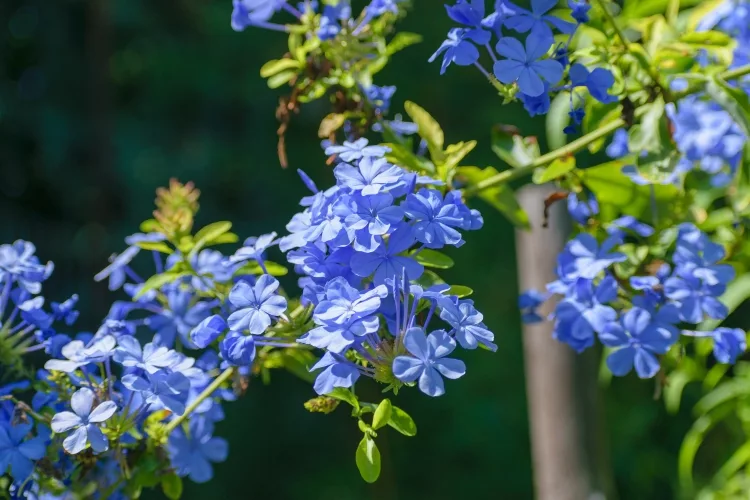
Plumbago auriculata (Cape Leadwort): Plumbago is a fixture in South and West Indian gardens for very good reason. Its pale-to-vivid blue flowers appear almost year-round in frost-free zones, making it one of the longest-blooming ornamentals available. It climbs, sprawls, and hedges with equal ease depending on how it's trained. The sticky calyx that traps insects is an evolutionary adaptation — part of what makes this plant so ecologically self-sufficient. In Mumbai, Chennai, and Bangalore gardens alike, it performs reliably on minimal water after establishment.
Bougainvillea: Few plants deliver more visual return per litre of water. Bougainvillea blooms most intensely under mild stress — reduced watering and slightly root-bound conditions trigger the heaviest flowering. It is one of the most drought-resistant ornamental shrubs in India and one of the most widely planted, with good reason. The vividly coloured "flowers" are technically bracts surrounding small white true flowers — a detail that consistently surprises first-time growers but changes nothing about the effect from across a garden.
Lantana camara: Lantana produces multi-coloured flower clusters that often shift from yellow to orange to pink on the same flower head, and it attracts butterflies with exceptional reliability. It is virtually indestructible under Indian conditions. The important caveat: in open, uncultivated ground it can spread aggressively. In a managed garden border with defined edges it is outstanding. Gardens near forest edges or open land should choose one of the less vigorous cultivated varieties to avoid contributing to local invasive spread.
Ixora coccinea (Jungle Geranium): Ixora is the backbone shrub of formal South Indian gardens. Its compact, dome-shaped growth habit, glossy dark foliage, and dense flower clusters in red, orange, yellow, and white cultivated forms make it ideal for hedging and precise edging work. It is one of the few species on this list that benefits from pH adjustment on alkaline sites — a simple compost amendment at planting is usually sufficient. Five to six hours of direct sun produces the heaviest flowering.
Hibiscus rosa-sinensis (China Rose): Hibiscus grows in temple gardens, domestic hedges, and public parks from Kerala to Kashmir. What's consistently underappreciated is how little it requires once established: full sun, occasional deep watering, and a hard annual prune in late winter are essentially the full maintenance program. Single-flower varieties are measurably hardier than ornate double cultivars — a practical distinction worth making when selecting plants for a low maintenance scheme.
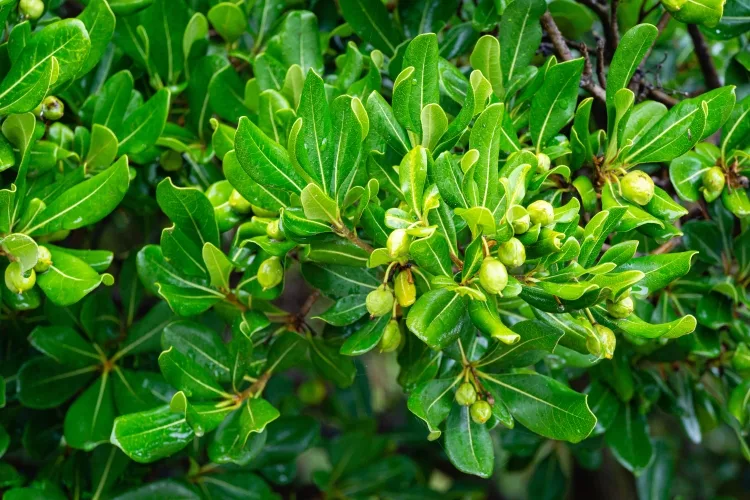
Pittosporum Tobira (Mock Orange): Pittosporum is significantly underused in Indian gardens given its exceptional performance across a wide range of conditions. Its leathery, glossy leaves make it drought-tolerant and wind-resistant. Creamy-white spring flowers carry a strong jasmine-like fragrance that draws pollinators. It functions as an excellent dense screening shrub or standalone specimen and tolerates coastal salt spray — a major asset for gardens in Mumbai, Chennai, and Goa where few ornamentals perform reliably near the waterfront.
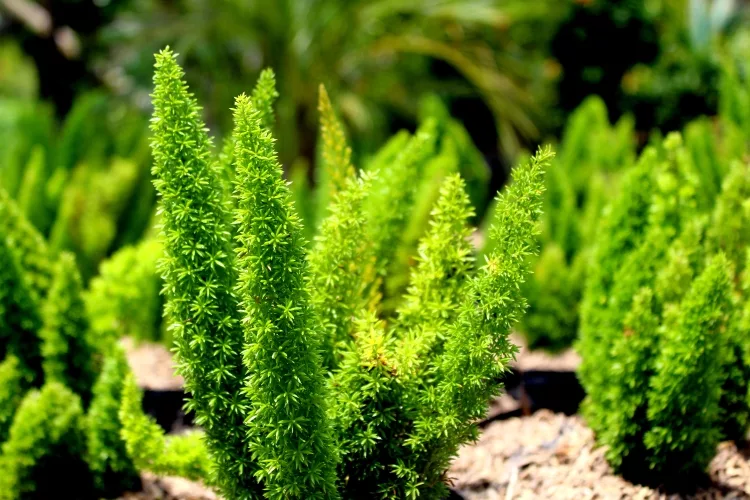
Asparagus Densiflorus (Foxtail Fern): Technically not a true fern, Asparagus densiflorus produces feathery, arching stems that look sculptural throughout the year. It handles shade, drought, and root competition from large trees — conditions that eliminate most ornamentals. It is one of the most forgiving plants available to an Indian gardener, and it doubles as one of the most elegant foliage plants in a mature mixed border. Gardeners managing canopy competition from large specimen trees will find relevant context in the guide on Naga Linga plant care and canopy tree management.
Most low maintenance shrubs India gardeners grow successfully share one defining characteristic: they tolerate under-watering but are killed by waterlogging. Poor drainage is the single greatest cause of failure in otherwise tough shrubs. Roots sitting in saturated soil lose access to oxygen, and rot follows within weeks — regardless of how drought-tolerant a species is described in theory.
Establishing a new shrub demands more water than maintaining a mature one. For the first three months after planting, water deeply every three to four days rather than giving shallow daily irrigation, which encourages surface roots that are vulnerable to heat stress. After establishment, most species on this list require irrigation only when the top 5 cm of soil is completely dry.
Fertilizer requirements are modest across the board. A balanced slow-release feed applied once at the start of the growing season is generally sufficient. For heavy-flowering shrubs like Ixora and Hibiscus, a phosphorus-rich supplement before the main flowering period intensifies bloom noticeably. Fertilizer spikes are particularly effective for containerized shrubs where controlled, measured feeding matters most and runoff is not an option.
Several naturalized species — Thryallis, Plumbago, and Lantana — fix nutrients efficiently enough that supplemental feeding becomes unnecessary after the first season. Over-fertilizing these plants consistently produces lush, dark foliage at the direct expense of flowering. Less is more.
Warning: Alkaline municipal water, common in many Indian cities, can gradually raise soil pH around frequently watered shrubs over multiple seasons. If flowering performance drops unexpectedly without other explanation, test soil pH. Acidification with elemental sulfur or regular compost top-dressing can restore the balance.
Pruning is the single most impactful maintenance activity for ornamental shrubs. Correctly timed, it shapes the plant, stimulates new flowering wood, and controls size. Done at the wrong seasonal moment, it eliminates an entire year's flowers. The timing rules below are non-negotiable for each species:
Propagating surplus plants from established shrubs is a cost-effective way to expand a planting without repeat nursery expenditure. The techniques covered in the guide on propagating plants through leaf cuttings apply directly to several softer-stemmed species on this list, including Plumbago and Asparagus Densiflorus, both of which root reliably from cuttings taken in the growing season.
For gardeners establishing their first shrub border or replacing high-maintenance ornamentals, three species stand out as near-foolproof under Indian conditions:
Lantana camara requires almost no management once in the ground. It flowers, attracts wildlife, and asks only for occasional boundary trimming to prevent spread. It is the most accessible entry point on this entire list — a beginner can plant it, walk away, and return to a flowering shrub with no intervening crisis.
Asparagus Densiflorus is the ideal shade-tolerant beginner plant. It tolerates neglect, container growing, root competition, and inconsistent watering in a way virtually no other ornamental can match. It performs under trees where little else survives. Beginners who don't have ideal sun conditions often find it the most reliable plant they own.
Bougainvillea is technically straightforward but requires internalizing one counterintuitive principle: less water produces more flowers. Once that principle is understood, it becomes one of the most rewarding plants in any collection. Beginners who overwater it consistently wonder why it won't flower; those who apply restraint are never disappointed by the results.
Beginners benefit most from starting with plants already proven in their specific local microclimate. In India, this means noting what grows in neighboring gardens and sourcing from nearby nurseries. Understanding the principle of regional plant adaptation — the same principle that makes Krishna Tulsi a reliable performer where exotic basil varieties fail — is explored in detail in the guide on Krishna Tulsi plant care in India.
Experienced gardeners can use low maintenance shrubs as structural anchors for complex layered planting designs. Rather than treating them as standalone specimens, the advanced approach positions them within a deliberate plant hierarchy:
Advanced gardeners also leverage the propagation potential of these species to expand plantings without repeated nursery cost. Establishing a 20-metre Plumbago hedge from cuttings taken from an existing plant, rather than purchasing a full run of nursery stock, represents a substantial cost difference with no performance trade-off. Most species on this list propagate readily through cuttings, layering, or division within a single growing season.
Seasonality planning distinguishes an experienced gardener's approach from an intermediate one. A well-designed shrub mix keeps at least two or three species in active bloom at any given point in the year. Cross-referencing bloom windows against the comparison table above makes this straightforward and prevents the common mistake of a garden that peaks brilliantly for six weeks and looks static for the remaining months.
For authoritative reference on climate zone classifications and how they apply to shrub cultivar selection across India's diverse growing regions, the Wikipedia overview of plant hardiness zones provides a useful framework for comparing species performance across different locations and elevations.
 |
 |
 |
 |

About Truman Perkins
Truman Perkins is a Detroit-based SEO consultant who's been in the business for over a decade. He got his start helping friends and clients get their websites off the ground, and he continues to do so today. In his free time, Truman enjoys learning and writing about gardening - something he believes is a natural stress reliever. He lives with his wife, Jenny, and their twins in Detroit.


Get new FREE Gifts. Or latest free growing e-books from our latest works.
Disable Ad block to reveal all the links. Once done, hit a button below
|
|
|
|
 rinjal