Profitable urban farming in India is genuinely achievable — and our team has found that the gap between success and struggle almost always comes down to crop selection, market access, and realistic cost planning. The concept of profitable urban farming India has moved far beyond hobby territory; it is an emerging economic force visible on rooftops in Mumbai, terrace plots in Bengaluru, and container setups across Delhi. For anyone ready to explore what growing food in the city can yield financially, our plants, herbs, and farming guides provide the foundational knowledge that makes it all possible.

India's rapid urbanization has created a paradox worth paying attention to: cities are expanding, green space is shrinking, and food demand is climbing year after year. That combination is precisely what makes urban agriculture compelling from a profitability standpoint. Our team has observed that growers who treat their rooftop or balcony as a micro-business — rather than a weekend diversion — consistently produce income that more than offsets input costs and, in many cases, builds into a meaningful revenue stream.
What follows is an honest look at the methods, pitfalls, and long-term strategies our research and hands-on experience suggest are most relevant for urban growers across Indian cities.
Contents
Urban farming is a broad term that encompasses a wide range of practices. It can mean a handful of herb pots on a windowsill or a fully automated hydroponic greenhouse on a commercial rooftop. According to Wikipedia's overview of urban agriculture, the practice includes rooftop gardens, container growing, aquaponics, community plots, and vertical systems — all of which have found genuine traction in Indian cities. The unifying factor is that food production happens within or immediately around urban areas, often using otherwise idle space.
Our team finds it useful to think of urban farming in India across three tiers: subsistence (growing for the household), supplemental (selling surplus at local markets), and commercial (structured operations with dedicated infrastructure and distribution channels). Each tier has a different profitability profile. Most growers start at the first and work their way toward the second within a single growing season.
India's urban food economy has structural characteristics that favor small-scale producers. Organic and fresh-produce premiums are significant — locally grown vegetables routinely command 20 to 40 percent more than their wholesale-market equivalents in cities like Pune, Hyderabad, and Chennai. The demand for pesticide-free produce is growing faster in Indian metros than almost anywhere else in Asia, driven by rising awareness around food safety. Distribution friction is lower here too: most urban micro-farms sell directly to neighbors, local restaurants, or via WhatsApp community groups, which eliminates the middleman entirely and keeps margins healthy.
Our team consistently sees that growers who secure two or three local restaurant accounts before scaling production reach break-even far faster than those who aim for large retail distribution from day one.
For most people beginning urban farming in India, the entry costs are genuinely modest. A rooftop or balcony setup using grow bags, a quality potting mix, and basic drip irrigation can be assembled for somewhere between ₹5,000 and ₹20,000 depending on scale. Crops like spinach, fenugreek, chili, and coriander are fast-cycling and require little infrastructure. Our experience suggests that anyone starting with leafy vegetables and herbs gets a first harvest within three to four weeks — which provides immediate feedback and keeps momentum going.
Our guide on seeds to sow in containers and grow bags is a practical starting point for choosing what to plant in limited urban spaces. The principles of soil health, drainage, and sun exposure covered there transfer directly to rooftop growing across Indian climates. Vertical growing techniques also deserve early attention: our tips for vertical gardening show how to dramatically increase yield per square foot on terraces and balconies using trellises, stacked planters, and wall-mounted systems.
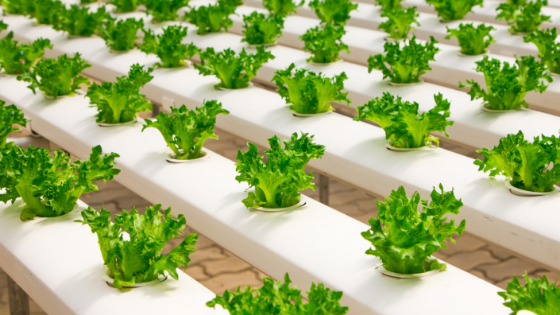
Once a grower moves past the basics, the economics shift considerably. Hydroponic systems — as our deep-dive into the scope of hydroponic farming in India explores — can produce three to five times the yield per square meter compared to soil-based methods, particularly for leafy greens and microgreens. The upfront cost is higher (a basic NFT system starts at roughly ₹50,000), but the operating cost per kilogram drops sharply at scale. Vertical racking amplifies this further, making commercial-scale production viable even in tight urban footprints.
Warning: Most people underestimate electricity and water costs when running hydroponic systems — these recurring expenses must be factored into the business model before committing to a commercial-scale setup.
Not all crops are equal from a revenue-per-square-meter standpoint. Our research points consistently to microgreens, exotic herbs, and high-value leafy vegetables as the most profitable urban farming options in Indian cities. Microgreens — sunflower shoots, pea shoots, radish — can be grown and sold within 10 to 14 days, and restaurant-grade microgreens command anywhere from ₹400 to ₹1,200 per kilogram in metro markets. Herbs like basil, lemongrass, and curry leaf are in steady demand at specialty grocery stores and are straightforward to grow in containers.
For larger setups, exotic vegetables — cherry tomatoes, zucchini, colored capsicum — perform well on well-structured terrace farms. These crops see consistent demand from hotels and premium restaurants that struggle to source reliable local supply. Our roundup of profitable fruits for large-scale growing in India also highlights several fruit varieties suited to terrace cultivation in tropical Indian climates, for growers ready to think beyond annuals.
| Crop | Time to First Harvest | Approx. Market Price (per kg) | Suitable Growing Method |
|---|---|---|---|
| Microgreens | 10–14 days | ₹400–₹1,200 | Trays, hydroponics |
| Spinach / Palak | 25–35 days | ₹30–₹80 | Grow bags, raised beds |
| Basil | 30–40 days | ₹200–₹500 | Containers, NFT hydro |
| Cherry Tomatoes | 60–75 days | ₹120–₹250 | Terrace beds, trellises |
| Coriander | 20–30 days | ₹40–₹100 | Containers, grow bags |
| Colored Capsicum | 70–90 days | ₹150–₹350 | Terrace, greenhouse |
Production is only half the equation. Our team has found that the most profitable urban farmers in India secure their buyers before they plant, not after. Direct-to-consumer channels — apartment community orders, neighborhood WhatsApp groups, subscription vegetable boxes — consistently deliver the highest margins because they eliminate every intermediary step. Restaurants and cloud kitchens are strong B2B accounts, particularly for consistent weekly supply of herbs and specialty greens. Farmers markets in cities like Bengaluru, Mumbai, and Hyderabad allow premium pricing alongside community visibility that compounds over time.

Three models stand out in our research as consistently viable. The subscription box — weekly deliveries of vegetables and herbs to apartment communities — suits growers with diverse crop mixes and the organizational discipline to manage recurring orders. The restaurant supplier model rewards reliability and quality consistency above all else; two to five steady accounts can sustain a well-run terrace operation. The training-plus-produce model, where workshops on urban farming techniques generate revenue alongside produce sales, works particularly well in metros where interest in sustainable living is high.
Some growers combine two of these models after establishing a track record. Diversification across revenue streams is what separates a resilient urban farm from a fragile one, and our experience suggests it takes roughly 12 to 18 months of consistent operation to reach that stability threshold.

Soil amendments and fertilizers are a recurring cost that eats into margins if not managed proactively. Composting and vermicomposting methods can reduce input costs significantly — a well-maintained compost system cuts fertilizer spending by 60 to 80 percent for most home-scale operations. Water recycling, especially in hydroponic setups, is the other major lever: closed-loop systems reduce water consumption by up to 90 percent compared to open soil irrigation, which matters both economically and ethically in water-stressed Indian cities.
Our team recommends starting a compost system during the setup phase of an urban farm, not as an afterthought — it takes about three months to mature and will reduce input costs substantially from the first full growing season onward.
One of the most consistent errors our team observes is overestimating how much produce a local buyer network can realistically absorb. Growing 50 kg of spinach per week is counterproductive if nearby buyers can only take 15 kg. Even informal market research — canvassing neighbors and local restaurants before scaling — prevents this mismatch. Pricing is the other common miscalculation: most new growers underprice to win initial customers, then struggle to raise rates once buyers expect a low price point. Starting at fair market rates while emphasizing freshness and pesticide-free credentials is a stronger long-term strategy.
Seasonality is also frequently underestimated. Demand patterns in Indian urban markets shift significantly between summer and monsoon periods, and crops that sell well in winter may glut local networks in peak growing season. Experienced urban farmers deliberately diversify their crop calendar to smooth revenue across the year rather than doubling down on a single high-performing crop.
Setup costs are visible and relatively easy to budget. What catches most new urban farmers off guard are the operational costs: electricity for grow lights and pumps, periodic replacement of growing media, packaging for direct-sale orders, and the time required for daily maintenance. Our team has seen several otherwise well-designed urban farms fail to reach profitability because the grower did not account for three to four hours of daily maintenance in their economic model. Honest accounting from the start — including the operator's own time as a real cost at a reasonable hourly rate — is what separates a viable business plan from an optimistic projection.
Our research confirms it is. A 200–400 sq ft rooftop is large enough to generate supplemental income through microgreens, herbs, and leafy vegetables, particularly when sold directly to local buyers. Starting small reduces risk while building the skills and buyer network needed to scale.
Microgreens consistently top the list in our experience — they yield in under two weeks and fetch premium prices from restaurants. Exotic herbs like basil and lemongrass, along with specialty vegetables like cherry tomatoes and colored capsicum, also deliver strong margins relative to the space they occupy.
A soil-based container setup on a rooftop can start at ₹5,000–₹20,000. A small hydroponic NFT system typically begins around ₹40,000–₹60,000. Costs scale with automation, lighting, and infrastructure, so most people start with a minimal setup and reinvest early revenue into expansion.
Direct-to-consumer channels — apartment community orders, neighborhood WhatsApp groups, and subscription box models — consistently return the highest margins because they eliminate middlemen. Local restaurants and cloud kitchens are strong B2B options, especially for growers who can guarantee consistent weekly volumes.
For most high-value crops like microgreens and leafy greens, hydroponics delivers three to five times the yield per square meter compared to soil, which significantly improves revenue per unit of space. The tradeoff is a higher upfront cost and ongoing electricity expense that must be factored into the business model.
Our team has observed that growers with direct-to-consumer sales channels and fast-cycling crops like microgreens or herbs can reach break-even within three to six months. Larger hydroponic setups with higher upfront costs generally take 12 to 24 months to recoup the initial investment.
The most frequent issues our team has documented are: overproduction without a secured buyer network, underpricing that erodes margins, underestimating recurring operational costs (especially electricity and water), and insufficient accounting for the grower's own time. Starting with honest financial projections prevents most of these pitfalls.
Profitable urban farming in India is not a distant ambition — it is a practical reality for growers who start with the right crops, secure buyers early, and account honestly for their costs and time. Our team encourages anyone seriously considering this path to pick one high-margin crop, build a small buyer network first, and treat the first season as a learning investment rather than a profit center. The foundation built in that first season is what makes everything that follows scale.
 |
 |
 |
 |

About Christina Lopez
Christina Lopez grew up in the scenic city of Mountain View, California. For eighteen ascetic years, she refrained from eating meat until she discovered the exquisite delicacy of chicken thighs. Christina is a city finalist competitive pingpong player, an ocean diver, and an ex-pat in England and Japan. Currently, she is a computer science doctoral student. Christina writes late at night; most of her daytime is spent enchanting her magical herb garden.


Get new FREE Gifts. Or latest free growing e-books from our latest works.
Disable Ad block to reveal all the links. Once done, hit a button below
|
|
|
|
 rinjal