reviewed by Christina Lopez
Hanging baskets account for over 30% of all container plant sales in North America, and the biggest reason most of them fail is simple: wrong plant, wrong light. Choosing the right hanging basket flowers full sun varieties makes the difference between a cascading wall of color and a crispy, wilted disappointment by mid-July. For gardeners working with limited space or specific growing conditions, sun-drenched hanging baskets offer one of the fastest ways to transform a porch, patio, or balcony.

Full sun means six or more hours of direct sunlight daily. That level of exposure demands plants with specific heat tolerance, drought resistance, and root systems that thrive in the confined, fast-draining environment of a hanging container. The good news: dozens of proven performers exist for exactly these conditions. This guide covers the best picks, setup strategies, and troubleshooting fixes for gardens of any size.
Contents
Not every flowering plant handles six-plus hours of direct rays while crammed into a 12-inch basket. The selections below have proven track records for heat tolerance, continuous blooming, and cascading growth habits that look spectacular overhead.
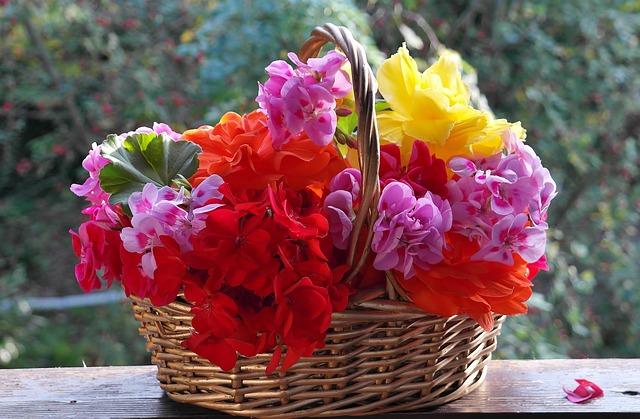
Wave and Supertunia series dominate hanging basket displays for good reason. These heavy-blooming annuals produce flowers nonstop from late spring through the first frost. They trail up to 4 feet, handle full sun without fading, and recover quickly from brief drought. Deadheading is optional with modern cultivars — most are self-cleaning.
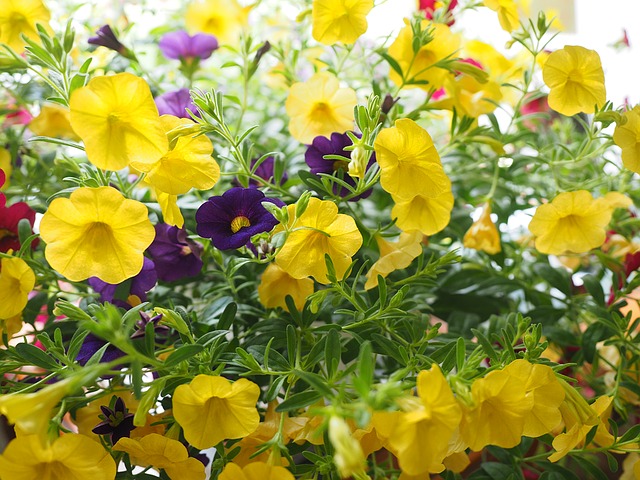
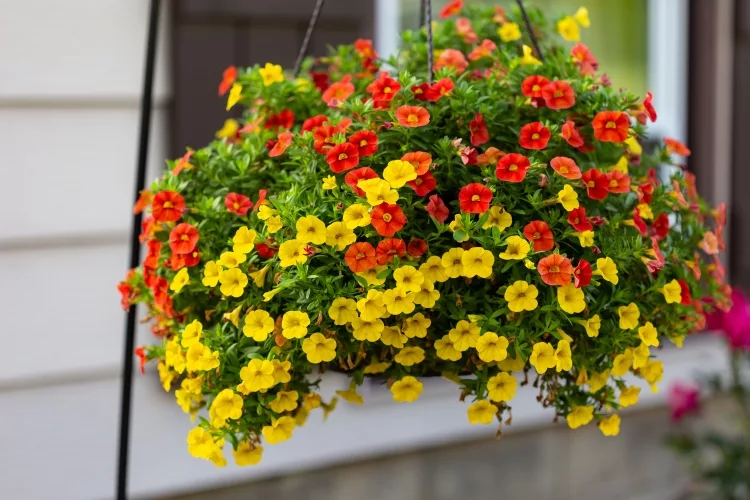
Calibrachoa looks like a miniature petunia but requires even less maintenance. These plants pump out hundreds of small trumpet-shaped flowers in every color imaginable. They thrive in acidic, well-draining soil and tolerate full sun exposure all day. Feed them weekly with a balanced liquid fertilizer for explosive growth.
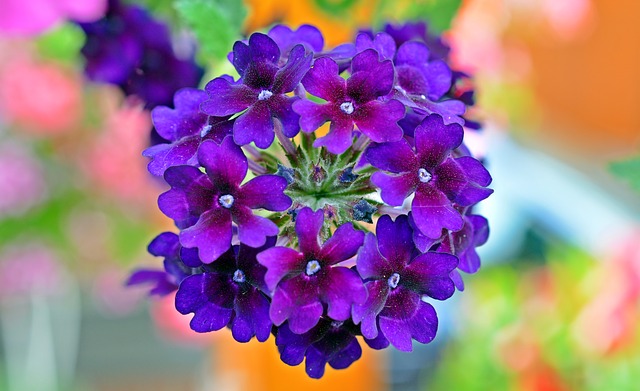
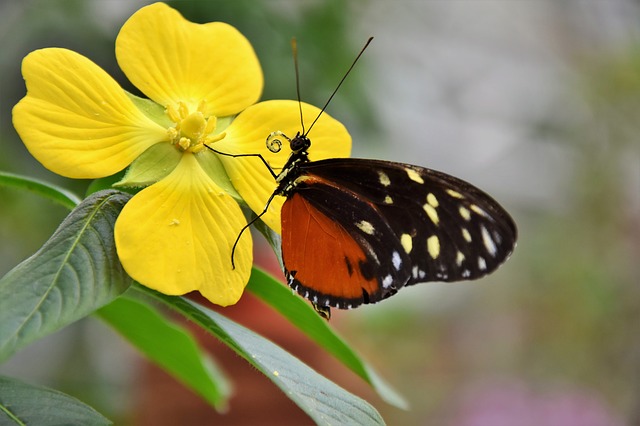
Trailing verbena is one of the toughest full-sun basket plants available. It laughs at heat, handles dry spells, and attracts pollinators like butterflies throughout the growing season. The clusters of tiny blooms create a dense, colorful carpet that spills beautifully over basket edges.
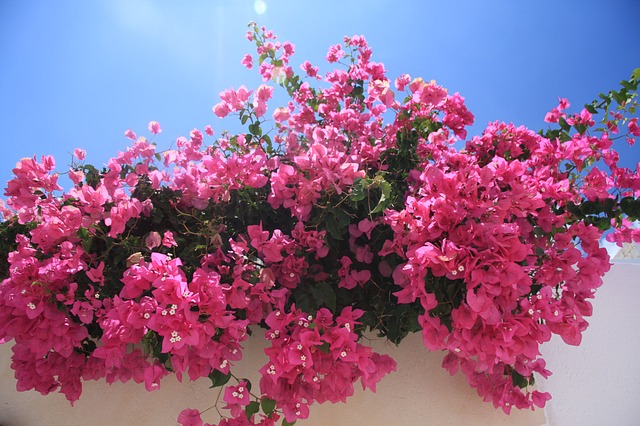
In warm climates (USDA zones 9–11), bougainvillea is a showstopper in hanging baskets. The vivid papery bracts come in magenta, orange, white, and purple. This plant actually blooms more when slightly stressed — overwatering and overfeeding reduce flower production. Full sun is non-negotiable for bougainvillea; anything less produces leggy green growth with sparse color.
Pro tip: Allow bougainvillea soil to dry out between waterings. Mild drought stress triggers heavier blooming cycles — exactly the opposite of what most gardeners expect.
Matching plant difficulty to skill level prevents frustration and wasted money. The table below sorts popular hanging basket flowers full sun varieties by experience level, water needs, and bloom duration.
| Plant | Difficulty | Water Needs | Bloom Period | Trailing Length |
|---|---|---|---|---|
| Petunia (Wave) | Beginner | Moderate | Spring–Frost | 3–4 ft |
| Million Bells | Beginner | Moderate | Spring–Frost | 1–2 ft |
| Verbena | Beginner | Low | Spring–Fall | 1–2 ft |
| Pansies | Beginner | Moderate | Cool seasons | 6–9 in |
| Chrysanthemum | Intermediate | Moderate | Late Summer–Fall | 1–2 ft |
| Bougainvillea | Advanced | Low | Year-round (warm) | 3–6 ft |
| Dwarf Lavender | Intermediate | Low | Summer | 8–12 in |
| Lobelia | Intermediate | High | Spring–Summer | 1–2 ft |
| Snowtopia | Beginner | Moderate | Spring–Fall | 1–2 ft |
| Lantana | Beginner | Low | Spring–Frost | 2–3 ft |
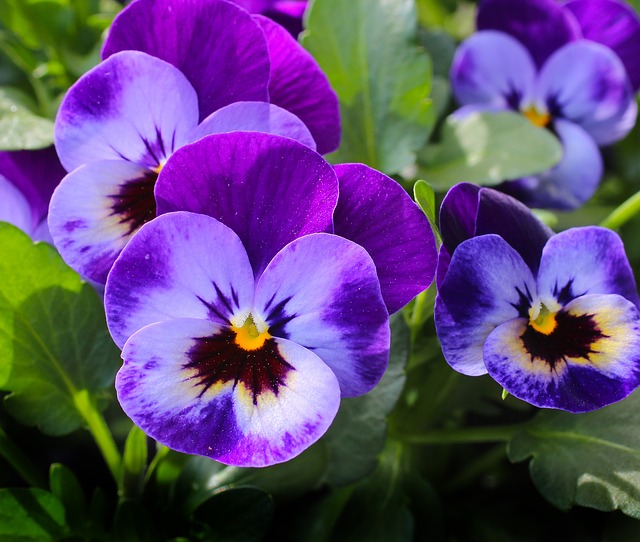
Pansies, petunias, and verbena top the beginner list. They bounce back from missed waterings, tolerate imperfect soil, and produce continuous color with minimal fussing. Snowtopia (a white bacopa variety) also deserves attention — it fills in gaps between showier plants and handles full sun surprisingly well.

For anyone just starting seeds indoors for the first time, petunias are an ideal gateway. They germinate in 7–10 days under grow lights and transplant into baskets with almost no shock.
Bougainvillea and certain trailing geraniums (like the Painted Lady series) demand more precise care. These plants need:
The payoff is worth it. A well-maintained bougainvillea basket produces more visual impact than almost any other single plant. Similarly, dwarf lavender brings incredible fragrance to a full-sun porch while repelling mosquitoes — a rare double benefit.
Even the hardiest hanging basket flowers full sun varieties will underperform without proper placement and container setup. Location strategy matters as much as plant selection.

South-facing and west-facing exposures receive the most intense afternoon sun. These spots suit heat-lovers like lantana, bougainvillea, and verbena. East-facing locations get gentler morning light — better for lobelia and some petunia varieties that scorch in extreme afternoon heat.
Key placement guidelines:
Warning: Metal bracket hooks in direct afternoon sun can heat above 150°F, cooking the root zone at the basket rim. Wrap metal hardware with cloth tape or switch to wooden mounting arms.
Standard garden soil is too heavy for hanging baskets. It compacts, drains poorly, and adds unnecessary weight. The ideal mix contains:
Basket size matters more than most people think. A 10-inch basket dries out twice as fast as a 14-inch one. For full-sun positions, 14–16 inch baskets are the minimum to maintain consistent moisture. Self-watering baskets with built-in reservoirs are an excellent investment for anyone who tends to forget watering — similar to how container-grown herbs benefit from consistent moisture management.
Most basket failures come down to three issues: water, nutrition, and pests. Catching problems early makes the difference between a quick fix and a total replant.
Wilting at midday — even in moist soil — is often heat stress, not dehydration. The plant shuts down temporarily to conserve moisture. If the soil is already damp, do not add more water. Overwatering a heat-stressed plant invites root rot, which kills far more baskets than drought ever does.
Leaf scorching (brown crispy edges) indicates the plant has hit its sunlight limit. Solutions include:
Lobelia is particularly prone to midsummer burnout. In hot climates, treat it as a cool-season basket plant and swap it for verbena or million bells when temperatures consistently exceed 85°F.
Aphids are the number-one pest for hanging baskets, congregating on new growth and flower buds. A strong water spray knocks off most infestations. For persistent problems, natural aphid control methods work well without harming beneficial insects.
Powdery mildew and botrytis show up when baskets are overcrowded or watered overhead in the evening. Prevention is straightforward:
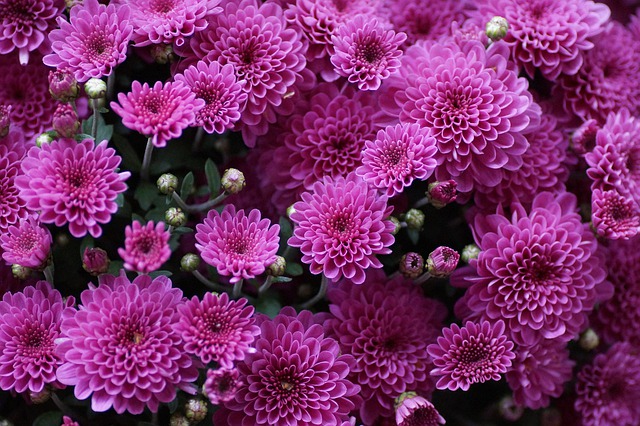
Chrysanthemums in baskets are especially susceptible to spider mites during dry spells. A daily misting of the foliage (morning only) discourages mite populations without encouraging fungal disease.
Quick fix: A teaspoon of neem oil mixed into a quart spray bottle with water and a drop of dish soap handles aphids, mites, and mildew simultaneously. Spray weekly as a preventative.
Timing separates a spectacular basket season from a short, disappointing one. Planting too early risks frost damage; planting too late shortens the bloom window.
The safest rule: plant hanging baskets two weeks after the last expected frost date for the local area. In most temperate zones, that falls between mid-April and late May. Warm-climate gardeners (zones 9–11) can plant year-round with seasonal variety swaps.
Cool-season baskets work well for extending the display beyond summer. Pansies and chrysanthemums handle light frost and provide color from early fall through late autumn. The 9 o'clock flower is another excellent choice for baskets that need to handle transitional weather — it opens daily with the sun and closes in the evening.
For staggered color all season long, plant in waves:
Certain conditions signal that planting should be delayed, no matter how tempting those nursery displays look:
Patience pays off. A basket planted two weeks late into ideal conditions outperforms one planted on schedule into hostile weather every single time. Anyone looking to fill the wait with productive gardening can focus on high-value edible crops that transplant into outdoor beds once the weather cooperates.
 |
 |
 |
 |

About Christina Lopez
Christina Lopez grew up in the scenic city of Mountain View, California. For eighteen ascetic years, she refrained from eating meat until she discovered the exquisite delicacy of chicken thighs. Christina is a city finalist competitive pingpong player, an ocean diver, and an ex-pat in England and Japan. Currently, she is a computer science doctoral student. Christina writes late at night; most of her daytime is spent enchanting her magical herb garden.


Get new FREE Gifts. Or latest free growing e-books from our latest works.
Disable Ad block to reveal all the links. Once done, hit a button below
|
|
|
|
 rinjal