Studies show that strategically placed trees can reduce a home's energy costs by up to 25% — yet most gardeners still treat tree selection as an afterthought. If you're serious about transforming your outdoor space, choosing the best ornamental trees for landscaping is one of the highest-impact decisions you'll make. The right species anchors your design, provides seasonal interest, and creates the kind of visual permanence that no flower bed can match. Browse Trinjal's full plants, herbs, and farming guide collection for deeper dives into plant selection across every corner of your garden.
The trees you plant today will define your landscape for decades. That's not a metaphor — it's a practical reality you need to account for from the moment you break ground. A Gulmohar planted too close to a wall will heave foundations. A Bottlebrush placed in the wrong microclimate simply won't flower. Getting these decisions right upfront saves you from costly removals and missed seasons of beauty.
Whether you're working with a compact urban plot or a sprawling rural property, the trees in this guide perform across a range of conditions. Some are drought-tolerant powerhouses; others are flowering spectacles that draw pollinators and admiration in equal measure. The best ornamental trees for landscaping are rarely the flashiest options at the nursery — they're the ones chosen for a specific purpose and placed with intention.
Contents
This is the myth that keeps compact gardens bare and underplanted. The assumption that every ornamental tree demands constant pruning, raking, and intervention simply doesn't hold up in practice. The right tree in the right spot requires almost no intervention after establishment. A Casuarina planted as a windbreak needs trimming perhaps once every two to three years. A well-placed Bottlebrush flowers on its own schedule and largely ignores you between seasons.
The high-maintenance reputation comes from poor placement decisions — a species chosen for aesthetics alone, planted where it fights its environment every season. Understand your soil type, rainfall pattern, and available space before you commit, and you'll find these trees largely take care of themselves. The selection process is where the real work happens, not the ongoing care.
The gardening world has swung hard toward native-only planting in recent years, and while the intention is sound, the absolutism misses the point. Many of the best ornamental trees for landscaping across the subcontinent — Gulmohar, Plumeria, Bottlebrush — are exotics that have naturalized over centuries and now support local insect populations as capably as indigenous species.
Pro tip: Check your local municipal tree list before planting near footpaths or drains — some exotic species are restricted in certain districts, and planting them in public-adjacent spaces can trigger removal notices.
The practical question isn't "native or exotic" — it's "does this tree fit my site conditions and serve a real purpose?" Invasive species are a legitimate concern, but most popular ornamental trees are not ecologically aggressive. Do your homework and you'll find both categories offer excellent candidates for every landscape type.
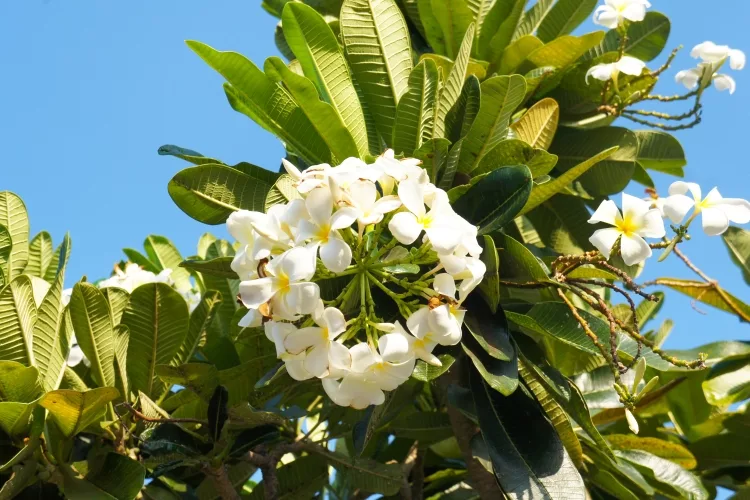
Plumeria (Frangipani) is the first tree most tropical gardeners reach for, and with good reason. Its waxy, fragrant blooms appear from spring through early monsoon, and its sculptural branching structure makes it architecturally interesting even out of season. It tolerates sandy, well-drained soil and handles dry spells without drama. Plant it where you want a focal point — near a seating area, flanking an entry gate, or as a standalone specimen in a lawn.
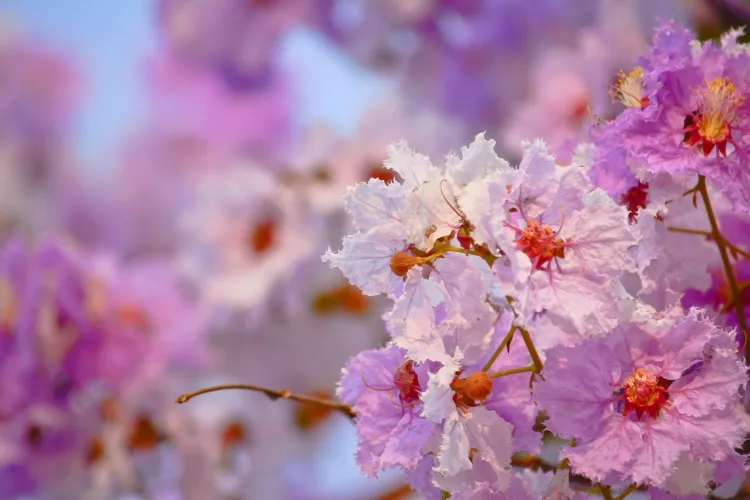
Pride of India (Lagerstroemia speciosa) is arguably the most underused garden tree on the subcontinent. Its clusters of lavender-pink blooms are spectacular, but what makes it truly valuable is its multi-season interest: flowers in summer, brilliant foliage color in autumn, and attractive peeling bark through winter. It's also one of the few ornamentals that thrives in clay soils with periodic waterlogging — which makes it practical across a wide range of garden conditions.
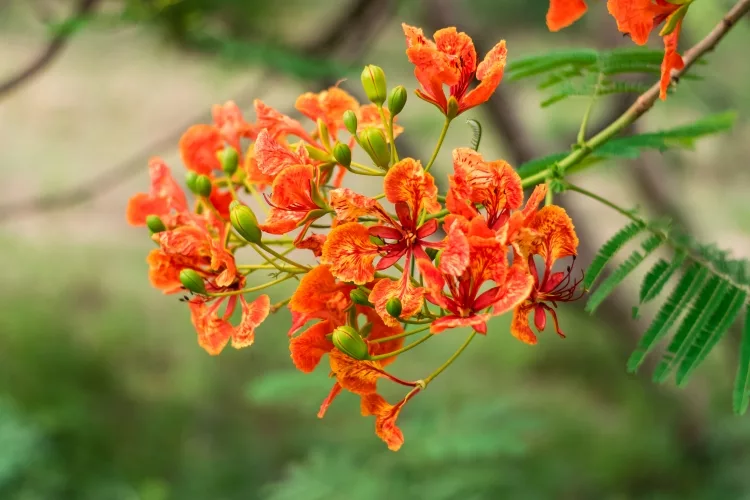
Gulmohar (Delonix regia) needs no introduction. Its flame-red canopy in summer is one of the most dramatic floral displays in any landscape. Plant it as a standalone specimen where its spreading canopy — which can reach 10 metres across — has room to develop. It's a fast grower, achieving genuine shade within five to seven years. If you're also cultivating fruit trees on the same property, our guide to tropical fruit trees that are easy to grow covers species that pair well in a mixed planting design.
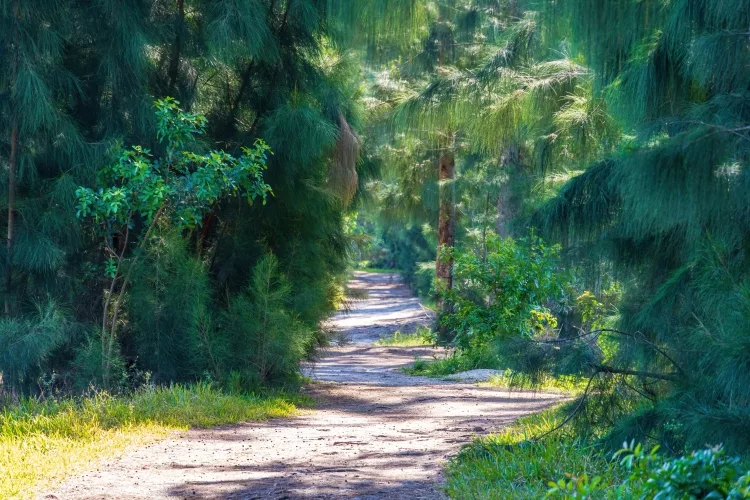
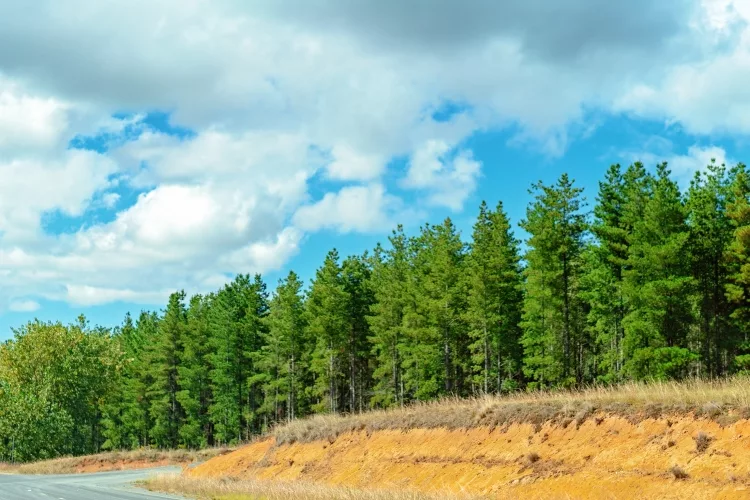
Casuarina (Australian Pine) is a surprisingly versatile landscaping choice, most commonly deployed as a windbreak or coastal screen. Its needle-like foliage creates a fine, soft texture that contrasts beautifully with broad-leafed species, and its vertical growth habit makes it ideal for narrow strips along property boundaries. Despite its common name, it is not a true pine — it belongs to the Casuarinaceae family, a uniquely adapted group native across South and Southeast Asia.
Neem (Azadirachta indica) belongs in almost every Indian garden. Its open canopy filters harsh afternoon light without blocking it entirely, making it ideal for underplanting with shade-tolerant species. It's a remarkable multi-use tree — a natural pest deterrent whose fallen leaves make excellent mulch and whose bark enriches composting systems. For a property-wide pest management strategy, neem is a cornerstone of the landscape toolkit.
Jacaranda performs at its absolute best in dry, warm climates with distinct seasons. Its lavender-blue flower clusters rank among the finest in any ornamental palette, and its light, feathery foliage allows dappled light to reach plants below. It's a medium to large tree — give it space, and it will reward you with decades of spring spectacle and genuine canopy structure.
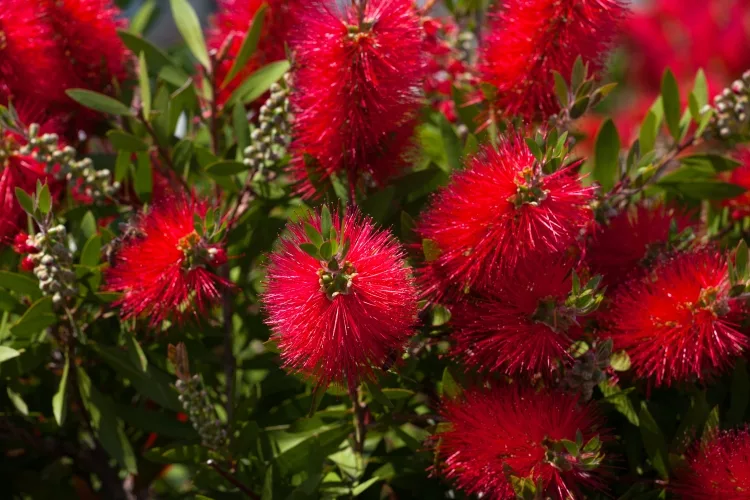
Bottlebrush (Callistemon) is one of the best ornamental trees for landscaping in terms of pollinator value. Its cylindrical red flower spikes are irresistible to sunbirds, bees, and butterflies throughout the blooming season. If attracting pollinators is a priority, read our post on how to attract bees and pollinators to your garden — Bottlebrush features prominently in every serious pollinator planting strategy.
Golden Shower (Cassia fistula) — India's national flower tree — produces cascading clusters of golden-yellow blooms that stop traffic in late spring. It's a medium-sized tree, controllable in most garden sizes, and deeply drought-tolerant once established. Bougainvillea trained into tree form on a standard adds dramatic color without the footprint of a full canopy tree, and Bamboo Palm (Chamaedorea) rounds out this list as an understory or container specimen — ideal for shaded courtyards and covered patios where larger trees simply won't perform.
Before you commit to any species, filter candidates against your site's key constraints. Growth rate, mature size, and water needs are the three variables most gardeners underestimate. Match these to your conditions first — aesthetics come second.
| Tree | Mature Height | Growth Rate | Water Needs | Bloom Color | Best Use |
|---|---|---|---|---|---|
| Plumeria (Frangipani) | 4–8 m | Slow–Medium | Low | White / Pink / Yellow | Focal specimen |
| Pride of India | 10–15 m | Medium | Low–Medium | Lavender-Pink | Avenue / Street tree |
| Gulmohar | 8–12 m | Fast | Low | Red-Orange | Specimen / Shade |
| Casuarina | 15–35 m | Fast | Low | Non-flowering | Windbreak / Screen |
| Neem | 15–20 m | Medium | Low | White (inconspicuous) | Shade / Utility |
| Jacaranda | 8–15 m | Medium | Low–Medium | Lavender-Blue | Specimen |
| Bottlebrush | 3–8 m | Medium | Low | Red | Border / Pollinator hedge |
| Golden Shower | 6–10 m | Medium | Low | Yellow | Specimen / Avenue |
| Bougainvillea (standard) | 2–4 m | Fast | Low | Magenta / Orange / Pink | Accent / Container |
| Bamboo Palm | 2–3 m | Slow | Medium | Non-showy | Understory / Courtyard |
Warning: Gulmohar roots are aggressive — never plant within 5 metres of underground pipes, paved driveways, or foundations, as root intrusion is a common and expensive problem that develops quietly over years.
Your garden contains multiple microclimates — a sun-baked western wall behaves nothing like a cool, shaded northern corner. The best ornamental trees for landscaping are not chosen from a generic list; they're chosen for a specific spot. Before selecting any species, observe your site through at least one full season. Note where water pools after rain, where afternoon shade falls, and which areas receive the most wind. These observations alone eliminate half the wrong choices before you set foot in a nursery.
Soil type matters equally. Sandy soils drain fast but dry out quickly — ideal for Plumeria and Gulmohar, problematic for moisture-dependent species. Clay soils retain water and can suffocate drought-adapted roots during wet seasons. Understanding your soil's drainage behaviour is non-negotiable before committing to any specimen tree. Our guide on how to prepare your own potting soil at home in India offers a practical framework for reading and amending your growing medium before you plant.
Most gardeners plant too close together, then spend years managing the consequences. The mature canopy spread listed on any nursery tag assumes ideal conditions — in good soil, it will exceed that estimate. Leave at least 60% of the listed mature spread as clearance from walls, fences, and adjacent trees. For large species like Casuarina or Neem, that means planting no closer than 4–6 metres from any structure.
Sightlines are equally important. A tree placed directly in front of a window or entry corridor will feel oppressive at maturity. Position specimen trees slightly off-centre from key viewpoints so they frame rather than block the view. This is a classic professional move that costs nothing to implement and dramatically improves the visual result from every angle of the property.
The hole you dig for a new tree matters more than most gardeners realize. A hole that's too narrow constrains root development; one that's too deep creates a drainage sump that drowns the root collar. Dig to the depth of the root ball and at least twice its width. Backfill with native soil amended lightly with well-rotted compost — not potting mix — and ensure the root flare sits at or slightly above grade. Planting too deep is the single most common cause of ornamental tree failure in the first three years.
Water deeply and infrequently from the start. A long soak once or twice weekly forces roots downward in search of moisture, building drought resilience. Daily shallow watering produces shallow, fragile roots that suffer at the first dry spell. Mulch to a depth of 7–10 cm in a ring around the base, keeping mulch well clear of the trunk to prevent collar rot. If you're establishing trees through a dry season without reliable water access, our guide to rainwater harvesting for home garden irrigation is a practical resource worth reading before your first planting season.
Once established — typically after two full growing seasons — most ornamental trees require only seasonal attention. Prune during the dormant period or immediately after flowering, never mid-growth when fresh wounds are most vulnerable to infection and borers. Remove crossing branches early; they create wound points at maturity that become chronic entry sites for disease.
Fertilize sparingly. A slow-release granular feed in early spring is usually sufficient for established trees. Avoid high-nitrogen formulations for flowering species — they'll push lush foliage at the direct expense of blooms. If you're managing trees across a larger property and want to think about yield alongside aesthetics, our overview of 20 profitable trees for farming in India covers species that combine ornamental value with genuine commercial potential — a worthwhile angle for rural and semi-urban landholders.
 |
 |
 |
 |

About Truman Perkins
Truman Perkins is a Detroit-based SEO consultant who's been in the business for over a decade. He got his start helping friends and clients get their websites off the ground, and he continues to do so today. In his free time, Truman enjoys learning and writing about gardening - something he believes is a natural stress reliever. He lives with his wife, Jenny, and their twins in Detroit.


Get new FREE Gifts. Or latest free growing e-books from our latest works.
Disable Ad block to reveal all the links. Once done, hit a button below
|
|
|
|
 rinjal