Can you grow fresh vegetables without a single handful of soil? If you live in India — where farmland is shrinking, water tables are dropping, and monsoons are less predictable than ever — the answer is a definitive yes. Hydroponic farming in India is reshaping how people grow food, from compact rooftop setups in Chennai to commercial greenhouses in Pune and Bengaluru. Browse our plants and herbs farming guides to see the wider world of growing options available to you, and keep reading to discover just how big the opportunity ahead of you really is.
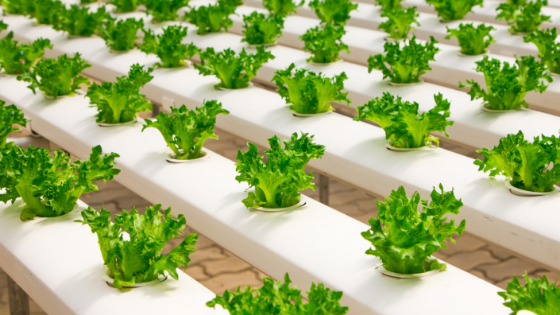
Hydroponics — growing plants in nutrient-rich water instead of soil — has moved from niche research labs to living rooms and rooftops across the country. Studies and farm reports consistently show yields two to three times higher than conventional field growing, using a fraction of the water. That combination of more food and less resource use is exactly what India's agriculture sector needs right now.
This guide covers the full picture: the context behind the method, how to build your first system, the tools you need, and the crops that deliver results fastest. Whether you have a balcony, a spare bedroom, or plans for a larger operation, there is a hydroponic setup that fits your situation perfectly.
Contents
Hydroponics removes soil from the equation entirely. You dissolve nutrients in water and deliver that solution directly to the plant's roots, which rest in an inert growing medium — clay pebbles, rockwool cubes, or coco coir — that anchors the plant without feeding it. According to Wikipedia's overview of hydroponics, the technique has been studied for centuries, but affordable pumps, LED lights, and premixed nutrient formulas have made it genuinely practical for everyday growers in recent decades. Plants grow faster in these systems because their roots receive food immediately, without spending energy breaking down soil particles first.
India's geography makes hydroponics more than just interesting — in many regions, it makes it necessary. States like Punjab, Haryana, and parts of Rajasthan face dramatic groundwater depletion. Urban areas have almost no spare land. Temperatures are climbing, and outdoor crops face increasing stress during summer months. Hydroponic systems address all three challenges at once: they use up to 90% less water than traditional farming because water recirculates through the system, they thrive indoors where temperature is controlled, and they don't require fertile soil at all. If you have already experimented with terrace gardening in Hyderabad, you'll immediately recognize the appeal of growing in a compact, controlled space — hydroponics takes that logic even further.

Several hydroponic systems exist, and the best one for you depends on your budget, available space, and comfort with technical setups. Deep Water Culture (DWC) is the most beginner-friendly option — plant roots dangle directly into an oxygenated nutrient reservoir. The Nutrient Film Technique (NFT) runs a thin stream of solution over angled channels and suits herbs and leafy greens perfectly. The Kratky method is completely passive, requiring no pumps or electricity, making it ideal for apartment growers with limited access to power outlets. Before choosing, consider whether you have natural light or need to supplement with grow lights. Unlike growing in a standard potting mix — which you can learn to prepare yourself in our guide on making potting soil at home in India — hydroponics requires precise nutrient management in place of organic soil fertility.
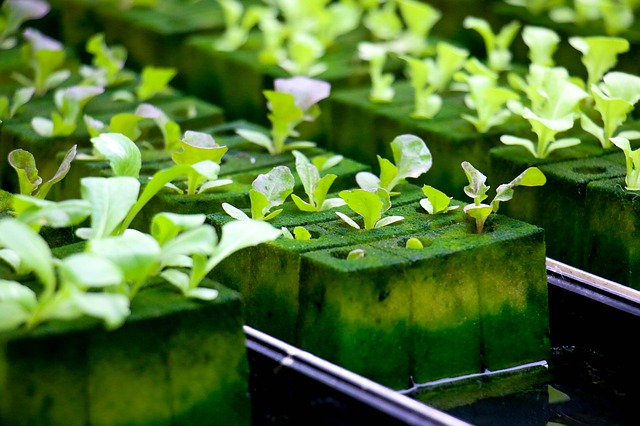
Setting up a basic DWC system takes less than an afternoon. Choose a dark-colored container — darkness blocks light and prevents algae from taking hold — sized between 10 and 20 liters for a home setup. Mix your hydroponic nutrient solution according to the product directions, then test the pH with a basic test kit; aim for a reading between 5.5 and 6.5. Cut holes in the container lid, fill net pots with clay pebbles, and insert your seedlings or germinated seeds. Connect an air pump to an airstone inside the reservoir to maintain oxygen levels at the root zone. From there, check nutrient concentration and pH twice a week and top up with fresh solution as plants drink it down.
Pro tip: Always start with chlorine-free water — let tap water sit uncovered overnight or run it through an RO filter. Chlorine disrupts the beneficial microbes that protect roots from rot.
You don't need to spend a fortune to get started, but certain items are non-negotiable. The table below breaks down the core equipment for a beginner hydroponic setup in India, along with realistic cost ranges in Indian rupees.
| Equipment | Purpose | Approx. Cost (INR) |
|---|---|---|
| Growing reservoir or bucket | Holds the nutrient solution | ₹200 – ₹600 |
| Net pots | Hold growing medium and plant roots | ₹5 – ₹20 each |
| Air pump and airstone | Oxygenates the water in DWC systems | ₹300 – ₹900 |
| pH meter or test kit | Monitors water acidity | ₹150 – ₹2,000 |
| EC / TDS meter | Measures nutrient concentration | ₹400 – ₹1,500 |
| Hydroponic nutrient solution | Feeds plants in place of soil fertility | ₹300 – ₹1,200 per kit |
| Growing medium (clay pebbles or rockwool) | Anchors roots without providing nutrients | ₹200 – ₹700 |
| LED grow light | Provides light for indoor systems | ₹1,500 – ₹10,000 |
Once you are comfortable with the basics, a few additions make a significant difference. An outlet timer automates your pump cycles so you don't have to manage feeding manually. A digital thermometer and hygrometer (humidity meter) let you track the environment around your plants. A grow tent gives you complete control over light, temperature, and pests in a compact footprint. These additions are optional at the start but become valuable quickly as you scale up your system or add more plant varieties.
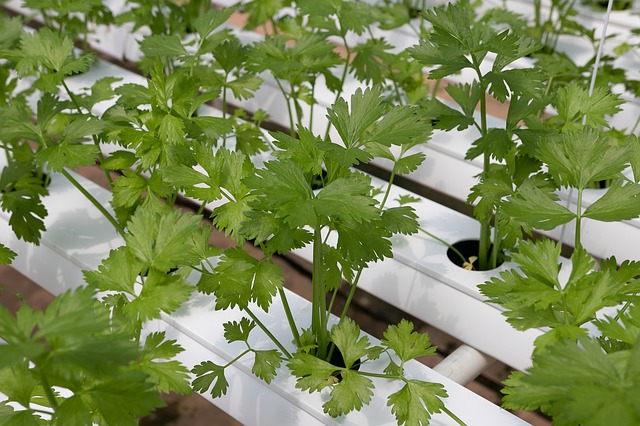
A home grower working in a 2×2 meter space can realistically produce enough leafy greens and herbs to supply a family of four year-round. Start with a 4 to 6 plant DWC system and focus on fast-growing crops. Initial investment for a home kit runs between ₹3,000 and ₹12,000 depending on whether you build your own or buy a ready-made system. Many home growers find that the setup pays for itself within a single growing season through savings on vegetables and herbs alone — and the quality of home-grown produce is noticeably higher than anything from a market.
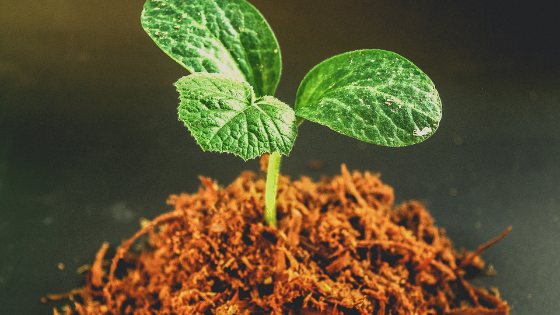
At the commercial level, Indian hydroponic farms operate in polyhouses or fully climate-controlled greenhouses, targeting premium crops — cherry tomatoes, bell peppers, basil, microgreens — for hotels, supermarkets, and direct-to-consumer subscription boxes. Capital costs are higher: a basic 1,000 sq. ft. commercial setup can start at ₹5 to ₹10 lakh. But profit margins are far better than conventional vegetable farming when you grow high-value produce. Some state governments actively support this transition; check out the Telangana greenhouse subsidy for rooftop farming to find out if you qualify for financial assistance with your infrastructure.
Leafy greens and herbs are where hydroponic farming in India delivers its most immediate wins. Spinach reaches harvest in 30 to 40 days. Lettuce is ready in under six weeks. Coriander, basil, and mint grow so vigorously in nutrient solution that you can harvest them continuously without replanting every cycle. Mint is a particularly ideal starter crop — it is fast, forgiving, and commands a strong price at local markets. Our guide on growing mint in pots without it spreading contains tips that translate directly to hydroponic containers. Similarly, our spinach container growing guide covers variety selection and harvest timing that applies equally well to a hydroponic setup.
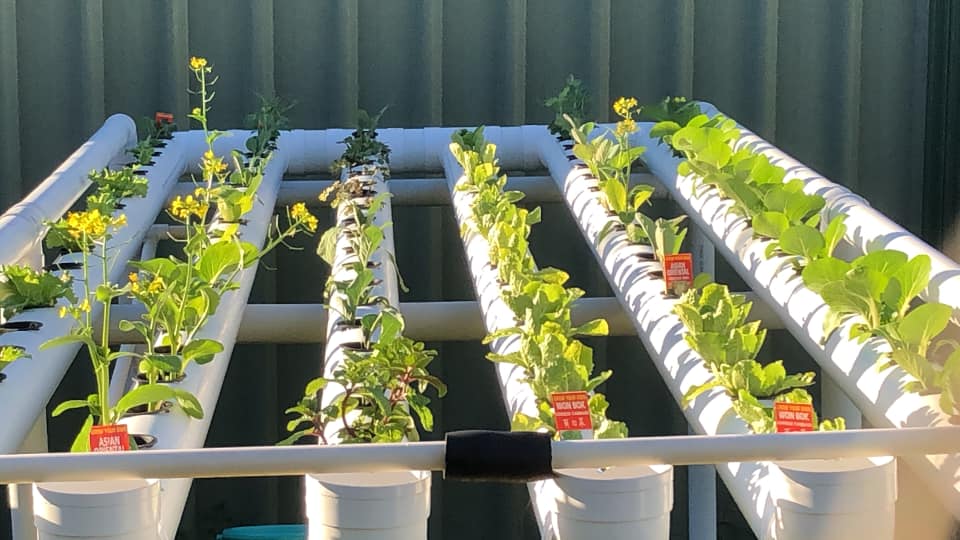
Once you have mastered leafy greens, fruiting vegetables open up a much larger income opportunity. Tomatoes, cucumbers, and bell peppers all perform exceptionally in NFT or Dutch Bucket systems. These crops take longer — typically 60 to 90 days — and require more light and more carefully managed nutrients. The returns, however, are proportionally higher. Indian markets consistently pay premium prices for hydroponically grown tomatoes and cucumbers because their flavor and shelf life are better than field-grown alternatives. Starting with one fruiting variety lets you learn the additional management involved without overwhelming your system.
The economics of hydroponic farming in India improve strongly over time. Once your infrastructure is established, recurring costs are limited to nutrients, electricity, and seeds — no soil amendments, no irrigation infrastructure repairs, no pesticide cycles. Compare that to conventional farming, where input costs compound season after season. If you are thinking about multiple income streams from the same property, pairing hydroponics with perennial options from our list of 20 profitable trees for farming in India gives you short-cycle vegetable income alongside long-term fruit or timber revenue. The two approaches complement each other well on medium-sized plots.
Water conservation is where hydroponic farming makes its most compelling long-term argument. A recirculating nutrient system uses a fraction of what flood or furrow irrigation consumes — sometimes as little as 10% of conventional water demand for the same yield. When you pair a hydroponic setup with a rainwater collection system, your operating costs drop even further. Our guide on rainwater harvesting for home garden irrigation walks you through how to collect and store monsoon water effectively. As India's groundwater continues to decline under agricultural pressure, growers who build water-efficient systems now will hold a decisive competitive advantage over those who don't adapt.
Yes, hydroponic farming is profitable in India when you focus on high-value crops like lettuce, basil, cherry tomatoes, and microgreens. Home setups typically recover their investment within one growing season through vegetable savings, while commercial operations targeting hotels and supermarkets can generate strong margins compared to conventional field farming.
A beginner home setup costs between ₹3,000 and ₹12,000 depending on system size and whether you buy a kit or build your own. A small commercial setup of around 1,000 sq. ft. typically starts at ₹5 lakh. Costs vary based on whether you need grow lights, a climate-controlled structure, and automated systems.
Leafy greens and herbs give the fastest results — spinach, lettuce, coriander, mint, and basil all thrive and reach harvest within 30 to 45 days. Fruiting vegetables like tomatoes, cucumbers, and bell peppers take longer but deliver higher market value and are well-suited to NFT or Dutch Bucket systems.
Yes. A recirculating hydroponic system uses up to 90% less water than conventional soil-based irrigation. Water that plants don't absorb returns to the reservoir and is reused, making hydroponics one of the most water-efficient growing methods available — a major advantage in water-stressed regions of India.
Deep Water Culture (DWC) is the best starting point for most beginners. It requires minimal equipment — just a container, an air pump, net pots, and nutrient solution — and is very forgiving of the mistakes that come with learning. The Kratky method is even simpler if you want a completely passive system with no electricity required.
Absolutely. Rooftops and balconies are ideal spaces for hydroponic systems in Indian cities. You get direct sunlight, ventilation, and space that would otherwise go unused. Lightweight systems like Kratky or small NFT setups are easy to place on any flat surface. Some Indian state governments even offer subsidies for rooftop growing infrastructure.
No farming background is required. Hydroponics is actually more manageable for beginners than soil farming because you control every variable — nutrients, water, pH — precisely. Start with a small DWC system growing lettuce or spinach, follow basic nutrient and pH guidelines, and you will see results within weeks regardless of prior experience.
Yes. Several state governments offer support for greenhouse and controlled-environment agriculture. The National Horticulture Board provides subsidies for greenhouse infrastructure, and states like Telangana have specific programs for rooftop farming and polyhouse construction. Check your state agriculture department's website or the NHB portal for current scheme details and eligibility criteria.
 |
 |
 |
 |

About Truman Perkins
Truman Perkins is a Detroit-based SEO consultant who's been in the business for over a decade. He got his start helping friends and clients get their websites off the ground, and he continues to do so today. In his free time, Truman enjoys learning and writing about gardening - something he believes is a natural stress reliever. He lives with his wife, Jenny, and their twins in Detroit.


Get new FREE Gifts. Or latest free growing e-books from our latest works.
Disable Ad block to reveal all the links. Once done, hit a button below
|
|
|
|
 rinjal