Figuring out how to choose a leaf blower comes down to three things: your yard size, your power source preference, and how much you want to spend. That's really it. Everything else — CFM ratings, noise levels, weight — flows from those three decisions. Whether you're clearing a small patio or managing a sprawling property full of mature oaks, the right blower makes fall cleanup feel less like a chore and more like a quick weekend task. If you're already investing time in your gardening tools and equipment, a solid leaf blower deserves a spot in your shed.
Most people overthink this purchase. They get lost comparing spec sheets and reading arguments about gas versus electric. The truth is, modern leaf blowers across all categories do a decent job. Your goal is to find the one that fits your specific situation — not the one with the highest numbers on the box.
This guide walks you through every factor that matters, from blower types and real performance specs to budget breakdowns and maintenance tips. By the end, you'll know exactly what to look for and what to skip.
Contents
Before you compare brands or prices, you need to pick a power source. This single choice determines your runtime, weight, noise level, and ongoing costs. Here's how the three main types stack up.

Corded electric blowers plug into a standard outlet and run as long as you need them. They're lightweight (usually 6–8 pounds), start with one button press, and need almost zero maintenance.
The cord is the obvious drawback. If you're working around garden beds and fences you've built, you'll need to manage it carefully to avoid snagging.
Battery blowers have improved dramatically. Modern 56V and 80V models rival mid-range gas blowers in airspeed while staying much quieter. Runtime ranges from 20 minutes on full blast to over an hour on low settings.
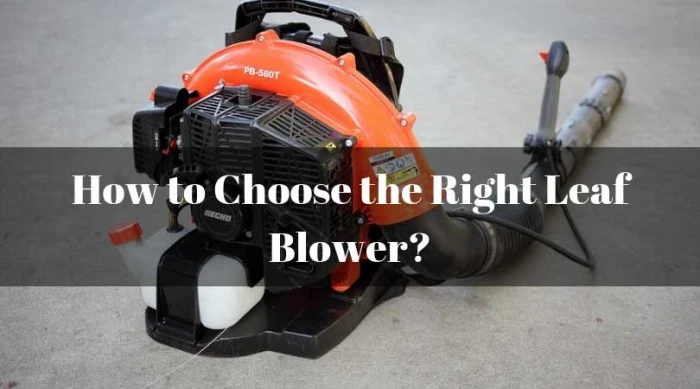
Gas blowers deliver the most raw power. They come in handheld and backpack styles, with backpack models reaching 600+ CFM (cubic feet per minute — the volume of air moved). They run until the tank empties, which means 60–90 minutes of continuous use.
Pro tip: If you already own a cordless drill or mower from a specific brand, check if they make a leaf blower on the same battery platform. Sharing batteries across tools saves you serious money.
Specs matter, but only in context. A blower that's perfect for a townhouse patio would be miserable on a two-acre lot. Here's how to match the tool to your actual property.
If your outdoor space is under 1/4 acre, a corded electric or entry-level battery blower handles everything you'll throw at it. You don't need 500 CFM to clear a driveway and a small lawn. Look for something in the 200–350 CFM range with an airspeed around 150 MPH. It'll move dry leaves efficiently without scattering mulch from your garden beds.
For yards between 1/4 and 1/2 acre, a battery-powered blower with at least 400 CFM is your sweet spot. You'll want a unit that balances power and weight since you'll be using it for 20–30 minutes at a stretch. Consider a model with a variable speed trigger so you can dial it back near delicate plants or when clearing debris around areas where you're growing new grass from seed.
Anything over half an acre calls for a gas-powered blower — preferably a backpack model. The weight sits on your back instead of your arm, which matters enormously when you're working for an hour straight. Look for 500+ CFM and 180+ MPH airspeed. If you deal with wet, matted leaves regularly, lean toward the higher end of those numbers.
There's a lot of bad advice floating around about leaf blowers. Let's clear up the biggest misconceptions so you can make a smarter purchase.
CFM measures air volume, not effectiveness. A blower pushing 600 CFM sounds impressive, but if the airspeed (MPH) is low, it won't move heavy or wet debris well. What actually matters is the combination of CFM and MPH. Some manufacturers list "Newton force," which multiplies the two — that's a more useful single number for comparison.
For most homeowners, 400–500 CFM at 150+ MPH is more than enough. Going higher just adds weight, noise, and cost without a meaningful improvement in real-world performance.
This was true a decade ago. It's not anymore. Premium battery blowers from brands like EGO, Greenworks, and Milwaukee now match or exceed many mid-range gas handheld models in both CFM and airspeed. The gap only remains at the very top end — commercial-grade backpack gas blowers still outperform anything battery-powered.
Noise levels vary wildly. A gas backpack blower can hit 75–80 decibels at the operator's ear. A corded electric might sit around 60–65 dB. That difference is significant — the CDC recommends hearing protection for sustained exposure above 70 dB. If you have close neighbors or early-morning cleanup habits, noise should be a top-three consideration.
| Feature | Corded Electric | Battery (Cordless) | Gas Handheld | Gas Backpack |
|---|---|---|---|---|
| CFM Range | 200–350 | 300–600 | 350–500 | 500–770 |
| Airspeed (MPH) | 130–180 | 120–200 | 150–190 | 170–240 |
| Weight | 6–8 lbs | 7–12 lbs | 8–12 lbs | 17–25 lbs |
| Noise Level | 60–68 dB | 56–65 dB | 70–75 dB | 75–80 dB |
| Runtime | Unlimited (corded) | 20–60 min | 60–90 min | 60–120 min |
| Maintenance | Minimal | Low | Moderate | Moderate |
| Best Yard Size | Under 1/4 acre | 1/4 – 1/2 acre | 1/4 – 3/4 acre | 1/2 acre+ |
Price tags can be misleading. A $150 battery blower that needs a $130 battery is really a $280 blower. A $200 gas model that needs annual carburetor service costs more over five years than a $300 battery unit. Think in terms of total cost of ownership, not just the sticker price.
Several expenses catch buyers off guard:
Watch out: Some budget battery blowers advertise high voltage but use small amp-hour batteries that die in 10–15 minutes. Always check the amp-hour (Ah) rating — aim for 4.0 Ah or higher for practical runtime.
A well-maintained leaf blower lasts years longer than a neglected one. The good news is that basic upkeep is simple, no matter which type you own.
Gas engines need the most attention, similar to how dealing with garden pests requires regular effort to prevent bigger problems.
The most common gas blower failure is a gummed-up carburetor from old fuel sitting over winter. Drain your tank at the end of the season and run the engine dry. This one habit prevents most starting problems.
Electric blowers are almost maintenance-free, but a few habits extend their life:
Battery blowers also benefit from running through a full charge cycle (full drain to full charge) once every few months. This helps the battery management system stay calibrated.
Most people buy a leaf blower for fall cleanup and then let it collect dust the rest of the year. That's a waste. Your blower earns its storage space when you find uses for it across all seasons.
Your leaf blower handles more yard tasks than you'd expect:
If you've spent time setting up garden beds or planting new areas that need careful watering schedules — like figuring out how often to water your vegetable garden — a blower on a low setting can gently clear fallen petals and debris without disturbing the soil or young plants.
Get creative with it:
Some people even use a leaf blower to speed up charcoal lighting in a grill or fire pit. The concentrated airflow works like a bellows. Just keep the nozzle at a safe distance to avoid scattering embers.
 |
 |
 |
 |

About Christina Lopez
Christina Lopez grew up in the scenic city of Mountain View, California. For eighteen ascetic years, she refrained from eating meat until she discovered the exquisite delicacy of chicken thighs. Christina is a city finalist competitive pingpong player, an ocean diver, and an ex-pat in England and Japan. Currently, she is a computer science doctoral student. Christina writes late at night; most of her daytime is spent enchanting her magical herb garden.


Get new FREE Gifts. Or latest free growing e-books from our latest works.
Disable Ad block to reveal all the links. Once done, hit a button below
|
|
|
|
 rinjal