The side effects of CBD hemp oil are real, documented, and worth understanding before anyone starts using this plant-derived compound. CBD — cannabidiol — is extracted from industrial hemp (Cannabis sativa L.), a crop with thousands of years of cultivation history for fiber, food, and medicine. Our team at Trinjal covers the full range of plant science through our plants, herbs, and farming guides, and hemp fits squarely into that territory. This guide covers what the research actually shows about CBD hemp oil's effects on the body, good and bad.
Side Effects Of CBD Hemp Oil
CBD hemp oil has become one of the most discussed botanical supplements in wellness and herb-growing communities alike. Our team has watched the conversation play out across gardening forums and natural health circles for years. The problem is consistent: accurate information gets buried under marketing hype on one side and unfounded fear on the other.
Our position is clear: CBD hemp oil has a generally favorable safety profile, but it is not a consequence-free supplement. Anyone using it — or considering it — benefits from knowing exactly what physiological changes to expect. Hemp is not marijuana. Its THC content is legally capped at 0.3% or below in most jurisdictions, meaning no psychoactive effect. But CBD itself is biologically active, and biological activity always comes with trade-offs.
Hemp has been cultivated for millennia — long before anyone isolated cannabidiol as a specific compound. Modern CBD hemp oil begins with the hemp flower, which contains the highest concentration of cannabinoids. Understanding the plant's biology is essential context for understanding why its extracts behave the way they do in the human body.
From Field to Bottle
The production pipeline for CBD hemp oil runs through several critical stages:
Cultivation — Hemp is grown in managed fields. Soil quality, irrigation, and pest management all affect the final cannabinoid profile and contaminant load.
Harvesting — Flowers and leaves are harvested at peak CBD concentration, typically before full seed set.
Extraction — CO₂ extraction is the gold standard. Ethanol and hydrocarbon-based methods are cheaper but leave residue risks that translate directly into consumer safety concerns.
Refinement — Raw extract is processed into full-spectrum oil (retains minor cannabinoids and terpenes), broad-spectrum (THC removed), or isolate (pure CBD only). Each form has a different side effect profile.
Formulation — Final product is suspended in a carrier oil — typically MCT, hemp seed, or olive oil — for bioavailability. The carrier itself is a common source of digestive side effects.
Each stage introduces variables that affect both potency and potential contamination. Our team considers the extraction method one of the most important quality markers when evaluating any CBD product.
Why the Source Plant Matters
Hemp is a phytoremediator — it actively pulls heavy metals and toxins from surrounding soil. That is an ecological advantage in some farming contexts, but it means hemp grown in contaminated soil concentrates those toxins directly in its biomass, including in the extracted oil. Low-quality CBD products have tested positive for lead, cadmium, and arsenic. This is fundamentally a sourcing issue, not a chemistry one, and it explains why product origin matters far more than most marketing materials admit.
Side Effects of CBD Hemp Oil
The Side Effects of CBD Hemp Oil at a Glance
The side effects of CBD hemp oil fall into two broad categories: common and dose-dependent effects that most people can manage, and rare but serious concerns that require professional oversight. Our team recommends treating this distinction seriously rather than lumping everything into a single alarm or dismissal.
Most Common Side Effects
These effects are well-documented in clinical literature and tend to resolve as the body adjusts or as dosage is corrected:
Dry mouth — CBD inhibits saliva secretion by interacting with cannabinoid receptors in the salivary glands. Nearly universal at higher doses.
Drowsiness and sedation — More pronounced with full-spectrum oils and at doses above 25mg. Most people report this fades within the first few days of consistent use.
Diarrhea and digestive upset — Often attributed to carrier oils rather than CBD itself, particularly MCT oil in sensitive individuals.
Reduced appetite — Counterintuitive given cannabis's broader reputation, but CBD specifically can suppress appetite at moderate doses.
Fatigue — Distinct from drowsiness; more of a low-energy state that persists through the day. Usually a dosing signal rather than an irreversible effect.
Mild dizziness — Related to CBD's blood-pressure-lowering activity. Most common when starting use or increasing dose sharply.
Side Effect
Frequency
Typical Trigger
Severity
Dry mouth
Very common
Any dose; higher doses more pronounced
Mild
Drowsiness
Common
Doses above 20–25mg; full-spectrum oils
Mild to moderate
Digestive upset
Common
MCT carrier oil sensitivity; high doses
Mild to moderate
Appetite suppression
Moderate
Moderate-to-high doses
Mild
Fatigue
Moderate
Chronic use; high doses
Mild to moderate
Dizziness
Uncommon
Starting use; rapid dose increases
Mild
Liver enzyme elevation
Rare
Very high doses (300mg+/day); pre-existing liver conditions
Serious
Drug interactions
Varies by medication
Concurrent prescription medication use
Serious
Rare but Serious Concerns
Two issues demand specific attention and cannot be handled with a simple dose adjustment:
Liver enzyme elevation — High-dose CBD, at the levels used in clinical seizure trials (often 10–20mg/kg/day), has shown elevated liver enzymes in a subset of patients. Those doses are far above typical consumer use, but anyone with pre-existing liver conditions should proceed only under medical supervision.
CYP450 drug interactions — CBD inhibits the cytochrome P450 enzyme system, the same metabolic pathway that processes a wide range of prescription medications. This can cause drugs to remain in the system longer than intended, amplifying both their effects and their side effects in unpredictable ways.
Importance Of CBD Dosage
When CBD Hemp Oil Is Appropriate — and When It Isn't
Our team takes a firm position here: CBD hemp oil is not a universal supplement. The contexts where it makes sense are distinct from the ones where it creates more risk than benefit.
Situations Where CBD Shows Promise
The strongest clinical evidence supports CBD hemp oil in these specific contexts:
Epilepsy (FDA-approved) — Epidiolex, a pharmaceutical-grade CBD product, is FDA-approved for Dravet syndrome and Lennox-Gastaut syndrome. This is the most rigorously tested use case by a substantial margin.
Anxiety and stress response — Multiple studies demonstrate CBD modulates activity in the amygdala, the brain's primary fear-processing center. Most people report noticeable anxiety reduction at 15–30mg doses with consistent use.
Sleep quality — CBD shows more consistent results for sleep than many popular botanical supplements. The sedative effect that functions as a side effect for daytime users becomes a direct benefit when used intentionally at night.
Inflammation-related discomfort — CBD interacts with the endocannabinoid system and influences inflammatory signaling pathways. Results vary considerably by individual and condition severity.
Cases Where Our Team Recommends Avoiding It
There are clear situations where the risk-benefit calculation does not favor CBD hemp oil:
Anyone taking blood thinners (warfarin), immunosuppressants, or antiepileptic drugs — the CYP450 interaction risk is clinically significant and not theoretical.
Pregnant or breastfeeding individuals — research on developmental effects is insufficient, and our team defaults to caution when long-term safety data is thin.
Anyone with active liver disease without explicit physician oversight and regular enzyme monitoring.
Children, except under specific medical supervision for verified seizure conditions.
Anyone sourcing from unverified, non-third-party-tested products — the contamination risk alone disqualifies the product regardless of CBD's intrinsic safety profile.
How to Reduce Side Effect Risk: A Step-by-Step Approach
Most side effects from CBD hemp oil are preventable with deliberate product selection and dosing discipline. Here is the practical approach our team recommends to anyone starting out.
Choosing the Right Product
Verify third-party lab testing (COA) — Every credible CBD product carries a Certificate of Analysis from an independent, accredited laboratory. Check cannabinoid potency accuracy, pesticide screening results, heavy metal panels, and residual solvent testing. No COA means no purchase. This is a hard rule.
Choose CO₂-extracted products — CO₂ extraction leaves no chemical residues. It is more expensive, and that cost is honestly reflected in pricing. It is worth it.
Understand spectrum differences — Isolate products contain CBD only and produce predictable, consistent effects. Full-spectrum products carry additional cannabinoids and terpenes that may enhance efficacy through the entourage effect but introduce more biological variables. Broad-spectrum is a middle ground.
Match the carrier oil to the individual — Anyone with MCT oil sensitivity (bloating, diarrhea) should look specifically for hemp seed oil or olive oil-based formulations. The carrier matters more than most people realize.
Starting Low and Adjusting Gradually
Begin at 5–10mg per day. This is conservative enough to assess individual tolerance before any meaningful side effects accumulate.
Hold that dose for one full week without any adjustment.
Increase by 5mg increments only, waiting at least five days between any dose change.
Keep a daily symptom log — energy level, digestive comfort, sleep quality, mood — for the first two weeks minimum.
Stop and reassess immediately if any drug interaction signals appear: unusual bruising, prolonged bleeding, unexpected amplification of prescription medication effects, or significant fatigue beyond the first few days of use.
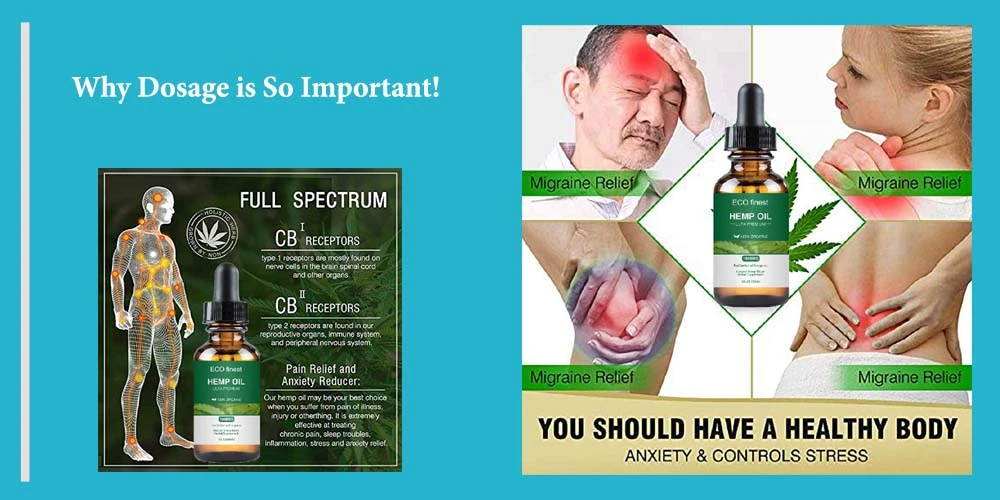
Why Dosage is So Important!
Myths About CBD Hemp Oil Side Effects, Cleared Up
The side effects of CBD hemp oil are misrepresented constantly — understated by enthusiasts and overstated by critics. Our team's job is to cut through both with what the evidence actually supports.
Myth: CBD Is Completely Side-Effect-Free
This claim appears frequently in product marketing and is flatly false. CBD is a biologically active compound. It interacts with the endocannabinoid system, modulates serotonin receptors, and inhibits liver enzyme activity. All of these interactions produce downstream effects. The side effects are real and consistently documented in peer-reviewed clinical literature. Dry mouth, fatigue, and digestive changes are not rare anomalies — they are reproducible findings across multiple independent trials.
Comparing plant compounds helps calibrate expectations. Just as our coverage of plants that contain caffeine illustrates that even universally accepted botanical compounds carry real physiological trade-offs, CBD hemp oil is no different. "Natural" has never meant consequence-free, and that framing serves no one well.
Myth: Hemp Oil and CBD Oil Are the Same Thing
These are entirely different products. Hemp seed oil is cold-pressed from hemp seeds, contains no cannabidiol, and has zero cannabinoid activity. It is nutritionally valuable — rich in omega fatty acids and plant sterols — but it will not produce any effect, positive or negative, associated with CBD hemp oil. Many budget products exploit this labeling confusion deliberately. Our team's recommendation is to look for "CBD" or "cannabidiol" explicitly stated on the label along with a milligram concentration. "Hemp extract" or "hemp oil" without that specificity is a red flag.
A Shocking Discovery About Quality Side Effects
Real-World Patterns in CBD Hemp Oil Side Effects
Clinical trial data is essential, but real-world use patterns tell a complementary story. Our team has tracked reports from herbal supplement users, home growers, and wellness communities over several years, and the patterns are consistent enough to be instructive.
Low-Dose vs. High-Dose Experiences
The dose-response relationship for CBD side effects is not linear. The profile changes meaningfully at specific thresholds:
5–25mg/day — Most people report mild relaxation, occasional dry mouth, and no significant disruption to daily function. This is the sweet spot for general wellness use.
25–75mg/day — Drowsiness becomes more consistent, especially in the first two weeks. Digestive effects increase. This range is most commonly associated with documented anxiety and sleep benefits.
75–150mg/day — Typically used for pain management or specific therapeutic protocols. Side effects are substantially more frequent and pronounced at this level. Our team considers medical supervision non-optional here.
Above 150mg/day — Primarily clinical territory. Liver enzyme monitoring is warranted. Consumer-grade products at this dose represent both poor economic value and elevated risk.
Drug Interactions in Practice
The CYP450 interaction is the most clinically significant concern in real-world use, and it affects a broader range of medications than most people expect:
Blood thinners (warfarin) — CBD can increase anticoagulant activity, raising bleeding risk to a clinically meaningful degree.
Antiepileptic drugs — Interaction effects vary by specific medication; some require dosage adjustment under physician supervision.
Antidepressants and antipsychotics — Elevated blood levels due to reduced liver clearance can amplify both therapeutic effects and unwanted side effects.
Immunosuppressants — A critical concern for transplant patients and anyone on long-term immune-modulating therapy.
Our team's recommendation is unambiguous: anyone on prescription medication should consult their prescribing physician before starting CBD hemp oil. This is not a cautionary hedge — it is a clinical necessity that no amount of product research or community anecdote can replace.
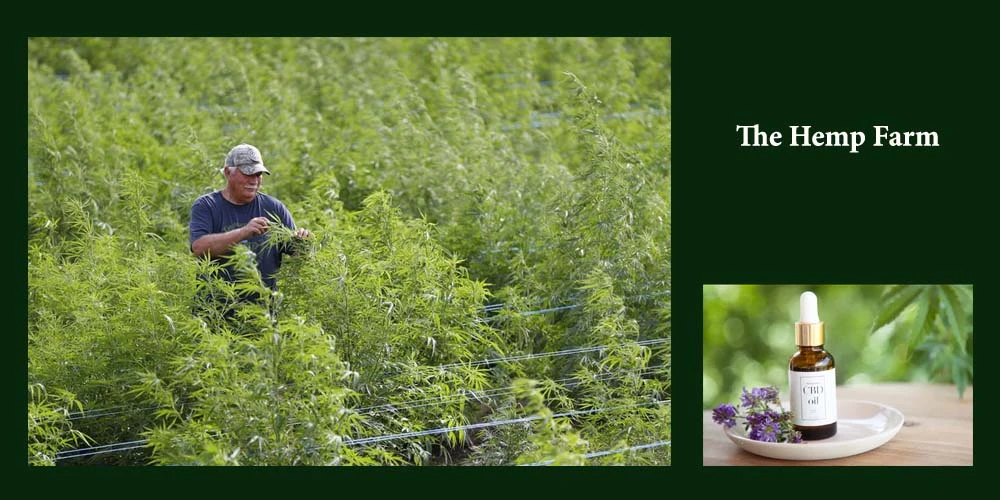
Hemp Farm
Product Quality, Cost, and How They Shape Side Effects
Our team's most consistent observation across CBD products is this: a significant portion of reported side effects trace back to product quality rather than CBD itself. Contaminants, mislabeled concentrations, and poorly selected carrier oils are responsible for many negative experiences that get incorrectly attributed to cannabidiol's pharmacology.
What Drives the Price of CBD Hemp Oil
Quality CBD hemp oil costs more for legitimate, traceable reasons:
Certified organic cultivation — Organic farming practices eliminate synthetic pesticide residues. That premium at the farm level carries through to the final product price.
CO₂ extraction equipment — Industrial CO₂ extraction systems represent significant capital investment. Manufacturers using them pass that cost to the consumer honestly.
Third-party laboratory testing — A comprehensive, multi-panel COA costs hundreds of dollars per production batch. Budget producers skip it to protect margins. The savings come directly out of consumer safety.
Accurate concentration labeling — Studies have found that a substantial percentage of budget CBD products contain significantly less cannabidiol than stated on the label. Inaccurate dosing means consumers cannot accurately manage their intake or predict side effects.
Red Flags in Budget Products
Products from the bottom of the price range consistently show these warning signs. Our team treats any of them as a disqualifier:
No COA, or a COA from an unaccredited or in-house laboratory
"Hemp oil" or "hemp extract" used without explicit milligram CBD content
Disease cure claims that violate FDA regulations — a reliable signal of regulatory indifference overall
No disclosed source country, farm, or cultivation standard
Solvent-based extraction method not disclosed or actively obscured
Just as our guide to organic fertilizers prepared at home demonstrates that input quality determines output quality in plant nutrition, cutting corners in CBD production consistently produces inferior and riskier end products. The principle is identical across plant science disciplines.
Frequently Asked Questions
Can CBD hemp oil cause liver damage?
At typical consumer doses — generally under 50mg per day — liver damage is not a documented risk for otherwise healthy individuals. The liver enzyme elevations observed in clinical trials occurred at doses of several hundred milligrams per day, far above what most people use. Anyone with pre-existing liver conditions or taking hepatically-metabolized medications should consult a physician before use and consider periodic liver enzyme monitoring if high-dose use is medically warranted.
Is CBD hemp oil safe for daily use?
Current evidence supports daily use at moderate doses — roughly 10–50mg — for healthy adults without significant medication interactions. Long-term safety data beyond two to three years of consistent use is still limited, which our team considers an honest caveat rather than a reason to avoid it entirely. Regular reassessment of dose and necessity every few months is the disciplined approach.
Does the quality of hemp source affect what side effects people experience?
Substantially, yes. Hemp's phytoremediation properties mean poorly sourced plants actively concentrate soil contaminants into their biomass. Products made from contaminated hemp have tested positive for heavy metals and pesticide residues that produce their own side effects entirely separate from CBD's pharmacology. This is a sourcing and quality control issue — and it is precisely why third-party Certificates of Analysis are non-negotiable when evaluating any CBD hemp oil product.
Next Steps
Request the Certificate of Analysis for any CBD hemp oil product currently in use or under consideration — verify cannabinoid potency accuracy, pesticide screening results, and heavy metal panels before the next dose.
List all current prescription medications and cross-reference with the CYP450 interaction categories covered above; bring that list to a pharmacist or prescribing physician before starting CBD hemp oil.
Begin at 5–10mg per day if starting fresh and maintain a simple daily symptom log for the first two weeks — energy, digestion, sleep quality, and mood are the key markers to track.
Reject any product labeled only as "hemp oil" or "hemp extract" without explicit milligram CBD content and a verifiable COA from an accredited independent laboratory.
Reassess dose and use case every three months — most people find their optimal dose and the side effect profile shifts over time, and regular evaluation prevents unnecessary long-term exposure above effective levels.
Truman Perkins is a Detroit-based SEO consultant who's been in the business for over a decade. He got his start helping friends and clients get their websites off the ground, and he continues to do so today. In his free time, Truman enjoys learning and writing about gardening - something he believes is a natural stress reliever. He lives with his wife, Jenny, and their twins in Detroit.






 rinjal