reviewed by Truman Perkins
Picture this: you've just spent an afternoon trimming your boxwood hedges into crisp, even shapes, only to notice the leaves look pale, sparse, and just a little sad. You head online to find a fertilizer, and suddenly you're staring at fifty options with confusing NPK ratios, granule sizes, and organic versus synthetic debates. Sound familiar? You're not alone — boxwoods are finicky feeders, and picking the wrong product can leave them worse off than before.
Boxwoods thrive when they get the right balance of nitrogen for leaf growth, potassium for root strength, and trace elements like iron and sulfur that keep their color deep and rich. The good news: the market has some genuinely excellent options in 2026, and this guide cuts through the noise to show you exactly which fertilizers deliver. Whether you're nursing a mature hedge or planting fresh specimens this season, you'll find the right pick here. Check our gardening reviews section for more detailed guides on garden products.
We've tested and evaluated seven of the top-rated boxwood fertilizers available today — covering organic and synthetic options, granules and spikes, slow-release and fast-acting formulas. Each one is broken down by real performance, not just marketing language. Let's get into it.

Contents





If you're looking for one product that consistently delivers results on boxwoods year after year, Espoma Holly-Tone is the benchmark. Its 4-3-4 NPK ratio is deliberately moderate — not the kind of nitrogen bomb that causes a flush of weak, disease-prone growth, but a steady, sustained feed that builds genuine plant health over time. The formula includes 5% sulfur, which lowers soil pH gradually. That matters because boxwoods perform best in slightly acidic soil between 6.0 and 6.8, and most garden soils creep alkaline over years of watering and weathering.
What sets Holly-Tone apart from generic granular fertilizers is the Bio-tone formula — a blend of beneficial microbes that work in the soil to break down organic matter and make nutrients more bioavailable to plant roots. You're not just feeding the plant; you're feeding the soil ecosystem. This translates to longer-lasting results per application compared to straight synthetic granules. The 4 lb bag covers a decent area for smaller hedges, and the product is safe around children, pets, and beneficial insects once watered in. Apply in early spring and again in late spring for best results with mature boxwood hedges.
One thing to note: organic fertilizers like Holly-Tone take 2–4 weeks before you see visible response, since microbes need time to process the nutrients. If your boxwoods are severely deficient, you may want a faster-acting supplement for the first application. But for routine seasonal feeding, this is your go-to. It pairs well with quality compost — if you haven't mulched with aged organic matter, check out our guide to the 11 best bagged compost options for a complete soil improvement plan.
Pros:
Cons:
Osmocote has earned its reputation as one of the most reliable slow-release synthetic fertilizers on the market, and the Plus Outdoor & Indoor formula brings 11 essential nutrients together in a single granule application that feeds for up to six months. The resin coating on each granule is the key engineering here — it regulates nutrient release based on soil temperature. When temperatures rise and plant metabolism increases, more nutrients are released. When it's cold and plants slow down, so does the feed. This temperature-responsive release mechanism means your boxwoods get nutrients precisely when they need them.
For boxwood specifically, the six-month feed window is a significant convenience advantage. One application in early spring carries you through the entire growing season without reapplication. The formula includes not just the major NPK macronutrients but also calcium, magnesium, sulfur, boron, copper, iron, manganese, molybdenum, and zinc — a comprehensive micronutrient profile that organic granulars often lack. This makes it particularly valuable if your soil has known deficiencies or you're growing boxwoods in containers where nutrients leach faster with irrigation.
The 2 lb bag is compact but efficient — a little goes a long way with Osmocote. Scatter it on the soil surface and water it in; no digging or mixing required. It works in all growing conditions, including containers, raised beds, and in-ground garden situations. The only real trade-off versus organic options is that you're not building long-term soil biology. Osmocote feeds the plant directly but doesn't enhance soil structure or microbial activity the way Bio-tone does. For established hedges where soil health is already good, that's a reasonable trade.
Pros:
Cons:
When you're putting new boxwoods in the ground or moving established plants to a new location, the first few weeks of root establishment are critical. Bio-Tone Starter Plus is engineered specifically for this window — the phase where transplant shock is highest and roots need every advantage to colonize new soil. Its 4-3-3 formula with 5% calcium provides a strong foundation, but the real differentiator is the dual mycorrhizal inoculant: it contains both endo and ecto mycorrhizae, two distinct types of beneficial fungi that colonize root systems and dramatically expand a plant's effective root surface area.
Mycorrhizal fungi form symbiotic networks that help plants access water and nutrients far beyond the physical root zone. For boxwoods going into new soil — especially compacted or nutrient-depleted ground — this biological boost is far more valuable than extra NPK alone. You mix the granules thoroughly with the soil used to backfill the planting hole, positioning the beneficial organisms exactly where new roots will encounter them. This is not a broadcast-and-water product; it needs to be in the root zone to work properly.
The 8 lb bag is generous and well-priced relative to the specialized function it serves. This isn't a product you'll use every season — it's your go-to for planting day. Once your boxwoods are established and the mycorrhizal network is in place, switch to Holly-Tone for ongoing seasonal feeding. Together, these two Espoma products cover both stages of boxwood nutrition from planting through maturity. If you're also managing soil amendment alongside planting, understanding the benefits of adding worms to your garden ecosystem can complement your fertilizer strategy significantly.
Pros:
Cons:
If measuring, spreading, and watering granules into the lawn feels like more effort than you want to commit to, Miracle-Gro's tree and shrub spikes solve that problem entirely. You press them into the soil at the drip line of your boxwoods, and they release nutrients slowly, continuously, and directly to the root zone with zero further action required. The drip-line placement is intentional — it puts the nutrients right where feeder roots actively grow, rather than broadcasting nutrients across an area most roots never reach.
These spikes are formulated for acid-loving plants including azaleas, hydrangeas, magnolias, and boxwoods, so the pH considerations are built into the product. The 12-count pack covering 3 lbs is enough for several medium-sized shrubs or one large established hedge. You get slow-release color and foliage support with none of the application complexity. This is the right product for gardeners who want their boxwoods fed without turning fertilizing into a project.
The trade-off is that spikes create nutrient concentration points rather than uniform soil distribution. If you have a dense hedge with roots everywhere, you may need more spikes than the package suggests to get even coverage. Spikes also don't address soil pH the way sulfur-containing granulars do — if your soil is already too alkaline, this product feeds the plant but doesn't solve the underlying chemistry issue. Use a soil test first. That said, for straightforward low-maintenance feeding on shrubs with reasonably healthy soil, this is as simple as fertilizing gets in 2026.
Pros:
Cons:
Milorganite has been produced by Milwaukee Metropolitan Sewerage District since 1925, and it remains one of the most trusted slow-release fertilizers on the market for one standout reason: it virtually cannot burn plants, even in hot, dry conditions. The 6-4-0 formula contains no salt — and salt is the mechanism by which almost every fertilizer burn occurs. When nitrogen salts contact moist leaves or dry soil with low water availability, osmotic damage causes leaf scorch. Milorganite sidesteps this entirely because its nitrogen is locked in organic complexes that release slowly through microbial breakdown.
The 32 lb bag is outstanding value, covering large areas of lawn and garden beds in one purchase. For boxwood hedges that border lawn areas, Milorganite doubles as a lawn fertilizer, simplifying your product list. The organically complex iron in Milorganite is another differentiator — it greens plants without staining concrete or hardscaping the way iron sulfate does. If your boxwoods sit alongside walkways or patios, this matters more than you'd expect.
The 6-4-0 ratio skews nitrogen-heavy with no potassium, which is fine for lush-leafed shrubs in established beds but less ideal if your boxwoods are showing root stress or drought sensitivity. Potassium builds root strength and drought tolerance, so if you're in a dry region or your soil is potassium-deficient, pair Milorganite with a potassium supplement or alternate with a more balanced product. Proper watering technique matters too — if you're applying fertilizer across large areas, a quality backpack sprayer can help you apply liquid supplements evenly alongside your granular feed.
Pros:
Cons:
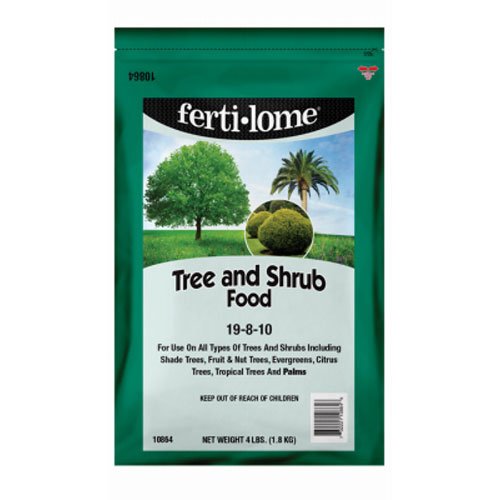
When your boxwoods have gone pale, thin, or yellow and you need visible recovery fast, Fertilome 19-8-10 is the high-nitrogen option that delivers. The 19% nitrogen content is among the highest in any granular shrub fertilizer, and the penetrating action formula is scientifically designed to move nutrients directly to the feeder roots without requiring you to dig holes or use injection equipment. You apply it at the soil surface and it works its way down to where active uptake happens.
The 19-8-10 ratio is aggressive — more appropriate for nutrient-depleted plants that need restoration than for routine feeding of healthy shrubs. Overuse can cause excessive leafy growth at the expense of plant structure, and repeated heavy nitrogen applications can make boxwoods more susceptible to certain fungal diseases. Use this product as a corrective measure or a spring jump-start, then transition to a more moderate formula like Holly-Tone for the rest of the season.
At 4 lbs per bag, this is a targeted product rather than a large-scale solution. It's precise, effective, and best treated as a tool for specific situations rather than a year-round staple. If you have a section of your hedge that got damaged, struggled over winter, or never recovered from a hard drought, Fertilome 19-8-10 is what brings it back. Apply once, water thoroughly, and give it three to four weeks before assessing. The improvement in color and density is typically quite visible within that window.
Pros:
Cons:
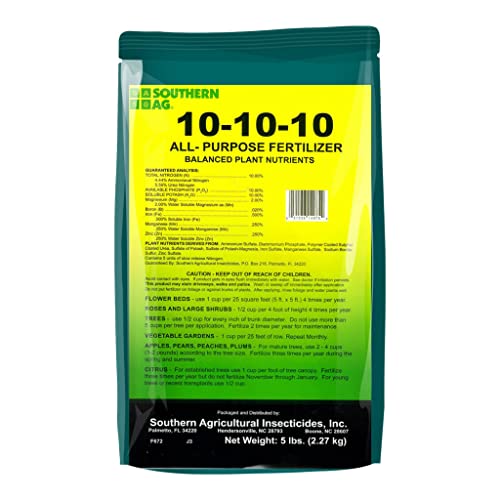
Sometimes simplicity and affordability are the right answer. Southern Ag's 10-10-10 granular fertilizer is a straightforward, balanced product with equal parts nitrogen, phosphorus, and potassium — no frills, no proprietary coatings, no biologicals. What it offers is a clean, homogenous granular formulation with minor elements included, at a price point that makes it easy to apply liberally without budget anxiety. The perfectly balanced 10-10-10 ratio is the default choice when you don't know what your soil specifically needs and haven't done a soil test.
For boxwoods in particular, the equal NPK split is somewhat generic — boxwoods are not heavy feeders and respond better to moderate nitrogen than equal-ratio broad-spectrum fertilizers. But for gardeners managing a diverse landscape where boxwoods share beds with other shrubs, perennials, and ornamentals, one 10-10-10 product simplifies the entire fertilizer cabinet. Apply it to the whole bed, use the right rate per shrub type, and you've covered everything adequately if not optimally.
The 5 lb bag covers a reasonable area and the uniform granule size means consistent spread whether you're applying by hand or with a spreader. The minor elements compensate partly for the lack of specialized additives. According to The Old Farmer's Almanac, balanced fertilizers like 10-10-10 are best used as a baseline when you plan to supplement with targeted products for specific deficiencies — a sound strategy when using this product alongside more specialized options from this list.
Pros:
Cons:
The three numbers on every fertilizer label — nitrogen (N), phosphorus (P), and potassium (K) — tell you the relative percentages of each primary nutrient. For boxwoods, nitrogen is the most important driver of leaf density and color, but too much nitrogen causes rapid, weak growth that's more susceptible to disease and winter damage. A moderate nitrogen formula in the 4–10% range is ideal for routine seasonal feeding. Phosphorus supports root development — most critical at planting time or after transplanting. Potassium builds drought tolerance and disease resistance in established plants.
Boxwoods are acid-loving, with optimal soil pH between 6.0 and 6.8. Fertilizers that include sulfur — like Espoma Holly-Tone with its 5% sulfur content — address both nutrition and soil chemistry simultaneously. If you're using a sulfur-free product, you may need to address pH separately with elemental sulfur or acidifying mulch.
Organic fertilizers feed the soil ecosystem alongside the plant. They release nutrients slowly through microbial decomposition, which means more consistent nutrition over a longer period and no risk of salt burn. They also build soil structure, water retention, and microbial diversity over multiple seasons. The trade-off is a slower visible response — typically 2–4 weeks before you see improvement — and higher cost per pound in most cases.
Synthetic fertilizers deliver nutrients directly and immediately to plant roots. They're more precise, faster-acting, and often more cost-effective for large-scale application. The downside is that they don't improve soil health and carry a higher risk of burning plants if over-applied. Slow-release synthetic products like Osmocote bridge this gap by controlling release rate, giving you some of the safety benefits of organic products with the consistency of synthetic chemistry.
Your choice depends on your priorities. For long-term soil health and sustainable garden management, organic wins. For fast correction of visible deficiency or low-maintenance convenience, slow-release synthetic is the practical answer.
Granular fertilizers are the most common format for boxwoods and offer good flexibility — you can broadcast them across the soil surface or incorporate them at planting. Spikes eliminate spreading entirely but create nutrient concentration points that may not distribute evenly under large hedges. Water-soluble liquid fertilizers feed fastest but require more frequent application and carry higher burn risk if applied to dry soil.
Timing matters as much as formula. Spring is the primary feeding window — apply just as new growth begins to emerge, typically late March through early May depending on your climate zone. A second application in late spring (not summer — summer feeding encourages late growth that won't harden before frost) rounds out the season. Avoid fertilizing within six weeks of the first expected frost date. Fall applications of fertilizer intended for root development only (low nitrogen, higher potassium and phosphorus) can support winter hardiness without stimulating vulnerable late growth.
The single most valuable investment you can make before choosing a fertilizer is a proper soil test. A basic NPK and pH test from your local cooperative extension costs very little and tells you exactly what your soil already has in abundance and what it lacks. Over-applying potassium to already potassium-rich soil wastes money and can cause nutrient lockout, preventing plants from absorbing calcium and magnesium. Over-acidifying soil that's already at the right pH damages beneficial microbes and creates its own plant problems.
Soil tests take the guesswork out of fertilizer selection entirely. If your pH is already at 6.5 and your nitrogen is adequate, you don't need Holly-Tone's sulfur content — Osmocote's 11-nutrient formula or Milorganite's nitrogen-focused feed might be a better match. Test first, then buy. You'll spend less money and get better results. For comprehensive soil improvement beyond fertilizing, pairing any of these products with quality compost amplifies results significantly.
Established boxwoods do best with two applications per year: one in early spring as growth resumes and one in late spring. Avoid summer and fall feeding for most formulas — summer encourages tender new growth vulnerable to heat stress, and fall feeding can push growth that won't harden before winter. If you're using a six-month slow-release formula like Osmocote, a single spring application is sufficient for the entire season.
Yes, and it's a common mistake. Over-fertilizing boxwoods causes excess leafy growth that's weak, disease-prone, and likely to suffer winter dieback. High-nitrogen formulas applied too frequently can also raise soil pH and cause leaf scorch from salt buildup. Always follow label rates and err on the conservative side. A soil test before each season helps you apply only what your soil actually needs.
Boxwoods perform best in slightly acidic soil with a pH between 6.0 and 6.8. Below pH 5.5, nutrient availability drops sharply and root damage occurs. Above pH 7.0, iron and manganese become locked in the soil and unavailable to the plant, causing yellowing leaves. Fertilizers that include sulfur — like Espoma Holly-Tone — gradually lower pH over time and help maintain the ideal range for acid-loving shrubs.
Both work well when applied correctly. Organic fertilizers build long-term soil health and are gentler on the plant with near-zero burn risk, but they act slowly. Synthetic slow-release fertilizers like Osmocote deliver precise, sustained nutrition more efficiently and are ideal for busy gardeners. For the best long-term outcomes, many experienced gardeners use organic formulas for routine seasonal feeding and synthetic options for targeted correction of specific deficiencies.
The optimal window for the 2026 growing season is early to mid-April in most temperate zones, once soil temperatures have risen above 50°F and new growth is beginning to emerge. A second application in late May or early June gives the plant a nutritional boost before the peak growth period. Do not apply fertilizer after August 1st in cold climates, as this risks pushing late growth that won't harden before the first frost.
Not always — it depends on your existing soil pH. If a soil test shows your garden soil is already in the 6.0–6.8 range, a general-purpose balanced fertilizer can be used effectively. But if your soil trends alkaline (pH above 7.0) or you've never tested it and your boxwoods show signs of yellowing or poor density, an acid-specific product with sulfur is the safer choice. It addresses both nutrition and soil chemistry in one application.
Your boxwoods are a long-term investment in your landscape, and the right fertilizer makes a visible, lasting difference in their density, color, and health season after season. Start with a soil test, match your product to what your plants and soil actually need, and apply at the right time — those three steps will get you better results than any single product choice alone. Pick your fertilizer from this list with confidence, get it into the ground this spring, and give your boxwoods the foundation they deserve in 2026.
 |
 |
 |
 |

About Truman Perkins
Truman Perkins is a Detroit-based SEO consultant who's been in the business for over a decade. He got his start helping friends and clients get their websites off the ground, and he continues to do so today. In his free time, Truman enjoys learning and writing about gardening - something he believes is a natural stress reliever. He lives with his wife, Jenny, and their twins in Detroit.


Get new FREE Gifts. Or latest free growing e-books from our latest works.
Disable Ad block to reveal all the links. Once done, hit a button below
|
|
|
|
 rinjal