reviewed by Truman Perkins
You're standing in the lawn care aisle — or scrolling through page after page of fertilizer bags online — and somehow every product claims to be the best. They all promise lush, thick, green grass, but the formulas, application rates, and price points couldn't be more different. Picking the wrong one doesn't just waste money; it can scorch your lawn or feed it the wrong nutrients at the wrong time of year.
The good news is that lawn fertilization is a well-understood science, and once you know what your grass actually needs, the right product becomes obvious. In 2026, the market has matured enough that there are clear leaders in every category — from organic slow-release options to fast-acting liquid boosters to fall winterizers. Whether you're nursing a patchy lawn back to health or maintaining an already-solid stand of turf, there's a product on this list that fits your situation. We've also put together a buying guide below that walks you through NPK ratios, release rates, and application timing so you can shop with confidence.
If you're building out a complete outdoor care setup, don't miss our coverage of the best fertilizer for grass and the best fertilizers for vegetable gardens — both updated for 2026. Now let's get into the picks.

Contents
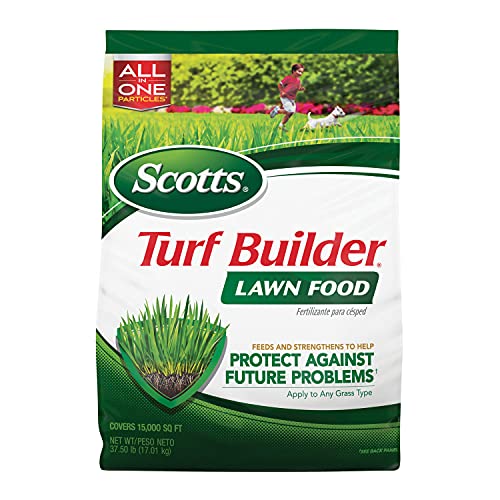




Scotts Turf Builder is the product most homeowners reach for first, and for good reason. This Northern formula covers a massive 15,000 square feet per bag, making it one of the most cost-effective options available for large lawns. It's formulated specifically for cool-season grasses like Kentucky bluegrass, fescue, and ryegrass — the turf types that dominate northern climates. The core benefit is root development: Scotts engineers the nutrient ratio to push energy downward, strengthening root systems so your lawn can absorb water and nutrients more efficiently even through dry spells.
You can apply this fertilizer to a wet or dry lawn, which makes it genuinely convenient. There's no need to time your application around rain or a fresh watering session. The granules are fine enough to settle into the turf canopy quickly without sitting on leaf blades for days. If you've been dealing with a lawn that greens up in spring but struggles through summer heat, consistent Scotts Turf Builder applications through the growing season will address the underlying root weakness driving that pattern. It's not the flashiest product on this list, but it delivers reliable, measurable improvement over multiple applications.
One caveat: Scotts Turf Builder is a synthetic fertilizer, which means it delivers nutrients fast but doesn't improve soil biology over time. If your soil is compacted or nutrient-depleted at a deeper level, you'll want to pair it with a soil conditioner or organic amendment. For straightforward feeding of a lawn that's already in decent shape, though, this is your workhorse product.
Pros:
Cons:
The Andersons PGF Complete is what lawn care professionals reach for when they want consistent, repeatable results — and now you can use the same product on your own turf. The 16-4-8 NPK ratio is well-balanced for most lawns through the active growing season, providing meaningful nitrogen for shoot growth, phosphorus for root establishment, and potassium for overall stress tolerance. What separates PGF Complete from consumer-grade products is the particle engineering: the granules are super-fine, which means you get twice the particles per square foot compared to standard granular fertilizers. More particles per square foot translates directly to more even distribution and fewer streaks or bare spots.
The nitrogen system here is particularly well designed. PGF Complete uses both quick-release and slow-release nitrogen, so you get an immediate green-up response within days of application plus sustained feeding for up to 8 weeks. You're not chasing that same green with repeat applications every few weeks. The inclusion of iron, micronutrients, and Humic DG (humic acid in a dispersible granule form) rounds out the package — iron drives deep color, micronutrients address deficiencies that NPK alone can't fix, and humic acid improves soil structure and nutrient uptake efficiency.
This is a 40-pound bag, so handling it requires some effort, but the coverage per bag justifies the bulk. If you're serious about your lawn and tired of products that seem to underdeliver on their promises, PGF Complete is the upgrade worth making in 2026. It's particularly effective on warm-season grasses like Bermuda and Zoysia that need precise nutrient management to thrive.
Pros:
Cons:
Milorganite has been around since 1926 and it's still one of the most trusted organic fertilizers on the market — and for 2026, it remains a top pick for homeowners who want results without synthetic chemistry. Made from heat-dried microbes from Milwaukee's water reclamation process, Milorganite feeds your lawn with a 6-4-0 NPK formula that releases nutrients slowly as soil microbes break down the organic matter. The burn-proof formula is Milorganite's signature advantage: because it contains virtually no salts, you literally cannot over-apply it and scorch your lawn the way you can with synthetic fertilizers. That makes it ideal for lawns with patchy, vulnerable areas.
The iron content in Milorganite is what drives its reputation for color. Unlike synthetic iron salts that stain concrete and driveways a rust color, Milorganite delivers organically complexed iron that feeds grass a deep, sustained green without any surface staining concerns. Apply it along a driveway or sidewalk edge and you won't be left cleaning orange streaks off hardscaping. The 32-pound bag covers roughly 2,500 square feet, which is enough for a standard residential lawn in most American suburbs.
The tradeoff is speed. Milorganite is a slow-release product — you won't see the dramatic 3-day green-up that some synthetic options offer. If your lawn needs immediate color for a specific event, pair it with a faster-acting iron supplement. But as a foundational fertilizer you apply 4–5 times per year, Milorganite builds soil health over time in a way that synthetic products simply don't. It's also worth noting that lawns fed with Milorganite consistently show better drought tolerance in summer — a real-world benefit that's easy to overlook on a spec sheet. If you also grow vegetables or flowers, our guide to vegetable garden fertilizers covers how organic slow-release options compare in that context.
Pros:
Cons:
If you need your lawn looking sharp in three days, Scotts Green Max is the product designed specifically for that job. The 2-in-1 formula combines standard lawn fertilizer with a concentrated iron supplement, and the combination produces noticeably darker, richer green color faster than almost any other granular product you'll find. The guaranteed 3-day green-up claim is backed by real iron content — not just nitrogen-driven blade elongation. You're getting true color enhancement, which is why this product is so popular before outdoor events, home sales, or any situation where first impressions of the lawn matter.
Scotts guarantees the formula won't stain driveways, walkways, or concrete structures when used as directed. That's a meaningful promise, because iron-containing fertilizers have a well-earned reputation for leaving rust-colored marks on hardscaping. The coverage area of 5,000 square feet makes it a better fit for smaller suburban lots than the Scotts Turf Builder Northern on this list. If you have a large lawn, plan to buy multiple bags or use Green Max strategically on high-visibility areas while relying on the larger bag for the rest.
One thing to note: Scotts Green Max is a targeted tool, not a complete nutritional program. The iron and fast-release nitrogen drive short-term aesthetics well, but you'll still want a full-season fertilizer program that includes potassium and phosphorus for overall grass health. Use Green Max for color enhancement alongside your regular fertilization schedule rather than as a standalone replacement.
Pros:
Cons:
Liquid fertilizers occupy a distinct niche in the lawn care world, and Simple Lawn Solutions has built a strong reputation in that space. The Extreme Grass Growth formula is a concentrated liquid with humic acid that's designed to maximize both vertical and lateral grass growth — meaning thicker coverage across bare patches, not just taller blades. The humic acid component is the key differentiator here: it improves soil cation exchange capacity, which essentially makes nutrients more bioavailable to grass roots even in poor or compacted soils. This makes it particularly valuable as a starter fertilizer for new sod or seeding projects where root establishment is the immediate priority.
The 32-ounce bottle comes with a hose-end sprayer ready for immediate use, which removes all the friction associated with spreaders and calibration. Attach it to your hose, turn it on, and walk your lawn. For homeowners without a broadcast spreader or those dealing with sloped areas where granular application is awkward, the liquid format is a genuine practical advantage. The nitrogen and phosphorus formula targets the growth-driving nutrients specifically, making it a focused tool rather than a comprehensive nutrition program.
Use this product for new lawn establishment, overseeding applications, and repair of thin or bare patches throughout the 2026 growing season. It's not designed to replace your full-season fertilization program, but as a targeted application for problem areas or new growth stimulation, it performs well. The concentrated formula means a single bottle goes further than the 32-ounce size might suggest.
Pros:
Cons:
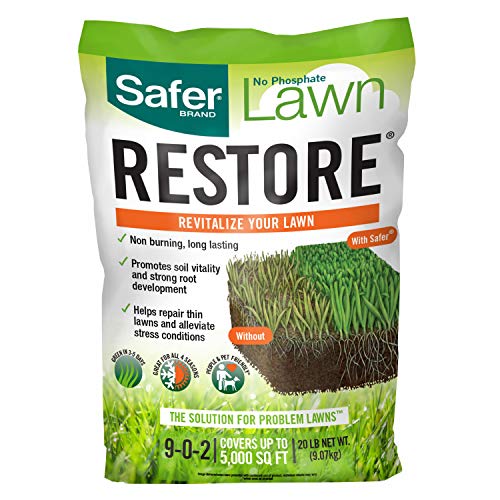
Safer Brand Lawn Restore positions itself as the natural fertilizer that doesn't compromise on speed — and it largely delivers on that claim. With a 9-0-2 NPK ratio, this is a nitrogen-heavy formula with potassium support, designed specifically to revitalize thin or struggling lawns without the burn risk that comes with synthetic high-nitrogen products. The soil vitality angle is what makes Lawn Restore worth considering: unlike synthetic formulas that feed the grass plant directly, this product feeds the soil ecosystem, supporting microbial activity that unlocks nutrients naturally over time. The result is a healthier growing environment, not just a temporarily green lawn.
The visible results come faster than you might expect from a natural fertilizer — most users report greening within 3 to 5 days of application. That's because Safer Brand has engineered the nitrogen release to be accessible relatively quickly, even from natural sources. The formula is derived from plant and animal proteins that break down in soil without the salt load that causes burning. You can apply it in summer heat or dry conditions without worrying about stress-induced damage.
Coverage is 5,000 square feet per bag, putting it in the mid-range for residential lawns. The zero-phosphorus formulation makes it appropriate for use in areas where phosphorus runoff is a regulatory concern — many municipalities restrict phosphorus in fertilizers applied near water bodies, and Lawn Restore sidesteps that issue entirely. For homeowners who want organic-aligned lawn care without sacrificing early results, this is the product that threads that needle most effectively. You can explore similar principles in our guide to best indoor plant fertilizers if you're managing plants both inside and out.
Pros:
Cons:
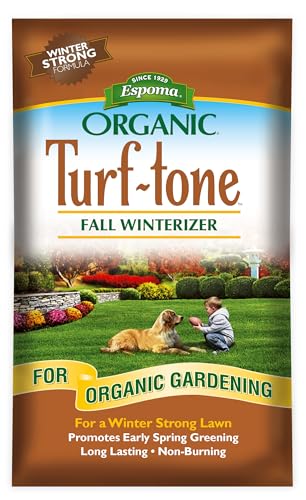
Fall fertilization is the most important application of the entire lawn care calendar, and Turf-Tone's Fall Winterizer is built specifically for that window. The 8-0-5 NPK ratio reflects exactly what grass needs heading into dormancy: nitrogen to fuel root energy reserves and potassium to harden cell walls against cold stress, with no phosphorus to redirect energy toward growth that won't survive the winter anyway. The elevated potassium level is the key feature here — it's what allows your lawn to enter dormancy stronger, recover from summer heat damage, and green up earlier and more vigorously the following spring.
Turf-Tone is a premium natural and organic formula made from the finest natural ingredients without sludges or synthetic chemicals. The organic nitrogen releases slowly as soil temperatures and microbial activity allow, which means it won't push tender late-season growth that would be vulnerable to frost damage. Instead, it stores energy in the root system where it can be drawn on during spring green-up. Won't burn lawns, won't leach out of soil — you apply it and let the biology work.
The 30-pound bag covers up to 5,000 square feet and works across all major grass types: fescue, bluegrass, ryegrass, St. Augustine, and Zoysia are all specifically listed. Apply it in fall — typically September through November depending on your region — using a drop or broadcast spreader. If you're also managing lawn thatch buildup, pairing this application with a good dethatching session before winter is excellent practice; check out our coverage of the best lawn dethatchers to find the right tool for that job. This is the fall application that separates lawns that look tired and patchy in spring from the ones that seem to leap back to life the moment temperatures rise.
Pros:
Cons:
Every fertilizer bag displays three numbers separated by dashes — this is the NPK ratio, representing the percentage by weight of nitrogen (N), phosphorus (P), and potassium (K). Nitrogen drives green leaf growth and is the number you'll rely on most for lawn applications. Phosphorus supports root development and is particularly valuable for new lawn establishment, though many established lawns don't need much supplemental phosphorus. Potassium strengthens overall plant health, disease resistance, and stress tolerance from heat, cold, and drought.
For a healthy established lawn in active growth, you want a nitrogen-forward ratio — something like 16-4-8 or 32-0-10. For fall applications, prioritize potassium to harden the grass against winter. For new seeding or sod installation, bump up phosphorus to drive root establishment. Most lawn fertilizer programs use different formulations at different times of year rather than one product year-round.
According to the EPA's guidance on nutrient pollution, over-application of phosphorus is one of the leading contributors to waterway contamination — so know your soil's existing phosphorus level before adding more. A basic soil test from your local extension office will tell you exactly what's needed.
This is one of the most important choices you'll make when selecting a fertilizer. Fast-release nitrogen (typically urea or ammonium nitrate in synthetic products) delivers nutrients immediately and produces visible green-up within a few days. The downside is that it exhausts quickly — often within 3–4 weeks — and can burn grass if over-applied, especially in hot or dry conditions.
Slow-release nitrogen (polymer-coated granules in synthetics, organic proteins in natural products) feeds steadily over 6–12 weeks. You get sustained color and growth without the feast-or-famine pattern that fast-release nitrogen creates. Most high-quality fertilizers combine both: an immediate-release fraction for quick response plus a slow-release fraction for sustained feeding. The Andersons PGF Complete is a good example of this dual-source approach.
Organic fertilizers like Milorganite and Safer Brand Lawn Restore feed soil biology rather than directly injecting nutrients into the plant. Over multiple seasons, this improves soil structure, water retention, and the overall health of your growing environment. They're also inherently burn-proof because they lack the salt concentration that causes synthetic overapplication damage.
Synthetic fertilizers deliver nutrients in immediately plant-available form, producing faster and more dramatic short-term results. They're more predictable in their NPK delivery and generally more cost-effective per nutrient unit. The trade-off is that they don't build soil health and can disrupt soil biology with repeated use over many years. For most homeowners, a hybrid approach — organic products for most applications plus targeted synthetic use when speed matters — delivers the best of both worlds. This principle applies just as much to container gardening; see our guide to tomato fertilizers for a parallel look at organic vs. synthetic trade-offs.
Calculate your lawn's square footage before purchasing. Applying too much fertilizer doesn't produce better results — it produces burning, runoff, and wasted money. Apply too little and you'll see uneven color and patchy growth. Most bags cover between 5,000 and 15,000 square feet; divide your total lawn area by the bag's coverage rating to determine how many bags you need per application.
Granular fertilizers require a spreader for even application. A broadcast spreader covers ground quickly and works well for large open lawns. A drop spreader gives you precise control along edges, driveways, and garden borders. Liquid fertilizers eliminate spreader requirements entirely but generally cover less ground per application. Match the format to your lawn's layout and your equipment situation.
Most lawns benefit from 4–5 fertilizer applications per year. A typical schedule for cool-season grasses runs early spring, late spring, early fall, and late fall. Warm-season grasses like Bermuda and Zoysia grow more actively in summer, so their heavy feeding happens in May through August with a lighter fall application. Don't fertilize dormant grass — nutrients applied when the plant isn't actively growing will leach away before roots can use them.
Early morning is ideal for most fertilizer applications. Temperatures are cooler, grass blades are often still damp with dew, and the risk of heat-stress burn is minimized. Avoid applying granular fertilizers to dry grass in midday heat, particularly with fast-release synthetic products. After application, water the lawn thoroughly if rain isn't expected within 24 hours to activate the granules and move nutrients into the soil.
Weed-and-feed combination products exist for exactly this purpose, but standalone fertilizer and herbicide products generally should not be applied simultaneously. Most pre-emergent herbicides work best in early spring before fertilizer application, and many post-emergent herbicides require dry conditions and mowing delays that conflict with fertilizer watering requirements. Read both product labels carefully and stagger applications by at least two weeks when using separate products.
With granular fertilizers, keep pets off the lawn until after the first watering or rain has activated the granules and the lawn surface is dry — typically 24 to 72 hours. Organic fertilizers like Milorganite are generally considered safer for pets than synthetic alternatives, though no fertilizer product should be ingested in quantity. Liquid fertilizers should dry completely before pets return to the lawn. Always check the specific product label for pet safety guidance.
Fertilize after mowing. Mowing immediately after fertilization can spread granules or liquid product onto driveways and hardscaping, and freshly cut grass blades have open wounds that increase the risk of fertilizer burn. Wait at least 24–48 hours after application before mowing. For granular products that need watering in, let the lawn dry after irrigation before running a mower over it.
A soil test reveals your lawn's pH level plus existing nutrient concentrations of nitrogen, phosphorus, and potassium. This information prevents you from adding nutrients your soil already has in abundance — a common waste of money and a contributor to runoff pollution. Most lawns grow best at a pH between 6.0 and 7.0; outside that range, nutrients become less available to grass roots regardless of how much fertilizer you apply. Soil tests are available through local cooperative extension offices for under $20 and are well worth doing every 2–3 years. Browse our full gardening reviews section for tools that support a complete lawn and garden care routine.
The right lawn fertilizer isn't the one with the highest nitrogen number or the biggest bag — it's the one that matches your grass type, your season, and your goals for that specific application. Whether you're building a complete year-round feeding program around The Andersons PGF Complete, going organic with Milorganite, or targeting a fast fall root charge with Turf-Tone Winterizer, every product on this list gives you a clear, reliable path to a healthier, greener lawn in 2026. Pick the product that fits your situation, follow the application rates on the label, and give your lawn the consistent care it needs — the results will follow.
 |
 |
 |
 |

About Truman Perkins
Truman Perkins is a Detroit-based SEO consultant who's been in the business for over a decade. He got his start helping friends and clients get their websites off the ground, and he continues to do so today. In his free time, Truman enjoys learning and writing about gardening - something he believes is a natural stress reliever. He lives with his wife, Jenny, and their twins in Detroit.


Get new FREE Gifts. Or latest free growing e-books from our latest works.
Disable Ad block to reveal all the links. Once done, hit a button below
|
|
|
|
 rinjal