reviewed by Truman Perkins
India accounts for over 80% of the world's coco peat supply, yet most home gardeners here still haven't moved past a bag of regular potting mix from the nursery. If you've been searching for the best coco peat in India for your terrace garden, raised beds, or container plants, you're in the right place. Coco peat — also called coir pith — is the fibrous, spongy material left over after coconut husks are processed for fiber. It's sustainable, renewable, and genuinely effective as a growing medium. If you're serious about plants, herbs, and farming, coco peat is one soil amendment worth learning properly before you spend money on it.
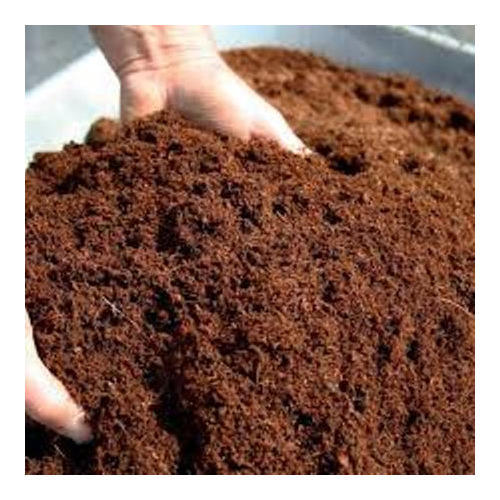
The Indian market has a wide range of coco peat options: compressed blocks, loose powder, granular formats, and combination packs with vermicompost or other amendments. Each format has a specific use case, and choosing the wrong one can affect your plants more than you might expect. Price, quality, and EC (electrical conductivity) levels vary significantly between brands — and those differences genuinely matter for sensitive crops.
This guide covers what coco peat is, where it comes from, its real strengths and weaknesses, price comparisons by format and quality tier, and how to choose the right product based on your experience level. By the end, you'll have a clear picture of what to look for and what to avoid.
Contents
Coco peat is the spongy, fibrous byproduct derived from the outer husk of coconuts. When coconut fiber (coir) is extracted for rope, mats, and brushes, the remaining pith is dried and processed into the growing medium you see at nurseries and on e-commerce platforms. India — particularly Tamil Nadu, Kerala, and Karnataka — dominates global coco peat production because of the enormous volume of coconuts processed in these states year-round.
The material holds water exceptionally well while still draining freely enough to prevent waterlogging. Its natural pH sits between 5.5 and 6.5, which suits a wide range of vegetables, herbs, and ornamentals. It's also significantly more resistant to mold and pests compared to traditional peat moss — a meaningful advantage in India's humid growing conditions. Unlike peat moss, which is harvested from ecologically sensitive bogs, coco peat is a genuine agricultural byproduct with a low environmental footprint.

You'll encounter several forms when shopping online or at a local garden center:
When buying coco peat in India, these specifications matter — especially if you're growing anything beyond basic ornamentals:
If you're pairing coco peat with organic fertilizers, the guide on best vermicompost brands in India covers options that blend well with coir-based mixes. For a deeper look at how organic inputs break down and interact with growing media, the guide on composting tea bags offers useful context on organic matter decomposition that applies to any mixed-media garden.
Coco peat is not a magic fix. It has genuine strengths that make it valuable for Indian gardeners, and honest limitations that require planning. Here's a balanced look at both sides.
Always check EC before using coco peat for sensitive crops like tomatoes or strawberries — high-sodium batches can stunt growth even when the pH looks right on paper.
A few characteristics can catch you off guard if you're not expecting them:
If you're building raised beds and want to understand full soil composition beyond coco peat, the guide on soil mixes for raised beds offers detailed ratios that incorporate coir alongside other amendments. Knowing your baseline pH before you mix anything is equally important — a reliable soil pH tester removes the guesswork entirely.
Coco peat is one of the more affordable soil amendments you'll find in the Indian market. That said, the price range is wide — from unbranded blocks under ₹100 to premium buffered products several times that cost for a comparable quantity. Understanding what drives the price difference helps you spend wisely rather than just buying the cheapest option available.
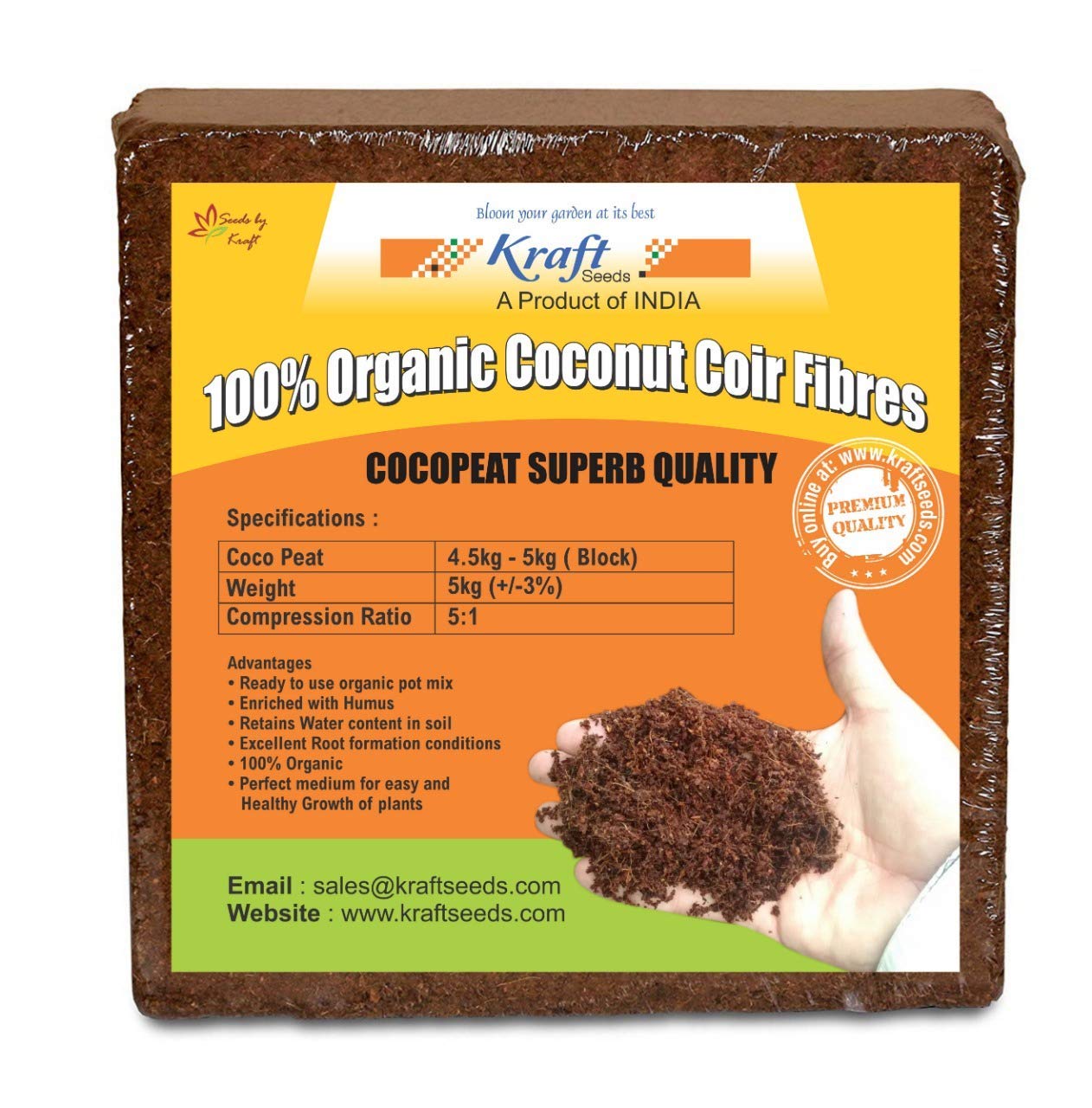
| Format | Weight / Size | Approx. Price (₹) | Best For |
|---|---|---|---|
| Budget block (unbranded) | 5 kg | 80–120 | Large beds, bulk amendment mixing |
| Mid-range block (Kraft, Cultivators) | 5 kg | 150–220 | General container and raised bed use |
| Premium buffered coco peat | 5 kg | 280–450 | Hydroponics, sensitive or high-value crops |
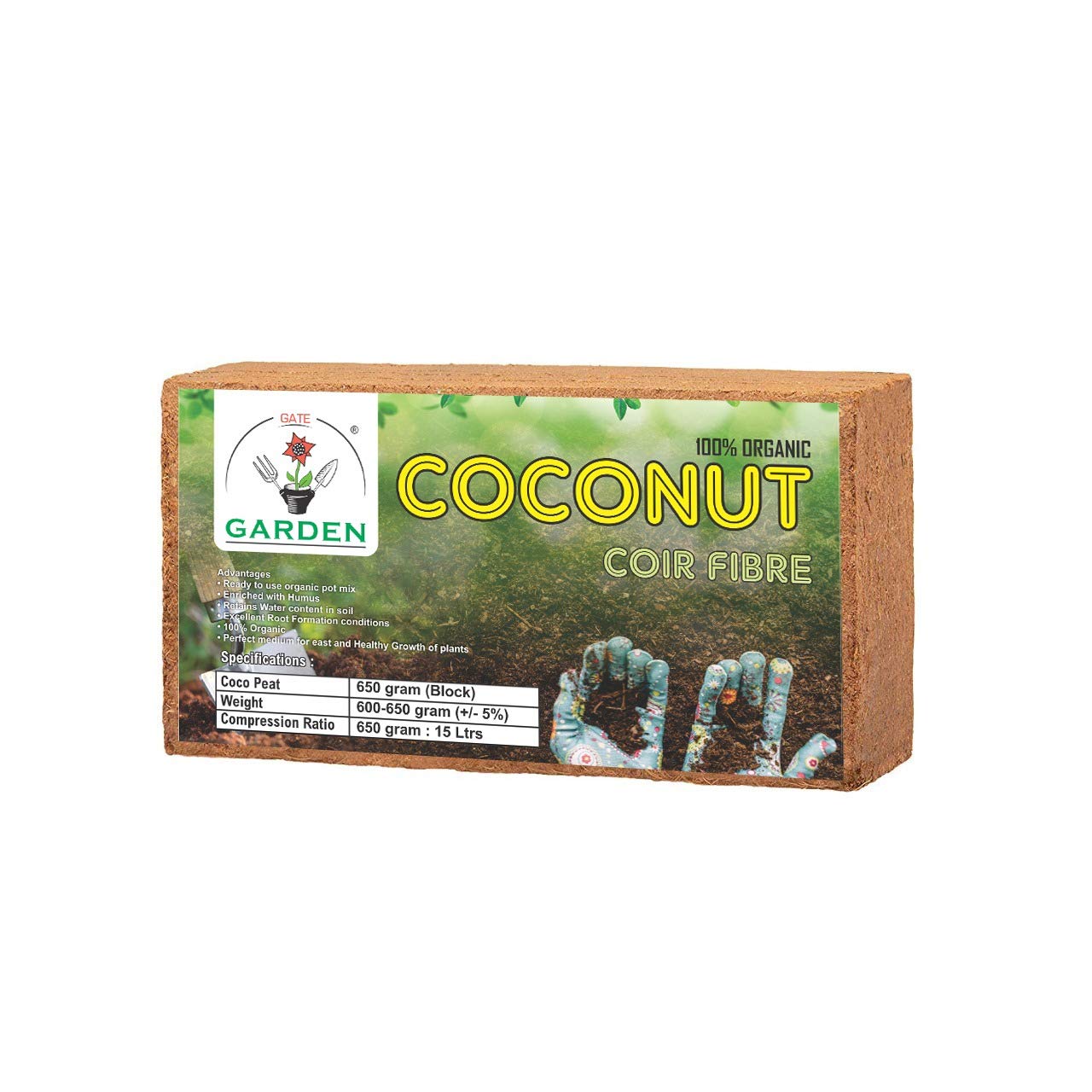
| Small brick (650g–1 kg) | 650g–1 kg | 30–80 | Indoor pots, small balcony setups |
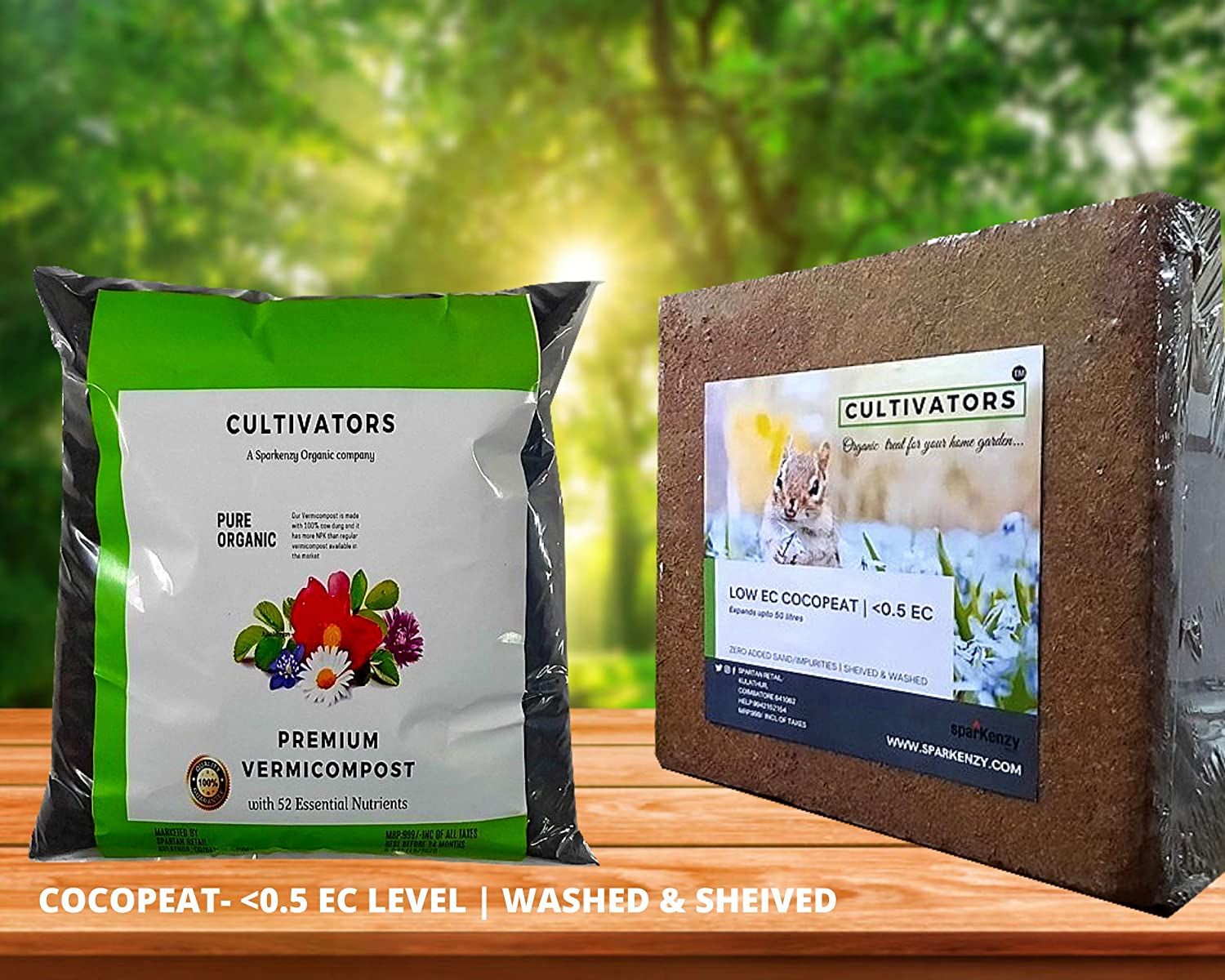
| Coco peat + vermicompost combo | 5 kg + 5 kg | 350–600 | Nutrient-rich ready-to-use container mix |
| Loose granules (pre-hydrated) | 4–5 kg | 200–350 | Seed trays, propagation, small pots |
| Coco chips / husk chunks | 5 kg | 180–280 | Orchids, ferns, aeration-focused mixes |
Price per kilogram can be misleading with compressed blocks because expansion ratios vary considerably. A budget 5 kg block that expands to 35 liters is better value than a mid-range product that only delivers 20 liters. Look for expansion volume listed on the packaging — not just weight.
Not all coco peat serves the same purpose. The grade, format, and quality level you choose should match both your current skill level and your specific growing setup. Here's how to think about the decision.
If this is your first season using coco peat, keep the approach simple and forgiving:
If you're growing vegetables in containers for the first time, the guide on the best veggies to grow in containers in India pairs naturally with a coco peat mix — those crops generally thrive in well-draining, moisture-retentive media. For anyone setting up an indoor garden, pairing coco peat with correct lighting is just as critical; the guide on growing indoor plants at home covers that side of the setup in detail.
Once you understand how coco peat behaves across different crops and climates, you can push it into more specialized applications:
Even the best coco peat in India underperforms if you don't prepare and use it correctly. These practical steps make a genuine difference in plant performance from the first growing cycle.
Getting hydration right is the most commonly skipped step:
There's no single perfect ratio — it depends on your crop, climate, and container depth. But these tested starting points give you a solid foundation:
One amendment worth considering alongside coco peat is charcoal. It improves drainage, supports beneficial microbial activity, and can help with certain soil pathogens. The guide on charcoal ash benefits for soil explains how it functions as a complementary amendment in organic and mixed-media growing setups.
One often-overlooked quick win: rehydrate and reuse coco peat between growing seasons. Rinse the old medium thoroughly with clean water to flush accumulated salts, let it drain, test EC, and supplement with fresh fertilizer before replanting. A single quality block can serve multiple crop cycles this way — reducing both cost and waste over time.
Quality coco peat can remain structurally effective for 3–5 years in well-managed growing systems. In outdoor raised beds exposed to Indian sun and monsoon rain, it tends to break down faster — usually within 2–3 growing seasons. Periodically checking the structure and EC of your medium helps you judge when it's time to refresh or replace it rather than guessing.
You can, but it works best as part of a blend for most gardeners. Pure coco peat holds moisture well but contains no nutrients. If you grow in 100% coco peat, you'll need to manage all plant nutrition through liquid fertilizers or soluble amendments from the very first week. This is standard practice in hydroponic setups but requires more monitoring than a conventional mixed-soil approach.
Coco peat naturally sits at a pH of 5.5–6.5, which suits most common vegetables, herbs, and flowering plants. If a specific crop prefers a slightly higher pH — such as garlic or asparagus — mix in a small amount of garden lime to raise it. Test your medium before planting rather than relying on general estimates; a basic soil pH tester takes the guesswork out of the process.
Coco peat is one of the most practical and affordable growing media available to Indian gardeners, and finding the best coco peat in India for your specific situation comes down to understanding format, grade, and a few key quality markers like EC and pH. Start with a trusted mid-range branded block, blend it into your existing soil mix at a sensible ratio, and observe how your plants respond over a full growing season — most gardeners notice better drainage, improved moisture retention, and stronger root development quickly. Head over to the plants, herbs, and farming section to explore more guides that help you build a productive, well-amended garden from the ground up.
 |
 |
 |
 |

About Truman Perkins
Truman Perkins is a Detroit-based SEO consultant who's been in the business for over a decade. He got his start helping friends and clients get their websites off the ground, and he continues to do so today. In his free time, Truman enjoys learning and writing about gardening - something he believes is a natural stress reliever. He lives with his wife, Jenny, and their twins in Detroit.


Get new FREE Gifts. Or latest free growing e-books from our latest works.
Disable Ad block to reveal all the links. Once done, hit a button below
|
|
|
|
 rinjal