If you want the single best gas-powered wood chipper for most homeowners in 2026, the Homonova Mini Wood Chipper Shredder delivers a 7HP engine, 3-inch capacity, and a 15:1 reduction ratio at a price point that makes serious landscaping tools accessible. Whether you're clearing storm debris, managing a small orchard, or just tired of hauling branches to the curb, a quality wood chipper changes the game entirely.
Wood chippers turn bulky yard waste — branches, limbs, leaves, and brush — into nutrient-rich mulch (finely shredded organic material you can use to feed your soil or suppress weeds). Instead of bagging piles of debris and waiting for trash day, you feed them into a machine and get useful garden material back in minutes. If you're serious about yard health, pairing a chipper with tips from our Top 10 Tumbling Composter Reviews gives you a complete composting and waste reduction system that works year-round.
The market in 2026 offers everything from compact electric shredders for small suburban yards to heavy-duty gas-powered machines that handle 3-inch branches without breaking a sweat. The challenge is matching the right machine to your actual workload. In this guide, we reviewed seven of the top-rated models available on Amazon — covering gas vs. electric, capacity, engine power, and value — so you can buy with confidence. You can also browse our full gardening reviews section for more tools to keep your outdoor space in top shape.

Contents
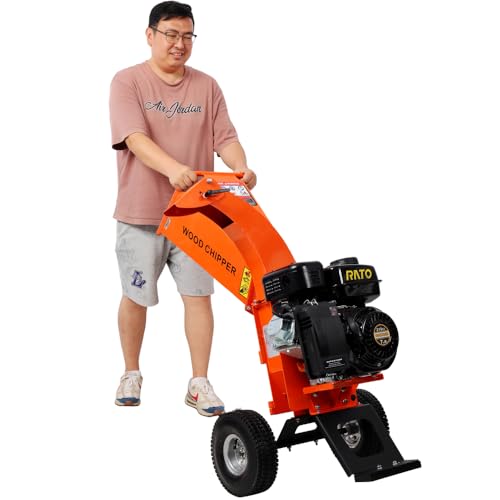






The Homonova Mini Wood Chipper earns its spot at the top of this list by hitting the sweet spot between power, capacity, and compactness. At its core is a 7HP 212cc OHV 4-stroke single-cylinder engine that spins up to 3,600 RPM — enough to chew through branches and limbs up to 3 inches in diameter without the hesitation you'd expect from a smaller machine. The EPA-certified engine is a genuine plus if you care about emissions compliance, and it matters increasingly in 2026 as more municipalities tighten regulations on gas-powered equipment.
The 3-inch maximum capacity feeding chute is extended and wide-mouthed, which means you're not constantly fighting to angle branches into a tight slot. That sounds like a small detail until you've spent 20 minutes wrestling with a chipper that has a poorly designed chute — then you appreciate it immediately. What really separates this machine is the 15:1 reduction ratio, meaning a pile of branches that takes up 15 cubic feet of space comes out as roughly 1 cubic foot of mulch. That's a massive storage and disposal win for anyone managing regular yard cleanup.
Build quality feels solid for the price bracket. The compact design makes it maneuverable in tighter spaces than full-size commercial chippers, and because it's a standalone unit rather than a towable, you don't need a tractor or ATV to move it around your property. For most homeowners dealing with seasonal cleanups, storm debris, or ongoing tree trimming, this is the machine that does the job cleanly, reliably, and without requiring a commercial budget.
Pros:
Cons:
The Landworks is the most versatile machine in this roundup, and that's not a close contest. Its 3-in-1 design gives you three distinct operating modes: a top hopper for chipping or shredding material up to 2 inches, a side chute for branches up to 3 inches, and an attachable leaf vacuum inlet for mulching loose leaves and debris. Most chippers do one or two of these things. The Landworks does all three, which makes it genuinely useful across every season — from spring pruning to fall leaf cleanup.
The engine is the same class as our top pick — a recoil-starting 7HP horizontal 4-stroke single-cylinder OHV gas engine — so you're not compromising on power to get the versatility. One design detail worth calling out is the slanted housing design that reduces jams. Jams are the single most frustrating aspect of using any chipper, and the slanted housing encourages material to feed through more smoothly instead of binding up at the intake. It also features a tow bar kit option, so you can hitch it to an ATV or small tractor and move it around a larger property without straining your back.
The fuel tank holds 0.7 gallons and runs on 87+ unleaded gasoline — no mixed-fuel fussing like you'd have with a 2-stroke engine. For a homeowner who wants one machine to handle chipping, shredding, and leaf collection rather than buying separate tools for each job, the Landworks is the smart long-term investment. It's well-built, well-reviewed, and has a longer track record on the market than newer entries.
Pros:
Cons:
The Earthquake K32 makes a statement with one specific design choice: airless 11-inch wheels that will never go flat. If you've ever shown up to a chipping session only to find a flat tire on your equipment, you understand exactly why this matters. These wheels roll smoothly over uneven terrain, gravel paths, and lawn surfaces without maintenance, and they make getting the machine to your work site genuinely effortless. Earthquake is a well-established brand in outdoor power tools, and this machine reflects that experience.
The engine is a 212cc 4-cycle Viper unit — Earthquake's own branded engine — which provides dependable power for chipping branches up to 3 inches in diameter. The real standout spec is the 20:1 reduction ratio, which is the highest in this roundup. That means you get denser, finer mulch output per volume of input material — ideal if your goal is producing quality garden mulch rather than just reducing pile size. An included debris bag makes cleanup and material collection easy without needing a separate container.
This machine is particularly well-suited for homeowners who value reliability and ease of use over maximum feature count. You get a straightforward, powerful chipper that moves easily, collects cleanly, and delivers outstanding reduction results. It's a workhorse, not a gadget. If you're looking for a machine with a simple, no-fuss experience and an industry-leading reduction ratio, the K32 deserves a serious look.
Pros:
Cons:
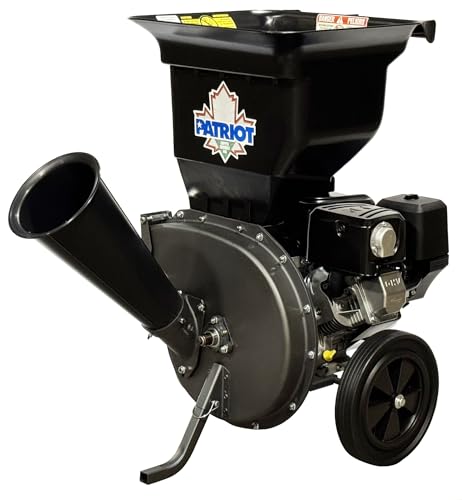
The Patriot CSV-3090B is the power play in this lineup. It runs a 9HP Briggs & Stratton engine — two full horsepower above the 7HP units from Homonova, Landworks, and Earthquake. That extra power is not just a spec number: you feel it when you're feeding dense hardwood branches or working through a large storm cleanup where the material keeps coming and you need the machine to keep pace without bogging down. Briggs & Stratton is also the most widely serviced small engine brand in North America, which means finding parts and authorized repair shops is easier than with proprietary engines.
The funnel-shaped cone design guides branches directly into the chipping mechanism, and the machine handles material up to 3 inches in diameter — turning them into coin-sized chips that are ideal for mulching around trees or garden beds. What sets the Patriot apart from most competitors is its swinging Y-hammer system for leaf shredding. Unlike fixed blades, the Y-hammers swing on impact, which means they can handle material that would stall or jam a fixed-blade system, including wet leaves and mixed debris. Leaf shredding performance on this machine is genuinely impressive.
If you have larger trees on your property — and if you've been reading our guide on the best trees to grow near your house, you know annual pruning generates significant volume — the Patriot's extra horsepower means you're not babying the machine through thick cuts. You just feed and go. It's the right choice for anyone with serious workloads or large properties who wants a machine they won't outgrow in a season or two.
Pros:
Cons:
The YARDMAX YW7565 is the entry-level gas chipper that punches above its weight. It runs a Briggs & Stratton CR950 6.5HP 208cc engine — slightly less power than the 7HP units above, but still more than capable of handling the branch sizes most residential properties generate. Branches up to 3 inches in diameter feed cleanly through its self-feeding chute, and the self-feeding design is a genuine quality-of-life improvement: you place the branch at the opening, the machine grabs it, and you let go. You're not pushing material in while holding on for safety.
The self-feeding chute is also described as spacious, which matters for longer branches that need to feed in at awkward angles. This machine is built for durability and straightforward usability — it's not loaded with features, but what it does, it does well. YARDMAX has built a solid reputation for making accessible outdoor power tools that hold up through regular seasonal use without requiring professional maintenance every year.
Where the YARDMAX makes the most sense is for the homeowner who has decided gas power is the right call but doesn't want to spend at the top of the market. You get a trusted Briggs engine, real 3-inch capacity, and a design that's simple enough that you won't spend your weekends troubleshooting it. For budget-conscious buyers who still want serious capability, this is the gas chipper to consider first.
Pros:
Cons:
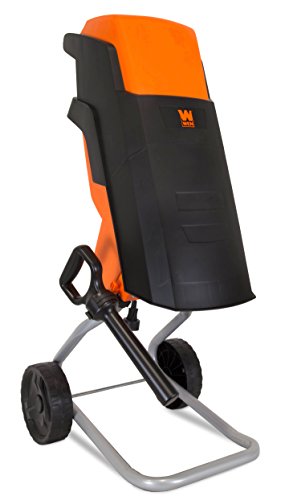
If you have a smaller yard, live in a suburban neighborhood, or simply want a no-fuss electric option you can plug in and run without dealing with gas, oil, or pull-start engines, the Wen 41121 is your answer. Its 15-amp motor delivers up to 8,000 cuts per minute — that's over 130 cuts per second — which produces finely shredded mulch from twigs, lawn clippings, and foliage with impressive speed. You plug it in, you run it, you're done. No fuel mixing, no priming, no warm-up time.
The capacity limit is 1.5 inches in diameter, which is a real constraint compared to the gas models in this list. Be honest with yourself: if you're regularly dealing with branches thicker than your thumb, this isn't the right machine. But for smaller twigs, light prunings, leaf piles, and general yard debris from a modest-sized suburban lot, 1.5 inches covers the vast majority of what you'll actually feed into it. The rolling design makes it easy to move around your yard without lifting or straining, and electric startup means you're chipping in seconds from the moment you plug in.
Electric chippers like the Wen also connect naturally to your overall yard health strategy — the mulch you generate makes excellent nutrient-rich soil amendment. If you're working on improving your soil quality alongside managing yard waste, you might find our Best Soil Amendment and Conditioner Reviews a helpful companion guide to getting the most from your fresh mulch.
Pros:
Cons:
The Westinghouse electric chipper rounds out this list as the most complete electric package available. Where the Wen is a straightforward shredder, the Westinghouse steps up with a 12-gallon collection bag, SK5 steel blades (a high-carbon steel known for holding a sharp edge), and a dual-hole feed hopper that handles both large branches and smaller twigs efficiently in separate input paths. The result is a cleaner, more organized chipping experience than most electric competitors offer.
The 15-amp motor runs at up to 4,000 RPM and handles material up to 1.8 inches in diameter — a slight step up from the Wen's 1.5-inch limit. It's not a massive difference in practice, but it does mean the Westinghouse can handle slightly thicker material on the occasions where you push the limits. The safety interlock system prevents the machine from operating unless everything is properly assembled and locked in place, which is the right design choice for a machine with fast-spinning blades. Overload protection automatically cuts power if you jam too much material through at once, protecting both the motor and you.
The 12-gallon collection bag is a standout feature. You're not chasing mulch across your yard or stopping to sweep it up — it collects directly into the bag, and when the bag is full, you carry it to your garden bed and distribute. For tidy work and easy material management, this is the best electric chipper in the lineup. According to Wikipedia's overview of wood chippers, disk and drum-style chippers are the most common residential designs, and the Westinghouse falls squarely into that proven category.
Pros:
Cons:
This is the first decision you make, and it shapes everything else. Gas chippers are for serious workloads — branches 2 inches and thicker, large properties without convenient power outlets, or situations where you need to run continuously for long sessions without stopping to manage cords. The tradeoff is maintenance: gas engines need oil changes, fresh fuel each season, and occasional carburetor attention. Electric chippers are for lighter, more frequent use — suburban lot maintenance, regular small prunings, leaf and twig cleanup. They're lighter, quieter, require zero fuel management, and are ready to run the moment you plug them in. Be realistic about the branch sizes you'll be chipping. If most of your material is under 1.5 inches, electric is easier. If you're regularly hitting 2-3 inch branches, gas is the only practical choice.
Chipping capacity is the maximum diameter of branch the machine can accept — typically measured in inches. Most residential gas chippers in 2026 top out at 3 inches, which is the standard for homeowner-grade machines. Reduction ratio (expressed as X:1) tells you how much the machine compresses your input material into mulch. A 20:1 ratio means 20 cubic feet of branches becomes 1 cubic foot of mulch — higher reduction ratios mean denser mulch and less storage volume. If you're generating a lot of material and want to maximize mulch quality, prioritize reduction ratio alongside capacity.
Engine horsepower determines how quickly and confidently the machine handles material at its rated capacity. A 7HP engine can handle 3-inch branches, but it will do so more easily and with less bogging than a 6.5HP unit. For most homeowners, 7HP is the practical sweet spot — enough power for real work without the weight penalty of 9HP+ commercial-oriented machines. Engine brand matters for long-term ownership. Briggs & Stratton is the most widely supported small engine brand in the United States — parts are available everywhere, and authorized service is easy to find. Proprietary or lesser-known engine brands may perform well out of the box but can become headaches when service is needed years down the road.
Think about where you'll store the machine and how you'll move it to your work site. Compact, wheeled designs are the easiest to maneuver around a typical residential property. Airless wheels (like those on the Earthquake K32) eliminate flat tire maintenance entirely — worth prioritizing if your storage area has concrete or gravel. Towable designs make sense if you have a large property with an ATV or lawn tractor, but they're overkill for most suburban lots. Measure your storage space before you buy — a machine you can't conveniently store is a machine you won't use consistently.
For most homeowners, a chipper that handles 2–3 inch diameter branches is the right size. Gas-powered models in the 6.5–9HP range cover this capacity. If your yard primarily produces small twigs and leaves rather than thick branches, an electric chipper handling up to 1.5–1.8 inches is sufficient and much easier to manage. Match the machine to the largest material you regularly deal with — not the largest material you might theoretically encounter once.
It depends entirely on your workload. Gas chippers deliver more power, handle larger material, and work anywhere without cord limitations — they're the right choice for properties with mature trees, frequent large prunings, or storm cleanup needs. Electric chippers are quieter, require no fuel or oil, and are ideal for smaller yards with lighter debris. If you're primarily managing twigs, light brush, and leaf cleanup on a suburban lot, electric is simpler and perfectly capable.
Yes, most wood chippers handle green (freshly cut) wood without difficulty — in fact, green wood is often easier to chip than fully dried wood. Wet leaves and mixed debris can sometimes challenge machines with fixed-blade systems, which is one reason the Patriot's swinging Y-hammer design stands out. Avoid feeding material that's rotting or mushy, as it can jam and create cleanup issues inside the machine. Large, dense hardwood knots are also best avoided or pre-cut to manageable sizes before feeding.
Basic maintenance for any gas chipper includes checking and changing the oil at the manufacturer's recommended intervals (typically every 25–50 hours of use), keeping the air filter clean, ensuring spark plugs are in good condition, and using fresh fuel each season. At the end of the season, drain the fuel tank or add a fuel stabilizer to prevent carburetor issues over winter storage. Blade sharpening is typically needed after 25+ hours of heavy use — dull blades reduce cutting efficiency and strain the engine.
The mulch from a wood chipper is genuinely useful garden material. You can spread it around tree bases and garden beds as a 2–3 inch layer to suppress weeds, retain soil moisture, and regulate soil temperature. It also makes an excellent addition to a compost pile, where it acts as a carbon-rich "brown" material that balances nitrogen-rich green waste. Fresh wood chip mulch is also great for covering pathways and suppressing ground-level weeds in vegetable gardens. The finer the reduction ratio of your chipper, the more quickly the mulch will break down and integrate into your soil.
Wood chippers are safe when you follow basic operating guidelines. Always keep hands and loose clothing well away from the feed chute — never push material in by hand when it's close to the intake. Wear safety glasses, hearing protection (especially with gas models), and work gloves at all times. Never reach into the discharge chute. Read the operator's manual before first use, and inspect the machine for loose or damaged parts before each session. Many modern electric chippers include safety interlocks that prevent operation when components aren't properly secured — a worthwhile feature to look for.
 |
 |
 |
 |

About Christina Lopez
Christina Lopez grew up in the scenic city of Mountain View, California. For eighteen ascetic years, she refrained from eating meat until she discovered the exquisite delicacy of chicken thighs. Christina is a city finalist competitive pingpong player, an ocean diver, and an ex-pat in England and Japan. Currently, she is a computer science doctoral student. Christina writes late at night; most of her daytime is spent enchanting her magical herb garden.


Get new FREE Gifts. Or latest free growing e-books from our latest works.
Disable Ad block to reveal all the links. Once done, hit a button below
|
|
|
|
 rinjal