Which plant ties actually hold up through a full growing season — and which ones leave your tomatoes flopping over by July? If you've ever come back to the garden to find a snapped stem or a vine that worked itself loose, you already know how much the right tie matters. The VELCRO Brand ONE-WRAP Garden Ties top our list for their combination of reusability, grip, and plant-safe softness — but depending on your setup, another pick on this list might suit you better. Read on.
In 2026, gardeners have more options than ever: hook-and-loop velcro rolls, stretch rubber ties, twist-wire reels, pre-cut loops, and even powered taping machines. Each type trades off cost, speed, reusability, and how gentle it is on stems. Whether you're training climbing roses up a trellis, staking tomatoes, or keeping houseplant vines tidy, there's a product here built for your situation. Browse our full gardening reviews for more tools to keep your plants thriving.
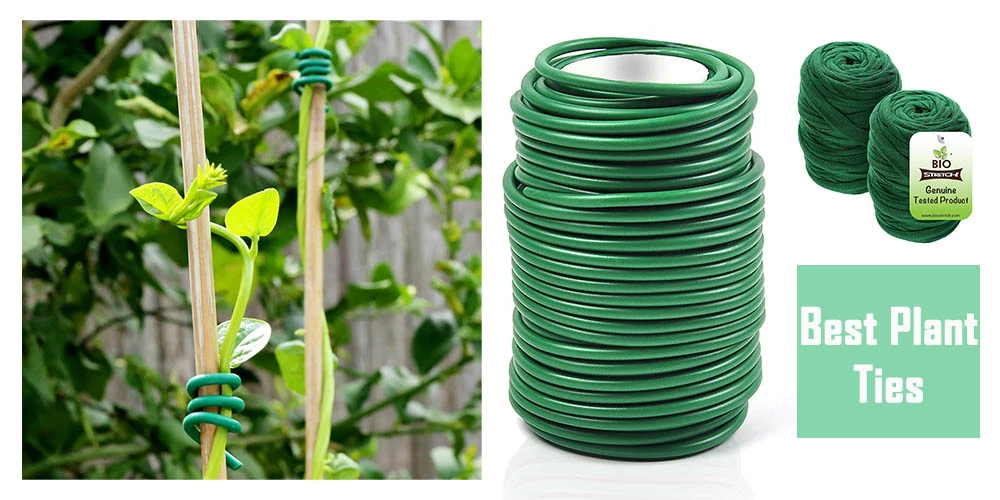
We've tested and researched dozens of products to bring you seven of the strongest contenders across different categories. You'll find options that are eco-friendly, budget-conscious, commercial-scale, and everything in between. Pair these with a good set of plant labels and you'll have a genuinely organized, productive garden. Let's get into it.
Contents






If you want one tie that does almost everything well, this is it. The VELCRO Brand ONE-WRAP comes as a 50-foot roll you cut to any length, which means you're not hunting for the right pre-cut size or wasting material. The hook-and-loop construction grips firmly without any knot — wrap it around stem and stake, press together, done. Because the soft side faces the plant, you don't get the abrasion damage that wire or coarse twine causes over time.
What sets this apart from generic velcro rolls is the material: 65% recycled plastic, which is a genuine sustainability win rather than just marketing language. The tie holds up through repeated wetting, drying, UV exposure, and repositioning without losing its grip. You can remove, adjust, and re-attach dozens of times across a single season. For anyone who moves plants around or trains stems as they grow, that flexibility is worth a lot.
The 1/2-inch width is wide enough to distribute pressure across delicate stems without cutting in, but narrow enough to look tidy on a trellis. It works equally well indoors on houseplants and outdoors on climbing roses or cucumber vines. The only real limitation is cost — per foot, this runs higher than basic twist wire — but the reusability across multiple seasons makes the math work out.
Pros:
Cons:
Stretch ties solve a specific problem that rigid wire and firm velcro don't: accommodating a stem as it grows thicker. As your tomato plant or grape vine swells through the season, a stretch tie expands with it rather than cutting in. The Gardener's Blue Ribbon Stretch Tie gives you a full 150 feet on a continuous roll, which you cut to whatever length the job demands.
The material is a soft, foam-like stretch fabric that's gentle enough for fragile new growth but durable enough to last a full season outdoors. It ties off simply by wrapping and knotting — no clips, no velcro, no tools. The generous length means a single roll handles a good-sized raised bed or a row of tomato cages without running out. Many gardeners buy one roll per spring and still have some left over.
The trade-off is that stretch ties aren't as reusable as velcro or twist wire. Once tied and cut, the knot is typically permanent. You'll be cutting them off at season end rather than saving them. That said, at the price point and with 150 feet of material, single-season use is completely reasonable. It's one of the most popular choices among home vegetable gardeners for good reason.
Pros:
Cons:
At 328 feet (100 meters) per reel, this is the pick for gardeners who go through ties quickly and don't want to keep reordering. The iron core inside a smooth plastic coating gives you a wire that's rigid enough to hold a shape but flexible enough to wrap around any stem without kinking unpredictably. The rustproof coating matters — cheaper twist wires corrode after a season of rain exposure and start bleeding rust onto your plants or pots.
The green color genuinely disappears into foliage. If aesthetics matter to you — and they do in a front-yard garden or on visible trellises — these look significantly cleaner than white wire or bright orange ties. The included cutter on the reel dispenser lets you snip to length one-handed, which speeds up the work when you're doing a full tying session down a row of tomatoes. Beyond the garden, these also work well for cable management and securing bag closures, which is a genuinely useful bonus.
Twist ties as a category aren't as gentle as velcro or stretch material — check your tension when tying anything with a thin or soft stem. Twisted too tight, wire ties can create pressure points. But used correctly with a loose loop, they're effective and extremely cost-efficient. You'll get through an entire season on one reel for most home gardens.
Pros:
Cons:
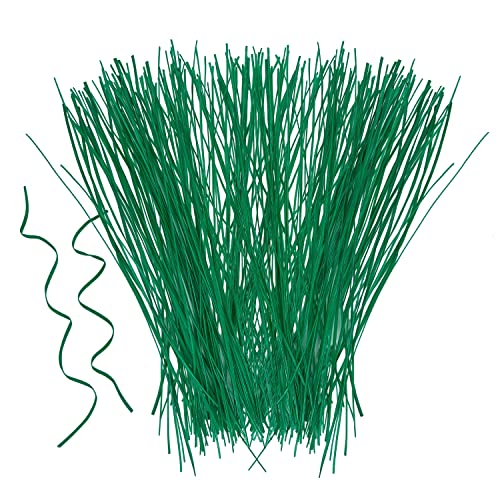
If you find yourself constantly fumbling with a wire reel or cutting ties to length, pre-cut loops solve the problem entirely. This pack of 100 gives you 8-inch ties ready to use straight out of the bag — no scissors, no cutter, no measuring. Eight inches is a practical length that handles most stem-to-stake situations without leaving excessive loose wire dangling around.
The plastic-over-iron construction is flexible enough to twist into multiple shapes, and the 8-inch length can be looped, figure-eighted, or wrapped depending on what you're securing. They work particularly well for training climbing vines, where you're frequently tying at multiple nodes up a trellis and want speed without fuss. Twist and done.
The main limitation is that pre-cut ties fix your length at 8 inches. That works for most stem-to-stake applications, but if you're working with large-diameter branches or unconventional trellis configurations, you'll occasionally wish for more length. And like any basic twist wire, these aren't really designed to be repositioned many times — the wire fatigues after repeated bending in the same spot. At 100 per pack, though, you won't be precious about using a fresh one when needed.
Pros:
Cons:
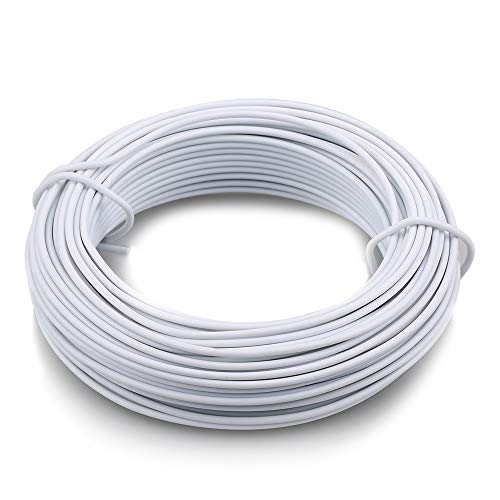
Most twist wire is thin gauge — fine for tomatoes, but if you're training fruit trees, securing heavier branches, or working with anything structural, you need something more substantial. The KINGLAKE 2mm wire is noticeably thicker than standard garden ties and holds its shape under real load. At 2mm diameter and 66 feet of length, this is the choice when you need wire that stays where you put it rather than bending back under a heavy branch.
The white coating is a deliberate choice — it reads cleanly against bark and works well in pots or on structures where green wire would look out of place. It's also noticeably easier to see when you're threading it through a trellis grid or looping it around a stake, especially in lower-light conditions early in the morning. The plastic coating protects both the wire and the plant contact point from metal abrasion.
The trade-off with heavier gauge wire is that it's less forgiving on delicate stems. You'll want to create a loose loop with padding material if you're using this on anything thin or soft-stemmed. It's also less convenient to cut — you'll need proper wire cutters rather than scissors. But for structural work, staking young trees, or securing established vines to permanent supports, this gauge is appropriate where lighter wire simply wouldn't hold. Also pair your plant setup with a quality plant moisture meter to make sure your tied plants are getting the right hydration.
Pros:
Cons:
This product is a different category entirely from the ties above — it's a powered taping tool, sometimes called a tapener or tying gun. If you grow tomatoes, grapes, cucumbers, or any climbing crop at scale, the time savings are dramatic. The RUKHOOL can tie a plant to a stake in under two seconds, wrapping a flexible tape around stem and support before shooting a metal staple to close it. That's roughly 50% faster than hand-tying per the manufacturer's claims, and in practice, the speed advantage is real across a full row.
The upgraded 50mm jaw opening handles thicker branches than earlier tapener designs — relevant for mature grape vines or established tomato stems that smaller jaws couldn't grip around. At 0.92 pounds it's light enough to use for extended sessions without hand fatigue becoming a serious issue. The push-pin staple design and visible staple slot make reloading fast and frustration-free, which matters when you're mid-row.
The tool uses consumable tape rolls and staples, so your ongoing cost is higher than simple wire. And there's a learning curve — the first time you use a tapener you'll probably misfire a few staples before the motion becomes natural. But if you're tying more than a few hundred plants per season, the ergonomic and time benefits justify the investment. Gardeners with repetitive-strain issues in their hands will find this especially worthwhile. For context, the kitchen garden tradition has always evolved toward better tools — this is a modern example of that.
Pros:
Cons:
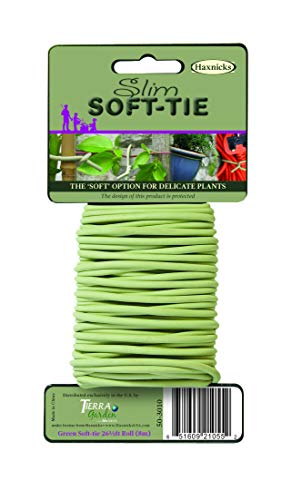
The Tierra Garden tie occupies a specific niche: situations where you want the convenience of twist wire but need the softness of a rubber or foam tie. The UV-stabilized rubber coating over a galvanized steel core is the key construction detail here. Galvanized steel provides real holding strength, while the rubber exterior gives you a surface that's genuinely soft against bark and stems. It doesn't harden, crack, or stiffen the way some coatings do after extended UV exposure.
At 26.3 feet you get a moderate-length roll that you cut to length with scissors. The slim profile keeps it visually unobtrusive — it disappears into foliage better than wider velcro ties, while the green color helps it blend at a distance. This makes it a good choice for visible garden areas where aesthetics matter alongside function: front-yard climbing roses, espaliered fruit trees on a fence, or trained wisteria on a pergola.
The roll length is shorter than some competitors, which becomes a consideration if you're tying a large number of plants. And the galvanized steel core, while strong, means this needs proper wire cutters or strong scissors to trim. But for training climbing roses, securing fruit tree branches, and tying any plant where bark protection matters, the rubber compound coating is distinctly superior to bare wire or plastic-coated alternatives. It's a quality-focused product at a corresponding price point. Consider also checking your raised garden bed liners alongside new ties if you're setting up a full gardening system this season.
Pros:
Cons:
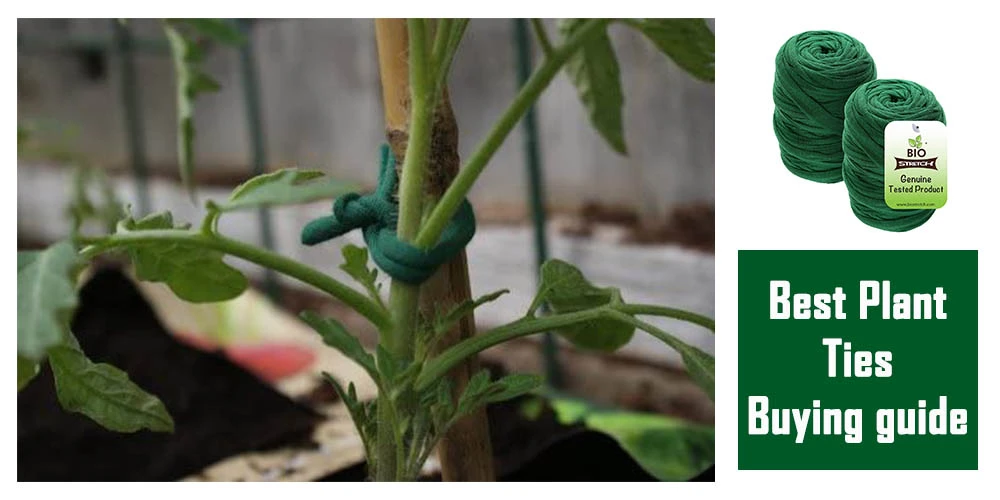
Before you click add-to-cart, it's worth thinking through what you actually need. The wrong tie for the job causes real problems — from stem damage to failed support to unnecessary cost. Here are the four factors that separate a good choice from a frustrating one.
This is the factor most buyers underestimate. Plant ties sit against living tissue for weeks or months. The wrong material — especially at the wrong tension — cuts bark, creates pressure wounds, or blocks the flow of nutrients through the stem. General principles:
The sticker price of a roll or pack doesn't tell you the real cost per tie. Consider:
This comes down to the type of work you're doing most often:
Any tie used outdoors needs to withstand UV, rain, temperature swings, and repeated wetting and drying. In 2026, most products in this category perform adequately through a single season — but there are differences worth noting:
For tomatoes, stretch ties are a top choice because they expand as stems thicken through the season. The Gardener's Blue Ribbon Stretch Tie is a proven option. If you prefer something reusable, the VELCRO ONE-WRAP cut to 6–8 inch sections works well — it's soft enough to avoid stem damage and repositionable as the plant grows. Avoid stiff wire directly against tomato stems without a loose loop, as stems can thicken quickly and wire will cut in if you're not checking regularly.
Yes — any tie applied too tightly or left in place too long without adjustment can damage a stem. The risk is highest with non-stretching materials like bare wire or rigid coated wire. To minimize damage, always tie with a figure-eight loop between stem and stake to create separation, leave room for growth, and check ties every 3–4 weeks during active growing seasons. Soft materials like velcro and rubber-coated wire are significantly less likely to cause damage even if tension builds slightly over time.
It depends on what you value most. Twist ties win on cost and simplicity — they're inexpensive, easy to use, and available in bulk. Velcro ties win on reusability, stem safety, and adjustability. For a single growing season on vegetables, twist ties are perfectly adequate. For perennials, roses, or fruit trees where you're tying and adjusting the same plants year after year, velcro ties pay for themselves in convenience and reduced stem damage over time.
Most plant ties are rated for one growing season of outdoor use, but quality varies widely. UV-stabilized rubber ties like the Tierra Garden option can realistically last 3–5 seasons if stored indoors during winter. Standard plastic-coated wire ties tend to become brittle after extended UV exposure — typically showing degradation by season two. Velcro ties last longest when rinsed at season end to clear debris from the hook surface. If you're leaving ties on plants year-round, check them each spring and replace any that have stiffened or lost grip.
A stake is the rigid support structure — typically bamboo, metal, or wood — driven into the soil. A plant tie is the connecting material that attaches the stem to the stake. Both are necessary: the stake provides vertical or directional support, and the tie keeps the stem attached to that support without cutting in. Neither works well without the other. When choosing ties, always consider the stake diameter as well — a tie needs to wrap cleanly around both the stem and the stake, so very thick stakes require longer tie lengths.
Technically yes, but neither is ideal. Zip ties are rigid, non-stretching, and can cut into stems quickly — they're better suited to inanimate objects than living plants. Standard rubber bands deteriorate rapidly in UV light and often snap within weeks outdoors. Both can work in a pinch for a short-term fix, but purpose-made plant ties are worth the small investment for anything you're tying for a full season. The dedicated products on this list are specifically designed to balance grip with plant safety in a way that repurposed hardware simply isn't.
 |
 |
 |
 |

About Truman Perkins
Truman Perkins is a Detroit-based SEO consultant who's been in the business for over a decade. He got his start helping friends and clients get their websites off the ground, and he continues to do so today. In his free time, Truman enjoys learning and writing about gardening - something he believes is a natural stress reliever. He lives with his wife, Jenny, and their twins in Detroit.


Get new FREE Gifts. Or latest free growing e-books from our latest works.
Disable Ad block to reveal all the links. Once done, hit a button below
|
|
|
|
 rinjal