You're standing in the garden center, staring at a wall of soil moisture meters, and you have no idea which one actually works. Overwatering kills more houseplants than drought does — and a good moisture meter takes the guesswork out of watering entirely. Whether you're nurturing delicate orchids indoors or managing a full raised-bed garden, the right meter saves your plants and your time.
In 2026, the options range from simple analog probes under ten dollars to Bluetooth-connected smart sensors that talk to your phone. Knowing which category fits your needs is half the battle. This guide covers seven of the most popular picks across that spectrum, with honest pros and cons for each.
If you're serious about plant health, a moisture meter pairs perfectly with other tools in your gardening toolkit. You might also want to pair yours with a quality plant mister to deliver targeted hydration once you know the soil is dry. Let's dig in.

Contents





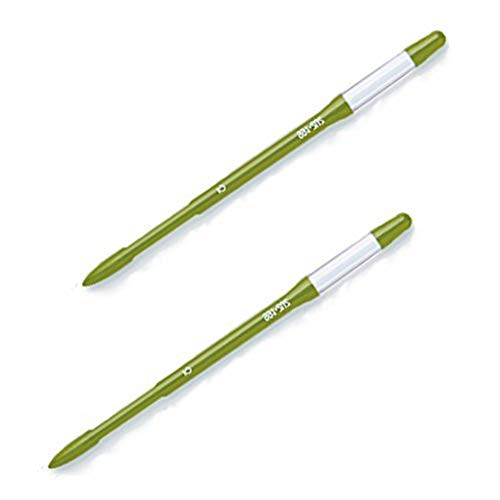
The Blumat Moisture Meter has been around long enough to earn a loyal following among serious gardeners. It works as a tensiometer (a device that measures soil water tension, not just surface dampness), which means it reads actual root-zone moisture rather than fooling you with wet topsoil. Just insert the probe, and you get an immediate, reliable reading.
Where Blumat stands apart is in irrigation calibration. If you're running a drip system or automated timer, this meter helps you dial in exactly when and how long to water — no more guessing whether your system is doing its job. The cap included in this version protects the probe when not in use, which extends its lifespan. Build quality feels sturdy compared to many cheaper analogs on the market.
It's worth noting that this meter focuses exclusively on moisture — no pH or light readings. For most gardeners, that's exactly what you want: a dedicated tool that does one thing well.
Pros:
Cons:
If you want a no-nonsense moisture meter that just works, the Gouevn is one of the best values available in 2026. Plug it in, get a reading — no buttons, no batteries, no setup. The large analog dial is easy to read from a distance, and the scale is clearly marked with dry, moist, and wet zones. It responds quickly after insertion, usually within a few seconds.
This meter is especially useful when you have a lot of houseplants. Instead of trying to remember the last time you watered each pot, you just check the meter and water accordingly. It takes the mental load off completely. The packaging includes a helpful plant watering guide on the back, which is a nice touch for beginners.
One honest note: this is a basic model. It measures soil moisture only, and it works best in standard potting mixes. Very sandy or very clay-heavy soils can produce less reliable readings. But for everyday indoor and outdoor plant care, it's hard to beat at this price point.
Pros:
Cons:
Standard moisture meters only read the top few inches of soil. If you've got large containers — think 10-gallon planters, whiskey barrel gardens, or deep raised beds — you've probably been fooled by wet topsoil while the roots sat dry. The XLUX long-probe meter solves that problem directly. Its probe runs 5.5 inches longer than regular models, letting you reach the bottom layer of even the largest pots.
The large dial uses a ten-point scale divided into three color zones (dry, moist, wet), which makes reading it fast and intuitive. Insert the probe and you get an immediate reading — no waiting. This 2-pack is excellent value, letting you monitor two different plants or two areas of a garden bed at once.
One important note: don't leave the probe in the soil for more than 5 minutes. Prolonged contact causes the metal tip to corrode over time, which shortens the meter's life. Pull it out after checking, wipe it down, and store it dry.
Pros:
Cons:
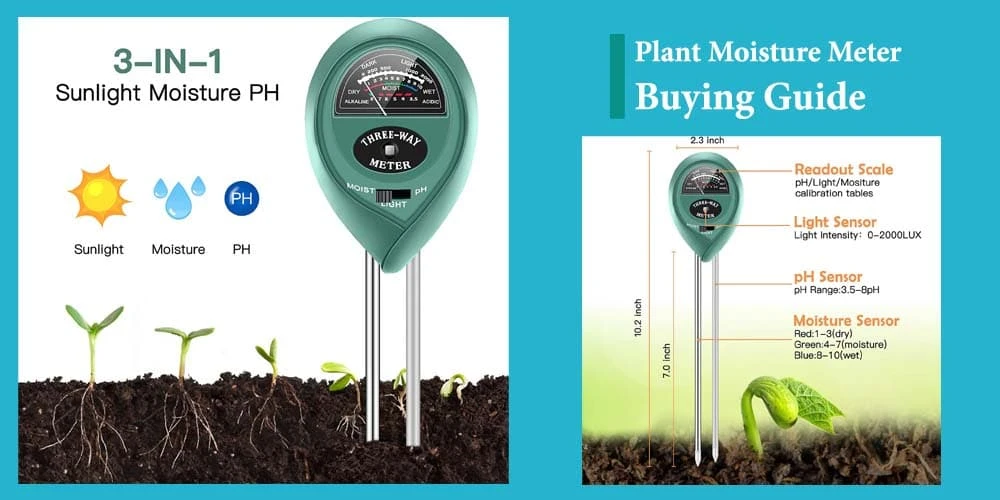
The SONKIR MS02 packs three sensors into one affordable tool: soil moisture, soil pH (a measure of acidity/alkalinity on a 0–14 scale), and sunlight intensity. A single switch cycles between all three modes. If you're new to plant care and want one device that covers the basics, this is a strong starting point.
No batteries are required. Insert the dual probes, wait a few minutes, and read the panel. It's straightforward enough for complete beginners, yet informative enough for experienced gardeners troubleshooting a struggling plant. Knowing that your soil is simultaneously too dry AND too acidic gives you a clearer picture than moisture alone.
There are a few honest limitations here. The pH reading is not as precise as a dedicated pH meter — treat it as a ballpark guide rather than lab-accurate data. The manufacturer also cautions that this meter cannot test the pH of liquids, only soil. In very dry soil, the indicator may not move at all; water the soil first before testing. That said, for a general-purpose garden health check in 2026, it offers real value.
Pros:
Cons:
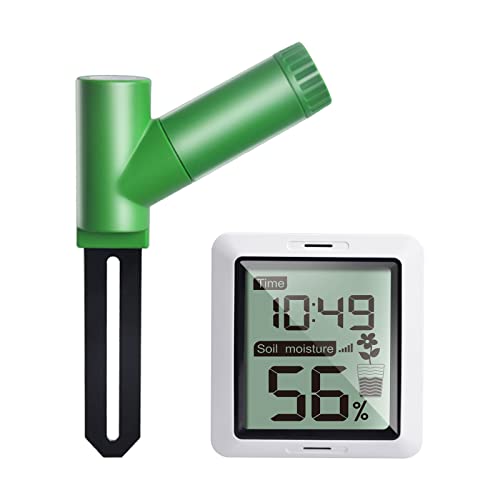
If you want to move beyond manual spot-checks into real plant monitoring, the RAINPOINT Bluetooth sensor is a meaningful step up. It tracks both soil moisture and air temperature in real time, sending data to the RAINPOINT app every 2 seconds. You check your plants from your couch — or from across town if you add the optional WiFi gateway.
The smart ecosystem integration is what sets this apart. Pair it with the TWG009 WiFi hub and the ITV102B water timer, and the system can automatically adjust your watering schedule based on actual soil readings. That's a genuine upgrade from set-it-and-forget-it timers that water on a clock regardless of what the soil actually needs. The built-in database covers 20 common plant types, helping you interpret readings in context.
The trade-off is complexity and cost. You're investing in an ecosystem here, not just a probe. The Bluetooth-only version works well within range of your phone, but remote monitoring requires the separate gateway purchase. For serious gardeners who manage multiple containers or a greenhouse, this investment pays off. For a single houseplant, the simpler options above are a better fit.
Pros:
Cons:
Most moisture meters require you to insert, read, and remove the probe each time. The Sustee Aquameter works differently — you leave it in the soil permanently and glance at the color indicator whenever you walk by. It functions like a dipstick for your pot: white means the soil has enough moisture, blue means it's time to water. No reading scales, no guessing.
This is especially useful for forgetful plant owners or anyone managing a collection of pots spread across a room. The medium size fits 3.5 to 6-inch pots well. Each unit is refillable, so you're not buying disposable sensors. The slim profile (0.39 x 0.31 inches) makes it nearly invisible in the pot. This 2-pack gives you two sensors to cover your most valuable or finicky plants.
The Sustee doesn't give you a numeric reading or log data — it's purely a visual cue. For gardeners who want precise moisture levels, one of the dial-style meters above is a better fit. But for everyday plant care where you just need a quick yes-or-no answer about watering, the Sustee is beautifully simple. Pair this with some quality outdoor planter pots and you've got a low-maintenance setup that keeps plants thriving.
Pros:
Cons:
The ECOWITT WH0291 bridges the gap between analog simplicity and digital precision. It displays exact moisture percentage on a clear LCD screen with a flower pot icon that visually reinforces what level you're at — an especially friendly touch for newer gardeners. Readings come in within 72 seconds, which is quick enough for a thorough check of multiple plants in one session.
The waterproof sensor means you can use it in rain without worry, and it handles both indoor pots and outdoor lawns or garden beds without issue. The digital display eliminates the ambiguity of analog dials — you see a number, not a needle floating somewhere in a zone. That precision helps when you're tracking moisture trends over time for sensitive plants.
It does require a battery, unlike the purely passive analog models above. That's a minor inconvenience but worth noting if you prefer zero-maintenance tools. For gardeners who want a step up from analog without jumping to a full Bluetooth smart sensor, this ECOWITT model hits a sweet spot. If you're also managing soil nutrition alongside moisture, consider reading up on the best organic potting soils to round out your plant care approach.
Pros:
Cons:

Not all moisture meters are built for the same job. Here's what to think about before you buy. According to the USDA's soil health resources, soil moisture is one of the most critical factors in plant health — and getting an accurate reading at root depth matters more than surface checks.
This is your first decision, and it shapes everything else.
Match the probe length to your pot depth. A standard 4-inch probe reads the top layer of soil — fine for small pots. If you're growing in large containers, raised beds, or ground gardens, you need a longer probe to reach the root zone. The XLUX long-probe model specifically addresses this gap. Measuring only the surface in a deep pot is like judging a glass of water by the rim — it tells you almost nothing useful.
If moisture is all you need to track, a dedicated meter does it best. If you're also curious about soil pH (acidity/alkalinity) or light levels, a 3-in-1 like the SONKIR MS02 gives you a comprehensive snapshot without buying three separate tools. The trade-off is accuracy — multi-function meters sacrifice some precision in each measurement compared to dedicated instruments. For most home gardeners, the ballpark readings are accurate enough to make good watering and care decisions.
Moisture meters have probes in direct contact with wet soil — they need some care to last. Key things to watch for:
Most analog moisture meters are accurate enough for practical plant care — you'll know if the soil is dry, moist, or wet. They're not laboratory instruments, so treat readings as reliable guides rather than exact measurements. Digital meters like the ECOWITT offer slightly more precision. For critical applications like calibrating irrigation systems, the Blumat's tensiometer design is more scientifically rigorous than standard resistive probes.
Only leave-in sensors like the Sustee Aquameter are designed to stay in soil continuously. Standard probe meters — analog or digital — should be removed after each reading. Prolonged soil contact causes the metal probes to corrode, which reduces accuracy and shortens the meter's life. Always wipe the probe dry before storing it.
Many popular analog moisture meters (Gouevn, XLUX, SONKIR MS02, Blumat) require no batteries at all — they use a simple electrical resistance method powered by the soil itself. Digital meters like the ECOWITT WH0291 need a battery for the LCD display. Smart Bluetooth sensors like the RAINPOINT require batteries or charging to power the wireless transmission.
That depends on the plant. Most houseplants thrive in the moist range (4–7 on a 10-point scale). Succulents and cacti prefer dry conditions (1–3). Ferns, tropical plants, and vegetables generally like consistently moist soil (5–7). The key is knowing your specific plant's preference — a moisture meter tells you the current level; you decide whether it needs water based on what that particular plant likes.
Yes, most moisture meters work in outdoor garden beds as well as indoor pots. For large outdoor areas or deep raised beds, choose a model with a longer probe like the XLUX to get readings at root depth rather than just the surface. Smart sensors like the RAINPOINT are especially useful outdoors when paired with automated irrigation timers.
A few signs your meter may be unreliable: the probe tip looks corroded or discolored, readings jump erratically, or the dial stays stuck in one position regardless of soil conditions. Clean the probe with fine steel wool to remove oxidation and test again. If readings are still inconsistent, the sensor element may be damaged and it's time to replace the meter. Always test in a pot you know well as a baseline check.
 |
 |
 |
 |

About Truman Perkins
Truman Perkins is a Detroit-based SEO consultant who's been in the business for over a decade. He got his start helping friends and clients get their websites off the ground, and he continues to do so today. In his free time, Truman enjoys learning and writing about gardening - something he believes is a natural stress reliever. He lives with his wife, Jenny, and their twins in Detroit.


Get new FREE Gifts. Or latest free growing e-books from our latest works.
Disable Ad block to reveal all the links. Once done, hit a button below
|
|
|
|
 rinjal