If you're serious about growing strawberries at home, the Strawberry Planter Tower 4-Tier Stackable is our top pick — it packs 28 planting sites into a single square foot and is made right here in the USA. Whether you're working with a cramped balcony, a sunny patio corner, or a full backyard garden, the right planter transforms your yield and simplifies your care routine dramatically.
Strawberries have a reputation for being tricky, but most of that difficulty comes down to drainage, airflow, and root space — all of which the right planter addresses directly. In 2026, the market offers everything from stackable fabric towers to upside-down hanging bags to elegant ceramic pots, and each design suits a different gardening style and space constraint. Understanding what separates a great strawberry planter from a frustrating one saves you time, money, and dead plants.

We tested and researched seven of the best planters for strawberries across every style category. Some shine for their space efficiency, others for their durability or aesthetic appeal. Before you spend a cent, this guide walks you through each option's strengths, weaknesses, and ideal use case — so you pick the one that genuinely fits your garden setup. For more container gardening resources, browse our full gardening reviews section. And if you're pairing your new planter with quality growing medium, check out our guide to the 13 best organic potting soils for container gardening — the right soil makes a measurable difference in strawberry flavor and yield.
Contents





This is the planter we'd buy first, and for good reason. The Strawberry Planter Tower gives you 28 individual planting sites across four stackable tiers, yet the entire footprint measures just one square foot. That's extraordinary density for any gardener working with limited space — a balcony, a patio corner, or even an indoor grow setup under supplemental light. Made in the USA, the build quality is noticeably more substantial than imported alternatives, with thicker walls and tighter-fitting tiers that don't wobble once stacked.
The design is clearly purpose-built for strawberries. Plants cascade naturally outward and downward from each tier, which improves airflow around the foliage and maximizes sunlight penetration to lower levels. That matters more than most people realize — strawberries are prone to fungal issues when air circulation is poor, and this vertical arrangement addresses that risk structurally. The 1-inch center hole is a standout feature: it allows you to insert a support pipe for added stability at height, and it also enables custom drip irrigation setups where water distributes top-down through the entire column. Herbs, lettuce, and small peppers work well in it too, making it genuinely multi-purpose beyond the strawberry focus.
The Deep Forest colorway blends well into outdoor garden settings without looking utilitarian. Assembly is straightforward — stack the tiers, fill with your chosen growing medium, and plant. For anyone pairing this with a proper saucer to catch drainage, our roundup of the top 10 best plant saucers is worth a look before you set it up on a deck or indoor surface.
Pros:
Cons:
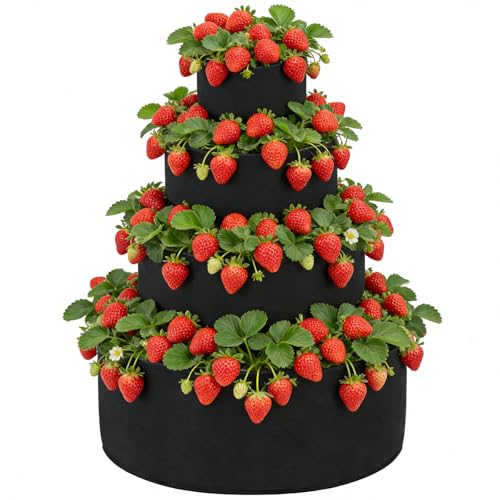
Fabric planters have earned genuine respect among serious gardeners, and the BOUTICOL 4-Tiered tower demonstrates exactly why. The tiered system steps up in size — 12, 20, 28, and 36 inches across — creating a pyramid profile that ensures every tier gets adequate sunlight without the upper levels completely shading the lower ones. That stepped geometry is a thoughtful design choice that many competing towers skip entirely. The felt fabric itself is breathable and fast-draining, which is exactly what strawberry roots need: consistent moisture without waterlogging.
One of the biggest advantages of fabric construction is air pruning. When roots reach the permeable walls, they prune naturally instead of circling and becoming root-bound, which consistently produces more vigorous, productive plants. The BOUTICOL handles this well. The material is dense enough to hold its structure under a full soil load, and the stitching at the base of each tier appears reinforced to resist sagging. Setup is simple — no clips, no hardware, just stack the tiers in size order and fill them. Outdoor durability has been a question mark for fabric planters historically, but high-quality felt like this holds up through multiple seasons without significant degradation.
The black colorway absorbs heat, which can benefit strawberries in cooler climates by warming the root zone earlier in spring. In very hot climates, however, you'll want to position this planter where it gets afternoon shade to prevent root overheating during peak summer. On a balcony or terrace where space is precious and portability matters, this fabric tower is hard to beat for the price point.
Pros:
Cons:
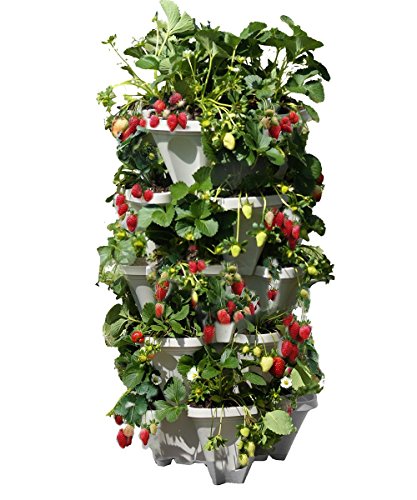
Mr. Stacky has been one of the most recognizable names in vertical gardening planters for years, and the 5-tiered version earns its reputation. The defining feature here is the self-watering cascade system: water the top pot and gravity distributes it downward through each successive tier. That means you're watering 20 plants by filling a single pot — an enormous time savings for anyone managing a busy schedule. For strawberries specifically, this kind of consistent, gentle moisture delivery is ideal because it prevents the cycle of drought stress and overwatering that kills most home-grown berries.
The five-tier configuration gives you more growing sites than most competing stackable designs, and the pots are sized appropriately for strawberry root systems. Each tier's pot features drainage holes that feed directly into the tier below, and the design keeps the stack stable even outdoors in moderate wind. Mr. Stacky works equally well indoors under grow lights and outdoors in direct sun, making it genuinely versatile across different gardening setups. It's also proven itself with tomatoes, peppers, herbs, and leafy greens — so if your strawberry season ends, you can transition to other crops without buying additional equipment.
Assembly is plug-and-play: each tier clicks into the one below with minimal effort. The plastic is UV-resistant, which matters for outdoor use where cheaper materials yellow and become brittle within one season. If you're new to vertical gardening and want something that practically runs itself, Mr. Stacky is the entry point that won't frustrate you.
Pros:
Cons:
If floor and shelf space are genuinely non-negotiable, upside-down hanging planters solve the problem in a way that vertical towers can't. This five-pack gives you 3-gallon bags — each measuring 8×14 inches — with six triangular pockets per bag and a bottom hole for inverted planting. Five complete bags with metal hooks for the price of a single rigid planter makes this the clearest value proposition in this category, and the generous quantity means you can cover a fence line, porch railing, or pergola with productive strawberry plants in one purchase.
The upside-down design isn't just a novelty. Gravity naturally draws water and nutrients directly toward the root zone, and the inverted orientation eliminates the soil-borne disease risk that comes with strawberry crowns sitting on wet soil. The six triangular pockets on each bag add further planting sites, so you're not limited to the single inverted bottom position — you can fill the side pockets with herbs or companion plants. The non-woven fabric construction is thick enough to hold its structure under a full soil load while remaining breathable for healthy root oxygenation.
Each bag includes a hanging handle and comes with a metal hook, so the full mounting setup is included — no sourcing separate hardware. The bags fold flat for off-season storage and are machine washable for reuse across multiple growing seasons. For a simple, space-efficient setup that costs less than a single rigid planter, this five-pack delivers real value.
Pros:
Cons:
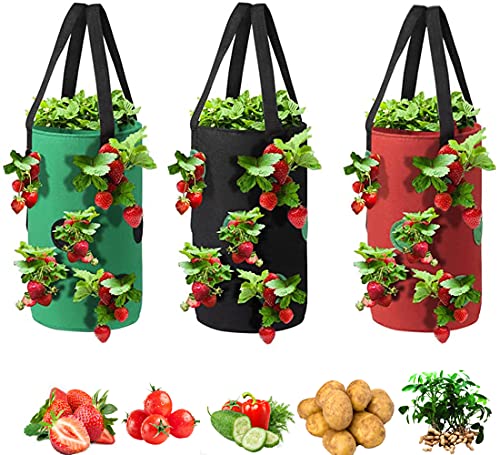
The SouilGoal set distinguishes itself from the five-pack above with one notable advantage: 12 planting holes per bag, double the count of most competing hanging planters. That means each of the three bags in this set can support a full garden's worth of strawberries or a diverse mix of vegetables and flowers simultaneously. The felt cloth construction is the same high-quality breathable material seen across the better fabric planters in this roundup — durable, foldable, washable, and genuinely multi-season capable.
Versatility is the real selling point here. Beyond strawberries and tomatoes, the 12-hole configuration accommodates potatoes, carrots, onions, garlic, lilies, and even watermelons. This makes the SouilGoal a genuinely all-purpose hanging growing system rather than a strawberry-specific purchase. If your growing priorities shift between seasons, these bags adapt without requiring additional investment. The set of three in red, green, and black also gives you visual variety that makes a garden fence or pergola feel intentional rather than makeshift.
At 3 gallons per bag, root volume is on par with the five-pack option above. The bags hang securely from garden fences, pillars, or pergola beams, and the felt maintains structural integrity under full soil load without bulging or drooping. For gardeners who want flexibility across multiple plant types — and specifically those who grow both strawberries and other vegetables — the SouilGoal set covers more ground than any single-purpose planter on this list.
Pros:
Cons:
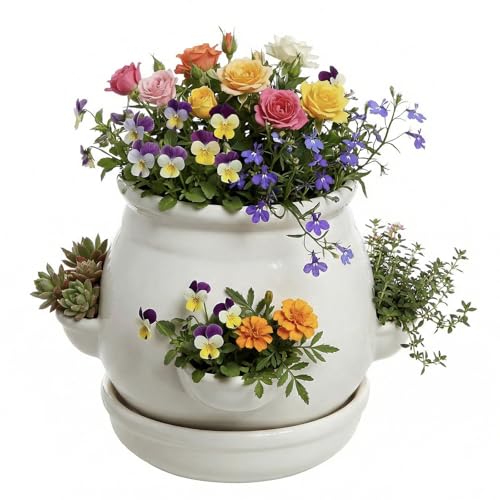
Not every strawberry planter needs to be optimized purely for yield. If you want something that looks genuinely beautiful on a patio table, kitchen windowsill, or indoor shelf, the MyGift White Ceramic Pot is the clear winner in this category. The classic strawberry pot design — a large round top opening with four decorative side openings — is a centuries-old form that remains one of the most elegant ways to display strawberry plants. The clean white glaze is versatile enough to complement any outdoor décor style, from modern minimalist to traditional cottage garden.
Functionally, it does what a strawberry pot should: the bottom drainage hole channels excess water into the included saucer, protecting surfaces while keeping the soil from staying waterlogged. The four side pockets allow you to plant runners or herbs alongside your main strawberry plant in the top opening, creating a full, lush arrangement from a single vessel. Ceramic provides natural insulation that moderates soil temperature better than plastic or fabric — a meaningful advantage in climates with hot days and cool nights.
The tradeoff is capacity. This is a decorative accent piece, not a high-yield growing system. You're looking at one to five plants depending on cultivar size. It's also heavier than fabric or plastic options, so repositioning requires more effort. If you're pairing this with other pots in a larger collection, our guide to the 15 best outdoor planter pots covers complementary options worth considering. For the gardener who wants their strawberry plants to be part of their home's visual story, there's nothing in this roundup that competes aesthetically.
Pros:
Cons:
Every other planter on this list focuses on maximizing plant count within a minimal footprint. The Keter Splendor takes the opposite approach: 31.7 gallons of growing volume in a raised bed format measuring 44.9 × 19.4 × 29.8 inches. If you want to grow a serious quantity of strawberries — enough for regular harvesting, jam-making, or feeding a household — this is the planter that delivers. The raised height also means no bending down to tend your plants, which is a practical benefit that becomes more valuable with every passing gardening season.
Keter built genuine intelligence into the watering system. An easy-to-read water gauge tells you exactly when your plants need moisture, removing the guesswork that leads to both underwatering and overwatering mistakes. The drainage plug opens and closes to give you full control — you can retain water during dry spells or flush the system after heavy rain. That level of moisture management precision is particularly valuable for strawberries, which are sensitive to both drought stress and root rot. The brown finish mimics wood grain convincingly, so this looks intentional in a patio or deck setting rather than utilitarian.
The construction is polypropylene resin — weather-resistant, UV-stable, and significantly lighter than an equivalent wood raised bed. Assembly requires no tools beyond what's included. If you're lining the interior before filling, our guide to the 13 best liners for raised garden beds is worth reading first. For anyone committed to growing strawberries at volume rather than purely minimizing footprint, the Keter Splendor is the most capable option in this roundup by a considerable margin. According to University of Minnesota Extension, strawberries thrive with consistent moisture and good drainage — both of which this planter's built-in system delivers.
Pros:
Cons:

Drainage is the single most important factor in strawberry planter selection. Strawberries are remarkably susceptible to root rot, and a planter that retains excess moisture will kill plants faster than any pest or disease. Every planter you consider needs adequate drainage holes or permeable walls — not as an afterthought, but as a core design feature. Fabric planters handle this almost automatically because water moves freely through the material. Ceramic and plastic planters need properly sized drainage holes, and ideally a separate saucer to catch runoff without letting the pot sit in standing water. The self-watering systems like Mr. Stacky and the Keter Splendor add an extra layer of intelligence here, actively managing moisture levels rather than just passively draining excess.
Beyond drainage, think about root volume. Each strawberry plant needs adequate soil depth — at least 8 inches and ideally 10-12 inches — to develop a productive root system. Shallow pockets look attractive but often underperform. Vertical tower planters typically offer more depth per site than horizontal tiered designs, which is one reason they're so consistently popular with serious strawberry growers.
Your available space determines which category of planter makes sense before you evaluate individual products. Vertical stackable towers are the obvious choice for patios, balconies, and any environment where floor space is the constraint. They multiply your growing capacity without expanding the footprint, and the best designs cascade fruit naturally for easy harvesting. Hanging planters solve a different problem — they use vertical wall space and overhead structures that would otherwise sit unused. Raised bed planters like the Keter Splendor require dedicated square footage but return the largest individual yield per plant because root systems aren't competing for space.
Consider sunlight distribution when evaluating tower-style planters. A poorly designed tower shades its lower tiers, resulting in uneven growth and disappointing yields from the bottom. Stepped designs like the BOUTICOL's pyramid profile address this directly. Cylindrical towers rely on rotation or positioning to ensure even sun exposure across all levels.
The material your planter is made from affects both longevity and growing conditions. Fabric planters — felt and non-woven polyester — excel at drainage and air pruning but have a shorter outdoor lifespan than rigid alternatives. High-quality felt holds up for several seasons, but cheaper fabric versions degrade noticeably within a year of UV and weather exposure. Plastic planters vary enormously in quality: UV-stabilized polypropylene resists yellowing and brittleness for many years, while low-grade plastic turns chalky and cracks by the second season. Ceramic is the most durable option aesthetically but adds weight and fragility — a dropped ceramic pot is a lost investment. Resin composites like the Keter Splendor offer the visual warmth of wood with the weather resistance of plastic.
Strawberries need consistent moisture, but most gardeners don't have time to monitor soil moisture manually every day. Built-in self-watering features or irrigation-compatible designs dramatically reduce maintenance burden while actually improving plant health through more consistent delivery. Mr. Stacky's cascade system, the Keter Splendor's water gauge and plug, and the center irrigation hole in the USA-made Tower all represent thoughtful solutions to this challenge. If you're using a planter without built-in watering features, a quality moisture meter takes the guesswork out of when to water — our roundup of the best plant moisture meters covers the top options available.
For any outdoor planter setup, also consider the watering access. Tall vertical towers may require you to carry water to height; self-watering designs with top reservoirs simplify this. Drip irrigation adapters are available for most tower systems and are worth the modest additional investment if you're growing more than a handful of plants.
Vertical stackable towers are generally the best choice for most home gardeners because they maximize plant density per square foot of space while promoting the airflow and sunlight exposure that strawberries need to thrive. For high-yield production without space constraints, raised bed planters provide the most root volume per plant. Hanging planters are ideal when floor and shelf space are completely unavailable. The right answer depends on your specific space, goals, and how many plants you want to grow.
Strawberry plants need a minimum of 8 inches of soil depth to develop a productive root system, and 10 to 12 inches is preferable for the most productive cultivars. Shallow planters — anything under 6 inches — consistently underperform because they can't support adequate root development or retain sufficient moisture between waterings. When evaluating vertical tower planters, look for individual pocket depth specifications rather than overall tower height.
Yes, and they often grow exceptionally well in fabric planters. The breathable walls promote air pruning, which prevents root circling and produces a more vigorous, branching root structure than rigid pots typically allow. The fast drainage of fabric also reduces root rot risk significantly. The main tradeoff is that fabric planters dry out more quickly than rigid containers, so you may need to water more frequently — especially in hot, dry climates or during peak summer heat.
This depends on the specific tower, but most four-tier stackable planters accommodate between 20 and 28 plants. The Strawberry Planter Tower reviewed here holds 28 plants across four tiers. Mr. Stacky's five-tier design holds 20. Fabric towers vary by size tier configuration. For a family wanting regular fresh strawberry harvests in 2026, a single 20-to-28 plant tower provides a meaningful yield without requiring more space than a standard pot.
Drainage holes are non-negotiable for strawberry planters. Without proper drainage, soil becomes waterlogged, oxygen can't reach the roots, and root rot sets in quickly. Every planter on this list provides drainage through either holes in the base, permeable fabric walls, or a managed drainage plug system. If you're placing any planter on a deck or indoor surface, pair it with a properly sized saucer to collect runoff — just ensure the pot doesn't sit in standing water, which defeats the drainage purpose entirely.
In USDA hardiness zones 6 and above, strawberries in planters can be maintained year-round with minimal protection. In colder zones, the limited soil volume in planters means roots are more exposed to freezing temperatures than in-ground plants. Move planters to a sheltered location or unheated garage during hard freezes, and add a layer of mulch over the soil surface for insulation. Everbearing varieties are particularly well-suited to container growing because they produce multiple harvests throughout the growing season rather than a single June crop.
The best strawberry planter isn't the one with the most features — it's the one that matches your actual space, your watering habits, and how serious you are about your harvest.
 |
 |
 |
 |

About Truman Perkins
Truman Perkins is a Detroit-based SEO consultant who's been in the business for over a decade. He got his start helping friends and clients get their websites off the ground, and he continues to do so today. In his free time, Truman enjoys learning and writing about gardening - something he believes is a natural stress reliever. He lives with his wife, Jenny, and their twins in Detroit.


Get new FREE Gifts. Or latest free growing e-books from our latest works.
Disable Ad block to reveal all the links. Once done, hit a button below
|
|
|
|
 rinjal