Plants & Farming

Tamil Nadu Greenhouse Subsidy For Rooftop Farming

reviewed by Truman Perkins

Tamil Nadu's urban agriculture initiative has channeled subsidies to more than 12,000 urban households since its inception, making the Tamil Nadu rooftop farming subsidy one of the most expansive state-backed urban horticulture programs in South India. As Chennai, Coimbatore, Madurai, and other major cities contend with shrinking green spaces and rising food costs, rooftop cultivation has emerged as a viable, government-supported alternative for residents seeking fresh produce and meaningful agricultural engagement. Trinjal's plants, herbs, and farming resource library covers the full range of urban growing approaches — and this subsidy sits at the center of what makes rooftop farming economically accessible for ordinary households.
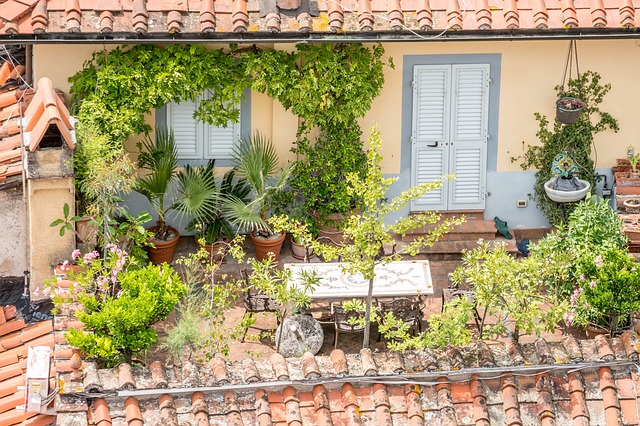
Terrace Garden
Terrace Garden

The Tamil Nadu Horticulture and Plantation Crops Department administers the subsidy under its Urban Horticulture scheme, offering financial assistance of up to 50 percent on approved infrastructure. Grow bags, shade nets, drip irrigation systems, vermicompost beds, and growing media all fall within the covered expense categories. The program targets residential homeowners, apartment societies, and institutional rooftops that meet minimum area thresholds and structural safety standards established by the department.

For residents already exploring whether urban farming can be profitable in India, this subsidy removes one of the most significant barriers: the upfront capital required to establish a productive rooftop garden. This guide covers every dimension of the Tamil Nadu rooftop farming subsidy — eligibility, application, benefits, risks, and scaling strategies — for applicants at every level of horticultural experience.

Who Qualifies and What the Subsidy Covers

The Tamil Nadu rooftop farming subsidy is not a blanket entitlement. The department applies specific criteria to determine eligibility, and understanding these conditions before submitting an application saves considerable time and effort.

Eligible Applicants and Property Types

The program accepts applications from a defined set of beneficiary categories. Each category carries its own area requirement and documentation standard.

  • Individual homeowners with a rooftop area of at least 100 square feet, confirmed by a structural stability certificate
  • Apartment residents who hold written approval from their resident welfare association or apartment management committee
  • Registered housing societies with common terrace areas of at least 500 square feet
  • Educational institutions, hospitals, and government buildings applying under the institutional rooftop sub-scheme
  • Applicants must be residents of Tamil Nadu and must not have previously received a rooftop farming subsidy from the state
  • Priority is given to applicants in urban and peri-urban zones classified under municipal corporation or town panchayat jurisdictions

According to the Wikipedia overview of rooftop gardens, urban rooftop cultivation reduces the urban heat island effect alongside its food production benefits — a dual rationale that informed Tamil Nadu's program design.

Covered Infrastructure and Expense Categories

The subsidy covers specific inputs. Applicants who purchase non-eligible items and later seek reimbursement face rejection. The table below summarizes the primary components, standard subsidy rates, and per-unit cost ceilings as published by the Horticulture Department.

Infrastructure Component Subsidy Rate Cost Ceiling (approx.) Notes
Grow bags (set of 100) 50% ₹3,000 UV-stabilized HDPE bags only
Shade net structure 50% ₹15,000 Minimum 50% shading grade required
Drip irrigation kit 50% ₹8,000 Must include pressure regulator
Growing media (cocopeat + vermicompost) 50% ₹2,500 Certified supplier invoices required
Seedlings and starter plants 50% ₹1,500 From government nurseries preferred
Vermicompost bed setup 50% ₹5,000 Optional; strengthens application score

Applicants who include a vermicompost bed in their proposal often score higher in departmental review. Worm castings as a fertilizer source are recognized by the program as a sustainable input that reduces recurring expenditure — a point worth emphasizing in the application narrative.

How to Apply for the Tamil Nadu Rooftop Farming Subsidy

The application process is managed through the district Horticulture Department office. There is no fully online submission pathway at present, though initial inquiry and form download are available through the department's web portal.

Documents Required for Submission

Incomplete document sets are the single most common reason for application delays. The following checklist reflects the standard requirements across most Tamil Nadu districts:
  • Proof of identity: Aadhaar card, voter ID, or passport (any one)
  • Proof of address matching the property where farming will occur
  • Property ownership document or registered lease agreement (minimum three-year tenure)
  • Structural stability certificate issued by a licensed civil engineer (not older than six months)
  • Photographs of the rooftop: minimum four angles, clearly showing the available area
  • Detailed project proposal specifying the crops intended, area coverage, and input list
  • Quotations from at least two suppliers for all infrastructure items in the proposal
  • Bank account details with passbook copy for direct subsidy transfer
  • For apartment residents: formal no-objection letter from the managing committee on letterhead

The Application Process Step by Step

Tools and Equipment:
  1. Obtain the official application form from the district Horticulture Department office or download it from the state horticulture portal.
  2. Complete the project proposal section with accurate crop selections, estimated yield targets, and a realistic infrastructure budget drawn from supplier quotations.
  3. Compile all mandatory documents in the order specified in the form's checklist. Incomplete submissions are returned without processing.
  4. Submit the application in person at the district office. Retain the acknowledgment slip with the submission date and reference number.
  5. Await field inspection. A departmental officer will visit the site to verify the rooftop dimensions and structural certification. This inspection typically occurs within 30 to 45 days of submission.
  6. Receive provisional approval. After inspection, the department issues a sanction letter specifying the approved amount and a deadline for implementation.
  7. Purchase approved inputs from suppliers whose quotations were submitted. Retain all original invoices — photocopies are not accepted at the reimbursement stage.
  8. Submit implementation proof including photographs of the completed setup, original invoices, and a completion report as specified in the sanction letter.
  9. Subsidy disbursement via direct bank transfer follows final verification, typically within 60 days of implementation proof submission.

Pro tip: Applicants who source seedlings and growing media from government-recognized nurseries and certified suppliers receive faster invoice verification — commercial supplier invoices often require additional scrutiny that extends the disbursement timeline.

Advantages and Limitations of the Program

The Tamil Nadu rooftop farming subsidy delivers measurable value, but it also carries constraints that applicants must weigh honestly before committing to the program's requirements.

Key Benefits for Urban Households

  • Direct cost reduction of up to 50 percent on core infrastructure, making rooftop farming financially viable for middle-income households
  • Access to government nurseries for certified, disease-resistant seedlings at subsidized rates
  • Eligibility for follow-on programs, including the state's composting and drip irrigation expansion grants
  • Reduced household vegetable expenditure: a 200-square-foot rooftop setup can supply 40 to 60 percent of a family's leafy vegetable needs
  • Contribution to urban heat island mitigation, which lowers cooling costs in the long term
  • Priority consideration for subsequent subsidy rounds for applicants who demonstrate productive use
  • Integration with Tamil Nadu's broader climate resilience agenda, which opens pathways to NGO and CSR-backed supplementary support

Homeowners considering growing profitable fruits as a small-scale enterprise in India will find the subsidy particularly useful for covering the container and irrigation infrastructure that fruit-bearing plants require at rooftop scale.

Recognized Constraints and Trade-offs

  • The subsidy covers infrastructure only — labor, water charges, and ongoing inputs such as fertilizers and pest control remain the applicant's responsibility
  • Reimbursement model requires out-of-pocket expenditure before funds are released, which creates a short-term capital requirement
  • Approved cost ceilings may not reflect current market prices in high-inflation periods, leaving applicants to absorb the difference
  • A minimum 100-square-foot rooftop area disqualifies residents of very small apartment units
  • The one-subsidy-per-household policy prevents applicants from scaling to a second unit under the same scheme
  • Processing timelines vary significantly by district; some applicants report waiting six months or longer between submission and disbursement

Critical Errors That Jeopardize Subsidy Approval

Departmental rejection data reveals consistent patterns in failed applications. Most errors are avoidable with preparation. Understanding these failure points protects both the application and the investment.
Documentation and Eligibility Mistakes

  • Submitting photocopies instead of originals for invoices and certificates — the department requires originals at every verification stage
  • Using a structural stability certificate older than six months at the time of submission
  • Providing supplier quotations without the GST number, which renders them inadmissible for reimbursement
  • Omitting the no-objection letter for apartment applications, which is treated as a mandatory document rather than an optional supplement
  • Listing ineligible infrastructure items — such as decorative pots or non-UV-stabilized containers — in the project proposal budget
  • Applying under a rented property without a registered lease of at least three years

Post-Approval Setup and Compliance Errors

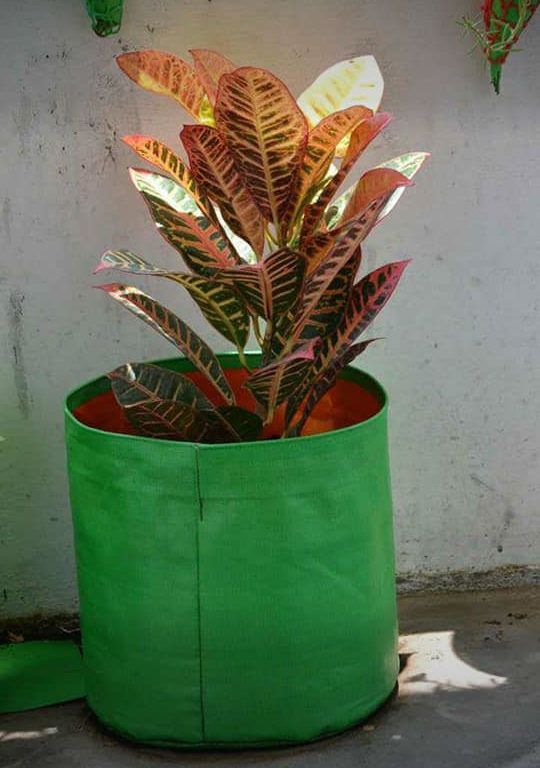
Grow Bag
Grow Bag
  • Purchasing inputs before receiving the official sanction letter — pre-sanction purchases are never reimbursed, regardless of eligibility
  • Substituting approved suppliers after sanction is issued; all purchases must align with the quoted vendors in the original submission
  • Missing the implementation deadline specified in the sanction letter — extensions require formal written requests and are not automatically granted
  • Failing to photograph the completed setup systematically; blurry or partial images cause verification delays
  • Installing infrastructure in configurations that differ from the approved proposal, such as placing grow bags below the rooftop level
  • Neglecting to retain original purchase receipts; lost invoices result in partial or full non-reimbursement

Proper container selection is foundational to compliance. Reviewing the range of indoor and outdoor planter pot types helps applicants identify which containers qualify under the department's UV-stabilized HDPE requirement and which do not — a distinction that affects both approval and long-term crop performance.

From First Plot to Full Rooftop Farm

The subsidy is designed to be inclusive, but the practical implications of the program differ substantially depending on whether the applicant is setting up a rooftop garden for the first time or expanding an existing urban farming operation.

What New Applicants Should Prioritize

First-time rooftop farmers benefit most by keeping the initial setup modest and focused. The subsidy's per-unit cost ceilings reward efficiency, and a compact, well-maintained setup produces better verification outcomes than an ambitious but under-resourced one.

  • Start with 50 to 80 grow bags on a 100-to-150-square-foot area — sufficient for leafy greens, herbs, and two or three fruiting vegetables
  • Prioritize a drip irrigation kit; hand-watering is inconsistent and the irrigation component attracts the full 50-percent subsidy rate
  • Select fast-maturing crops such as spinach, fenugreek, coriander, and radish for the first season — these demonstrate productivity during the departmental follow-up visit
  • Source growing media from certified suppliers; cocopeat and vermicompost combined at a 70:30 ratio is the standard mix recommended in department literature
  • Apply rice water as a supplemental fertilizer during the early growth phase — it supports root development in the shallow-depth growing media typical of rooftop containers without adding to input costs

New applicants who wish to supplement natural light — particularly during monsoon months when overcast conditions reduce photosynthetic efficiency — should consider reviewing available options for LED grow lights for indoor and covered growing setups. While supplemental lighting is not covered by the subsidy, it extends the productive season significantly for shaded rooftops.

Scaling Strategies for Experienced Growers

Applicants who already manage a productive rooftop garden and are applying to formalize or expand it under the subsidy face a different set of strategic decisions. The one-subsidy-per-household rule means the application must capture as much eligible infrastructure as possible in a single well-structured proposal.

  • Document the existing setup thoroughly before applying — field officers compare the pre-application rooftop state against the post-installation photographs, so any undocumented prior installation complicates verification
  • Channel the subsidy toward infrastructure the existing setup lacks: shade netting and drip systems are often the highest-value additions for growers who already use grow bags
  • Incorporate a vermicompost bed into the proposal; experienced growers who already compost household waste can use the subsidy to formalize the setup with a certified bed — reducing ongoing input costs permanently
  • Select crops with higher market value for expanded sections: cherry tomatoes, capsicum, and herbs such as basil and lemongrass offer meaningful return for rooftop-scale growers considering supplementary income
  • Engage the district Horticulture Department officer early in the planning phase — officers often provide informal guidance on proposal structuring that significantly improves approval rates for experienced applicants with complex setups

Frequently Asked Questions

What is the maximum subsidy amount available under the Tamil Nadu rooftop farming program?

The subsidy covers 50 percent of the cost of approved infrastructure components up to the cost ceilings set by the department. The total reimbursable amount varies based on the scale of the setup, but most residential applicants receive between ₹10,000 and ₹25,000 in subsidy support. Larger housing society applications covering common terraces can qualify for higher amounts under the institutional category.

Can tenants apply for the Tamil Nadu rooftop farming subsidy, or is it limited to property owners?

Tenants are eligible to apply, provided they hold a registered lease agreement with a minimum tenure of three years from the date of application. The lease must be registered — a notarized agreement is not accepted as a substitute. The property owner's written consent is also required as part of the documentation set, though the subsidy disbursement goes to the applicant's account.

How long does the entire process take from application to subsidy disbursement?

The process typically spans four to seven months across all stages: submission review (two to four weeks), field inspection (one to six weeks), sanction issuance (two to four weeks), implementation period (variable, usually one to two months), and final verification and disbursement (four to eight weeks). Applicants in districts with higher processing volumes experience longer timelines. Maintaining complete documentation at every stage is the most effective way to avoid delays.

Final Thoughts

The Tamil Nadu rooftop farming subsidy represents a concrete, government-backed opportunity to establish productive urban agriculture at significantly reduced cost — but the program rewards preparation. Applicants who invest time in assembling complete documentation, designing a realistic proposal within the department's cost ceilings, and sourcing inputs from recognized suppliers navigate the process far more smoothly than those who treat it as a simple reimbursement form. The next step is straightforward: visit the district Horticulture Department office, collect the official application form, and begin gathering the structural certificate and supplier quotations that will form the foundation of a competitive, approvable proposal.

Truman Perkins

About Truman Perkins

Truman Perkins is a Detroit-based SEO consultant who's been in the business for over a decade. He got his start helping friends and clients get their websites off the ground, and he continues to do so today. In his free time, Truman enjoys learning and writing about gardening - something he believes is a natural stress reliever. He lives with his wife, Jenny, and their twins in Detroit.


Follow Christina:

Get new FREE Gifts. Or latest free growing e-books from our latest works.

Disable Ad block to reveal all the links. Once done, hit a button below