The first time many aquatic gardeners try keeping submerged plants alive, they lose half of them within a month — not from neglect, but from not knowing which species genuinely belong below the surface. Understanding the 10 plants that grow underwater is the natural starting point for anyone entering aquatic gardening, whether the goal is a thriving freshwater aquarium, a backyard pond, or a decorative water feature. This guide, part of Trinjal's plants, herbs, and farming resource library, covers plant selection, setup, real-world costs, and the ongoing care these species need to flourish.
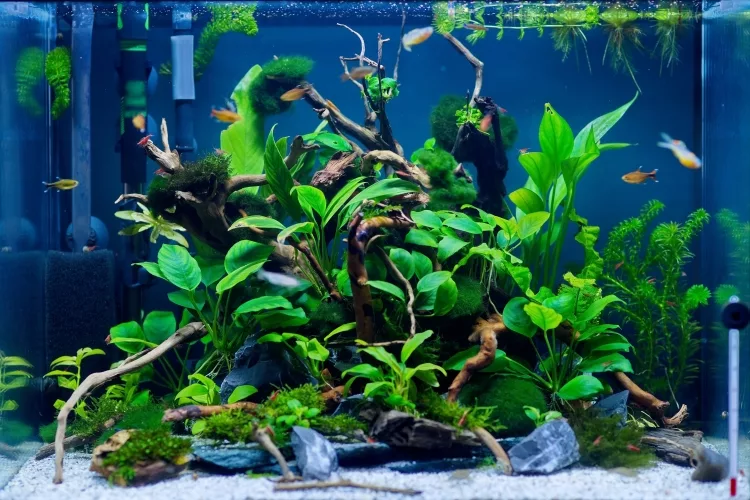
Aquatic plants are not a monolithic category. They include true submerged species, emergent varieties that grow partly above the waterline, and floating plants that never touch substrate at all. The ten species featured here are fully or primarily submerged — plants that spend most of their life cycle beneath the surface. Each plays a distinct ecological role: oxygenating the water column, out-competing algae for dissolved nutrients, stabilizing substrate, and providing cover for fish and invertebrates. Many home gardeners discover that a well-planted aquatic setup is dramatically more stable than a bare tank or sterile pond, with fewer water quality crashes and far less maintenance intervention over time.
Unlike terrestrial plants, submerged species interact with their environment through water chemistry rather than soil structure. Parameters like pH, carbonate hardness, and light intensity determine whether a plant thrives or slowly yellows and melts. Gardeners already familiar with the principles behind testing soil pH at home will find the logic transfers directly — aquatic plants follow the same chemistry, just with water as the growing medium instead of soil.
Contents
The container shapes every other decision in aquatic plant keeping. Indoor aquariums between 10 and 30 gallons give most beginners enough space to experiment while keeping parameters manageable. Smaller vessels — anything under five gallons — heat up quickly, experience more volatile pH swings, and leave little margin for error when fish waste spikes ammonia. Outdoor ponds introduce additional complexity: rainfall affects pH, ambient temperature can fluctuate dramatically by season, and predators or debris may disturb planting over time. Sealed ceramic pots and half-barrel water gardens work surprisingly well for compact collections of low-maintenance species placed in partially shaded patios or courtyard gardens. For aquarists who already experiment with enclosed ecosystems, the principles in Trinjal's overview of different types of terrariums translate cleanly into aquatic setups — especially for paludariums that blend land and water zones in a single container.
Most of the 10 plants that grow underwater do not strictly require specialized substrate. Plain aquarium gravel or coarse sand anchors root feeders like Amazon sword and vallisneria adequately. Nutrient-rich substrates — aqua soils, Fluval Stratum, or capped layered systems — accelerate growth in demanding species such as bucephalandra and dwarf hairgrass, delivering trace elements directly at the root zone. Lighting intensity is equally critical: hornwort and java moss tolerate low-output fixtures, while water wisteria and Amazon sword perform best under moderate to high PAR (photosynthetically active radiation) values. CO₂ injection, while not mandatory, dramatically accelerates growth in most stem plants and significantly reduces algae pressure by helping plants absorb nutrients faster than algae spores can colonize.
Water parameters worth monitoring include pH, which most submerged plants prefer between 6.5 and 7.5, as well as general hardness (GH) and carbonate hardness (KH), the latter of which buffers pH stability across days and water changes. Temperature ranges between 22°C and 28°C suit the majority of tropical aquatic species. Coldwater-tolerant plants like hornwort survive temperatures as low as 15°C, making them viable for unheated setups or temperate outdoor ponds during the warmer half of the year.
Root-feeding plants — Amazon sword, vallisneria, dwarf sagittaria, and all Cryptocoryne varieties — go directly into substrate, buried to the crown of the plant but never past it. Covering the growing point causes rot. Rhizome plants, specifically java fern and anubias, must never have their rhizome buried at any depth. The standard approach is to attach these plants to driftwood, smooth river stones, or ceramic decorations using fishing line, cotton thread, or aquarium-safe cyanoacrylate gel. The plant's natural roots will grip the surface within a few weeks, after which the tie can be removed entirely. Stem plants such as hornwort and water wisteria can float freely near the surface or be loosely anchored in substrate with a small plant weight or clip.
Never bury the rhizome of java fern or anubias — doing so causes rot from the base within two to three weeks. Attach these plants to hardscape and let them grip on their own schedule.
Submerged plants deliver benefits that extend well beyond aesthetics. Live aquatic plants consume ammonia and nitrate — the primary byproducts of fish waste decomposition — reducing the burden on mechanical filtration and lowering the frequency of water changes needed to keep parameters stable. This natural filtration effect is consistent and measurable: densely planted tanks routinely show lower nitrate readings than comparable unplanted setups running on the same feeding schedule. Algae control is another concrete advantage. Healthy, fast-growing plants like hornwort and water wisteria directly out-compete algae for dissolved phosphate and nitrogen, keeping glass and hardscape noticeably cleaner week over week. Fish and shrimp exhibit measurably lower stress indicators in planted environments, which translates to better coloration, more active behavior, and higher breeding success rates in many species.
For gardeners who cultivate plants in adjacent wet or marshy conditions outside of aquariums, there is substantial species overlap with fully aquatic environments. Many plants suited for wet terrestrial zones also adapt to submerged or emergent aquatic positions — a relationship explored in detail in Trinjal's guide to plants that grow well in marshy areas.
The challenges are real and worth understanding before committing equipment or budget. Algae outbreaks — particularly green spot algae and thread algae — frequently afflict new planted setups before plants establish and begin actively consuming nutrients. Imbalances from overfeeding fish, insufficient light, or fertilizing without adequate CO₂ create persistent management problems that frustrate beginners who expect immediate stability. Some submerged plants melt when first introduced, shedding their emersed-grown leaves before producing aquatic-adapted foliage. This transition, lasting two to four weeks in crypts and Amazon sword, consistently alarms new aquarists who assume the plant has died. It has not — it is converting cellular structure from an air-grown form to a water-adapted one, a process that cannot be rushed or bypassed.
According to Wikipedia's classification of aquatic plants, submerged macrophytes are organized by rooting behavior, growth habit, and tolerance of varying water conditions — distinctions that map directly onto practical difficulty levels for home aquarists and pond keepers. The 10 plants that grow underwater range from nearly indestructible to genuinely demanding, and choosing the right starting point makes a significant difference in early success rates and long-term satisfaction.
Java fern (Microsorum pteropus) tops most beginner lists for good reason. It grows in low light, tolerates a wide pH range, needs no CO₂ injection, and attaches readily to driftwood and rock. Anubias, particularly Anubias barteri var. nana, shares the same tolerant profile and grows slowly enough to require only occasional trimming of dead or algae-coated leaves. Hornwort (Ceratophyllum demersum) is arguably the most forgiving species on this list — it floats freely, requires no planting, and grows vigorously in low-tech setups where other plants stall. Vallisneria, a grass-like species that colonizes substrate through lateral runners, establishes quickly in plain gravel and provides excellent background coverage in any sized tank. Java moss (Taxiphyllum barbieri) completes the beginner tier: it tolerates almost any light level, requires no substrate, and provides invaluable shelter for fish fry and dwarf shrimp. For aquarists curious about how different moss species behave in enclosed water environments, Trinjal's guide to types of terrarium moss offers useful comparative context across both aquatic and semi-aquatic applications.
Bucephalandra occupies the upper tier of difficulty — not because it requires extreme conditions, but because it grows so slowly that errors compound before they become visible. A single misplaced rhizome can take months to recover, and browning leaves may persist long after the original problem is corrected. Dwarf hairgrass (Eleocharis parvula) demands consistent moderate-to-high light and benefits substantially from CO₂ injection to achieve the dense carpet effect most aquascapers pursue; without both inputs, it grows sparsely and fails to spread laterally. Amazon sword (Echinodorus amazonicus) is beginner-friendly in terms of water chemistry tolerance but can reach 40–60 cm in height, making it impractical in small tanks where it will shade everything beneath. Water wisteria (Hygrophila difformis) grows rapidly enough under good conditions to require weekly trimming; left unchecked, it creates dense surface cover that starves lower plants of light. Cryptocoryne species occupy a middle ground — hardy once established, but prone to the well-documented "crypt melt" when water parameters shift, which can be disconcerting for those unfamiliar with how this genus adapts. Dwarf sagittaria, smaller and more compact than vallisneria, spreads reliably through runners to form a grass-like midground layer in moderate light without CO₂.
A functional planted aquarium can be established for as little as $50–80 USD when plants are sourced from local hobbyist groups, online auction platforms, or surplus trimmings from established aquarists. Basic equipment — a used aquarium, a simple sponge filter, and a budget LED fixture — handles the majority of beginner-tier species without issue. Many aquarists begin with java moss, hornwort, and anubias specifically because all three are inexpensive, widely available, and forgiving of the inconsistent care that is inevitable during the learning curve of a first planted setup.
Mid-range setups targeting a full planted display tank typically run $200–500. This range covers a quality adjustable-spectrum LED, a pressurized CO₂ system with regulator and diffuser, nutrient-rich substrate, and a canister filter with adequate turnover rate for the tank volume. Advanced setups — those using high-output lighting arrays, automated CO₂ controllers, and dedicated fertilizer dosing systems — can exceed $800–1,200 for a single display tank. The table below summarizes typical cost ranges by setup tier.
| Setup Tier | Tank Size | Lighting | Filtration | CO₂ | Plants | Est. Total |
|---|---|---|---|---|---|---|
| Budget / Beginner | 10–20 gal | Basic LED ($15–30) | Sponge filter ($10–20) | None | $15–30 | $50–100 |
| Mid-Range | 20–40 gal | Quality LED ($60–120) | Canister filter ($80–150) | Pressurized ($80–120) | $40–80 | $260–470 |
| Advanced / Display | 40–75 gal | High-output LED ($150–300) | Multi-stage canister ($150–250) | Automated + reactor ($150–250) | $80–200 | $530–1,000+ |
These figures exclude livestock and ongoing consumables such as fertilizers, CO₂ refills, and replacement filter media. Monthly operating costs for a mid-range setup typically run $10–25, with CO₂ refills and liquid fertilizers accounting for most of that figure.
Consistent maintenance separates thriving planted tanks from ones that slowly decline into algae-dominated disarray. Weekly tasks include partial water changes covering 20–30% of tank volume, glass cleaning to remove surface algae film before it becomes established, and trimming of fast-growing stem plants to prevent canopy shading. Slow-growing species like anubias and java fern need trimming only occasionally — when leaves yellow, accumulate visible algae, or physically crowd out other plants. Fertilizer dosing, either through weekly liquid supplements or substrate root tabs replaced every few months, sustains growth in tanks operating without CO₂ injection. Monthly tasks include inspecting substrate for anaerobic pockets identifiable as dark patches with a sulfurous odor when disturbed, checking CO₂ cylinder levels before they run empty mid-cycle, and rinsing filter media in tank water — never tap water, which kills beneficial bacteria — to restore flow rate.
Yellowing leaves in Amazon sword and Cryptocoryne most often point to iron deficiency, resolved with an iron-rich liquid fertilizer or root tabs placed near the plant base. A yellow tinge between leaf veins while the veins remain green — interveinal chlorosis — is a reliable iron deficiency indicator specifically. Holes developing in anubias leaves suggest physical damage from snails or fish grazing, or potassium deficiency in nutrient-poor water. Green spot algae appearing on glass and on the leaves of slow-growing plants indicates phosphate excess relative to plant uptake, or a flickering, inconsistent light schedule; establishing a fixed photoperiod of eight to ten hours daily often resolves it within two to three weeks. Staghorn algae — grey, branching threads anchored to hardscape and filter outlets — typically signals CO₂ fluctuations causing the plants to halt photosynthesis intermittently. Addressing the CO₂ consistency, rather than dosing algaecides, resolves the root cause.
Java fern and hornwort consistently rank as the most accessible starting points. Both tolerate low light, require no CO₂ injection, and survive modest parameter fluctuations — conditions that are common in newly established setups before the biological cycle stabilizes.
Not all of them. Java fern, anubias, and java moss attach to hardscape and require no substrate whatsoever. Root-feeding plants like Amazon sword, vallisneria, and Cryptocoryne species perform best when planted in gravel, sand, or nutrient-rich aqua soil where their roots can actively draw minerals.
Most species show visible new growth within two to four weeks under appropriate light and water conditions. Crypts and bucephalandra may appear dormant for several weeks as they shed emersed leaves and produce aquatic-adapted foliage — this adaptation phase is normal and should not be mistaken for plant failure.
Several can manage it in temperate climates. Hornwort, vallisneria, and java moss tolerate outdoor pond conditions during warmer months. Tropical species like Amazon sword and water wisteria require water temperatures consistently above 18°C and are better suited to heated indoor aquariums in most regions.
Beginner-tier species — java fern, anubias, hornwort, and java moss — grow well without supplemental CO₂. Higher-demand plants such as dwarf hairgrass in carpet form, water wisteria at full density, and bucephalandra benefit substantially from pressurized CO₂, which accelerates growth rate and dramatically reduces algae pressure by allowing plants to process available nutrients efficiently.
In most setups, weekly liquid fertilizer dosing covers the macro and micronutrient requirements of moderate-demand plants. Root tabs placed near heavy root feeders like Amazon sword every three to four months supplement substrate nutrition directly at the root zone. Over-fertilizing without sufficient light and CO₂ to drive nutrient uptake promotes algae rather than accelerating plant growth.
Yellowing most commonly indicates iron or nitrogen deficiency. Interveinal chlorosis — yellow leaf tissue with green veins remaining — points specifically to iron deficiency, resolved with iron-rich fertilizer or root tabs. Uniform pale yellowing across the whole leaf typically indicates insufficient nitrogen. A basic liquid test kit for aquariums helps isolate the nutrient issue before any corrective dosing begins.
Yes — all of these species thrive under quality artificial lighting designed for planted aquariums. Full-spectrum LED fixtures provide the wavelengths needed for photosynthesis without the complications of natural sunlight through a window, which is highly variable and frequently promotes aggressive algae growth. A timer set to a consistent eight to ten hour photoperiod delivers more reliable results than ambient natural light.
 |
 |
 |
 |

About Christina Lopez
Christina Lopez grew up in the scenic city of Mountain View, California. For eighteen ascetic years, she refrained from eating meat until she discovered the exquisite delicacy of chicken thighs. Christina is a city finalist competitive pingpong player, an ocean diver, and an ex-pat in England and Japan. Currently, she is a computer science doctoral student. Christina writes late at night; most of her daytime is spent enchanting her magical herb garden.


Get new FREE Gifts. Or latest free growing e-books from our latest works.
Disable Ad block to reveal all the links. Once done, hit a button below
|
|
|
|
 rinjal