Last spring, I grabbed my garden shears to cut back an overgrown rose bush and spent twice as long as I should have — the blades tore through stems rather than slicing cleanly. That's when it hit me: dull shears aren't just inconvenient, they actively damage your plants. Knowing how to sharpen garden shears is one of the most practical skills you can add to your routine, right alongside knowing how to prune delicate plants like peace lilies — because a sharp tool always makes the difference.

Sharp shears produce clean cuts that heal faster and resist disease. A ragged cut leaves plant tissue exposed to fungal infections and pest entry points — problems that compound quickly in an active garden. For more tool guides and gear recommendations, the gardening reviews section on Trinjal is a solid starting point for building out your toolkit.
You don't need a professional sharpening service or expensive machinery. Most gardeners already have everything they need sitting in their shed. This guide covers the right equipment, a clear step-by-step process, a comparison of sharpening methods, maintenance habits that extend edge life, and the technique details that separate a passable edge from a genuinely sharp one.
Contents
Before you start sharpening, gather the right equipment. Using the wrong tool leads to inconsistent results and can shorten the life of your blades. The good news is that effective sharpening tools are inexpensive and available at any hardware store.
Hand tools give you full control over pressure and angle — exactly what precision blade work requires. Here are the options worth knowing:
Beyond the sharpening tool itself, you'll need a wire brush or steel wool to remove rust, a clean rag, rubbing alcohol or soapy water for cleaning, and a light machine oil — WD-40 or 3-in-1 oil — for lubrication after sharpening.
For gardeners with a large tool collection or commercial-grade shears, power tools speed up the process considerably. A bench grinder works on thick blades but requires experience — too much heat from the wheel draws the temper from the steel and permanently weakens the edge. A rotary tool with a grinding attachment gives you more control and is a reasonable middle ground for most people. For the average home gardener sharpening a pair of bypass pruners, a diamond file is still the smarter and safer choice.
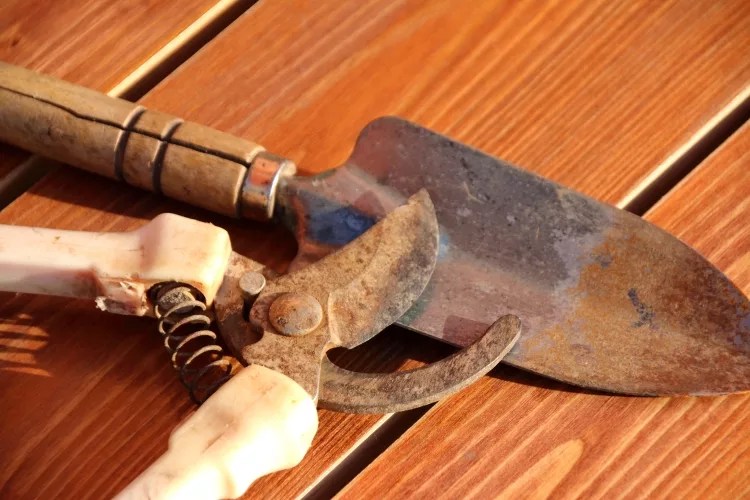
This is the core process for how to sharpen garden shears correctly. Follow each step in order — skipping the prep phase leads to uneven results and can introduce new problems to blades that were already struggling.
Never sharpen dirty blades. Soil, plant sap, and rust residue contaminate your sharpening tool and grind into the metal in ways that damage rather than improve the edge. Start with a thorough clean:
A chipped or deeply nicked blade needs aggressive material removal before fine sharpening begins. If you spot chips during inspection, start with a coarse-grit tool and spend more time on the restoration pass before moving to finishing strokes.
Garden shears have a single beveled edge — only one side of the blade carries the angled grind. That's the side you sharpen. The flat back side is left untouched except for a brief deburring pass at the end.
According to Wikipedia's overview of pruning shears, bypass-style shears rely on a scissor-like cutting action that depends on both blade sharpness and proper blade alignment. After sharpening, confirm that both blades still pass each other cleanly at full closure before putting the shears back to work.
The paper test is the fastest quality check. Hold a sheet of newspaper by one edge and slice through it with the shears. Sharp blades cut cleanly with no tearing or dragging. If the paper crumples or the shears stall mid-cut, make a few more sharpening strokes and test again. For a practical real-world check, cut a fresh green stem from the garden — the cut surface should be smooth, flat, and nearly effortless to make.
Choosing the right sharpening method depends on blade condition, how frequently you sharpen, and what tools you already own. Each approach has genuine advantages and real limitations worth understanding before you commit to one.
| Method | Best For | Skill Level | Approximate Cost | Edge Quality |
|---|---|---|---|---|
| Diamond file | Regular maintenance, most shear types | Beginner | $8–$20 | Very good |
| Whetstone | Fine finishing, full restoration | Intermediate | $10–$40 | Excellent |
| Pull-through sharpener | Quick touch-ups between sessions | Beginner | $5–$15 | Moderate |
| Rotary tool / Dremel | Nicked or chipped blades | Intermediate | $25–$80 | Good |
| Bench grinder | Commercial tools, heavy restoration | Advanced | $50–$150 | Good (overheating risk) |
A whetstone produces the finest edge of any hand tool and is ideal for restoring genuinely neglected shears. The two-stage process — coarse grit first, fine grit second — lets you remove material efficiently and then refine the bevel to a polished finish. The main drawback is the learning curve. Maintaining a consistent angle across the full length of each stroke takes real practice. If you're also maintaining other bladed tools like knives or chisels, the whetstone investment pays for itself quickly across your entire tool collection.
For most home gardeners, a diamond file is the better everyday tool. It's faster than a whetstone, requires less technique, and handles the curved blade profiles common in bypass shears without difficulty. A flat diamond file covers straight blade sections; a tapered file reaches the curved area near the tip. The tradeoff is that diamond files wear down over time and don't produce the same mirror finish as a fine whetstone. For a gardener sharpening shears two or three times per season, a diamond file is more than adequate — and the lower skill barrier means you'll actually use it consistently.
Sharpening is only part of the picture. The habits you build between sharpening sessions determine how long that edge actually lasts. Good maintenance takes a few minutes per use but adds months — sometimes seasons — to the life of quality shears.
Leaving sap and soil on your blades accelerates corrosion and builds up a gummy residue that dulls edges faster than cutting does. After each session:
The same principle that applies to cutting tools applies to all your garden equipment. Just as neglecting a small leak turns into a bigger repair — anyone who's dealt with a cracked hose knows the lesson from repairing a garden hose — letting sap and moisture sit on your shears compounds into a much harder fix over time.
A light coat of machine oil after cleaning keeps the pivot bolt moving freely and creates a moisture barrier across the blade surfaces. Apply one or two drops of 3-in-1 oil or WD-40 to the blades and the pivot point, then wipe off the excess with a clean rag. You want a thin protective film — not a visible slick coat.
Store your shears in a dry location. Avoid leaving them in a damp tool shed without a protective oil coat, and never store them in a leather holster while wet — leather traps moisture directly against the blade. A breathable tool roll or a dry wall hook works better. Consistent oiling and dry storage can double the time between full sharpening sessions for most gardeners.
The difference between gardeners who get crisp, lasting edges and those who don't usually comes down to a few specific technique details. These are the most common points where sharpening efforts go wrong — and how to fix them.
Matching the existing bevel angle is the single most important variable in the sharpening process. If you deviate from that angle, you're either grinding away too much metal or failing to contact the actual cutting edge at all. Here's how to lock it in reliably:
Most bypass pruners use a 20–25 degree bevel. Loppers and hedge shears often use a shallower angle closer to 15 degrees. If you're unsure, measure the existing bevel with an angle gauge before starting. This matters especially when shears see heavy use — tasks like cutting through tough bamboo canes stress the edge far more than typical deadheading or soft-stem pruning, and those blades need more frequent touch-ups to stay reliable.
Don't wait until the blades look dull. By the time the problem is visible, you've already been making damaging cuts for a while. Watch for these performance signals instead:
For most active gardeners, sharpening every four to six weeks during the growing season keeps shears in reliable condition. After heavy use — cutting thick hedges, loppers through old wood, or sustained work in dense growth — sharpen immediately rather than waiting for the next scheduled session.
For most home gardeners, sharpening every four to six weeks during the active growing season is a reliable baseline. If you cut thick or woody stems frequently, sharpen more often. A quick paper test before each use tells you whether the edge is still performing or needs attention before you start damaging plants.
Yes — a diamond sharpening file is the most widely recommended tool for the job. It's fast, easy to control, and handles the curved blade profiles common in bypass pruners without difficulty. Use a flat file for straight blade sections and a tapered file for curved areas near the tip. It produces a very good edge with minimal technique required.
No. Garden shears have a single beveled edge on one side only. You sharpen only the beveled face, using consistent full-length strokes that match the existing angle. On the flat back side, you make just two or three very light strokes to remove the wire burr that forms during sharpening — that's all. Working the flat side aggressively creates a secondary bevel that ruins the cutting geometry.
Bypass shears have two blades that pass each other like scissors — only the top cutting blade carries a bevel, and that's the blade you sharpen. Anvil shears close a single cutting blade down onto a flat metal plate — both edges of that cutting blade can be sharpened. The technique is identical for both types; the only difference is identifying which surfaces require sharpening before you begin.
 |
 |
 |
 |

About Truman Perkins
Truman Perkins is a Detroit-based SEO consultant who's been in the business for over a decade. He got his start helping friends and clients get their websites off the ground, and he continues to do so today. In his free time, Truman enjoys learning and writing about gardening - something he believes is a natural stress reliever. He lives with his wife, Jenny, and their twins in Detroit.


Get new FREE Gifts. Or latest free growing e-books from our latest works.
Disable Ad block to reveal all the links. Once done, hit a button below
|
|
|
|
 rinjal