Picture this: a home cook decides to grow fresh basil, thyme, and rosemary on a sunny windowsill. The seeds sprout beautifully, but within weeks the plants look limp and pale despite regular watering. The culprit? Potting soil that was never designed for herbs in containers. Choosing the right growing medium makes the difference between a thriving herb garden and a disappointing patch of struggling greens.
Not all potting soils are created equal, and herbs have specific needs that differ from ornamental flowers or heavy-feeding vegetables. Herbs generally prefer well-draining, moderately fertile soil with good aeration — conditions that prevent root rot while supplying steady, gentle nutrition. In 2026, the market is full of quality options, but sorting through the choices can feel overwhelming without a clear guide.
This review covers 13 of the best potting soils for herbs, evaluating drainage, nutrient content, organic ingredients, and real-world performance. Whether buyers are growing culinary favorites like mint and cilantro or tending Mediterranean varieties like lavender and sage, there's a mix on this list suited to the task. For additional container gardening guidance, the gardening reviews section covers everything from soil to tools.

Contents






FoxFarm Ocean Forest has built a reputation over decades as a go-to container mix for gardeners who want results without fuss. The formula combines earthworm castings, bat guano, sea-going fish and crab meal, and forest humus into a rich, loamy texture that herbs take to immediately. The slightly acidic pH range of 6.3 to 6.8 sits squarely in the sweet spot for most culinary herbs, which means less need for corrective amendments right out of the bag.
Performance in containers is notably consistent. The mix drains well enough to prevent waterlogging — a common killer of rosemary and thyme — while retaining enough moisture to carry basil and parsley through a dry afternoon. Gardeners who have used this mix across multiple seasons report that herbs establish quickly and put on vigorous new growth within the first few weeks. The 1.5 cubic foot bag covers a meaningful number of pots, making it economical for anyone managing more than a couple of containers.
One thing to keep in mind: Ocean Forest is a rich mix. For herbs like lavender, sage, or oregano that thrive in leaner, Mediterranean-style conditions, this soil may produce lush but slightly less fragrant foliage compared to a less fertile alternative. For moisture-loving herbs like basil, mint, and chives, however, it's genuinely hard to beat.
Pros:
Cons:
Happy Frog sits just below Ocean Forest in terms of raw nutrient density, which actually makes it a better match for herbs that prefer moderate fertility. The mix is amended with earthworm castings, bat guano, and aged forest products, but the standout feature is its custom blend of beneficial soil microbes designed to improve root efficiency and nutrient uptake. For herb growers, that translates to plants that extract more from every watering and develop stronger root systems in smaller containers.
The texture is light and airy — noticeably so compared to denser mixes. This works in favor of herbs that resent compaction, like thyme, marjoram, and cilantro, which prefer their roots to have room to breathe. The ready-to-use formula eliminates prep time, and the 12-quart bag is practical for repotting a small collection of windowsill herbs or filling a medium-sized outdoor planter. Indoors, the mix performs reliably without the heavy earthy odor that some organic soils carry.
Happy Frog's lighter nutrient load compared to Ocean Forest means gardeners may want to supplement with a diluted organic fertilizer after the first six to eight weeks, particularly for heavy feeders like basil. That said, the microbial boost it provides tends to extend the productive window before supplementation becomes necessary, making it a smart choice for low-maintenance herb growing. Pairing it with the right container matters — for ideas on that, the guide to 15 best pots for herbs covers container options that complement this kind of light, airy mix.
Pros:
Cons:
For gardeners who prioritize certified organic inputs, Espoma's potting mix is a consistently reliable choice. The base of sphagnum peat moss and perlite provides solid structural support for herb roots, while the enriching amendments — earthworm castings, alfalfa meal, kelp meal, and feather meal — deliver a slow-release nutrient profile that feeds plants gently over time. The proprietary Myco-Tone blend of endo and ecto mycorrhizae is Espoma's signature contribution, encouraging robust root networks that help herbs access water and nutrients more efficiently.
This mix works well across a wide range of herb types, from moisture-tolerant varieties like mint and lemon balm to the drier-preference herbs like oregano and thyme. The 16-quart bag is a practical size for home gardeners — large enough to fill several pots without the storage challenge of a full cubic foot bag. The texture after watering holds together well without becoming waterlogged, and aeration through the perlite component keeps the root zone healthy through repeated watering cycles.
Espoma's mix has been a market standard for years, and in 2026 it remains one of the most trusted options among herb growers who want to avoid synthetic inputs entirely. One minor drawback is that peat moss, while effective, is a less sustainable ingredient compared to coconut coir-based alternatives. For buyers focused on environmental sourcing, that's worth factoring into the decision.
Pros:
Cons:
Burpee's premium mix takes a notably different approach from peat-heavy formulas by incorporating coconut coir as a primary moisture management component. Coir holds water longer than many alternatives while remaining structurally open, preventing the soggy-bottom syndrome that ruins herb roots in containers without drainage holes. The OMRI-listed organic certification confirms clean inputs, and the built-in plant food provides immediate nutrition followed by a slow-release feed that carries plants for up to three months.
For herbs that like consistent moisture — basil, parsley, chervil, cilantro — this mix performs particularly well. The coconut coir component is an especially good match for indoor herb gardens where watering schedules can be irregular, acting as a buffer against both over- and under-watering. The 9-quart bag size is on the smaller side, but it's convenient for urban gardeners with limited storage who are filling a few pots at a time rather than a large raised bed.
The included plant food is a useful feature for new growers who might otherwise forget to fertilize, but experienced gardeners may prefer the control that comes with a mix-only product and separate fertilizer regimen. The Burpee mix also performs well in raised beds alongside containers, adding flexibility for those with a mixed growing setup. It's worth noting that the moisture retention characteristics make this a less ideal pick for drought-tolerant Mediterranean herbs like sage or lavender, which can suffer in persistently moist conditions.
Pros:
Cons:
The Bar Harbor Blend from Coast of Maine stands out for its distinctive regional ingredient list. In addition to sphagnum peat moss, compost, and perlite, this mix incorporates lobster and crab shell meal along with kelp meal — marine amendments that provide a steady, organic nutrient source with a particular emphasis on calcium and trace minerals. This combination supports strong cell wall development in herbs, contributing to more resilient foliage and better resistance to common stresses like heat and wind.
The perlite content is notably generous, giving the mix an open, granular structure that promotes excellent drainage. For Mediterranean herbs that demand dry feet — rosemary, thyme, lavender, and sage — this is one of the better performing mixes on the list. Container gardeners using hanging baskets, window boxes, and elevated planters will appreciate how the mix stays loose and aerated even after extended use, without the compaction that can clog drainage holes over time.
The 16-quart bag covers a reasonable number of medium pots, though buyers stocking a large herb collection may need multiple units. The marine-based nutrients give this mix a distinctive coastal scent that dissipates outdoors but can be noticeable in enclosed spaces initially. Most users adapt quickly, and the performance trade-off is generally considered worthwhile. For gardeners looking at the broader container setup, a look at the best organic potting soils for container gardening provides a wider comparison of similar products.
Pros:
Cons:
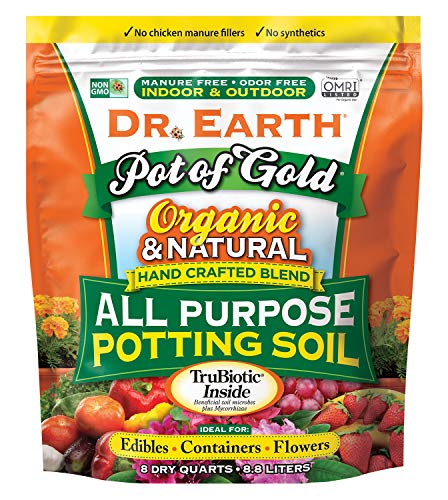
Dr. Earth's Pot of Gold has earned a loyal following among indoor herb gardeners who work with smaller pots, hanging baskets, and patio containers. The 8-quart bag size makes it ideal for buyers who want a premium organic mix without committing to a large bulk purchase. The formulation draws on Dr. Earth's signature approach of using diverse organic amendments including alfalfa meal, fish bone meal, kelp meal, and feather meal alongside mycorrhizal fungi to create a living soil environment that supports sustained herb growth.
The all-purpose nature of Pot of Gold makes it genuinely versatile across herb types. It handles moisture-demanding varieties like basil and cilantro without waterlogging, and it provides enough mineral diversity to support Mediterranean herbs that need leaner but mineral-rich conditions. The texture is pleasantly consistent — not too fine and not too chunky — which makes it easy to work with in smaller pots where uniform filling is important.
The nutrient profile is calibrated for steady, moderate feeding rather than aggressive growth forcing. For culinary herb growers who want flavorful, aromatic plants rather than maximum leaf volume, this is a meaningful advantage. Overfed herbs can produce plenty of leafy growth while losing the essential oil concentration that makes them worth growing. Dr. Earth's balanced approach tends to yield herbs with better fragrance and flavor than plants grown in heavy-feeding mixes — a distinction that experienced cooks notice immediately.
Pros:
Cons:
As environmental concerns around peat harvesting have grown, peat-free alternatives have moved from niche to mainstream — and Organic Mechanics Premium Blend is one of the strongest performers in that category. The mix combines compost, aged pine bark, coconut coir, perlite, and worm castings into a formula that replaces every functional role that peat traditionally plays: moisture retention, structural integrity, and organic matter — all without the environmental cost. For sustainability-focused herb growers in 2026, this is one of the most compelling choices available.
The moisture retention in this mix is genuinely impressive. The coir and compost combination holds water longer than many peat-based mixes, which means less frequent watering while still maintaining the drainage herbs require. Houseplant and tropical plant growers often mention this mix in the context of needy plants, but herbs respond equally well — particularly moisture-tolerant varieties like mint, parsley, chives, and lemon balm. The worm castings add a gentle nutrient layer that feeds plants at the root level without overwhelming the soil biology.
The 1 cubic foot bag is a full-sized format suitable for stocking multiple containers at once, and the peat-free formula means it qualifies as a more environmentally responsible choice for certified organic programs that restrict peat. One practical consideration: the mix can feel heavier than peat-based alternatives when fully moist, which matters for hanging baskets or elevated planters where weight is a factor. For anyone pairing this soil with basil specifically, the best pots for basil guide is a useful companion resource for choosing containers that balance drainage and weight well.
Pros:
Cons:

Walking into a garden center or browsing online in 2026, buyers encounter dozens of potting soil products that all claim to be "ideal for herbs." Most are adequate; fewer are genuinely excellent. Understanding what separates the two comes down to knowing what herbs actually need from their growing medium — and recognizing how those needs differ across herb varieties.
This is the most important variable in any herb potting soil purchase. Mediterranean herbs — rosemary, thyme, sage, oregano, and lavender — originated in rocky, well-draining soils with minimal organic matter. They need a mix that leans toward fast drainage and low fertility. For these plants, the Coast of Maine Bar Harbor Blend or a mix amended with extra perlite is the better choice.
Moisture-tolerant herbs like basil, mint, parsley, cilantro, and chives prefer a different environment: more organic matter, higher water retention, and richer nutrient access. For these, Burpee's coir-enriched formula or FoxFarm Ocean Forest performs noticeably better. The mistake most beginners make is treating all herbs as a single category when their soil preferences are actually quite distinct. According to the USDA National Agricultural Library's herb growing resources, drainage management is one of the primary factors affecting container herb success rates.
The best potting soils for herbs rely on slow-release organic amendments rather than synthetic fertilizer salts. Earthworm castings, bat guano, kelp meal, alfalfa meal, and fish bone meal all appear repeatedly in the top-performing mixes reviewed here — and for good reason. These ingredients release nutrients gradually as soil microbes break them down, which closely mirrors how herbs feed in natural environments. Slow-release nutrition produces more flavorful herbs with higher essential oil concentrations than those pushed with fast-acting synthetic nutrients.
Mycorrhizal fungi additives, found in mixes like Espoma Organic and Dr. Earth Pot of Gold, offer a meaningful advantage in container growing where root space is limited. These fungi extend the effective reach of herb root systems, enabling more efficient water and nutrient absorption from a fixed volume of soil. Buyers who want to maximize productivity from smaller containers should prioritize mixes that include mycorrhizae.
Sphagnum peat moss has been the backbone of potting soil formulas for generations, and it remains highly effective at moisture retention and pH adjustment. However, peat bogs are slow-growing ecosystems that take centuries to regenerate, and their extraction contributes to carbon release. In recent years, alternatives like coconut coir have closed the performance gap significantly. Coir retains moisture comparably to peat while providing a renewable, lower-carbon footprint option.
Buyers who prioritize environmental responsibility should look at Burpee's coir-forward formula or Organic Mechanics' fully peat-free mix as primary options. Those who prefer the proven track record of peat-based formulas can rely on Espoma or FoxFarm products with confidence that they'll perform as expected.
Container volume and bag size need to match the scale of the growing operation. For a few windowsill pots, the 8- or 9-quart options from Dr. Earth or Burpee are practical and eliminate storage problems. For a full patio herb garden or multiple raised planters, the 1 to 1.5 cubic foot bags from FoxFarm or Organic Mechanics deliver much better value per volume.
It's also worth factoring in how the mix behaves in the specific container type being used. A lightweight, airy mix like Happy Frog works well in almost any container. Heavier mixes like Organic Mechanics Premium Blend are better suited to stable floor pots than hanging baskets where weight accumulates with each watering. For comprehensive container pairing guidance, the review of best pots for indoor plants covers container types and drainage characteristics in detail.
For indoor herb growing, a well-draining mix with moderate nutrient levels works best. FoxFarm Happy Frog and Espoma Organic are strong choices because they balance aeration with organic nutrition while staying manageable for smaller containers. Avoid mixes that are too dense or moisture-retentive for herbs like rosemary and thyme, which can develop root rot in persistently damp indoor soil.
Regular garden soil is not recommended for container herb growing. It lacks the drainage and aeration structure that potting mixes provide, and it tends to compact in containers, cutting off oxygen to roots. A purpose-formulated potting mix with perlite or peat provides the drainage channels and moisture management that herbs need when root space is limited to a pot.
Potting soil benefits from refreshing or replacement every one to two years in active containers. Over time, organic matter breaks down, nutrients deplete, and the soil structure compacts. Repotting herbs annually — ideally in spring — with fresh potting mix is one of the most effective ways to maintain plant health and productivity. Between full replacements, top-dressing with fresh compost or worm castings extends the soil's useful life.
Yes — Mediterranean herbs perform best in leaner, sharply draining soil with lower organic matter than moisture-loving herbs prefer. A mix like Coast of Maine Bar Harbor Blend, which is high in perlite and marine minerals, is well-suited to these varieties. Adding a handful of coarse perlite or horticultural grit to any standard potting mix can also improve drainage sufficiently for rosemary, lavender, thyme, and sage.
For culinary herbs, the organic/conventional distinction matters more than it does for ornamental plants. Herbs are harvested and consumed, so the absence of synthetic pesticide residues and fertilizer salts in certified organic mixes is a practical benefit beyond the environmental one. Additionally, organic mixes tend to produce herbs with superior flavor and aroma because the slow-release nutrition from biological sources encourages higher essential oil production in the plant tissue.
Several warning signs indicate a poor soil-herb match: yellowing leaves despite adequate watering often signal nutrient deficiency or waterlogged roots; wilting immediately after watering can indicate compaction; white crusty deposits on soil surfaces suggest high salt buildup from synthetic fertilizers; and a foul odor from the soil usually points to anaerobic conditions caused by poor drainage. Any of these signs warrant repotting into a fresh, well-structured mix.
 |
 |
 |
 |

About Christina Lopez
Christina Lopez grew up in the scenic city of Mountain View, California. For eighteen ascetic years, she refrained from eating meat until she discovered the exquisite delicacy of chicken thighs. Christina is a city finalist competitive pingpong player, an ocean diver, and an ex-pat in England and Japan. Currently, she is a computer science doctoral student. Christina writes late at night; most of her daytime is spent enchanting her magical herb garden.


Get new FREE Gifts. Or latest free growing e-books from our latest works.
Disable Ad block to reveal all the links. Once done, hit a button below
|
|
|
|
 rinjal