What separates a thriving basil plant from a yellowing, root-rotted disappointment? More often than you'd think, the answer is the pot. Basil is one of the most moisture-sensitive herbs you can grow in a container — it demands consistent hydration but punishes waterlogged roots almost instantly. After evaluating dozens of containers in 2026, one option rises clearly above the rest: the Lechuza Classico Color 21 White Self-Watering Planter delivers the precision moisture control and premium build quality that basil genuinely needs.
The challenge with basil is that its root zone wants to stay evenly moist, not wet and not bone dry. Standard pots with unpredictable watering schedules make that balance hard to hit consistently. The right container solves this problem for you — whether through a sub-irrigation reservoir that feeds roots on demand, or through breathable terracotta walls that prevent humidity from building up into rot. Getting this choice right is the difference between a scraggly pot of basil that barely makes it to July and a lush, fragrant plant you're harvesting through September.
The seven pots reviewed here cover every growing scenario: self-watering planters for frequent travelers, classic terracotta for traditionalists who prefer natural materials, and tough plastic options that thrive in outdoor conditions. If you're also setting up a broader herb garden, our gardening reviews section covers everything from soil to planters to plant care tools. Read on for the full breakdown — including a detailed buying guide and FAQ — so you can pick the right pot with confidence.







When it comes to keeping basil alive without babysitting it daily, the Lechuza Classico Color 21 sets the standard. This German-engineered planter measures 8.3 inches in diameter and 7.9 inches tall — spacious enough for a full basil plant but compact enough for a kitchen counter or patio table. The standout feature is its sub-irrigation self-watering system, which uses inorganic granulate compounds to release precisely calibrated moisture directly to the root zone. Basil roots draw water upward as needed rather than sitting in a pool at the bottom, which is exactly how this plant wants to be watered.
The build quality here is exceptional. Lechuza uses frost-resistant and UV-resistant polypropylene plastic manufactured in Germany, which means you're not going to see fading, cracking, or warping even after years of outdoor exposure. The clean white colorway suits any setting — a bright kitchen windowsill, a minimalist patio, or a balcony herb corner. In 2026, this remains one of the most refined-looking self-watering pots on the market, and it backs up that appearance with genuine engineering. The reservoir system eliminates the guesswork entirely; you fill it, walk away, and your basil stays consistently hydrated for days.
One practical note: the self-watering granulate system works best when you use it with the recommended Lechuza-PON substrate rather than standard potting soil. That adds a small upfront cost, but it's worth it for the drainage and aeration benefits that basil's roots require. If you want an elevated, set-and-forget growing experience that looks as good as it performs, this is your pot.
Pros:
Cons:
The Bloem Ariana 8" delivers genuine self-watering functionality at a price that doesn't sting. This 8-inch resin planter features a built-in self-watering grid at the base that collects excess runoff and holds it in a reservoir beneath the root zone. Your basil draws moisture upward as the soil dries out — a capillary action approach that keeps the root zone from both flooding and drying. The transitional design and rolled rim profile give it a polished look that works indoors on a windowsill or outdoors on a patio, and the charcoal colorway is neutral enough to blend with virtually any setting.
Flexibility is a strong selling point here. Bloem includes optional knockout drainage holes, so you can configure this as a true self-watering planter or as a standard drainage-hole pot depending on your watering habits and your location. If you grow basil on a covered patio where heavy rain isn't a factor, leave the knockouts intact and use the reservoir. If you're growing outdoors where rainfall is unpredictable, knock them out and let excess water escape freely. That adaptability makes this pot genuinely versatile across seasons and situations.
Resin construction means this is lightweight, easy to move around, and completely frost-safe for most climates. It won't have the aesthetic warmth of terracotta, but it more than compensates with its practical engineering. For the price, the Bloem Ariana gives you a reliable, low-maintenance home for basil that doesn't require the premium investment of the Lechuza.
Pros:
Cons:
Terracotta has been the gold standard for herb growing for centuries, and the Cedilis 6-inch pots remind you exactly why. These natural clay pots are fired at high temperature, giving them a dense, chip-resistant structure that holds up to regular outdoor use. Each pot measures 5 inches tall and 5.9 inches wide — a compact but practical footprint for a single basil plant. The breathable clay walls allow air to circulate freely around the root zone and wick away excess moisture through the pot walls themselves, which dramatically reduces the risk of root rot compared to sealed plastic pots.
Each pot comes with a matching saucer, which is a detail that matters more than it sounds. The saucer catches drainage water and keeps your windowsill or tabletop dry, but because terracotta saucers are also porous, they don't trap standing water the way glazed ceramic or plastic saucers do. You get drainage without mess. The drainage hole at the bottom is appropriately sized — large enough to prevent waterlogging, small enough to keep your potting mix from washing straight through. This is the kind of pot where nothing is overthought and nothing is missing.
The two-pack format makes this a practical choice if you want to grow multiple basil varieties side by side — a Genovese next to a Thai basil, for example — or if you want a backup pot ready to go. Terracotta does dry out faster than plastic or self-watering options, so you'll water more frequently in summer. But if you're pairing these pots with a quality moisture-retaining soil mix — check out our guide to the best organic potting soils for container gardening — that tradeoff becomes much easier to manage.
Pros:
Cons:
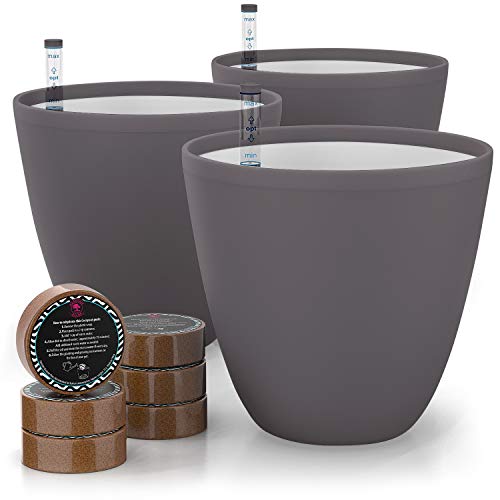
The GARDENIX DECOR self-watering planters solve two of the most common herb-growing problems simultaneously: inconsistent watering and no visibility into what your plant actually needs. This three-pack of 7-inch gray polypropylene planters uses a nested inner pot design where the plant sits elevated above a water reservoir on small legs. The roots draw water upward through those legs only as needed — no stagnant pooling, no root rot, no overwatering. You can go over 10 days without touching these pots and your basil will still look healthy. For travelers, busy professionals, or anyone who's ever killed a basil plant during a long weekend, that interval is a genuine relief.
What distinguishes this option from other self-watering pots is the water level indicator with a built-in growth dial. The indicator tells you exactly when the reservoir needs refilling — you're not guessing by lifting the pot or poking the soil. The growth dial on top of the measuring valve lets you mark your basil's height and track its progress over weeks. It sounds like a gimmick, but it's genuinely useful for understanding how quickly your plant is growing and whether your watering schedule is supporting healthy development. This is the kind of feature that makes a difference for newer plant owners who are still building their intuition.
Build quality is solid throughout. The polypropylene construction is described as virtually unbreakable, and the colors — gray in this case — are injected directly into the material rather than painted on, so they won't fade in direct sun the way cheaper pots do. The 7-inch diameter gives basil enough room to grow a full, bushy plant rather than a cramped, leggy one. The three-pack format means you can dedicate one pot to basil, one to another culinary herb like parsley or cilantro, and still have a spare.
Pros:
Cons:
If you want terracotta in three graduated sizes rather than a uniform pack, the INGOFIN set delivers exactly that. You get a 5-inch, 6-inch, and 7-inch pot, each with a matching saucer — a smart combination for herb gardeners who want to start a basil seedling in the smallest pot, then step it up through the larger sizes as the plant matures. Each pot is fired from genuine clay at high temperature, producing one-piece molded construction that resists cracking and chipping considerably better than cheaper terracotta imports that tend to split after a single winter.
The material itself does what good terracotta should: it disperses air and water quickly through its porous walls, keeping the root zone from staying saturated. Basil roots get consistent oxygen exchange, which accelerates healthy root development and reduces the likelihood of fungal issues. The drainage hole in each pot is well-proportioned — adequate to flush excess water after heavy watering without letting the soil wash out. Each matching saucer keeps the drainage tidy whether you're using these indoors on a shelf or outdoors on a deck railing. Just as with the Cedilis pots discussed above, pairing these with a quality potting mix maximizes their performance.
The graduated sizing makes this set genuinely versatile. Use the 5-inch for a single compact basil variety like Spicy Globe, the 6-inch for standard sweet basil, and the 7-inch for large-leaf Italian varieties. You can also use the three sizes for three different herbs — basil, rosemary, and thyme are natural companions and all do well in terracotta. INGOFIN packs these with multi-layer shock-absorbing packaging, which addresses one of the most frustrating aspects of ordering terracotta online: receiving broken pots. If you're also growing other herbs or small fruiting plants in containers, our guide to the best planters for strawberries covers similar container principles that apply across edible gardening.
Pros:
Cons:
Sometimes you don't need a self-watering system, a growth dial, or premium German engineering. You just need a solid, reliable pot that works — and the Bloem Terra Pot Planter is exactly that. At 8.75 inches wide at the top, 6 inches at the base, and 7.25 inches tall, it holds one full gallon of growing medium, which gives a mature basil plant ample room for root expansion. The high-quality plastic resin construction is UV-protected to resist fading, maintenance-free, and easy to clean between growing seasons. This is the pot you grab when you want something that simply works without overcomplicating your herb garden.
The drainage holes in the base handle moisture management efficiently. Excess water exits freely after each watering, preventing the waterlogged conditions that kill basil faster than almost anything else. Because this is a standard drainage-hole design rather than a self-watering system, you're in direct control of the watering schedule — which is a genuine advantage if you prefer to manage your plants' hydration actively rather than relying on a reservoir. Paired with a quality potting mix and a consistent watering routine, basil thrives in this straightforward setup.
The Living Green colorway has a quiet, natural look that blends into a garden or patio without demanding attention. This pot is also notable for its accessibility: it's one of the more affordable options in this roundup, making it a practical choice for filling out a large herb garden without significant investment. If you already have a collection of pots for plants like aloe and want to add basil to the lineup without matching a specific aesthetic, the Terra Pot's neutral design integrates seamlessly.
Pros:
Cons:
The T4U 6-inch self-watering pots stand out for their clean, functional design and the practical value of a four-pack at a competitive price. Each pot uses a cotton wick plus removable reservoir system that keeps plants watered for 7 to 10 days between refills. The wick draws water from the bottom reservoir directly into the root zone through capillary action — the same principle as professional sub-irrigation, but in a compact 6-inch format that fits neatly on a kitchen windowsill, balcony railing, or desk. For basil specifically, this size is ideal for a single compact plant or a pair of small seedlings that share the pot before being separated.
The transparent side window with measurement markings is one of the most user-friendly features in this roundup. You check the reservoir level at a glance without tipping the pot or probing the soil, which makes managing multiple pots across a windowsill herb garden genuinely simple. The UV-proof PP plastic construction is rated for 3 to 5 years of indoor use and 2 to 3 years outdoors — that's a realistic and honest lifespan estimate that outperforms the cheap dollar-store pots that crack within a season. Black is a smart color choice here too: it absorbs warmth in cooler indoor environments, which basil appreciates.
The four-pack format is the real value proposition. You get enough pots for a complete kitchen herb lineup — basil, parsley, cilantro, and mint can each have their own dedicated pot — without paying premium pricing per unit. The removable reservoir makes cleaning straightforward between plantings. If you prefer a mess-free windowsill growing setup that you can actually maintain without daily attention, the T4U 4-pack is one of the most practical purchases in this category.
Pros:
Cons:
The single most important feature in any basil pot is adequate drainage. Basil roots sitting in waterlogged soil develop root rot within days, and the plant wilts and discolors rapidly once that process begins. Every pot in this roundup includes drainage holes or a sub-irrigation system that prevents stagnant water from accumulating around the roots. What you want to avoid is any sealed pot with no drainage exit — a charming ceramic bowl with no hole at the bottom might look great, but it will kill your basil. When shopping outside this list, drainage holes at the base are an absolute requirement, not an optional feature. If a pot you love doesn't have them, use a drill with a masonry bit to add them before planting.
Basil needs more root space than most windowsill herbs. A pot that's too small restricts root development, causes the plant to bolt prematurely, and dries out so quickly that consistent watering becomes difficult. For a single basil plant, aim for a minimum of 6 inches in diameter and depth — the 6-inch and 7-inch pots in this review are the sweet spot. For a large, full-season plant you plan to harvest heavily, an 8-inch pot gives the roots enough room to support sustained leafy growth. Going too large is also counterproductive: excess soil volume holds moisture the roots don't reach, increasing rot risk. Match pot size to plant size, then step up as the plant matures.
The pot material affects both moisture dynamics and root temperature. Terracotta is porous — it breathes, wicks away excess humidity, and keeps roots cooler in summer because water evaporates through the walls. That breathability is a clear advantage for basil, though it means more frequent watering in hot weather. Plastic and resin pots retain moisture longer, reducing watering frequency, but they can heat up significantly in direct outdoor sun — which stresses basil roots and can accelerate soil drying unevenly. Light-colored plastic pots reflect heat better than dark ones; if you're growing outdoors in a hot climate, the Lechuza white or GARDENIX gray options are smarter choices than dark-colored alternatives. Self-watering systems compensate for material limitations by maintaining consistent moisture regardless of evaporation rate.
Self-watering pots suit basil extremely well because the plant wants even, consistent moisture rather than the feast-or-famine cycle of irregular hand-watering. If you travel frequently, work long hours, or simply forget to water, a self-watering design is the practical choice. The Lechuza, Bloem Ariana, GARDENIX, and T4U pots all use sub-irrigation approaches that keep the root zone hydrated for 7 to 14 days without intervention. Standard drainage pots like the Bloem Terra Pot, Cedilis, and INGOFIN terracotta sets require attentive watering — typically every 1 to 2 days in warm weather — but give you more direct control. If you're an attentive gardener who waters on a schedule, standard pots with high-quality potting soil work just as well. If consistency is a challenge for you, invest in the self-watering option upfront.
A 6 to 8-inch pot is the sweet spot for most basil varieties. This size gives roots room to expand without holding excess moisture in soil the plant can't yet reach. If you're growing a compact variety like Spicy Globe or Greek basil, a 5 or 6-inch pot works well. For large-leaf Italian varieties or sweet Genovese basil that you plan to harvest repeatedly throughout the season, go with a 7 or 8-inch pot. Avoid anything smaller than 5 inches — basil roots fill small pots quickly, and root-bound plants bolt and stop producing leaves.
Yes, and in many cases basil does better in a self-watering pot than in a standard drainage pot. Basil wants consistent moisture at its root zone, not alternating wet and dry cycles. A self-watering system delivers exactly that by releasing water from a reservoir only as the roots draw it upward. The key is making sure the reservoir doesn't stay perpetually full in cool or low-light conditions, when the plant uses less water. In winter or on cloudy days, let the reservoir partially empty before refilling to prevent the oversaturation that basil's roots won't tolerate even in self-watering setups.
Terracotta is better for aeration and heat management; plastic is better for moisture retention and durability. Terracotta's porous walls allow air and water to move through them, which promotes healthy root oxygenation and reduces the risk of fungal root diseases. In warm climates where basil dries out quickly, plastic retains moisture longer and reduces watering frequency. In cool, humid environments, terracotta's breathability prevents the soggy conditions that rot basil roots. Neither material is universally superior — choose based on your climate, your watering habits, and how often you want to tend to your plants.
In a standard pot during warm growing season temperatures, basil typically needs watering every 1 to 2 days. In a self-watering pot with a full reservoir, you can go 7 to 14 days between refills. The right approach is to water when the top inch of soil feels dry to the touch — basil prefers consistent moisture but punishes you for waterlogging. Morning watering is better than evening watering because it gives the surface moisture time to evaporate before cooler temperatures arrive, reducing fungal risk. A plant moisture meter takes the guesswork out entirely and helps you develop intuition for your specific pot and climate.
Yes, basil grows indoors year-round in a pot as long as it receives adequate light — at minimum 6 hours of direct sun per day, which in winter often means supplementing with a grow light. Basil's biggest indoor challenge in 2026 is low winter light, not temperature. Keep indoor basil away from cold drafts and air conditioning vents, both of which drop temperatures below the 60°F minimum the plant tolerates. In a south-facing window with consistent warmth and a self-watering pot to maintain moisture levels, basil can produce continuous harvests throughout the year with no seasonal interruption.
Drainage holes are essential for basil. Without them, water accumulates at the root zone after every watering and creates the anaerobic, waterlogged conditions that kill basil roots through rot. If your chosen pot doesn't come with drainage holes, you can drill them with a ceramic or masonry drill bit. Self-watering pots handle drainage differently — they use a physical separation between the water reservoir and the root zone, preventing direct contact between standing water and roots — but even self-watering pots benefit from an overflow drain to handle excess water during heavy rainfall outdoors.
The right pot transforms basil from a finicky plant that barely survives to a lush, productive herb you harvest all season long — and with the seven options reviewed here in 2026, you have a clear path to the right choice for your situation. Whether you go with the precision engineering of the Lechuza Classico for a hands-off growing experience, the breathable authenticity of terracotta for traditional herb care, or the practical four-pack value of the T4U self-watering pots for a full windowsill garden, pick the one that matches how you actually garden and commit to it. Head to the product pages, check current pricing, and get your basil planted while the growing season is in full swing.
 |
 |
 |
 |

About Truman Perkins
Truman Perkins is a Detroit-based SEO consultant who's been in the business for over a decade. He got his start helping friends and clients get their websites off the ground, and he continues to do so today. In his free time, Truman enjoys learning and writing about gardening - something he believes is a natural stress reliever. He lives with his wife, Jenny, and their twins in Detroit.


Get new FREE Gifts. Or latest free growing e-books from our latest works.
Disable Ad block to reveal all the links. Once done, hit a button below
|
|
|
|
 rinjal