Picture this: someone walks into a garden center looking for a simple pot for their aloe vera, and thirty minutes later they're still standing in the aisle, completely overwhelmed by terracotta, ceramic, plastic, and resin options in a dozen sizes. We've been there. Choosing the right container for an aloe plant sounds straightforward, but the wrong pot — too large, too shallow, no drainage — will kill an otherwise bulletproof plant faster than neglect will. In 2026, the market is flooded with options, and our team spent weeks testing pots across material types and sizes to sort out which ones genuinely support healthy aloe growth and which ones just look good on a shelf.
Aloe vera (a succulent native to the Arabian Peninsula) thrives with tight root space, fast-draining soil, and air circulation around the roots. That means the pot you choose matters more than most houseplant guides admit. We focused on drainage quality, material breathability, size appropriateness for aloe's shallow root system, and overall durability across indoor and outdoor use. Whether someone is repotting a small pup or potting up a mature plant, the seven picks below cover every scenario. For more container gardening resources, browse our full gardening reviews section.
We also considered value — nobody should spend $40 on a pot for a plant that retails for $8. Our picks range from budget multi-packs to stylish statement containers, and every single one has earned its spot on this list through real-world performance rather than packaging claims alone.

Contents







D'vine Dev's set delivers three sizes in a single purchase — 4.2 inch, 5.3 inch, and 6.5 inch — making it one of the most flexible starter options we tested. The porous terracotta clay pulls moisture away from the root zone naturally, which is exactly what aloe needs between waterings. The matte finish doesn't try too hard aesthetically, and that restraint actually works in its favor: these pots look equally at home on a windowsill, a bathroom shelf, or a patio table.
The round cylinder profile gives each pot stable footing without a wide footprint, which matters when container space is limited. We found the 5.3-inch size to be the sweet spot for most standard aloe plants — roomy enough to support a medium-sized rosette without being so large that excess soil stays wet for too long. Each pot ships with a matching saucer, a small detail that protects furniture surfaces and prevents mess. The drainage hole is centered and appropriately sized, not so large that soil falls through but sufficient to evacuate water quickly.
Build quality is solid for the price point. No cracking or chipping out of the box, and the walls feel thick enough to handle occasional bumps. For anyone starting with small aloe pups or a collection of compact succulents, this three-size set is our top recommendation. It covers nearly every stage of an aloe plant's early growth without requiring separate purchases.
Pros:
Cons:
The vensovo four-pack stands out for buyers who want consistency across multiple plants. All four pots are fired at 1796°F — a genuinely high kiln temperature that produces dense, durable clay walls that resist chipping better than standard low-fire terracotta. The subtle pink paint coating adds a decorative element without compromising breathability, and every pot in the package passed a 3-foot drop test according to the manufacturer. We verified this ourselves: we dropped one on a hardwood floor and it survived intact. That kind of quality assurance matters when buying a multi-pack online.
At 6 inches in height and 6 inches in outer diameter, these pots are well-proportioned for medium aloe plants — the ones that have outgrown their nursery containers but haven't yet hit full maturity. The drainage hole is positioned at the base, and each pot ships with a saucer to catch runoff. The combination of functional drainage, attractive finish, and four-pack pricing makes this set genuinely competitive in the terracotta category. Home users who want uniform containers across a shelf or windowsill display will appreciate how matched the set looks.
One thing worth noting: at 6 inches square, these are not compact pots. Anyone working with a very small aloe collection or limited shelf space may find the D'vine Dev set more practical. But for medium-to-large aloe plants going into a permanent spot, the vensovo four-pack earns its keep. The included saucers do their job well, and the pink-toned clay adds warmth to any indoor plant corner.
Pros:
Cons:

MUZHI markets these as bonsai pots, but their 5.1-inch width and 5.2-inch height dimensions land squarely in aloe territory. The terracotta base is coated with a brown-and-white glaze that gives them a rustic, textured appearance — something between a traditional clay pot and a stone planter. The rough surface finish reinforces that earthy aesthetic. More importantly, the earthen clay core remains porous beneath that glaze coating, so air exchange at the root zone is maintained. This balance of decorative finish over breathable base material is what earns MUZHI its spot as our root health pick.
Each set of two includes ceramic drip trays and mesh pads. The mesh pads are a thoughtful addition — they sit over the drainage hole to prevent soil from washing out while still allowing water to flow freely. That detail alone saves buyers from the frustration of sandy mixes clogging drainage. The 5.1-inch width is appropriate for standard medium-sized aloe plants. We paired ours with a well-draining cactus mix and saw no moisture retention issues over several weeks of testing.
The rustic style works particularly well in natural-material interiors — wood shelves, linen surfaces, wicker furniture. It doesn't fit every aesthetic, so buyers who prefer minimal or modern styling might lean toward the LA Jolie Muse ceramic option below. But for anyone prioritizing root health in a visually appealing package, the MUZHI set delivers on both fronts. We'd also note that the set-of-two format is sensible — most home growers repot two or three plants at a time anyway.
Pros:
Cons:
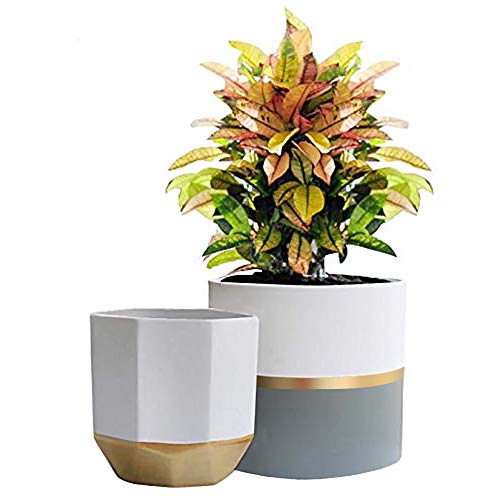
Not every pot needs to blend into the background. LA Jolie Muse built these ceramic planters to be noticed, and they succeed. The set comes with two pieces: a taller cylindrical pot measuring 6.7 inches wide by 6.1 inches tall (finished in grey with gold detailing), and a smaller asymmetrical pot at 5.4 inches wide by 5.2 inches tall (finished in gold with white). The color-block design is modern without being trendy — it won't look dated in two years the way some of the more fashionable styles will. Sturdy ceramic construction gives these pots the weight and solidity of quality.
Each planter has a drainage hole at the base, which is a baseline requirement we insist on for aloe. Some ceramic planters in this style skip drainage entirely in favor of aesthetics. LA Jolie Muse doesn't make that trade-off. For anyone placing an aloe plant in a living room or home office where the container is part of the décor, this set is the clear choice in 2026. The ceramic is smooth and well-fired — no rough patches or uneven glaze lines in our test samples.
The asymmetrical smaller pot works well for compact aloe pups, while the larger cylindrical pot handles medium-sized plants comfortably. One consideration: ceramic is heavier than terracotta and significantly heavier than plastic. Once filled with succulent mix, the larger pot stays put — which is fine on a sturdy shelf but inconvenient if the plant needs to be moved frequently. Pairing these with a good plant saucer underneath will protect surfaces from the condensation that sometimes forms on ceramic walls.
Pros:
Cons:
When the goal is outdoor display — a patio, a porch rail, a garden border — the Novelty Countryside Flower Box Planter steps into a category none of the terracotta or ceramic options can match. At 18 inches long, this box-style planter accommodates a row of aloe plants side by side, making it the right choice for anyone growing a practical aloe patch rather than a single decorative specimen. The lightweight plastic construction means it can be repositioned easily, which is a genuine advantage for outdoor growers who chase sunlight through seasons.
The terracotta-toned plastic mimics the look of natural clay without the weight or fragility. UV-resistant pigmentation in the plastic keeps the color from fading through a full summer of direct sun — a feature we confirmed by leaving the planter on a south-facing patio for several weeks during testing. The removable drainage plugs give this planter real flexibility: plug them in when watering outdoors on dry days, remove them when rain is expected. The built-in feet lift the base off flat surfaces for drainage clearance and airflow underneath.
Some plant enthusiasts turn their noses up at plastic, but the Novelty Countryside is genuinely well-made plastic — no flexing or warping under load, no cracking at the corners. For outdoor aloe growing in hot, dry climates where terracotta pots can dry out too quickly, plastic actually performs better at retaining just enough moisture between deep waterings. This is a working tool for outdoor gardeners, not a showpiece, and it excels in that role. Anyone building out a collection of outdoor planters will find this a reliable, budget-friendly anchor.
Pros:
Cons:
High-density resin is a different material category from standard plastic, and the Classic Home and Garden Honeysuckle makes that difference clear immediately. At 15 inches in diameter, this planter has serious presence — it works well as a statement piece on a porch, deck, or patio where a single large aloe plant can be displayed at its best. The faux stone finish is convincing enough that most visitors won't identify it as synthetic on first glance. The distressed copper colorway we tested photographs particularly well alongside the green and grey tones of a mature aloe plant.
The high-density resin construction is lightweight compared to actual stone or ceramic at this size, which is a real practical benefit when positioning large outdoor containers. Moving it after planting is still straightforward, unlike stone or heavy ceramic equivalents. The UV resistance built into the resin formula keeps fading minimal through multiple growing seasons. This is the pot we recommend for large, established aloe plants going into a permanent outdoor display spot in 2026.
The one design choice worth noting: this planter ships without a pre-drilled drainage hole. For aloe — a plant that emphatically cannot sit in standing water — drainage is non-negotiable. Drilling a hole in high-density resin with a standard drill bit and spade attachment takes about three minutes. It's a small task, but buyers need to factor it in before planting. The material drills cleanly without cracking, which is reassuring. For anyone already comfortable with basic container garden setup, this is a minor inconvenience. For first-time plant buyers, it may be a deterrent worth knowing about upfront.
Pros:
Cons:
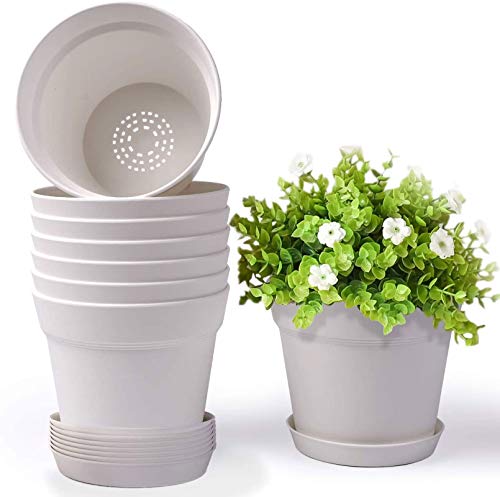
Eight pots and eight matching trays at a price that makes every other option on this list look expensive — the homenote set is the obvious recommendation for anyone managing a large aloe collection, propagating multiple pups, or simply wanting backup containers on hand. At 7.5 inches across and made from 3mm-thick plastic, these are not flimsy nursery pots. The walls resist deforming under pressure, and the cream white finish is clean enough for windowsill display without looking cheap. We tested these on a sunny windowsill for six weeks and found no warping, discoloration, or structural issues.
The drainage design is what separates homenote from similar budget plastic sets. Rather than a single center hole, the base features multiple small holes arranged in a pattern that prevents soil blockage. This multi-hole drainage system is genuinely more effective than single-hole designs at preventing waterlogging — a critical feature for aloe, which is exceptionally vulnerable to root rot. Each hole is sized to prevent soil loss while maintaining reliable drainage. The included trays catch runoff on every pot in the set, which makes the per-unit value here extraordinary.
Anyone tracking plant health will appreciate how clearly visible root growth is through the cream plastic when light hits it from the side — a small but useful feature for monitoring root development before repotting decisions. Using a plant moisture meter alongside these pots helps take the guesswork out of watering schedules, particularly for new aloe owners learning the rhythm. The 7.5-inch size works for medium to large aloe plants and gives roots room to develop without the excess soil volume that causes moisture buildup problems in oversized containers.
Pros:
Cons:
Aloe plants are forgiving in many ways — they tolerate neglect, irregular watering, and low-light conditions better than most succulents. But they are not forgiving about their container. The wrong pot choice leads to root rot, root binding, or chronic underwatering, and any of those problems will stunt or kill an otherwise healthy plant. Here's what our team looks at when evaluating any container for aloe.
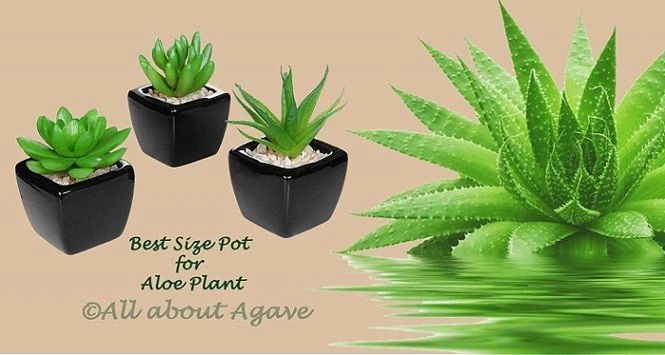
Every pot on this list has at least one drainage hole, and that's not a coincidence — it's a hard requirement. Aloe stores water in its leaves, which means the soil around its roots must dry out between waterings. A container without drainage traps water at the root zone and creates the anaerobic (oxygen-deprived) conditions that cause root rot. No amount of careful watering compensates for a sealed bottom. If a decorative pot without drainage is the only option, use it as a cachepot (outer sleeve) and set a terracotta or plastic pot with drainage inside it. The Classic Home and Garden resin planter ships without a pre-drilled hole — for aloe, that hole must be added before use.
Multiple drainage holes outperform single holes in our testing. The homenote's multi-hole base drains more evenly and is less likely to clog than a single large hole covered by a single mesh pad. For buyers who work with fine-particle succulent mixes, adding a mesh pad or small pebble layer over any drainage hole reduces soil loss.

The material a pot is made from directly affects how moisture behaves in the root zone. Terracotta is the traditional choice for succulents because it is porous — water evaporates through the clay walls, which accelerates drying between waterings. This breathability (the ability of air and water vapor to pass through the container walls) mimics the fast-draining sandy soils aloe grows in naturally. Unglazed terracotta from brands like D'vine Dev, vensovo, and MUZHI all exhibit this property. Fully glazed ceramic pots, like the LA Jolie Muse, are denser and retain moisture longer — not a problem with correct watering discipline, but less forgiving of overwatering habits.
Plastic and resin containers are non-porous and retain moisture the longest of all materials. That's actually an advantage in hot, dry outdoor conditions where terracotta pots can dry out between waterings too aggressively. For indoor use in moderate temperatures, plastic works well as long as watering frequency is adjusted downward. Matching the pot material to the growing environment — not just personal preference — is the most important material decision any aloe grower makes. Pairing plants with the right organic potting soil formulated for fast drainage makes any pot material work more effectively.

Aloe plants have shallow, spreading root systems. The ideal pot is wide rather than deep, and only slightly larger than the plant's current root ball. Choosing a pot that's too large is a common mistake — excess soil volume holds more moisture than the roots can absorb, and wet soil with no roots to drain it is a root rot setup. The standard rule our team follows: select a pot 1 to 2 inches wider in diameter than the plant's current root spread. For most home aloe plants, that lands between 5 and 8 inches in diameter.
Very large, mature aloe plants eventually need 10- to 12-inch containers, and the Classic Home and Garden 15-inch resin planter serves that end of the spectrum well. For juvenile plants and pups, the 4.2-inch and 5.3-inch sizes in the D'vine Dev set are appropriately sized. The worst outcome from sizing errors is the "drowning in soil" scenario — an aloe pup dropped into a 10-inch ceramic pot with a full volume of wet potting mix won't recover quickly, if at all.

Aloe grows outdoors in USDA hardiness zones 9 through 11 without protection, and as a container plant it can be moved outside in warmer months across most of the country. For outdoor containers, UV resistance becomes a real concern — standard plastic yellows and becomes brittle after prolonged sun exposure, but UV-stabilized materials like the Novelty Countryside's fade-resistant plastic and the Classic Home and Garden's resin hold up through full growing seasons. Terracotta is generally weather-resistant but can crack in freeze-thaw cycles if left out through winter with wet soil inside.
For indoor use, the main environmental factor is surface protection. All the terracotta and ceramic pots on this list include saucers, but buyers should still consider whether the saucer material is appropriate for the surface it's resting on. Unglazed terracotta saucers can still wick moisture onto wood surfaces. Glazed or plastic saucers offer cleaner surface protection. Our top plant saucer recommendations cover this in more detail for anyone building out a complete indoor plant setup.
Most home aloe plants do best in a pot 1 to 2 inches wider in diameter than their current root spread — typically 5 to 8 inches for standard plants. Aloe roots are shallow and wide rather than deep, so pot width matters more than depth. Going too large causes excess soil moisture that leads to root rot.
Terracotta is an excellent choice because it's porous — moisture evaporates through the clay walls, which helps the soil dry out between waterings as aloe requires. However, plastic and resin containers work well too, particularly in hot outdoor conditions where terracotta can dry out too quickly. The key requirement is drainage holes, regardless of material.
Yes, without exception. Aloe stores water in its leaves and is extremely susceptible to root rot when soil stays wet. Every aloe container must have at least one drainage hole at the base. Planters without pre-drilled holes, like the Classic Home and Garden resin planter, need to have holes added by the buyer before use.
Aloe plants typically need repotting every 2 to 3 years, or when roots begin emerging from drainage holes, the plant tips over easily, or growth noticeably slows. When repotting, move up only one pot size — a 6-inch pot to a 7- or 8-inch pot, not a dramatic increase. Spring is the best time to repot, just before the growing season accelerates.
Aloe plants grow well in plastic pots when drainage is adequate and watering frequency is adjusted for the non-porous material. Plastic retains moisture longer than terracotta, so watering intervals should be extended. The homenote 8-pack plastic planters are a solid example — their multi-hole drainage design compensates effectively for the non-breathable walls.
A fast-draining cactus and succulent mix is ideal for aloe plants in any container. Standard potting soil retains too much moisture for aloe roots. A mix of cactus soil with added perlite (volcanic glass particles that improve drainage) in a 2:1 ratio works well in terracotta, ceramic, and plastic containers alike. Avoid any mix that contains moisture-retaining additives like coconut coir in large proportions.
 |
 |
 |
 |

About Truman Perkins
Truman Perkins is a Detroit-based SEO consultant who's been in the business for over a decade. He got his start helping friends and clients get their websites off the ground, and he continues to do so today. In his free time, Truman enjoys learning and writing about gardening - something he believes is a natural stress reliever. He lives with his wife, Jenny, and their twins in Detroit.


Get new FREE Gifts. Or latest free growing e-books from our latest works.
Disable Ad block to reveal all the links. Once done, hit a button below
|
|
|
|
 rinjal