You've finally found the perfect planter for your living room or back porch — and then you set it down and water runs straight onto your hardwood floor. It happens to every plant parent at some point. The right plant saucer is one of those small purchases that quietly protects your floors, your furniture, and your plants all at once.
In 2026, there are more options than ever: ceramic saucers for style, heavy-duty plastic for outdoor durability, terracotta for breathability, and multi-pack sets that cover every pot in your collection. The challenge is sorting through the noise to find what actually works for your setup. That's exactly what this guide does — we've reviewed seven of the top-rated plant saucers on the market so you can make a confident decision without second-guessing yourself. Whether you're managing a single statement plant or an entire indoor garden, you'll find the right pick here.
If you're also building out your container garden, check out our guide to the 15 Best Outdoor Planter Pots — pairing great pots with the right saucers makes all the difference. And if you want to go deeper into plant health, our 13 Best Organic Potting Soils for Container Gardening covers everything you need to know about the foundation your plants grow in. For all our top-rated garden gear, browse the full gardening reviews section.

Contents
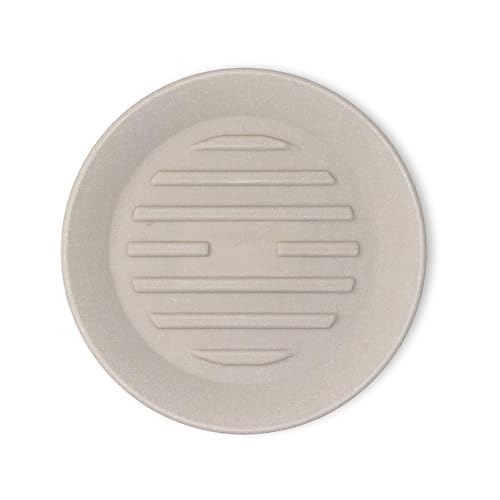




When you're working with large floor planters, you need a saucer that can hold its own. The Crescent Garden Universal Round Planter Saucer is purpose-built for big pots — its 15-inch inner diameter accommodates the base of standard large planters, while the 20-inch outer diameter gives you generous overflow protection. Made from 100% recyclable polyethylene, this saucer handles both indoor and outdoor conditions without cracking, fading, or warping over time. The parchment finish blends naturally with neutral décor without looking cheap.
One of the things that sets this saucer apart is its build density. It feels solid underfoot — not the flimsy flex you get with bargain-bin plastic trays. The raised lip holds standing water reliably and the smooth interior makes it easy to pour out any accumulated drainage. If you're protecting hardwood floors or expensive rugs from a large statement plant, this is the saucer you want under it. It's also a strong outdoor performer — it sits flat on decks and patios without warping in summer heat.
The one trade-off is that it's sold individually, so if you need multiple large saucers, cost adds up. But for a single large pot — say a tall fiddle leaf fig or an oversized monstera — this is the most durable, purpose-built option in its size class for 2026.
Pros:
Cons:
If you have a full shelf of houseplants in varying sizes, the SupKing 9 Pack is one of the smartest buys you can make. You get three 6-inch, three 8-inch, and three 10-inch saucers in one order — all made from thick, sturdy PP plastic that holds up to heavy pots without bowing or cracking. The clear design is genuinely useful: you can see at a glance how much water has collected beneath your pots without lifting them, which helps you avoid both root rot and underwatering. The ridged surface elevates pots slightly, improving airflow to the root zone — a small design detail that makes a real difference in plant health over time.
Compared to the thin, flimsy saucers you'll find at dollar stores or big-box garden centers, these feel noticeably more solid. They're thick enough that you can set a substantial pot on them without any flex, and the clear PP plastic won't yellow or crack with regular indoor use. The waterproof design catches both excess water and stray soil, keeping your shelves and windowsills clean even after heavy watering sessions.
For anyone managing five or more plants of different sizes, this is the most efficient way to saucer your entire collection in one purchase. The transparent look is also versatile — it doesn't compete with colorful planters or styled shelving, it just disappears underneath them. If you're also monitoring soil moisture levels across your plants, pairing these with a good tool like one from our Top 17 Best Plant Moisture Meters guide will sharpen your watering routine considerably.
Pros:
Cons:
Not every saucer needs to be a workhorse. Sometimes you want something that looks as good as the plant above it, and that's exactly where the D'vine Dev Ceramic Saucer earns its place. The matte white finish and clean round profile add a modern, gallery-ready look to any plant setup — on a shelf, on a dining table, or in a minimalist entryway. It's a 5.4-inch inner diameter saucer designed specifically to pair with D'vine Dev's 6-inch ceramic planters, but it works equally well as a replacement saucer under any similar-sized pot.
The ceramic construction is substantial without being cumbersome. At 6.4 inches outer diameter and 1.2 inches tall, it has a low profile that doesn't raise the pot awkwardly. The matte glaze repels water without any slippery finish on the exterior, so the saucer stays put rather than sliding across smooth surfaces. It catches and holds drainage cleanly without staining, and the neutral white color means it matches virtually any planter color or finish you might have.
This isn't a high-volume, multi-pack option — it's a premium single piece for a premium plant display. If you're decorating a specific spot in your home and want a saucer that's part of the aesthetic rather than hidden under it, this is the pick. The limitation is size: it only fits pots with a base diameter of 5.4 inches or less. For a wider selection of stylish planter and saucer combinations, also browse our 15 Best Outdoor Planter Pots guide.
Pros:
Cons:
If you're working with genuinely heavy pots — the kind you need two people to move — the Bosmere Down Under is the saucer that handles them. Rated to support up to 500 lbs, it's an outlier in a product category where most saucers are rated for household use, not commercial-grade loads. At 17 inches, it's sized for large deck containers, outdoor specimen plants, and statement planters that carry significant weight. The clear plastic design is understated enough to work in most settings without calling attention to itself.
The engineering here is practical and deliberate. The saucer lifts pots slightly to allow airflow underneath, which prevents moisture buildup between the pot base and your deck or flooring — one of the primary causes of wood damage and rot over time. It's designed to fit securely onto Bosmere's 16-inch Plant Caddie, but it functions perfectly as a standalone saucer regardless. The clear finish lets you see water accumulation without lifting the pot, which matters a lot when the pot weighs too much to move casually.
This is not a decorative saucer — it's a load-bearing, functional piece of equipment for serious gardeners. If you have a large outdoor container that sits on a wood deck, a finished patio, or an interior tiled floor, the Bosmere Down Under is the most structurally sound choice in this roundup. Just note that the clear finish won't win any style awards. It's built to work, not to impress guests.
Pros:
Cons:
Terracotta saucers have been used in horticulture for centuries for good reason — the porous clay material breathes, which promotes healthy root aeration in a way that plastic simply cannot. The terracotta used in the Suwimut 10 Pack is classic fired clay: slightly rough to the touch, warm in tone, and naturally matched to terracotta pots, ceramic planters, or rustic garden setups. Each saucer measures 6 inches outer diameter with a 5.3-inch inner rim, making it ideal for standard small pots in the 5 to 6-inch range — exactly the size that dominates most herb gardens, succulent collections, and windowsill setups.
The value here is strong. Ten saucers in one pack covers an entire shelf of small pots at once, and the smooth, slightly raised edge does a reliable job catching excess water and soil spillage. The clay construction works with any pot material — ceramic, terracotta, glass, or fabric — and the natural breathability supports root health in ways that sealed plastic saucers don't. If you're growing herbs on a kitchen windowsill or managing a collection of small succulents, the earthy look fits right in without needing to hide the saucer.
The trade-off is that terracotta is heavier than plastic and more fragile if dropped. These also absorb small amounts of moisture over time, which is great for plants but means they shouldn't sit on surfaces that are sensitive to staining. For indoor shelving with a natural or rustic aesthetic, though, these are the most authentic and plant-friendly small saucers on this list. They also pair beautifully with quality organic potting mixes — our guide to the 13 Best Organic Potting Soils covers the top options for container growing.
Pros:
Cons:
Most plastic saucers that live outdoors don't last more than a season or two before they become brittle and crack. The HC Companies 16 Inch Classic addresses that problem directly with UV-resistant plastic construction that holds up in full sun without degrading, yellowing, or becoming fragile. The warm gray finish is calm and neutral — it reads as intentional rather than industrial, and it suits both formal garden settings and casual patio arrangements without standing out awkwardly.
You get two saucers per pack, which makes the per-unit value solid for outdoor use. At 16 inches, they handle large outdoor planters comfortably, catching runoff from heavy watering sessions before it can pool on your deck or damage your patio surface. The classic round shape and consistent depth mean drainage collects centrally and doesn't spill over the edge during a normal watering session. These are lightweight enough to move easily even with a pot on top — a practical consideration when you're rearranging outdoor containers.
The warm gray finish holds its color season after season, which is the real differentiator here. If you've ever watched a cheap plastic saucer bleach out to a chalky white after a summer in direct sunlight, you'll understand why UV resistance matters. For anyone with outdoor containers on a south-facing patio, deck, or garden bed that gets direct afternoon sun, this is the most durable 16-inch option in 2026. These are purpose-built for outdoor longevity, not indoor style.
Pros:
Cons:
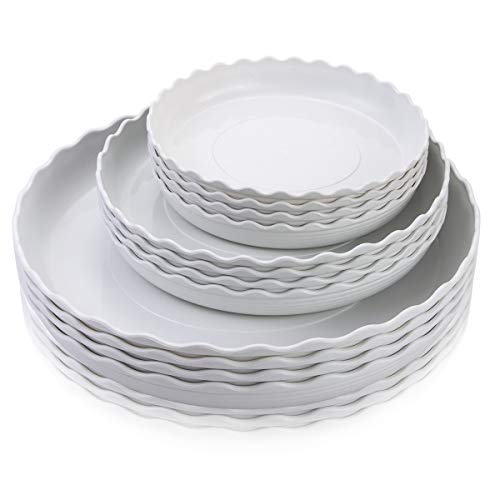
If you want a multi-pack saucer set that actually looks like it was chosen intentionally, the FIREBOOMOON 12 Pack is where function meets design. The graceful wavy-edge design lifts this above the standard flat-rim plastic saucer without adding cost or complexity — these are still practical, heavy-duty PP resin trays, but they look considerably more refined on a bookshelf or windowsill. You get 12 total saucers in three sizes (6, 8, and 10 inches, four of each), which is enough to cover a serious indoor plant collection in one order.
The PP resin construction is thick and sturdy — these don't flex noticeably even under heavy pots, which is the baseline requirement for any saucer worth buying. The white finish reads as clean and intentional, pairing well with white, natural wood, and neutral-toned interiors. The wave-patterned rim adds enough visual interest to make the saucer a complementary part of the plant display rather than something you're trying to hide. Each size handles drainage efficiently, and the raised interior surface keeps the pot base slightly elevated to help air circulation at the roots.
For a 12-pack at this price, the value-to-design ratio is exceptional. You're not sacrificing build quality for aesthetics here — these are genuinely sturdy saucers with a decorative edge. The one limitation is that the 10-inch max size won't work for large floor planters, but for small-to-medium collections on shelves, stands, or windowsills, this is the best-looking set on this list. Pair these with well-watered plants and a good plant mister for a complete, low-maintenance indoor setup.
Pros:
Cons:
Plant saucers are straightforward products, but buying the wrong one creates real problems — water overflow onto floors, inadequate pot support, or a saucer that looks out of place in a styled room. Here's what to evaluate before you buy.
The most common sizing mistake is measuring the top opening of a pot rather than its base diameter. The saucer needs to catch water draining from the bottom, so you need it sized to the base footprint. Measure the widest point of the pot's base and choose a saucer with an inner diameter that's equal to or slightly larger. For floor planters, err on the larger side — extra overflow protection matters when you're watering large volumes. For shelf plants, a closer fit looks cleaner.
Most multi-packs like the SupKing and FIREBOOMOON sets cover the 6 to 10-inch range, which handles the vast majority of houseplant pots. If you have large outdoor planters or statement floor plants, look at single-piece saucers in the 15 to 17-inch range like the Crescent Garden or Bosmere options.
Each material has a specific use case, and knowing where you're placing the saucer determines which material to choose:
A flat saucer that lets your pot sit in standing water is worse than no saucer at all in the long run. Root rot is one of the leading causes of houseplant death, and it develops when roots are in contact with stagnant water for extended periods. Look for saucers with a raised interior surface or ridged base — these elevate the pot slightly so water drains away from the root zone rather than pooling directly beneath the drainage hole.
The SupKing and FIREBOOMOON options both feature this raised-surface design. The Bosmere Down Under is specifically engineered to lift the pot for airflow. Even small elevation (a few millimeters) makes a meaningful difference in root health over time.
If a saucer is going outdoors, UV resistance is not optional — it's a requirement. Standard plastic degrades rapidly in direct sunlight, becoming brittle and cracking within one to two seasons. If you're placing saucers on a patio, deck, or in a garden bed that receives direct sun, specifically check that the product is rated UV-resistant before buying. The HC Companies 16-inch saucer is the best outdoor option on this list for that reason. Ceramic and terracotta hold their appearance outdoors but are heavier and more prone to weather-related stress cracking in freeze-thaw cycles.
Measure the diameter of the pot's base — not the rim opening. Choose a saucer with an inner diameter equal to or slightly larger than the pot's base. For large floor planters, go a size up to allow for generous overflow protection during watering. Most multi-packs in the 6 to 10-inch range cover standard houseplant and herb pot sizes.
No. Standing water in a saucer should be removed within 30 minutes to an hour after watering. Leaving water pooled under your pot — especially if the pot has direct contact with it — promotes root rot and creates conditions for fungus gnats. Saucers with a raised interior surface help by keeping the pot base above the waterline, but emptying excess water is still the best practice.
Yes, in most cases. Plastic saucers work under ceramic, terracotta, fiberglass, and fabric pots without any compatibility issues. Terracotta saucers are particularly versatile because their breathability benefits multiple pot types. The only pairing to be careful with is ceramic saucers on smooth floors — the weight can cause the saucer to slide, so adding a non-slip pad underneath is a good idea.
Standard plastic is not. Basic polyethylene and PP saucers break down quickly in direct UV exposure and will crack and fade within one to two seasons outdoors. For permanent outdoor setups, you need UV-stabilized or UV-resistant plastic specifically rated for outdoor use. The HC Companies 16-inch saucer is the best UV-resistant option reviewed here. In climates with hard winters, ceramic and terracotta saucers may also crack during freeze-thaw cycles, so bring those indoors before temperatures drop.
White mineral deposits from hard water are common and easy to remove. Soak the saucer in a solution of equal parts white vinegar and water for 30 minutes, then scrub with a soft brush. For stubborn deposits, use undiluted white vinegar and let it sit longer. Rinse thoroughly before returning the pot. Avoid bleach-based cleaners, which can leave residues that affect sensitive plant roots.
The terms are often used interchangeably, but technically a saucer is a single dish placed under one pot, while a tray is a larger, shallower container designed to hold multiple pots or to create a humidity tray environment. For most houseplant applications, individual saucers are the right choice. Humidity trays — filled with pebbles and water below the pot base — are used specifically to raise ambient humidity for tropical plants that prefer a more humid microclimate.
 |
 |
 |
 |

About Christina Lopez
Christina Lopez grew up in the scenic city of Mountain View, California. For eighteen ascetic years, she refrained from eating meat until she discovered the exquisite delicacy of chicken thighs. Christina is a city finalist competitive pingpong player, an ocean diver, and an ex-pat in England and Japan. Currently, she is a computer science doctoral student. Christina writes late at night; most of her daytime is spent enchanting her magical herb garden.


Get new FREE Gifts. Or latest free growing e-books from our latest works.
Disable Ad block to reveal all the links. Once done, hit a button below
|
|
|
|
 rinjal