A friend handed me a sealed mason jar once — moss packed tight inside, a few small ferns pressing against the glass, the lid screwed down firm. I gave it two weeks before writing it off as a failed experiment. It lived for over a year without a single watering. That one jar changed how I think about indoor plants entirely.
If you've been wondering how to make a closed terrarium, you're in the right place. A closed terrarium is a self-sustaining ecosystem sealed inside a glass container — no drainage holes, minimal watering, and a built-in water cycle that runs itself. Before you shop for materials, browse our gardening reviews section to find the right containers, tools, and soil amendments for the build.
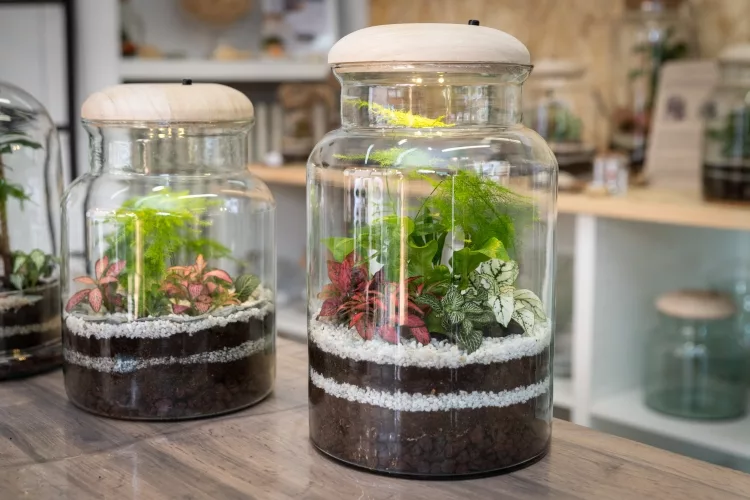
According to Wikipedia, terrariums were first developed in the 1800s by botanist Nathaniel Bagshaw Ward — originally as a way to transport tropical plants on long sea voyages. The principle hasn't changed: a sealed glass environment traps moisture, recycles it through condensation, and keeps humidity-loving plants alive with almost no intervention from you.
The difference between a thriving closed terrarium and a moldy glass box comes down to what you put inside and how you build it. Every decision you make before you seal the lid matters. This guide covers the tools, the layers, the plants, the pitfalls, and the fixes — everything you need to build a terrarium that lasts for years, not weeks.
Contents
Getting your materials sorted before you start saves you from tearing apart a half-built setup later. A terrarium is only as good as the components you put inside it. Here's what to gather before you open a single bag of soil.
Your container needs to be fully sealable and clear enough to let light through. These are the most practical options:
Avoid plastic containers entirely. They scratch, they cloud up permanently, and they don't regulate internal temperature the way glass does. A wider opening always makes planting easier — especially when you're using long-handled tools to position plants at the far edges of the container.
A closed terrarium has no drainage holes, so you build drainage directly into the substrate stack. Each layer does a specific job. Skip one and you compromise the entire system. If you've read our guide on how to fill an outdoor planter, you'll recognize the layering logic — same principle, scaled down and sealed inside glass.
| Layer | Material | Depth | Purpose |
|---|---|---|---|
| Drainage | Pea gravel or LECA | 1–2 inches | Holds excess water below the root zone |
| Separation | Sphagnum moss or fine mesh | ½ inch | Prevents soil from sinking into drainage layer |
| Filtration | Activated charcoal | ½ inch | Slows bacterial growth and controls odor |
| Growing medium | Tropical or terrarium potting mix | 2–3 inches | Anchors roots and provides nutrients |
| Top dressing | Sheet moss or decorative stones | ¼–½ inch | Aesthetic finish and surface moisture retention |
Beyond soil, you'll need a short toolkit: long-handled tweezers or bamboo chopsticks for positioning plants inside the container, a rolled paper cone or small funnel for directing soil without smearing the walls, a fine-mist spray bottle for controlled initial watering, and a clean dry cloth for wiping the interior glass before you seal. Read through our guide on how to clean garden tools first — sterilized tools significantly reduce the risk of introducing bacteria that causes rot in a sealed environment.
This is the core of the entire process. Follow these steps in order. Rushing any stage — especially the initial watering — is the single most common reason builds fail within the first month.
If condensation is so heavy after 24 hours that you can't see the plants clearly, crack the lid open for 2–4 hours to vent excess moisture, then reseal. Repeat over several days until condensation settles to a light morning mist. That equilibrium is your target. Think of it like managing a small greenhouse — you're actively tuning the internal environment in the early days, not simply sealing it and walking away.
Knowing the technique is one thing. Knowing what to actually build makes the difference between a generic glass jar and something you're genuinely proud to display. These designs are proven performers — they look good and they work reliably over the long term.
This is the easiest starting point for anyone new to closed terrariums. A single large glass jar, sheet moss as the primary plant, and a few natural accents. Moss terrariums are the most forgiving because moss handles moisture fluctuations better than almost any other plant you could choose.
Start here if you've never built a terrarium before. Once you've kept a moss jar alive for three months, you'll have the confidence to attempt more complex builds.
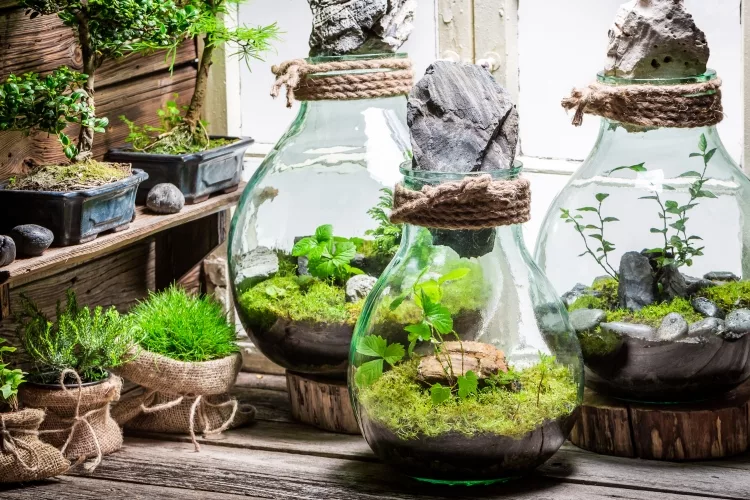
This design mimics a forest floor and works best in a larger container with a wide opening. It creates the illusion of a tiny, self-contained landscape — the kind of thing that draws attention the moment someone walks into the room.
The woodland design benefits from a 2.5–3 inch soil depth so fern root systems have room to spread. Make sure your container is tall enough that plant tops won't press against the sealed lid as they grow.
A closed terrarium isn't the right container for every plant or every situation. Knowing when to use one — and when to reach for an open container or a pot — saves you from a frustrating rebuild.
Closed terrariums perform best under specific circumstances. You should build one when:
Closed terrariums fail fast when you use plants that need dry conditions or airflow. These plants do not belong in a sealed glass environment — no exceptions:
If your plant list leans toward drought-tolerant or Mediterranean species, build an open terrarium. The substrate layering principles are similar, but you leave the lid off entirely and provide more gritty, well-draining growing medium.
Most terrarium failures are preventable. These are the mistakes that come up over and over — and they all have solutions if you catch them early enough.
This is the number one mistake. People water the terrarium like a standard houseplant before sealing it, then wonder why there's standing water at the bottom of the drainage layer and rotting plants a month later.
Not every plant that looks small at the garden center stays small. And not every leafy green plant handles constant high humidity without problems.
Light is the one input your terrarium cannot generate or recycle on its own. Without enough, plants can't photosynthesize and will slowly decline regardless of how good your substrate is. Too much direct sun, and the glass amplifies heat until you've essentially cooked everything inside.
Even carefully built terrariums develop issues. Here's how to read the warning signs and fix them before small problems turn into total losses.
Some condensation on the inner glass walls is normal and healthy — it means the water cycle is actively working. But if the glass is so fogged that you can't see the plants at all, the system is out of balance.
White fuzzy growth on the soil surface is a common early warning. Gray or black mold — especially near plant stems — means you have a more urgent problem that needs immediate action.
Yellow leaves inside a closed terrarium almost always point to overwatering or insufficient light — rarely to underwatering, since humidity inside is high. Wilting plants in a humid sealed container point directly to root rot, not drought stress.
Terrarium advice online is full of oversimplifications and outright misinformation. These three myths are the most persistent — and the most likely to sabotage your build if you act on them.
Closed terrariums are dramatically lower maintenance than any potted plant — that part is true. But "low maintenance" is not the same as "zero maintenance." The water cycle extends the interval between waterings to weeks or even months, but it doesn't eliminate the need entirely. Each time you open the lid to inspect or prune, a small amount of moisture escapes. Over enough time, the system slowly dries out. Check soil moisture every 4–6 weeks by pressing a finger near the glass edge. If it's dry an inch below the surface, add a small, measured amount of water with a dropper.
This myth costs people money every time. A plant that thrives in a pot on your windowsill is not automatically suited for a sealed, high-humidity glass container. Succulents, cacti, lavender, rosemary, and most herbs actively dislike the environment a closed terrarium creates. Seal them inside and they'll rot within weeks. Stick to tropical humidity-lovers: ferns, mosses, fittonias, prayer plants, small peperomias, nerve plants, and creeping fig. These aren't arbitrary choices — they're plants that evolved in consistently moist, shaded environments.
This is probably the most dangerous myth in the terrarium hobby. Activated charcoal filters toxins and slows bacterial growth in the water — it does not hold or redirect excess moisture the way a gravel drainage layer does. Skipping the gravel and relying solely on charcoal leads to waterlogged soil and root rot within a few months, guaranteed. You need both: a gravel drainage layer on the bottom and a charcoal layer above it. They serve entirely different functions and cannot substitute for each other.
The best plants for closed terrariums are humidity-loving tropicals that stay small. Top choices include mood moss, cushion moss, miniature ferns, nerve plant (Fittonia), baby's tears (Soleirolia), creeping fig, and small peperomias. These plants thrive in the consistently moist, low-airflow environment a sealed glass container creates.
In most cases, a properly built closed terrarium needs no additional water for months at a time. The sealed environment recycles its own moisture through condensation. Check the soil moisture every 4–6 weeks by pressing a finger near the glass edge. If the soil is dry an inch below the surface, add a small amount of water using a dropper or syringe — never pour water freely into the container.
Standard potting soil is not ideal for closed terrariums. It tends to be too dense, retains excess moisture, and can compact over time in a sealed environment. Use a tropical or terrarium-specific potting mix instead. These mixes are formulated for good aeration and moisture retention without becoming waterlogged — exactly what your plants need in a sealed container.
Closed terrariums need bright, indirect light for 8–12 hours per day. A north- or east-facing windowsill is ideal. Avoid direct afternoon sun — the glass amplifies heat and can cook plants quickly. If natural light is insufficient, place the terrarium under a full-spectrum grow light on a 12-hour timer. Rotate the container a quarter turn weekly for even, balanced growth.
A well-built closed terrarium can last for decades. The longest-running documented closed terrarium — David Latimer's bottle garden — has been sealed since 1972 and continues to thrive. Realistically, with proper plant selection and correct moisture balance at setup, you can expect your terrarium to remain healthy for several years with only occasional light maintenance like trimming and removing dead leaves.
A healthy closed terrarium should have a mild, earthy smell — like forest soil after rain. A bad or rotten smell is a warning sign of bacterial growth or rotting plant material inside the container. If you detect an unpleasant odor, open the terrarium, remove any dead or decaying material, add a fresh layer of activated charcoal, and vent the lid for 24–48 hours before resealing.
Building a closed terrarium is one of the most satisfying indoor gardening projects you can take on — and once you've done it right once, you'll want to build another. Start with a simple moss jar, get comfortable reading condensation levels, and scale up from there. Gather your materials, choose your plants carefully from the humidity-lovers listed in this guide, and seal your first terrarium this weekend — the hardest part is just getting started.
 |
 |
 |
 |

About Truman Perkins
Truman Perkins is a Detroit-based SEO consultant who's been in the business for over a decade. He got his start helping friends and clients get their websites off the ground, and he continues to do so today. In his free time, Truman enjoys learning and writing about gardening - something he believes is a natural stress reliever. He lives with his wife, Jenny, and their twins in Detroit.


Get new FREE Gifts. Or latest free growing e-books from our latest works.
Disable Ad block to reveal all the links. Once done, hit a button below
|
|
|
|
 rinjal