If you want one product to start with, Bonsai Jack's Gritty Mix is the go-to choice for serious succulent growers — its ultra-fast drainage practically eliminates root rot. But the right soil really depends on your setup, your watering habits, and whether you're growing indoors or out. We've rounded up the best options for 2026 so you can find your perfect match without the guesswork.
Succulents are tough plants, but they have one non-negotiable need: soil that drains fast. Pack them into regular potting mix and you're setting them up for failure. Their roots need to dry out between waterings, and standard garden soil holds way too much moisture. That's why picking the right succulent mix matters more than most people realize. Whether you're a casual windowsill grower or a full-on collector with hundreds of pots, the soil you use will make or break your plants. You can browse more of our plant care picks over at our gardening reviews section.

In this guide, we've reviewed seven top-rated succulent soils — from budget-friendly big-box options to pro-grade gritty mixes — along with a buying guide and answers to the most common questions growers ask. We've also included a few perlite (a volcanic mineral that improves drainage) and amendment options so you can customize whatever mix you already have. If you're also thinking about containers, check out our guide to the 25 best pots for succulents to pair the right soil with the right pot. Ready to dig in? Let's go.
Contents




Hoffman's 10-quart cactus and succulent mix is one of the most popular entry-level options out there, and it earns that reputation. The formula is specifically designed to break up clay-heavy soils and prevent the clumping that suffocates roots. For a budget pick, it performs surprisingly well — decent drainage, reasonable aeration, and it's widely available at most garden centers and online. You get 10 quarts for a solid price, and if you need more, there's an 18-quart size too.
That said, some growers find this mix a bit too moisture-retentive on its own for very sensitive succulents like lithops. If you're growing anything fussy, consider mixing in some extra perlite to improve drainage. For hardier varieties like aloe, jade, and echeveria, it works just fine straight out of the bag. It's a reliable, no-fuss starting point if you're new to succulents or just need to repot a few plants without overthinking it.
Pros:
Cons:
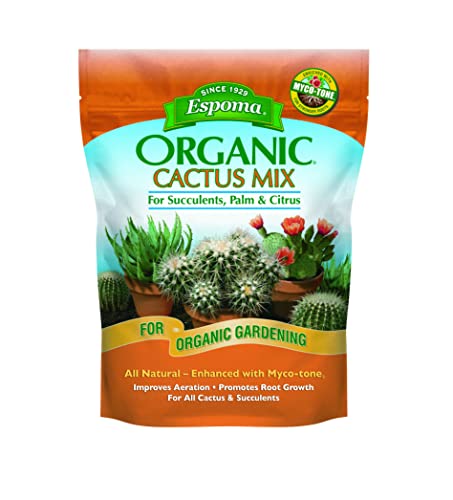
Espoma is a brand that gardeners trust, and their organic cactus potting soil lives up to that reputation. The blend combines sphagnum peat moss, humus, and perlite — a classic trio that balances moisture management with solid drainage. What makes Espoma stand out from the budget crowd is the inclusion of Myco-Tone, a proprietary blend of mycorrhizae (beneficial fungi that attach to plant roots and help them absorb water and nutrients more efficiently). It's a small detail that can make a real difference over the long run.
This mix works well for a wide range of plants — not just succulents and cacti, but also palms and citrus trees grown in containers. If you like to keep your growing practices organic and natural, this is one of the few ready-to-use mixes that genuinely fits that philosophy. The 4-quart size is on the smaller side, so it's best for hobbyists with a modest collection rather than anyone repotting dozens of plants at once. It's also a good pick if you're growing plants indoors where you want to minimize chemical inputs.
Pros:
Cons:
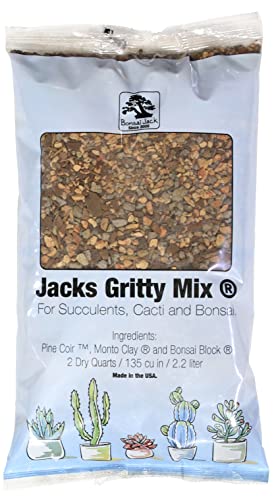
Bonsai Jack's Gritty Mix is the gold standard among serious succulent collectors, and for good reason. This isn't your typical potting mix — it's an inorganic, ultra-fast-draining blend made from Bonsai Block, Monto Clay, and Pine Coir (pine bark fines). The result is a mix that dries out quickly between waterings, which is exactly what succulents and cacti need to avoid root rot. It's also optimized to a pH of 5.5, which is ideal for acid-loving plants in this family.
Because it drains so aggressively, you'll water more frequently than with standard mixes — but your plants will thank you for it. This mix is perfect for anyone who has previously lost plants to overwatering or root rot. It's also lightweight and airy, which means roots can explore the pot freely. The 2-quart size is great for testing it out, though committed growers usually buy in bulk. It works beautifully for specialty varieties like Echeveria, Haworthia, Lithops, and Jade. Think of it as the premium, professional-grade option in this lineup.
Pros:
Cons:
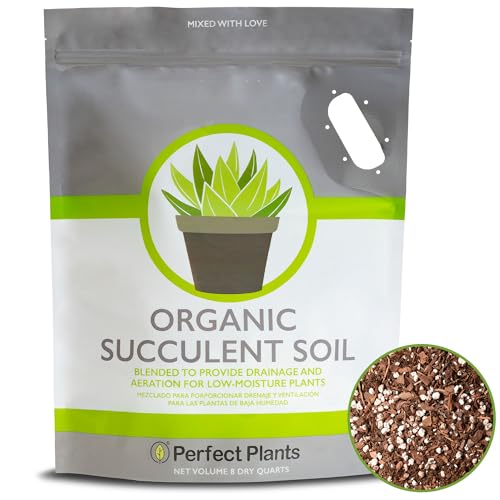
Perfect Plants' 8-quart succulent mix hits a sweet spot between moisture retention and drainage that casual growers will appreciate. The mix is professionally blended to mirror the dry conditions succulents love in their native habitats, while still holding onto just enough nutrients to feed your plants between fertilizations. It's formulated by actual plant growers — not just soil scientists — which means it's been tested in real-world container growing conditions.
The 8-quart size offers good value and is enough to repot a decent number of plants in one go. Aeration is a clear priority here: the mix expands root space so plants can develop strong, healthy root systems. It's organic, fresh, and tends to arrive in good condition with minimal dust or clumping. If you're looking for something between the ultra-fast-draining Bonsai Jack and the more budget-focused Hoffman, this is a solid middle-ground choice. Great for both beginners and experienced growers who want a ready-to-use option.
Pros:
Cons:
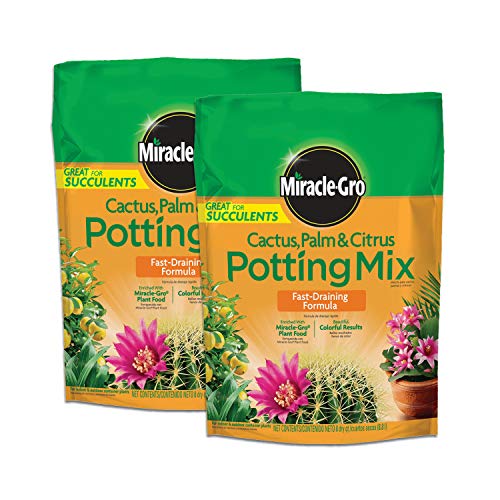
Miracle-Gro is the brand most people think of when it comes to plant care, and their Cactus, Palm, and Citrus Potting Mix is a solid performer for everyday succulent growing. The fast-draining formula comes pre-enriched with Miracle-Gro Plant Food, which means your plants get a nutrient boost right out of the bag. The 2-pack gives you 16 quarts total — plenty for repotting a full collection without running out mid-project.
This mix is designed for both indoor and outdoor container plants, which makes it versatile. It handles cacti, succulents, palms, and citrus trees with equal competence. That said, it's not as free-draining as Bonsai Jack, and some growers add extra perlite to speed up drainage for more sensitive varieties. It's the kind of mix that works well if you're not overwatering — which, honestly, is the case with most succulent-friendly soils. The Miracle-Gro name also means it's easy to find at virtually any garden center or home improvement store in 2026, which is a real convenience factor. If you want a no-fuss, widely available option that won't break the bank, this is it.
Pros:
Cons:

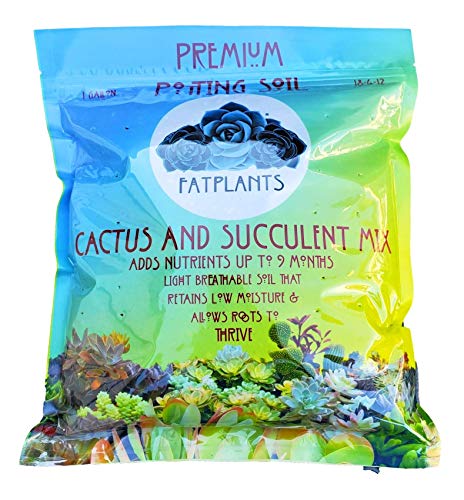
Fat Plants San Diego specializes in succulents and cacti, so it makes sense that their potting mix is purpose-built for exactly these plants. The formula includes eight months' worth of time-released nutrients in the form of small yellow fertilizer granules containing nitrogen (N), phosphorus (P), and potassium (K) — the three macro-nutrients every plant needs. That's a big deal for low-maintenance growers who don't want to fuss with separate fertilizer schedules.
The pH is carefully calibrated to the slightly acidic range that succulents and cacti prefer, so you're not fighting the soil chemistry from day one. The mix itself is well-draining, and Fat Plants has clearly thought about what these plants actually need rather than just repackaging standard potting soil with a cactus label on it. It's a premium-feeling product at a mid-range price. If you hate the idea of buying soil and fertilizer separately, this is the most convenient all-in-one package in this roundup. Pair it with one of our recommended herb soils if you're also growing other plants alongside your succulents.
Pros:
Cons:
Perlite isn't technically a "soil" on its own, but it's one of the most important tools in any succulent grower's toolkit. Supreme Perlite's medium-grade horticultural perlite is professional quality — the same material nurseries and commercial growers use to amend their mixes. Perlite is a type of volcanic glass that's been superheated until it puffs up like popcorn, creating tiny porous particles that improve drainage and aeration without adding any nutrients or acidity.
This 4-cubic-foot bag is a serious quantity — more than enough to amend large batches of potting mix or fill multiple propagation trays. The medium grade (approximately 1/4 inch or 4-5mm particles) is ideal for succulent and cactus mixes, as it's fine enough to mix thoroughly but coarse enough to keep air channels open around roots. If you already have a mix you like but find it a bit too moisture-retentive, adding 25-50% perlite by volume is the single best upgrade you can make. It's also useful for seed starting and propagation. Just note that 4 cubic feet is a LOT — this is a bulk buy best suited for serious growers or nurseries. For the average home hobbyist, a smaller bag would do. To understand how soil amendments work across different plants, see our best soil amendment and conditioner reviews for a broader perspective.
Pros:
Cons:
Before you click "add to cart," take a few minutes to think through what your plants actually need. According to the Wikipedia entry on succulent plants, most succulents evolved in arid or semi-arid environments where the soil is rocky, sandy, and drains instantly after rain. Understanding that context helps explain why the right soil choice matters so much. Here's what to look for in 2026.
This one isn't negotiable. Succulents store water in their leaves, stems, and roots, which means they can tolerate drought far better than they can tolerate soggy soil. When roots sit in water, they suffocate and rot within days. A good succulent soil should drain freely and dry out within 24-48 hours after watering. If you press a handful of the mix and it clumps together like clay, keep looking. A good mix should crumble and feel gritty. Signs of good drainage include:
Most ready-to-use succulent soils are a blend of organic material (like peat moss or coconut coir) and inorganic material (like perlite or sand). Pure inorganic mixes like Bonsai Jack's Gritty Mix drain the fastest and are hardest to overwater, but they require more frequent watering because they hold almost no moisture. Organic-heavy mixes stay moist longer and contain more nutrients, but raise the overwatering risk. The right balance depends on your climate, your pot type, and how often you water:
Succulents generally prefer a slightly acidic to neutral pH — somewhere in the 5.5 to 6.5 range (pH is a measure of soil acidity; 7.0 is neutral, lower numbers are more acidic). Most purpose-formulated succulent mixes are already calibrated in this range, so you typically don't need to test or adjust. But if you're mixing your own blend from scratch, it's worth checking. Soils that are too alkaline (above 7.5) can prevent plants from absorbing nutrients even when those nutrients are present. If you grow other specialty plants and want to compare soil needs across species, our guide to the top soils for snake plants covers similar pH and drainage considerations.
The soil you choose should match your pot. Terracotta (unglazed clay) pots wick moisture out through the walls, which means even a slightly moisture-retentive mix can work fine. Plastic or glazed ceramic pots hold moisture much longer, so they require faster-draining soil to compensate. Smaller pots dry out faster than large ones, which is forgiving — large pots in dense soil are where root rot really takes hold. Consider these pairing guidelines:
Regular potting mix is designed to retain moisture for plants that need consistent watering. Succulents need the opposite — soil that drains fast and dries out quickly between waterings. Succulent mixes contain gritty amendments like perlite, pumice, or coarse sand that prevent water from pooling around roots. Using regular potting soil dramatically increases the risk of root rot, which is the number one cause of succulent death.
Absolutely, and many experienced growers prefer it. A basic DIY mix is two parts coarse horticultural sand or perlite to one part standard potting mix. For a more advanced mix, try one part potting mix, one part perlite, and one part pumice. The goal is a blend that drains freely and dries out within a day or two after watering. Making your own also lets you fine-tune the mix for specific varieties — lithops need almost pure mineral media, while most echeveria do fine with a balanced blend.
A general rule of thumb is to repot every one to two years, or whenever you see roots escaping through the drainage holes. Fresh soil matters because nutrients deplete over time and old organic matter can break down into a denser, less-draining texture. Spring and early summer are the best times to repot, as plants are entering active growth. When you repot, let the plant sit in dry soil for a day or two before watering to help any damaged roots callous over and reduce rot risk.
Not strictly necessary if you're using a quality pre-mixed succulent soil, but it's almost always beneficial. Perlite is one of the cheapest and most effective drainage improvers available. Even a good ready-to-use mix like Espoma or Perfect Plants benefits from a 20-30% perlite addition if you tend to water frequently or grow in a humid environment. It's particularly valuable for indoor growers where soil dries more slowly due to lower light and air circulation.
Succulents are light feeders and don't need much fertilizer, but they do benefit from occasional nutrient input during the growing season (spring and summer). Some mixes like Fat Plants San Diego include time-released fertilizer granules that handle this automatically for months. For other mixes, a diluted balanced liquid fertilizer applied once a month during growing season is sufficient. Avoid fertilizing in fall and winter when most succulents enter a rest phase — pushing growth during dormancy weakens the plant.
Indoor succulents dry out more slowly than outdoor ones due to lower light and less air movement. That means indoor plants benefit most from faster-draining mixes — Bonsai Jack's Gritty Mix or any standard mix amended with 30-50% perlite works well. Avoid heavy organic mixes indoors, as they stay wet long enough to breed fungus gnats and encourage root rot. Terra cotta pots pair especially well with indoor succulents because they help wick away excess moisture through the pot walls.
 |
 |
 |
 |

About Christina Lopez
Christina Lopez grew up in the scenic city of Mountain View, California. For eighteen ascetic years, she refrained from eating meat until she discovered the exquisite delicacy of chicken thighs. Christina is a city finalist competitive pingpong player, an ocean diver, and an ex-pat in England and Japan. Currently, she is a computer science doctoral student. Christina writes late at night; most of her daytime is spent enchanting her magical herb garden.


Get new FREE Gifts. Or latest free growing e-books from our latest works.
Disable Ad block to reveal all the links. Once done, hit a button below
|
|
|
|
 rinjal