What's the single biggest mistake most strawberry growers make? They obsess over variety selection, irrigation, and sunlight hours — then plant in mediocre soil and wonder why their harvest disappoints. The truth is, the soil you choose determines everything: root depth, water retention, pH balance, and ultimately the sweetness and yield of every berry you pick. If you're serious about growing strawberries in 2026, this guide cuts through the noise and tells you exactly what to reach for.
We've tested and reviewed the top options available right now across containers, raised beds, and in-ground setups. Whether you're growing June-bearing varieties in pots on a balcony or everbearing plants in a dedicated garden bed, the right soil makes the difference between a handful of berries and a genuine harvest. Our top pick is the FoxFarm Ocean Forest Potting Soil — it delivers the perfect pH range, excellent drainage, and rich organic material that strawberries demand. But depending on your setup, another option on this list might serve you even better.
Strawberries thrive in slightly acidic soil with a pH between 5.5 and 6.5, according to University of Minnesota Extension. They need soil that drains freely but still retains enough moisture to keep roots from drying out between waterings. That balance — drainage plus moisture retention — is what separates mediocre mixes from the best soils for strawberries. You'll find everything you need to know in the reviews and buying guide below. And if you're exploring other growing media for your garden, check out our full gardening reviews section for more tested recommendations.

Contents






FoxFarm Ocean Forest is the gold standard for container strawberry growing, and it earns that reputation every single season. This all-purpose mix lands in the ideal pH range of 6.3 to 6.8 right out of the bag, which means you're not spending time adjusting acidity before your first planting. The blend draws from a marine-based recipe that includes composted forest humus, sandy loam, and sea-going fish and crab meal — ingredients that deliver a diverse nutrient profile your strawberry roots can immediately draw from. The texture is notably airy, which prevents compaction in containers and keeps oxygen circulating around developing roots.
What sets Ocean Forest apart for strawberries specifically is how it handles watering cycles. It wets evenly, drains excess moisture quickly, and still holds just enough hydration to keep plants from stressing between waterings. If you're growing in pots, hanging baskets, or fabric grow bags, you'll notice your plants establish faster and start throwing runners sooner than they would in a generic big-box potting mix. This is a ready-to-use product — open the bag and plant. No amendments needed for the first growing season, and it's plenty rich to sustain a full fruiting cycle without early fertilizer intervention.
One thing to note: Ocean Forest is on the premium end of the price scale for a 1.5 cubic foot bag. But when you're trying to get the most out of a limited container space or a small raised bed planter, the performance per square foot justifies the cost without hesitation. It's our top pick for 2026 and the one we recommend most confidently for growers of all skill levels.
Pros:
Cons:
Happy Frog is FoxFarm's biologically active formula, and for strawberry growers who want to push yields through soil health rather than chemical inputs, it's the smarter choice. The blend is amended with earthworm castings, bat guano, and aged forest products — a combination that creates a living soil environment from day one. The custom blend of beneficial soil microbes is what really distinguishes Happy Frog from most competitors. These microorganisms colonize root zones and dramatically improve a plant's ability to uptake phosphorus, nitrogen, and trace minerals that are already present in the soil.
Strawberries are shallow-rooted plants that respond exceptionally well to biologically rich growing media. In Happy Frog, you'll see stronger root systems, more vigorous foliage, and fruit that tends to develop more consistent sweetness because the plant is accessing a broader spectrum of nutrients. The bat guano component provides a natural phosphorus boost that supports the flowering and fruiting stages — exactly when your strawberry plants need it most. The pH is adjusted to around 6.2 to 6.8, keeping it firmly in the target zone without any amendments from you.
Happy Frog is slightly more forgiving than Ocean Forest for growers who occasionally miss waterings, largely because the organic matter helps the mix hold a bit more moisture. It's an excellent choice for indoor container growing during colder months or for gardeners who prioritize building long-term soil health over quick-fix fertilization. If you've had success with FoxFarm products before — and most gardeners have — this one won't disappoint. For other herb and vegetable growing applications, it pairs well with recommendations in our guide to the 13 best potting soils for herbs.
Pros:
Cons:
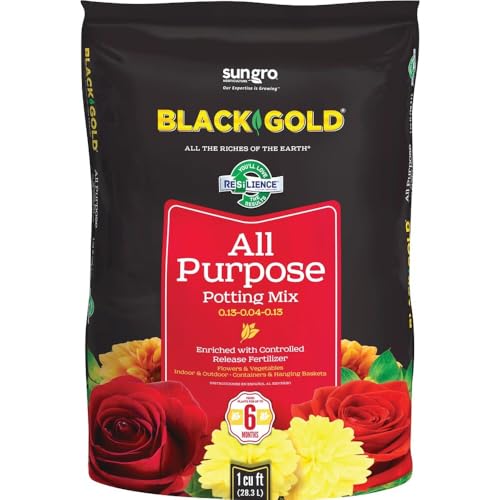
Sun Gro's Black Gold All Purpose mix delivers serious value for the gardener who wants a reliable, nutrient-rich soil without paying FoxFarm prices. At 1 cubic foot, this multi-purpose mix is formulated to work across a wide range of plants — and it handles strawberries particularly well. The blend is dense enough to anchor plants firmly in containers but still maintains adequate porosity to prevent waterlogging. The nutrient-rich base supports steady, consistent growth from transplant through the full fruiting cycle.
Black Gold's recipe leans on composted forest products, perlite, and organic fertilizer inputs to create a mix that works without requiring immediate supplementation. For strawberries going into pots, planters, or hanging baskets, this is a no-fuss solution that performs reliably season after season. It won't blow you away with microbiome complexity the way FoxFarm products do, but it delivers the core fundamentals: proper drainage, reasonable water retention, and enough nutrient density to sustain strawberry plants through their first productive season without additional amendments.
If you're planting a large number of containers or want to fill a strawberry tower planter without breaking your budget, Black Gold is the smart call. It's widely available, consistently formulated, and has earned a loyal following among vegetable and fruit gardeners who grow at scale. Add a side-dressing of worm castings at planting time and you've got a setup that rivals mixes costing twice as much.
Pros:
Cons:
Coast of Maine's Bar Harbor Blend is a standout product for gardeners committed to certified organic growing. The ingredient list reads like a premium soil formulation should: sphagnum peat moss, compost, perlite, lobster and crab shell meal, and kelp meal. That last trio — the marine-derived inputs — gives this blend a mineral profile that most organic soils simply don't replicate. Lobster and crab shell meal slowly release calcium and chitin, which strengthens cell walls in strawberry plants and even helps suppress certain soil pathogens over time.
The perlite content is generous, which is great news for strawberry growers concerned about drainage. Strawberry roots are particularly vulnerable to fungal root rots caused by overwatering and poor drainage, so a mix that sheds excess moisture quickly without becoming bone dry is essential. Bar Harbor Blend handles that balance well. The peat moss base retains moisture evenly, the perlite keeps it draining freely, and the organic matter provides a slow-release nutrient stream that keeps plants fed without requiring early intervention.
This is an excellent choice for container and raised bed strawberry growing in 2026, particularly for growers focused on chemical-free production. The 16-quart size is manageable for small plantings or top-dressing existing beds, though you'll want multiple bags for any substantial setup. The revitalizing effect on existing garden soil is a genuine benefit — if you're refreshing a raised bed that's lost structure over previous seasons, incorporating Bar Harbor Blend brings it back to productive form quickly.
Pros:
Cons:
Espoma has been a trusted name in organic gardening for decades, and the Raised Bed Mix is purpose-built for exactly the setup most dedicated strawberry growers use. Raised beds give you control over drainage, depth, and soil quality that in-ground planting can't match — and this mix is calibrated to perform at its best in that environment. The formula combines earthworm castings, alfalfa meal, kelp meal, and feather meal in a natural and organic base that feeds plants throughout the season without chemical shortcuts. The Myco-Tone addition is the standout feature: a proprietary blend of endo and ecto mycorrhizae that colonizes root zones and extends the plant's effective nutrient absorption surface area dramatically.
Mycorrhizal fungi form symbiotic relationships with strawberry roots, essentially acting as an extended root network. This translates directly into more efficient water and phosphorus uptake — two factors that heavily influence fruit size and sweetness. If you've ever added mycorrhizal inoculants separately to your soil, Myco-Tone eliminates that extra step and integrates it directly into the growing medium. For raised bed strawberry production, this is one of the most complete off-the-shelf solutions available in 2026.
The 1.5 cubic foot bag size is practical for a single 4×4 raised bed section or topping off an established bed. Espoma recommends using this mix for both initial fills and seasonal refreshes, and it performs well in both roles. The alfalfa meal component provides a natural source of triacontanol, a plant growth stimulant that's been shown to increase flowering and fruiting rates — a nice bonus you won't find called out on most competitor labels. For growers who also tend roses or other flowering plants, the best soils for roses guide covers several products that pair well with the same raised bed approach.
Pros:
Cons:
When you're filling a large raised bed system, multiple planters, or a dedicated strawberry patch, the Sun Gro Black Gold Natural and Organic formula in the 2 cubic foot bag gives you premium-quality organic soil at a per-volume cost that makes sense at scale. The formulation centers on earthworm castings, pumice, sphagnum peat moss, and perlite — a combination that delivers exceptional drainage alongside genuine organic fertility. The earthworm castings bring microbial life and a full spectrum of bioavailable nutrients; the pumice and perlite ensure the mix never becomes waterlogged even in deep beds where drainage can become an issue.
For strawberry growers who've dealt with root rot in past seasons, the drainage characteristics of this blend are worth noting. Pumice is a volcanic material that provides air pockets and water channels through the soil profile in a way that perlite alone doesn't fully replicate. The combination creates a mix that behaves well across a wide range of watering habits — it buffers against both underwatering and overwatering better than most comparably priced alternatives. Moisture retention is balanced and predictable, which makes establishing new strawberry transplants significantly easier because you're not fighting dramatic wet-dry cycles in the root zone.
This is the product we'd recommend most for growers setting up a new strawberry patch in 2026 who need to fill substantial volume without compromising on quality. The OMRI-listed organic certification means you're covered for certified organic production, and the versatility of the blend means it works equally well for container growing, in-ground raised beds, or as a soil amendment mixed into native garden soil. If you grow a variety of edibles beyond strawberries, this is also worth considering for a broader look at the best soil amendments and conditioners for your whole garden.
Pros:
Cons:
Wiggle Worm is not a potting mix — it's a pure worm castings amendment, and that distinction matters. While every other product on this list is designed to be used as your primary growing medium, Wiggle Worm belongs in the soil alongside your chosen base mix. That said, it earns its place on this list because it's genuinely transformative when added to any of the soils above. These are 100% pure worm castings, not vermicompost blended with uneaten worm bedding or filler material — a distinction the company emphasizes because most competing products on the market don't offer the same purity level.
The football-shaped particle structure of worm castings creates natural air channels and moisture-holding pockets in soil, improving both drainage and water retention simultaneously. That sounds contradictory until you understand how the particle shape works at the microscopic level — it creates a soil matrix that handles both excess water and dry spells better than most amendments. For strawberries, the benefit is direct: better root zone oxygenation, more consistent moisture availability, and a measurable boost in the microbial population surrounding your plants. The OMRI certification confirms the organic integrity, and Wiggle Worm's unique manufacturing process concentrates nutrients more densely than standard castings products.
Mix 10–20% Wiggle Worm castings into any of the soils on this list and you'll notice the difference within a few weeks. New transplants establish faster, runners develop more aggressively, and the berry flavor improves because the plant is drawing from a richer, more biologically active soil environment. At 30 pounds, this bag goes a long way — a little goes a long way with pure castings, and you won't need to fertilize as frequently once it's incorporated. It's the most effective single upgrade you can make to your strawberry soil in 2026.
Pros:
Cons:
Strawberries are among the more pH-sensitive fruits you can grow. They need soil in the 5.5 to 6.5 range — slightly acidic. Outside that window, nutrient lockout starts to occur even when the soil contains plenty of available nutrients. Iron and manganese become inaccessible in alkaline soil, which causes yellowing leaves and weak fruit set. Most quality potting mixes sit in the 6.0 to 6.8 range, which covers strawberries well, but it's worth checking the bag label if you're using a general-purpose product. If you're adding native garden soil or compost, test the pH before planting. A $15 soil pH meter pays for itself in the first season.
This is the most important structural factor for strawberry soil. Strawberries demand fast drainage — their roots are extremely susceptible to Phytophthora root rot and other fungal pathogens that thrive in waterlogged conditions. At the same time, they're shallow-rooted and can't tolerate drought stress during fruit development without significant yield loss. The ideal mix drains excess moisture within 30–60 seconds of watering but retains enough to stay evenly moist for 24–36 hours. Perlite and pumice additions increase drainage speed; peat moss, coir, and earthworm castings improve moisture retention. Most of the mixes on this list have this balance engineered in, which is exactly why they outperform generic topsoil or cheap garden mixes.
Strawberries are moderate to heavy feeders during the flowering and fruiting stage, but they're also sensitive to excess nitrogen, which promotes leafy growth at the expense of fruit production. Organic-matter-rich mixes provide a slower, more balanced nutrient release compared to synthetic fertilizer amendments, which means lower risk of nitrogen overload and more consistent performance across the season. Look for mixes that list earthworm castings, bat guano, kelp meal, fish meal, or composted forest products as ingredients. These inputs support both macro and micronutrient availability in a form that's immediately accessible to plant roots. Avoid mixes with high bark content as the primary ingredient — raw bark competes with plants for nitrogen as it decomposes.
Your growing setup should influence your soil choice significantly. Container growing demands the highest drainage performance because there's no surrounding soil to absorb excess moisture — the pot itself is the entire drainage system. For containers, prioritize mixes with higher perlite or pumice content like FoxFarm Ocean Forest or Black Gold Natural & Organic. Raised bed growing allows more flexibility — you can blend in garden soil and compost alongside a commercial mix, and the Espoma Raised Bed formula is specifically engineered for this application. In-ground planting typically requires soil amendment rather than a full commercial mix — this is where Wiggle Worm castings and products like Black Gold Natural & Organic shine when incorporated into native soil. The same principle applies when you're choosing soils for other edible plants: the growing environment drives the spec. Our guide to the best soils for roses covers a similar analysis for flowering shrubs if you want a side-by-side comparison framework.
Strawberries grow best in soil with a pH between 5.5 and 6.5. This slightly acidic range keeps iron, manganese, and phosphorus fully available to the plant's root system. Outside this range — especially above 7.0 — you'll see yellowing leaves, poor fruit set, and reduced yields even in otherwise fertile soil. Most quality potting mixes for strawberries land in the 6.0 to 6.8 range right out of the bag. If you're amending native garden soil, test the pH first and add elemental sulfur to lower it if needed.
You can, but you'll get significantly better results from a mix formulated for fruits and vegetables or one that explicitly addresses drainage. Generic potting soils often contain high bark content and minimal microbial activity. Strawberries need fast-draining, nutrient-rich, slightly acidic soil — a standard multipurpose mix might not hit all three of those marks. If regular potting mix is all you have, improve it by mixing in 20–25% perlite for drainage and a cup of worm castings per gallon of soil for nutrition.
Strawberries are shallow-rooted plants, but they still need at least 8 inches of soil depth for healthy root development. Containers 10–12 inches deep are ideal for most varieties. Deeper is generally fine — the extra soil acts as a moisture buffer. Avoid very shallow containers under 6 inches because the limited soil volume dries out too quickly and doesn't give runners room to develop. Fabric grow bags in the 5–10 gallon range work exceptionally well with the mixes on this list.
Most premium potting mixes like FoxFarm Ocean Forest and Happy Frog contain enough nutrition for the first 4–6 weeks without additional fertilizer. Applying extra fertilizer at planting time — especially high-nitrogen products — can actually burn roots and delay establishment. Wait until your plants show active new growth, then begin a regular feeding program with a balanced berry fertilizer or a low-nitrogen, phosphorus-rich formula to support flowering. Worm castings mixed into the soil at planting are a safe exception — they release nutrients slowly enough that root burn isn't a concern.
The terms are used interchangeably by most brands, but technically "potting mix" is the more accurate term for container-growing products because they're engineered for drainage and aeration rather than ground application. True "soil" contains mineral soil particles; most container products don't. For strawberries, what matters is the physical structure and nutrient profile, not the label. Any product on this list delivers what strawberries need regardless of what it's called on the bag.
Container soil degrades over time — organic matter breaks down, structure collapses, and nutrient reserves deplete. For actively planted strawberry containers, plan to refresh or fully replace the soil every 1–2 seasons. Signs it's time to replace: water runs straight through without being absorbed (structure collapse), plants show persistent nutrient deficiency despite regular feeding, or you've had disease problems in the container. A mid-season top-dressing of worm castings can extend the productive life of your mix by restoring microbial activity and adding a nutrient boost.
The best strawberry harvest you've ever had starts six inches underground — get the soil right, and everything else falls into place.
 |
 |
 |
 |

About Truman Perkins
Truman Perkins is a Detroit-based SEO consultant who's been in the business for over a decade. He got his start helping friends and clients get their websites off the ground, and he continues to do so today. In his free time, Truman enjoys learning and writing about gardening - something he believes is a natural stress reliever. He lives with his wife, Jenny, and their twins in Detroit.


Get new FREE Gifts. Or latest free growing e-books from our latest works.
Disable Ad block to reveal all the links. Once done, hit a button below
|
|
|
|
 rinjal