reviewed by Christina Lopez
If you want one product that delivers immediate results, Down To Earth Garden Gypsum is the top pick for clay-heavy soils — it loosens compaction fast without touching your pH. But the right soil amendment depends entirely on what your soil is lacking, and in 2026 there are more high-quality options than ever before. Whether you're battling hardpan clay, starving your plants of micronutrients, or just trying to get better drainage in containers, choosing the wrong product wastes your money and your growing season.
Soil amendments and conditioners work below the surface — literally. They change the physical structure, chemical balance, and biological activity of your growing medium. The difference between good soil and great soil is often a single targeted amendment applied at the right time. From worm castings that flood your root zone with beneficial microbes to volcanic rock dust that remineralizes depleted ground, each product in this category solves a distinct problem. Knowing which problem you have is half the battle. If you're also researching related products, our guide to the best potting soils for herbs covers how amendment choices affect container mixes specifically.
We tested and researched seven of the most popular soil amendments available on Amazon in 2026, covering organic gypsum, worm castings, composted manure, peat moss, perlite, liquid humic acid, and volcanic trace minerals. This guide gives you honest reviews, a clear buying framework, and answers to the questions gardeners ask most. You can also browse our full gardening reviews section for more product comparisons across every tool and supply category.

Contents






Down To Earth's Garden Gypsum is the amendment you reach for when your soil feels like concrete and nothing drains properly. The prilled (mini granule) format makes it far easier to apply evenly than powdered gypsum — you get consistent coverage across beds without clouds of dust. It works by introducing calcium and sulfur ions that displace sodium and magnesium from clay particles, allowing them to aggregate into crumb structure. The result is measurably better drainage and root penetration within one to two watering cycles. At 5 lbs per bag, it's well-suited for raised beds and targeted problem areas rather than large-scale field amendment.
What sets this product apart from generic gypsum is the OMRI organic listing and the acid-neutral chemistry. Your soil pH stays exactly where you've calibrated it — critical if you're growing blueberries, azaleas, or any pH-sensitive crop. It delivers roughly 22% calcium and 17% sulfur, both of which support cell wall integrity and enzyme function in plants. Apply at about 5–10 lbs per 100 square feet and work it into the top 4–6 inches. For clay soils that drain poorly and compact seasonally, this is the fastest non-chemical fix available.
The 5 lb bag is adequate for a couple of raised beds but you'll want the larger format for whole-garden treatment. Some gardeners note the granules dissolve slowly in very dry soil — water the area after application to activate it. The price per pound is reasonable for certified organic gypsum, and Down To Earth's manufacturing standards are consistently above industry average.
Pros:
Cons:
Wiggle Worm earns the top spot for microbiological soil health because they produce actual pure castings, not vermicompost with bedding filler. That distinction matters more than most gardeners realize. Vermicompost mixes in undigested organic matter and worm bedding; pure castings are 100% worm-processed material, which means a vastly higher concentration of beneficial bacteria, fungi, and plant-available nutrients per pound. The 30 lb bag gives you enough to meaningfully amend raised beds, mix into seed starting media, or top-dress multiple large containers.
The football-shaped particle structure of worm castings creates natural micro-pores in soil. These improve both drainage and water retention simultaneously — a rare combination. Water moves through quickly enough to prevent root rot but the casting particles hold enough moisture to buffer dry spells. This product is also OMRI listed organic and recognized as a fertilizer rather than just a soil additive, which speaks to the nutrient density. You'll see stronger root development, deeper green foliage color, and healthier microbial populations within weeks of application.
Mix 10–20% castings into potting mix for containers or apply 1–2 inches as a top dressing around established plants. It will not burn roots even at high application rates, which makes it safe for seedlings and transplants where chemical fertilizers can cause damage. For anyone building a long-term soil health program, worm castings are the single highest-ROI amendment per dollar.
Pros:
Cons:
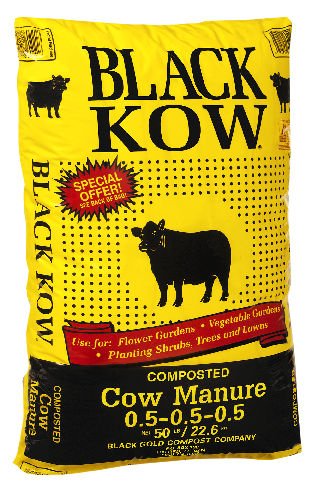
Black Kow has been a trusted name in composted manure for decades, and the 35 lb bag format is one of the best cost-per-pound values in the amendment category. Composted cow manure works differently from gypsum or castings — its primary contribution is organic matter. Organic matter improves almost every measurable soil property: water holding capacity, cation exchange capacity, microbial diversity, and tilth. If your soil is sandy and drains too fast, or if it's depleted from years of chemical fertilizer use, this is where you start your rehabilitation.
Black Kow's composting process is thorough enough to eliminate weed seeds and pathogens. This is non-trivial — improperly composted manure can introduce weed pressure or harmful bacteria. The product smells mild and earthy rather than sharp, which is a reliable indicator of complete composting. At a 1–2 inch application tilled into the top 6 inches, a 35 lb bag covers roughly 50–75 square feet effectively. Use it as a base amendment at the beginning of each growing season to rebuild organic matter reserves your crops spend down.
The limitation with Black Kow is that it's bulky and heavy — shipping costs can eat into the value advantage on Amazon. If you have a local garden center, buying in-store often makes more sense. It also has a relatively low nutrient analysis (approximately 0.5-0.5-0.5 NPK), so treat it as a soil builder rather than a fertilizer replacement.
Pros:
Cons:
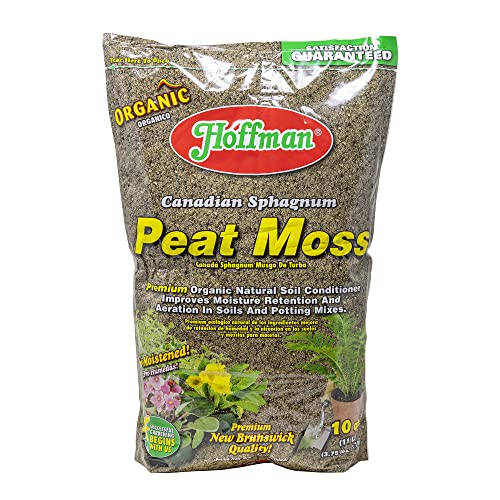
Sphagnum peat moss is one of the most widely used soil amendments in professional horticulture for one reason: it holds up to 20 times its weight in water while still maintaining adequate aeration. Hoffman's Canadian sphagnum is sourced from premium bogs, which produces a more fibrous, consistent product compared to domestic alternatives. The 10-quart bag is practical for container mixes, raised beds, and targeted applications around acid-loving plants.
Peat moss is naturally acidic (pH 3.5–4.5), which makes it ideal for blueberries, azaleas, rhododendrons, and many herbs. If you're working with a neutral or alkaline soil and want to grow these plants, incorporating peat is the most reliable way to shift pH downward. For general vegetable gardening, use peat more conservatively or pair it with lime to balance the acidifying effect. Mixed at 20–30% of a container blend, it significantly reduces watering frequency — critical for balancing moisture in terracotta pots or grow bags.
The environmental debate around peat moss is real — peat bogs are a significant carbon sink, and harvesting them has long-term ecological consequences. If sustainability is a priority for you, consider worm castings or coconut coir as partial substitutes. That said, Hoffman sources from managed Canadian bogs with some replanting oversight. For pure performance in moisture-sensitive applications, peat remains the standard.
Pros:
Cons:
Perlite is expanded volcanic glass — lightweight, inert, and structurally porous. Perfect Plants packages a quality-grade product that performs consistently across container applications. If your potted plants suffer from root rot, overwatering damage, or compacted soil that won't drain, perlite is the most direct fix available. The 8-quart bag is a practical size for mixing into multiple containers or blending a batch of custom potting mix. This is a staple amendment for anyone growing succulents, cacti, herbs, or any plant that demands fast-draining conditions.
The porosity of perlite creates permanent air pockets in your soil mix that roots need for oxygen exchange. Unlike organic amendments that break down over time and compact, perlite maintains its structure for years. Mix it at 10–25% of your potting blend for most plants, or up to 50% for succulents and cacti that need near-xeric conditions. It pairs exceptionally well with peat moss or coconut coir — the perlite handles drainage and aeration while the organic material manages moisture and nutrition. Our best potting soil for herbs guide details exactly how to build a high-performance herb container mix using perlite as the drainage component.
Perlite is pH neutral and provides no nutritional value. It's a structural amendment only. You'll need to pair it with a fertilizer program. The fine dust can irritate lungs when dry, so wet it down before mixing or wear a dust mask. The 8-quart format is well-priced and more than sufficient for most home gardeners.
Pros:
Cons:
Farmer's Secret takes a different approach from every other product on this list. Instead of physical structure modification, it targets the soil's biological ecosystem. The activated humic acid concentrate stimulates microbial populations in a way that conventional solid amendments can't replicate per ounce. It's essentially liquid compost in a concentrated form — you're feeding the microbial workforce that processes organic matter, releases bound nutrients, and builds soil structure from the inside out. One 32 oz bottle treats a significant area when diluted according to directions.
Humic acid improves nutrient uptake by chelating minerals — making them more available to plant roots even in soils where the nutrients are technically present but chemically locked. It's OMRI certified organic with no synthetic chemicals, and the activated formulation means the humic compounds are biologically active rather than dormant. Apply monthly throughout the growing season, with particular emphasis on fall (to build microbial reserves over winter) and spring (to jump-start soil activity before planting). The liquid format penetrates soil structure rapidly — you'll see response within 2–3 weeks rather than the season-long timeline of solid organic amendments.
The 32 oz bottle is cost-efficient per application once diluted, but you should treat this as a supplement to your main amendment program rather than a standalone solution. If your soil is severely depleted in organic matter, start with compost or manure and use Farmer's Secret to amplify the biological activity you're building. It pairs particularly well with worm castings for a combined structural and biological one-two punch.
Pros:
Cons:
Azomite stands alone in this category because it addresses mineral depletion — a problem that the organic matter-focused amendments above don't solve. Modern agricultural soils are stripped of trace minerals through decades of cropping with narrow-spectrum NPK fertilizers. Azomite provides over 70 trace minerals from volcanic ash deposits, remineralizing soil in a way that composted materials simply cannot match. The 44 lb bulk bag is excellent value for serious gardeners and small-scale growers treating multiple beds or orchard rows.
The micronized particle size means minerals are available to plants relatively quickly compared to coarser rock dusts. Apply 1/4 to 1/2 lb per 100 square feet annually as a soil amendment, or mix into compost tea for a soluble application. For container plants, mix 1/2 teaspoon per inch of pot diameter into your potting mix before planting, then top-dress quarterly. Azomite is mined from a Utah volcanic ash deposit — it's technically not a manufactured product, just powdered geological material. According to the Wikipedia entry on soil amendments, trace mineral deficiencies in food crops are increasingly linked to yield loss and nutritional quality decline, making remineralization products like this more relevant than ever in 2026.
The 44 lb bag is heavy and the micronized powder creates dust — apply on a calm day and wear a mask. It's safe for plants at any stage and won't burn even young seedlings. The effect on fruit size and flavor is where most gardeners report the most noticeable results, typically over one to two full growing seasons. If you want bigger harvests with more flavor, trace mineral depletion is often the overlooked variable. If you're also growing in a greenhouse environment, check our best small greenhouse guide for how to incorporate amendments into enclosed growing systems.
Pros:
Cons:
Every amendment on this list solves a different problem. Buying without diagnosing wastes money. Here's how to match the symptom to the solution:
A basic soil test from your county extension office costs under $20 and tells you exactly which nutrients and structural properties need attention. Do this before buying amendments in bulk.
Organic amendments build soil health over time; synthetic amendments feed plants directly but do nothing for structure or biology. The products in this review are all organic or naturally derived, which means they work slowly and cumulatively. You won't see a single-watering transformation with most of them — except gypsum and liquid humic acid, which act measurably faster. If you're building a long-term garden, organic amendment is almost always the better investment. Year two and three will outperform any synthetic program because your soil biology is compounding.
More is not always better with soil amendments. Over-applying peat moss acidifies soil too aggressively. Over-applying gypsum in already-loose soil doesn't cause harm but wastes product. Follow label rates closely on your first application, then assess results before the next season.
The most productive gardens combine multiple amendment types targeting different layers of soil health. A complete amendment stack looks like this:
You don't have to apply everything at once. Build your stack progressively as your soil improves. The fastest results come from addressing the single most limiting factor first — usually drainage in clay soils or moisture retention in sandy ones.
A soil amendment changes the physical, chemical, or biological properties of soil. A fertilizer provides specific nutrients (nitrogen, phosphorus, potassium) directly to plants. Gypsum, perlite, and peat moss are classic amendments — they alter structure without directly feeding plants. Worm castings and composted manure blur this line because they do both. You need amendments for long-term soil health and fertilizers for season-to-season crop nutrition. Using only fertilizer without addressing soil structure will eventually plateau your yields.
It depends on the product. Structural amendments like gypsum and perlite are typically applied once per season or when problems recur. Organic matter amendments like compost and worm castings benefit from annual application because crops and microbes consume organic matter continuously. Trace mineral products like Azomite need only once-or-twice-annual applications since minerals don't break down. Liquid amendments like Farmer's Secret work best on a monthly schedule during the active growing season. Start with a soil test to establish your baseline and track improvement year over year.
Yes, and in most cases you should. Combining amendments that address different soil properties is more effective than using any single product alone. The most productive combination for most garden beds is composted manure plus worm castings plus a trace mineral source. For containers, perlite plus worm castings plus peat moss creates a well-draining, moisture-retentive, biologically active mix that outperforms any pre-made bagged potting soil. The one combination to be careful with is mixing multiple acidifying amendments — peat moss plus sulfur-based products can drop pH below the viable range for most vegetables.
No. Both are volcanic minerals, but they behave very differently in soil. Perlite is extremely porous and rigid — it improves drainage and prevents compaction. Vermiculite is plate-like and compressible — it retains moisture and provides some cation exchange capacity. Perlite is your choice for succulents, cacti, and plants that need fast drainage. Vermiculite is better for seeds, cuttings, and plants that need consistent moisture. Many professional potting mixes use both together for a balanced result.
It varies by product type. Gypsum improves clay structure within 1–2 waterings — measurable change is fast. Perlite improves drainage immediately on first use. Liquid humic acid stimulates microbial activity within 2–3 weeks. Worm castings and composted manure build soil health over one full growing season. Azomite's trace mineral effects on fruit quality typically develop over one to two growing seasons. Patience is required with organic programs — the compounding benefits of improved soil biology don't peak until year two or three of consistent amendment.
All seven products reviewed here are either OMRI certified organic or naturally derived minerals with no synthetic chemicals. They are safe for vegetable gardens, edible herb beds, and food-producing containers. Gypsum, worm castings, composted manure, and Azomite are all approved for certified organic production. Peat moss and perlite are inert and carry no chemical risk. Farmer's Secret is OMRI listed organic. The only practical safety note is perlite dust — wet it before mixing to avoid inhaling fine particles.
Healthy plants start with healthy soil — get the structure right first, feed the biology second, and the minerals will do the rest.
 |
 |
 |
 |

About Christina Lopez
Christina Lopez grew up in the scenic city of Mountain View, California. For eighteen ascetic years, she refrained from eating meat until she discovered the exquisite delicacy of chicken thighs. Christina is a city finalist competitive pingpong player, an ocean diver, and an ex-pat in England and Japan. Currently, she is a computer science doctoral student. Christina writes late at night; most of her daytime is spent enchanting her magical herb garden.


Get new FREE Gifts. Or latest free growing e-books from our latest works.
Disable Ad block to reveal all the links. Once done, hit a button below
|
|
|
|
 rinjal