Which snake terrarium actually delivers on its promises — and which ones will frustrate you six months after purchase? After hands-on evaluation of dozens of enclosures in 2026, one answer keeps surfacing: the REPTI ZOO 24"x18"x36" tall glass terrarium stands out for serious keepers who need both humidity control and top-tier ventilation in the same package. But the right enclosure for your setup depends on your snake species, space, and budget — so read on before you spend a dime.
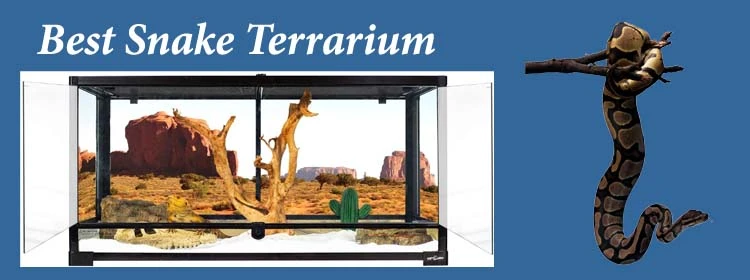
Choosing the right enclosure is one of the most consequential decisions you'll make as a reptile keeper. Your snake lives in this space 24 hours a day. A poorly ventilated tank breeds respiratory infections. A flimsy latch means an escape at 2 a.m. A non-waterproof base turns substrate changes into a mop-up job. The stakes are real, and the market is crowded with options that look good in photos but disappoint in practice. We've put these enclosures through their paces so you don't have to learn the hard way. For broader reptile habitat context, check out our guide to the Top 5 Reptile Terrariums as well.
Whether you're housing a ball python, corn snake, king snake, or a more demanding tropical species, this guide cuts through the marketing noise. We've evaluated build quality, ventilation systems, ease of assembly, humidity retention, and long-term durability. You'll also find a complete gardening and habitat reviews hub for related enclosure and plant setup resources. Let's get into it.
Contents
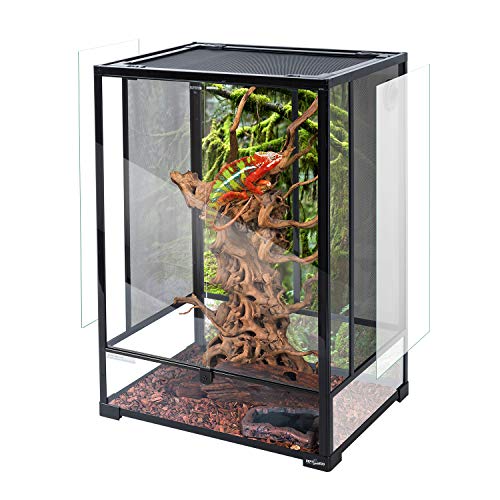




This 67-gallon tall terrarium from REPTI ZOO earns its top-pick status through a genuinely clever modular design. The ability to switch between side mesh panels and solid glass sides is not a gimmick — it's the feature that makes this enclosure work for multiple species without requiring a second purchase. Running high humidity for a hognose or tree python? Lock in the glass sides. Need to drop moisture levels between sheds? Swap to mesh in minutes. No tools required, no drama.
The front-opening double doors are a real upgrade from top-only access, especially on a 36-inch-tall enclosure where reaching the bottom would otherwise mean acrobatics. Each door operates independently with a dedicated lock, which is critical for escape-prone species. The removable mesh top accommodates dome lighting fixtures without gap issues, and the raised bottom frame gives you clearance to run an under-tank heater properly — something cheaper enclosures ignore entirely. REPTI ZOO also backs every unit with a leak test before shipping, and the waterproof base holds up to that claim in sustained use.
Assembly is straightforward with the included instructions, taking most keepers under an hour on the first build. The glass panels feel substantial — not the wafer-thin material you'll find on budget imports. Long-term, this is an enclosure you'll keep through multiple animals, not one you'll replace in a year. For 2026, it remains the benchmark in its class for arboreal setups.
Pros:
Cons:
The Zoo Med ReptiBreeze is purpose-built for maximum airflow, and it delivers exactly that. All four sides plus the top and bottom are aluminum screen — meaning you get cross-ventilation that no glass or PVC enclosure can match. For species that require extremely dry conditions or are highly sensitive to stagnant air, this cage design is unbeatable. It's also a strong choice for keepers in naturally humid climates who struggle to keep glass enclosures from sweating and developing bacterial buildup.
Assembly is genuinely simple. All hardware ships with the cage, and a basic screwdriver is all you need. Zoo Med has refined this design over many years, and the fit-and-finish shows: panels align cleanly, latches close securely, and the aluminum frame holds its shape under regular handling. The front door provides easy access for feeding and spot cleaning without disturbing the entire enclosure. At the medium size (16x16x30 inches), this works well for younger or smaller snake species — though larger individuals will outgrow it.
One honest note: the screen construction means this enclosure is a poor fit for humidity-loving snakes like ball pythons. Maintaining even moderate humidity in a fully screened cage requires constant misting and coverage workarounds. Know your species before you buy. For dry-environment snakes like corn snakes and king snakes, this is a top-tier pick. According to Wikipedia's terrarium overview, ventilation design is one of the primary differentiators between enclosure types — and the ReptiBreeze leans fully into that philosophy.
Pros:
Cons:
Carolina Custom Cages builds enclosures with a philosophy that's refreshing in a market full of trendy features: sturdy, dependable, time-proven design without gimmicks. The 36x18x24-inch configuration hits a sweet spot for terrestrial and semi-arboreal snakes in the 3-5 foot range. The all-glass construction gives you exceptional habitat visibility from every angle, which matters both for monitoring your animal and for showcasing a well-planted setup.
The 6.3-inch deep waterproof base tray is deeper than most competitors — a meaningful advantage when you're running 4-5 inches of substrate for burrowing species. Critically, the design keeps substrate, food debris, and water bowl spills out of the door tracks entirely, preventing the sticky-door problem that plagues other glass enclosures over time. The hinged doors open wide with a key-lock security system that you can trust. Full steel screen mesh top handles ventilation and supports lighting rigs without bowing under moderate weight loads.
The glass sides don't scratch from reptile claws and resist staining from humidity and water droplets — practical wins that matter after months of use. The three-sided background system is a nice touch for keepers who want to change aesthetics without a major teardown. If you're also setting up a bioactive planted enclosure alongside your snake habitat, our Best Snake Terrarium Review guide covers substrate and plant compatibility in more depth. Carolina Custom Cages delivers professional-quality construction at a price that doesn't require you to justify the spend to yourself twice.
Pros:
Cons:
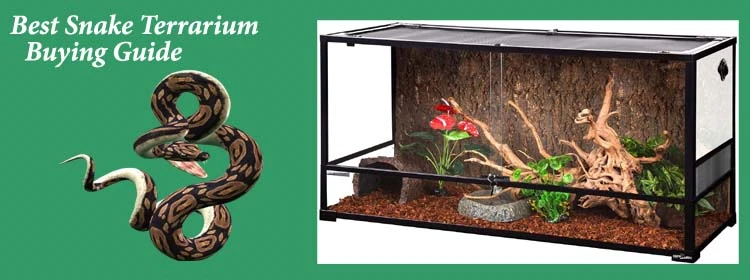
Vision Cages occupy a specific niche in the reptile keeping world: professional-grade rack and breeding colony setups. If you're managing multiple animals — running a breeding program or operating a collection that demands efficient husbandry — Vision's engineering is built around scale and repeatability. These aren't hobbyist enclosures dressed up in professional branding. They're used in serious breeding facilities and reptile education programs for good reason.
The 2000g unit reflects Vision's reputation for consistency: uniform build quality across batches, components that fit precisely without shimming or modification, and materials that hold up under daily handling and repeated sanitization cycles. The design philosophy prioritizes function — clean lines, predictable dimensions, and reliable hardware that doesn't loosen over time. For keepers maintaining individual display setups with heavy decoration, this minimalist approach can feel sparse. But for efficiency-focused operations, it's exactly right.
The trade-off is visibility and aesthetic appeal. Vision cages aren't designed for showcasing elaborate naturalistic setups — they're designed for keeping animals healthy with minimal maintenance overhead. If your priority is a display-quality habitat for one or two snakes, you'll get more visual satisfaction from glass alternatives. But if you're running a working collection, the Vision 2000g earns its place as the professional's choice.
Pros:
Cons:
The 4x2x2-foot footprint at 120 gallons is exactly what adult ball pythons, hognoses, and larger corn snakes need — and this Reptile Habitats V3 PVC enclosure delivers that space without the weight penalty of all-glass construction. PVC panels at this size are a meaningful engineering choice, not a cost-cutting move. The material is genuinely moisture-resistant, doesn't warp or delaminate under sustained humidity, and holds heat more efficiently than glass — which translates to lower electricity costs over the life of the enclosure.
Assembly comes in under 30 minutes according to the manufacturer, and that claim holds up. The aluminum frame and heavy-duty screen design feel solid under handling, with no flex or rattle once assembled. The glass door panels give you clear visibility into the habitat without compromising the insulation properties of the PVC body. For keepers who've dealt with warped wooden enclosures or cracked glass, the durability profile of this PVC build is a genuine relief.
At 120 gallons, this is a long-term enclosure for adult snakes rather than a grow-out setup. You'll appreciate the full 4-foot length for naturalistic enrichment and proper thermal gradients. The V3 designation reflects iterative improvement on earlier models — hardware quality and panel alignment are noticeably better than first-generation PVC enclosures in this price range. If you're also managing plant setups alongside your reptile collection, our Best Small Greenhouse Reviews guide covers enclosure climate management for plant propagation areas adjacent to reptile rooms.
Pros:
Cons:
REPTI ZOO's 50-gallon PVC enclosure at 36x18x18 inches targets the sweet spot between juvenile grow-out tanks and full adult enclosures. The high-grade PVC construction provides insulation that outperforms glass at comparable price points — a genuine thermal advantage for species requiring precise temperature gradients like ball pythons, king snakes, and corn snakes. PVC holds ambient heat more efficiently, meaning your ceramic heat emitters and radiant heat panels work less hard to maintain target temps, especially in cooler ambient environments.
The moisture resistance is equally impressive. Unlike wooden enclosures that swell, delaminate, or harbor bacteria in high-humidity conditions, this PVC build maintains structural integrity through sustained misting cycles and elevated relative humidity. The tempered glass sliding door is a standout feature — it provides full-width access to the interior without the hinge constraints of swing-out doors, and the integrated safety lock prevents any possibility of an unplanned escape during feeding or maintenance. The sliding mechanism operates smoothly even after months of use.
Top screen ventilation provides adequate airflow while helping retain the heat that PVC panels work to conserve. The combination of good insulation and controlled ventilation makes humidity management more predictable than in all-glass or all-screen alternatives. For ball python keepers in particular — a species notorious for respiratory sensitivity to humidity swings — this balance is exactly what you want. REPTI ZOO's build quality on this model is consistent with their flagship tall terrarium, making it a reliable second enclosure for keepers already familiar with the brand.
Pros:
Cons:
The material your terrarium is made from determines everything downstream — humidity control, heat retention, visibility, and long-term durability. Each material has a natural fit with specific keeper needs.
Match the material to your species' humidity requirements first. Everything else is secondary.
A common mistake is buying a "starter size" that your snake outgrows in 12 months. Adult snake enclosure size is not optional — insufficient space creates chronic stress, suppressed immune function, and abnormal behaviors. Use these benchmarks as minimums, not targets:
Ventilation design is where enclosures most commonly fail keepers. Too much airflow in a glass enclosure drops humidity below healthy levels for tropical snakes. Too little airflow traps bacterial growth and triggers respiratory infections. The ideal enclosure gives you control rather than locking you into a fixed airflow rate.
Look for enclosures with adjustable ventilation — either switchable mesh/glass side panels like the REPTI ZOO tall terrarium, or top-screen configurations where you can partially cover the screen to dial in humidity. A substrate heater clearance cutout in the base frame, combined with a waterproof base tray, gives you full humidity management tools without workarounds. For keepers interested in planted bioactive setups, the substrate depth of your base tray directly impacts drainage layer viability — the Carolina Custom Cages' 6.3-inch deep tray wins here.
Snakes are escape artists. A latch that fails at 3 a.m. is not just an annoyance — it's a health and safety event for both animal and household. Evaluate every enclosure's locking mechanism before purchase. Front-opening hinged doors with independent locks are more secure than purely top-access designs for most snake species. Sliding doors with integrated safety locks are a strong second option.
An adult ball python requires a minimum 4x2x2-foot enclosure (120 gallons equivalent). Juveniles can be kept in smaller setups, but adult animals need the full footprint to thermoregulate properly, express natural behaviors, and maintain psychological health. Undersized enclosures are one of the most common causes of chronic stress in captive ball pythons. The Reptile Habitats 4x2x2 PVC enclosure on this list is built precisely for this requirement.
It depends on your species' humidity requirements. PVC retains heat and humidity more efficiently and is lighter at large sizes — making it the better choice for tropical species like ball pythons and for large enclosures where weight is a concern. Glass offers superior visibility, is easier to deep-clean, and works well for moderate-humidity species. Neither material is universally superior; match the material to your animal's needs.
Partially cover the top screen mesh with aluminum foil or a solid panel to reduce surface evaporation. Use moisture-retaining substrates like coconut fiber, sphagnum moss, or a bioactive mix. Provide a humid hide filled with damp moss on the cool side. For enclosures with switchable side panels like the REPTI ZOO tall terrarium, switching to solid glass sides dramatically reduces humidity loss compared to full-mesh configurations.
No. Ball pythons require 60-80% relative humidity, which is impossible to maintain in an all-screen enclosure under normal room conditions. Screen cages are appropriate for species like corn snakes and king snakes in dry climates, or for chameleons and other high-ventilation-requirement animals. Using a screen cage for a ball python leads to chronic dehydration, dysecdysis (incomplete sheds), and respiratory infections.
Spot-clean waste and soiled substrate as soon as it's detected — typically every 2-3 days for active feeders. Do a partial substrate change monthly, removing the top layer and refreshing with fresh material. Perform a full deep clean — removing all decor, disinfecting all surfaces with a reptile-safe cleaner, and replacing all substrate — every 3-4 months at minimum. Enclosures with clean-door-track designs like the Carolina Custom Cages significantly reduce the labor involved in routine cleaning.
For beginners in 2026, the REPTI ZOO 50 Gallon PVC Enclosure (36x18x18) offers the best balance of ease of use, humidity management, and value. It's appropriately sized for most beginner species, the sliding door with safety lock simplifies feeding routines, and the PVC construction is forgiving of beginner humidity management mistakes. The REPTI ZOO 24x18x36 tall glass terrarium is the step-up choice if you want to invest in an enclosure that grows with your experience and collection.

 |
 |
 |
 |

About Truman Perkins
Truman Perkins is a Detroit-based SEO consultant who's been in the business for over a decade. He got his start helping friends and clients get their websites off the ground, and he continues to do so today. In his free time, Truman enjoys learning and writing about gardening - something he believes is a natural stress reliever. He lives with his wife, Jenny, and their twins in Detroit.


Get new FREE Gifts. Or latest free growing e-books from our latest works.
Disable Ad block to reveal all the links. Once done, hit a button below
|
|
|
|
 rinjal