Which peppermint oil is actually worth your money in 2026 — and which ones are just watered-down imitations with a minty label? If you've been standing in the essential oils aisle (or endlessly scrolling Amazon) trying to figure that out, you're not alone. After researching dozens of options and comparing purity, sourcing, and real-world uses, NOW Essential Oils Peppermint Oil stands out as the best overall pick for most buyers. But depending on what you need it for, one of the other six options on this list could be a better fit for you.

Peppermint oil is one of the most versatile essential oils you can own. People reach for it to ease tension headaches, support digestion, cool sore muscles, boost focus, freshen up their home, and even repel pests from the garden. According to the National Center for Complementary and Integrative Health, peppermint oil has a long history of use and a growing body of research behind its applications. That range of uses means quality matters — a cheap, diluted oil won't deliver the menthol punch you need. Whether you're new to essential oils or upgrading from a brand that let you down, this 2026 guide cuts through the noise.
We've also rounded up everything you need to know before buying: purity testing, organic certification, bottle size, price-per-ounce, and the key differences between therapeutic-grade and bargain-bin options. If you're building out a broader aromatherapy toolkit, check out our guides to the best lavender essential oils and best patchouli oils — peppermint blends beautifully with both. And if you're shopping for natural wellness products more broadly, our gardening and natural living reviews section has you covered.
Contents






NOW Essential Oils has been a trusted name in the wellness world for decades, and their 2-ounce peppermint oil delivers exactly what you'd expect from a brand that takes purity seriously. This oil is steam distilled from the aerial parts of the peppermint plant, which means you get a clean, concentrated menthol scent without any synthetic fillers or carrier oils diluting the experience. The child-resistant cap is a practical touch that's easy to overlook until you have curious kids around — and it works reliably.
For diffuser use, this oil is outstanding. A couple of drops fills a room with that sharp, invigorating mint scent that wakes you up better than a second cup of coffee. It's also popular for topical use when diluted with a carrier oil like jojoba or coconut — great for temples and the back of the neck when tension hits. The 2-ounce size is ideal if you're new to peppermint oil and want to test quality before committing to a larger bottle. NOW tests every batch in-house and the formula is vegan and cruelty-free.
The price point makes this a no-brainer repeat buy for everyday aromatherapy use. You're not paying for fancy packaging — you're paying for consistent, verified purity. That's the deal with NOW, and in 2026 it still holds up well against newer competitors.
Pros:
Cons:
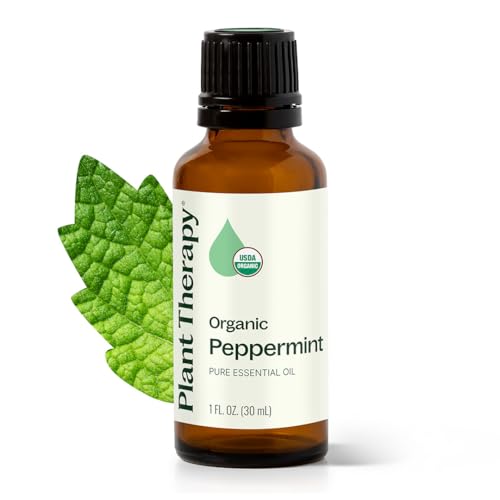
If you want organic certification you can trust, Plant Therapy's peppermint oil is the pick. This oil carries USDA certified organic status, which means it meets strict federal standards for how the peppermint was grown — no synthetic pesticides, no chemical fertilizers. For anyone applying peppermint oil to skin or using it around children and pets, that certification matters more than marketing language on a generic label.
The 30 mL (1 oz) size is a convenient step up from the typical trial sizes, and the oil performs exceptionally well for both aromatherapy and topical use. Diluted to 1–3% with a carrier oil (about 6–18 drops per ounce of carrier), it provides a cooling, soothing sensation on temples, neck, and shoulders that you can feel within minutes. The scent is crisp and clean — not the harsh, chemical-adjacent mint you sometimes get from lower-quality oils. Plant Therapy is also one of the brands that publishes third-party GC/MS (gas chromatography/mass spectrometry) test results, so you know exactly what's in the bottle.
This is the oil to reach for when you're building a serious aromatherapy practice or when you're incorporating essential oils into DIY beauty products where ingredient integrity matters. It's slightly pricier than non-organic options, but the certification is real and the quality is consistent.
Pros:
Cons:
doTERRA is the brand that wellness practitioners consistently recommend when the application is internal or health-adjacent. Their peppermint essential oil is sourced from farms doTERRA certifies under their CPTG (Certified Pure Tested Grade) standard, which includes multiple rounds of independent laboratory testing to verify purity, potency, and the absence of contaminants. The 15ml bottle looks small, but because the oil is so concentrated, it lasts longer than you'd expect.
The digestive support application is where doTERRA peppermint really earns its reputation. A single drop rubbed on the abdomen diluted in a carrier oil, or inhaled directly, can help ease occasional stomach discomfort and bloating. For respiratory support, diffusing this oil during cold and flu season promotes clearer, easier breathing. It's also been a staple ingredient in premium oral care products like toothpaste and mouthwash for decades — the menthol content is high and the antibacterial properties are real.
You will pay a premium compared to drugstore oils, but doTERRA's reputation and testing protocols justify the cost for applications where quality directly affects your health outcomes. If you're using peppermint oil for cooking, digestive support, or respiratory wellness, this is the one to buy.
Pros:
Cons:
Cliganic has built a loyal following by keeping things simple and verifiable. Their organic peppermint oil carries both USDA organic certification and Non-GMO Project verification — making it one of the most credentialed options on this list at a surprisingly reasonable price. The formula is genuinely single-ingredient: just peppermint oil, nothing else. No dilution, no synthetic preservatives, no mystery additives. What you see is what you get.
The scent is bright, clean, and potent — exactly what you want for diffuser use, DIY skincare, or adding a fresh mint note to homemade cleaning sprays. For topical use diluted in a carrier oil, it delivers that satisfying cooling sensation without overwhelming skin. The packaging is straightforward and functional, and Cliganic makes it easy to verify your specific batch's test results through their website — a transparency move that more brands should adopt.
If you're buying peppermint oil for someone who's particular about organic and non-GMO standards — or if those designations matter to you personally — this is your oil. The price-per-ounce is competitive with non-certified oils, which makes the certifications here feel like a genuine bonus rather than a marketing upcharge.
Pros:
Cons:

If you want a big bottle without spending big money, Handcraft Blends is the answer. Their 4-ounce peppermint oil comes in at a price point that makes it easy to use generously — in your diffuser, in DIY cleaning products, in candle and soap making, and in homemade skincare. Every bottle is tested by an independent third-party lab for constituents, purity, and the absence of fillers or additives. That's not just a marketing claim: they back it up with documentation.
The amber glass bottle is a nice touch at this price — glass protects the oil from light degradation that plastic bottles can't prevent, and the included glass dropper gives you precise control over how much you use. That matters both for avoiding waste and for getting your dilution ratios right when mixing with a carrier oil. The scent is fresh and clean with good intensity; it holds up well in cold-process soap making and candle formulation where cheaper oils sometimes fade.
The trade-off here is that this isn't certified organic or USDA verified. For aromatherapy and DIY projects — candles, soaps, room sprays, cleaning blends — that's completely fine. If you need certified organic for topical or wellness applications, step up to Plant Therapy or Cliganic. But for everyday creative use and home freshening, Handcraft Blends gives you the most oil for your dollar without sacrificing basic purity standards.
Pros:
Cons:
Sixteen ounces of peppermint oil. If you make candles, formulate soaps, run a massage practice, or go through essential oils fast, this is the bulk buy that changes your cost equation entirely. Sun Essential Oils keeps the price-per-ounce dramatically lower than any of the smaller bottles on this list, and the oil quality is solid for the applications where bulk buying makes sense.
The scent is invigorating and authentic — clear to pale yellow in color as you'd expect from a steam-distilled peppermint oil. It blends well with lavender, lemon, tea tree, and clove for custom aromatherapy blends or DIY cleaning products that smell genuinely refreshing. For massage therapists or anyone doing regular body work, diluting this into a carrier oil for muscle soothing is economical and effective. It also works well in diffusers and humidifiers without leaving residue.
Keep in mind this isn't marketed as certified organic or verified by third-party testing documentation. For a home manufacturer, craft seller, or heavy aromatherapy user who goes through oil quickly, that's an acceptable trade-off. Store it properly — cool, dark location, sealed tight — and a 16-ounce supply will last you a long time. For reference, if you're also looking for a great massage application for this oil, check out our guide to the best massage oils to understand how to blend it correctly.
Pros:
Cons:
Radha Beauty has positioned this 4-ounce peppermint oil squarely at the DIY and creative market — and it delivers on that promise. 100% pure and natural with no additives or dilution, this oil is therapeutic grade and steam distilled, giving you a clean, versatile base for homemade bath bombs, body scrubs, sprays, candles, laundry fresheners, and aromatherapy blends. The large bottle at a reasonable price point makes it easy to experiment without rationing every drop.
For aromatherapy, Radha Beauty's peppermint oil performs well in both warm and cold diffusers. The scent is bold and minty — good intensity for filling larger spaces. Topically, diluted in a carrier oil, it provides the cooling sensation and focus-boosting properties you want from a high-menthol peppermint. It's also vegan and cruelty-free, which matters to an increasing number of buyers in 2026 who want to know their products weren't tested on animals at any stage of production.
The DIY applications are where this oil really shines. Add it to homemade laundry detergent for a fresh scent boost. Blend it into a DIY room spray with water and a touch of witch hazel. Mix a few drops into unscented shampoo for a scalp-stimulating mint wash. The 4-ounce size gives you enough volume to play around with formulas without running dry in the middle of a project. If you're building a collection of natural oils for creative projects, this pairs well alongside other oils like those in our best neem oil guide for skin and hair applications.
Pros:
Cons:
Not all peppermint oils are created equal. Here's what you actually need to evaluate before you buy — skipping the marketing fluff and focusing on what makes a real difference in quality and value.
This is the single most important factor. A "100% pure" label means nothing without independent verification. Look for oils that have been tested using GC/MS (gas chromatography/mass spectrometry) analysis — this identifies the exact chemical compounds in the oil and confirms that no synthetic adulterants or carrier oils have been added. The best brands either publish these results on their website or make them available upon request. Brands like Plant Therapy, Cliganic, and doTERRA all make testing documentation accessible. Handcraft Blends uses independent third-party testing as well. If a brand makes purity claims but can't point you to test results, that's a red flag.
If you're applying peppermint oil topically — on your skin, in a massage blend, on your temples for headache relief — organic certification is worth the slight price premium. USDA organic certification means the plants were grown without synthetic pesticides or herbicides, which matters when the oil is coming into direct contact with your body. Plant Therapy and Cliganic both carry USDA organic certification, and Cliganic adds Non-GMO Project verification on top of that. For diffuser use or DIY crafts where skin contact is indirect or minimal, non-organic oils from reputable brands are completely acceptable.
Think about how you'll actually use the oil before buying the cheapest per-ounce option. Here's a practical breakdown:
Match the oil to your actual use, not just the best-looking label. Here's a quick guide:
Essential oils don't last forever, and peppermint oil is no exception. Most pure peppermint oils have a shelf life of 3–5 years when stored correctly. Keep your bottles in a cool, dark location — away from direct sunlight, heat sources, and humidity. Amber glass bottles (like Handcraft Blends uses) protect against light degradation better than clear glass or plastic. Always replace the cap tightly after use to prevent oxidation. If your oil starts smelling sharp, metallic, or "off" compared to fresh peppermint, it's past its prime and should be replaced. Buying bulk is only economical if you'll use it within the shelf life window.
Peppermint essential oil is used for a wide range of applications in 2026. The most common uses include aromatherapy for mental focus and energy, topical application (diluted in a carrier oil) for headache relief and muscle soreness, digestive support, respiratory wellness during cold season, DIY cleaning products, candle and soap making, and natural pest deterrence in and around the home. The active compound menthol gives peppermint oil its characteristic cooling sensation and is responsible for most of its wellness benefits.
Pure peppermint essential oil should never be applied to skin undiluted — it's highly concentrated and can cause irritation, redness, or even chemical burns in some cases. Always dilute to 1–3% in a carrier oil such as coconut, jojoba, or sweet almond oil before topical application. That works out to roughly 6–18 drops of peppermint oil per ounce of carrier oil. Keep peppermint oil away from the eyes, mucous membranes, and broken skin. For children under ten, avoid topical application around the face and neck entirely.
Add 3–5 drops of peppermint essential oil to your ultrasonic diffuser filled with water to the fill line. Run for 30–60 minutes at a time — continuous diffusing in an enclosed space isn't necessary and can become overwhelming. Peppermint diffuses well on its own or blended with lavender, eucalyptus, or citrus oils for a more complex aroma. Keep the room ventilated, especially if you have pets — concentrated essential oil diffusion can be harmful to cats and dogs in enclosed spaces.
Peppermint essential oil is the pure, steam-distilled essence of the peppermint plant — highly concentrated and intended for aromatherapy, topical use (diluted), and certain wellness applications. Peppermint extract is a food-grade flavoring typically made by suspending peppermint oil in alcohol — it's designed for cooking and baking. They're not interchangeable. Don't use essential oil in cooking unless it's specifically food-grade labeled, and don't use extract in a diffuser or for therapeutic topical application.
For headache relief, choose a USDA certified organic peppermint oil that is safe for direct skin contact when diluted. Plant Therapy Organic Peppermint Essential Oil and Cliganic Organic Peppermint Essential Oil are both excellent choices. Dilute 2–3 drops in a teaspoon of carrier oil and apply to your temples, forehead, and the back of your neck at the base of the skull. The menthol creates a cooling sensation that can ease tension headache discomfort within 15–20 minutes for many people.
That depends entirely on bottle size and how frequently you use it. A 2-ounce bottle contains roughly 1,100–1,200 drops. If you diffuse 4 drops per session twice a day, a 2-ounce bottle lasts about 140 sessions, or roughly 4–5 months of regular use. Smaller 15 mL and 30 mL bottles will go faster for heavy diffuser users but can last a year or more for occasional topical use. For shelf life purposes, properly stored peppermint oil stays potent for 3–5 years — so unless you're going through it fast, buying the 16 oz bulk size only makes sense for professionals and crafters.
 |
 |
 |
 |

About Truman Perkins
Truman Perkins is a Detroit-based SEO consultant who's been in the business for over a decade. He got his start helping friends and clients get their websites off the ground, and he continues to do so today. In his free time, Truman enjoys learning and writing about gardening - something he believes is a natural stress reliever. He lives with his wife, Jenny, and their twins in Detroit.


Get new FREE Gifts. Or latest free growing e-books from our latest works.
Disable Ad block to reveal all the links. Once done, hit a button below
|
|
|
|
 rinjal