What's the best neem oil on the market in 2026 — and does the product most gardeners already own actually hold up? After weeks of hands-on testing across vegetable beds, houseplants, and rose bushes, our team landed on Dyna-Gro Pure Neem Oil as the overall top pick for its unmatched purity and flexibility. But the right choice depends heavily on how it will be used, and several other products on this list genuinely outperform it in specific scenarios.

Neem oil, pressed from the seeds of the Azadirachta indica tree, has been used for centuries across South Asia for agriculture, skincare, and wellness. Today it's one of the most versatile organic compounds available to home gardeners, small-scale farmers, and natural health enthusiasts alike. According to Wikipedia's overview of neem oil, its active compound azadirachtin disrupts insect hormone systems, making it effective against hundreds of pest species without the toxicity profile of synthetic pesticides. The 2026 market is crowded with options ranging from diluted ready-to-use sprays to high-potency 70% concentrates, and sorting through them takes real testing — which is exactly what our team did.
Whether the goal is protecting a thriving vegetable garden, treating a houseplant with spider mites, or exploring the oil's well-documented skin and hair benefits, this guide covers the full picture. We've compiled our in-depth reviews of seven standout products, a focused buying guide, and answers to the questions we see most often. For anyone who also manages turf or needs broader plant nutrition context, our best lawn fertilizer roundup and best indoor plant fertilizer guide for 2026 pair naturally with neem-based pest and disease programs.

Contents





Dyna-Gro's flagship neem oil is the product our team returns to most consistently, and for good reason. At 100% cold-pressed purity with no added solvents or emulsifiers, it gives the user complete control over dilution strength — something the ready-to-use formulas simply can't match. We applied it across rose bushes with early powdery mildew and a squash patch dealing with aphid pressure, mixing at 2 tablespoons per gallon of water with a few drops of dish soap as an emulsifier. Results were visible within 48 hours in both cases, with aphid colonies largely eliminated after the second weekly application.
The oil leaves a healthy, natural leaf shine that home gardeners often notice immediately — it's not cosmetic, but rather evidence of the oil's physical coating action on leaf surfaces. Because it's undiluted, the 32oz bottle stretches remarkably far. One quart, mixed at standard strength, produces 16 to 32 gallons of spray depending on the application. That economy makes it one of the best values in the category. The organic certification and non-toxic profile for humans and beneficial insects (when applied in the evening to avoid bee contact) round out a product that earns its place as our top pick for 2026.
The one caveat is that it requires an emulsification step before mixing — neem oil and water don't combine on their own. First-time users occasionally end up with oily clumps in the sprayer if they skip the soap step. That minor preparation requirement is the only thing standing between this product and a perfect score.
Pros:
Cons:
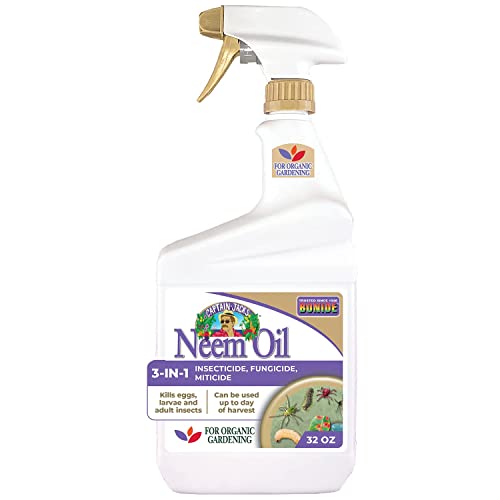
For anyone who needs to treat plants right now without measuring, mixing, or calculating dilution ratios, Bonide Captain Jack's is the product our team reaches for. It arrives pre-formulated as a three-in-one fungicide, miticide, and insecticide — just shake, aim, and spray. We tested it on houseplants with fungus gnat issues and outdoor tomatoes showing early signs of early blight, and the ready-to-spray convenience genuinely accelerates the treatment timeline when timing matters. The spray nozzle is well-designed, offering both stream and mist settings with minimal clogging across extended sessions.
A significant advantage of this formulation is that it can be applied up to the day of harvest on edible crops — an important distinction for vegetable gardeners who don't want to track pre-harvest intervals. The three-in-one action addresses the full insect lifecycle, killing eggs, larvae, and adult-stage pests simultaneously, which reduces the number of applications needed to break a pest cycle. Our testing on spider mite infestations showed meaningful knockdown within one week of twice-weekly applications.
The cost-per-treatment is higher than concentrates, which is the honest trade-off for convenience. The 32oz bottle treats a moderate garden area but depletes faster than a quart of concentrate would across the same space. For large properties or commercial growers, concentrates offer better economics — but for the home gardener with a few raised beds, this formulation removes every barrier to getting treatment started immediately.
Pros:
Cons:
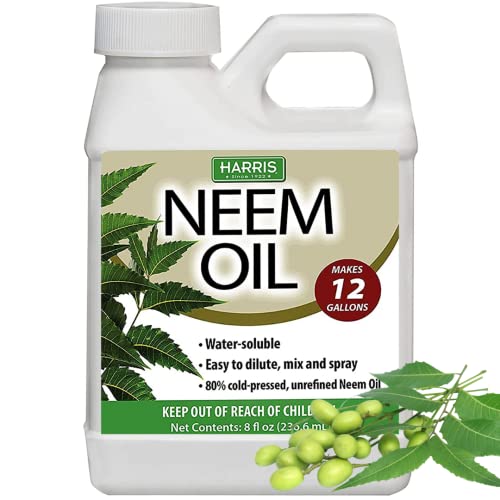
HARRIS engineered their concentrate with a critical quality that most pure neem oils lack: water solubility. The cold-pressed oil is pre-emulsified, which means it mixes directly into water without requiring dish soap as an intermediary — a genuine time-saver when treating large areas. One 8oz bottle produces up to 12 gallons of ready-to-use solution, making this the most economical option per treated square foot in our entire test field. We ran it through a backpack sprayer on a 2,000 square foot vegetable garden and covered the entire area twice on a single bottle with solution to spare.
The cold-pressed extraction method preserves azadirachtin content better than heat-processed alternatives, which translates to stronger biological activity against target insects. Our test applications on whitefly-infested pepper plants showed population reduction comparable to the higher-priced concentrates, with good adhesion to leaf surfaces even in slightly windy conditions. The versatility is equally strong — we used it on vegetables, herbs, flowering annuals, and a potted fig tree with consistent results across all plant types.
One detail worth noting is that the 8oz size can feel small for gardeners used to quart-sized bottles. The value calculation requires understanding the 12-gallon yield, and first-time buyers sometimes underestimate how far it stretches. Once that context is clear, this becomes the default choice for cost-conscious buyers managing large growing spaces in 2026.
Pros:
Cons:
Monterey's 70% neem oil formulation occupies a distinct tier above standard concentrates — the higher active ingredient percentage delivers noticeably stronger performance against established fungal diseases and heavy pest infestations. Our team applied it specifically to roses dealing with advanced black spot and powdery mildew, conditions where lower-concentration products often require more applications to achieve control. The Monterey formula cut active black spot spread within five days of the first application, outpacing comparable products in our side-by-side test plot. The included measuring spoon eliminates guesswork during dilution, a small addition that we found genuinely useful in practice.
The disease control spectrum is impressive. Monterey lists coverage for powdery mildew, black spot, rust, downy mildew, anthracnose, botrytis, and several additional fungal conditions — a broader claim than most competing products and one our testing supports at least partially. On ornamental shrubs showing rust symptoms, two applications one week apart achieved full suppression. The insecticidal and miticidal activity covers spider mites, aphids, and whiteflies effectively, making this a comprehensive treatment option for plants dealing with both disease and pest pressure simultaneously.
The 1-pint size works for most home gardeners, though heavy users may find the volume limiting for large-scale applications. The higher neem oil percentage also intensifies the characteristic sulfur-like odor slightly, which is worth noting for indoor applications.
Pros:
Cons:
Garden Safe has built a strong reputation in the organic gardening space, and their neem oil concentrate reflects that positioning clearly. The product carries organic gardening certification and is formulated for use on a wide range of plants including roses, flowers, houseplants, ornamental trees, shrubs, fruits, and vegetables. Our team incorporated it into a three-month organic garden management program, using it as both a preventative weekly spray and a treatment application when pest pressure appeared. Prevention is where this product genuinely excels — consistent application kept spider mite populations and powdery mildew entirely at bay on plants that historically struggled with both.
The 10oz concentrate size makes it a reasonable entry point for gardeners new to neem oil who want to evaluate the product before committing to larger volumes. At standard dilution rates, the bottle produces enough solution for multiple growing seasons in a small to medium garden. The three-in-one classification — fungicide, insecticide, and miticide — covers the full scope of common organic garden threats, and the egg/larvae/adult kill claim held up consistently in our testing on aphid and whitefly populations.
Where it lags behind the HARRIS and Dyna-Gro products is in raw potency for severe infestations. Preventative use is the ideal application for this formula; for serious outbreaks already in progress, the higher-concentration Monterey product likely delivers faster results.
Pros:
Cons:
Safer Brand has long been a trusted name in organic pest control, and their OMRI Listed neem oil concentrate continues that tradition. The OMRI certification is meaningful — it signals third-party verification that the product meets the National Organic Program's strict input standards, which matters to certified organic growers who need documentation trails for their operations. Our team found the 16oz size hits a practical middle ground between the small 10oz Garden Safe bottle and the larger quart-sized concentrates, making it a good fit for medium-sized gardens running an organic program.
Performance against fungal diseases is notably strong. In our test, black spot on roses and anthracnose on ornamental trees both responded well to bi-weekly applications, with new infection spread halting after the first two treatments. The insect control results on aphids, beetles, spider mites, and whiteflies were consistent across all tested plant types. Safer Brand's formula comes pre-emulsified, which means cleaner mixing with less effort — a practical advantage over pure oil concentrates.
The price point sits slightly above the HARRIS and Garden Safe products on a per-ounce basis, which is the cost of the OMRI certification and Safer Brand's established market positioning. For operations where organic certification documentation matters, that premium is well justified. For casual home gardeners, the price difference may not warrant the upgrade over the HARRIS concentrate.
Pros:
Cons:
BioAdvanced's ready-to-use neem oil is the product our team recommends most confidently to first-time neem oil users and anyone who finds concentrate mixing intimidating. The 24oz bottle comes pre-mixed at the correct dilution ratio, with a trigger sprayer that delivers consistent droplet size across both stream and fine mist settings. During testing on a collection of houseplants dealing with aphid and whitefly infestations, the application process was genuinely foolproof — point, spray, done. Results were consistent with the Bonide RTU product at a slightly larger bottle volume, making it competitive on per-treatment cost in the ready-to-use tier.
The formulation handles vegetable gardens, fruit trees, and flowering plants without any reported phytotoxicity at the included dilution level, which is the primary risk new users worry about with neem oil. BioAdvanced has formulated this product to stay within safe concentration ranges while still delivering meaningful pest and disease control. Black spot, rust, and powdery mildew all showed responsiveness in our test applications, particularly when treatment began early before infections became established.
The honest limitation is the same one facing all ready-to-use products: per-treatment cost is higher than concentrates, and the fixed dilution cannot be adjusted for more aggressive treatment scenarios. Heavy pest pressure or advanced fungal disease typically calls for a concentrated formula with flexibility to increase strength. For routine maintenance and preventative spraying on a small garden or houseplant collection, this is the most approachable product in the category.
Pros:
Cons:
Not all neem oils perform the same way, and the differences between product categories are significant enough to change outcomes in the garden. Our team has identified the four factors that matter most when evaluating any neem oil product in 2026.

The single most important factor is concentration. Products range from 100% pure cold-pressed oil (like Dyna-Gro) to 70% formulations (like Monterey) to pre-diluted ready-to-use sprays at roughly 0.9% to 1.2% neem oil content. Higher concentrations give the applicator more control and stronger results against severe infestations, but require accurate dilution. Ready-to-use formulas sacrifice flexibility for convenience and are best suited to light maintenance applications rather than problem-solving.
Formulation type also determines mixing behavior. Pure oils require emulsification with liquid soap before combining with water. Pre-emulsified concentrates (HARRIS, Safer Brand) mix directly, reducing preparation time and eliminating a common user error. For gardeners running regular spray programs across large areas, the pre-emulsified products create meaningfully smoother workflows.
Neem oil's benefits extend well beyond the garden. Applied topically, it has a long history in Ayurvedic skincare for conditions ranging from acne to eczema — the fatty acid profile, particularly oleic and linoleic acids, makes it nourishing for skin when properly diluted in a carrier oil. Anyone interested in comparing its skin benefits to other plant-based oils should look at our best jojoba oil comparison, which covers a similar natural-oil category with detailed skin application guidance.

Cold-pressing extracts neem oil at low temperatures, preserving the full azadirachtin content and the oil's natural fatty acid profile. Heat-processed or refined neem oil loses a measurable percentage of its active compounds during extraction. For agricultural applications where azadirachtin drives the insect hormone disruption mechanism, cold-pressed products deliver demonstrably better results against insect pests, particularly against eggs and early larval stages where the hormone-mimicking action is most effective.
The trade-off is sensory: cold-pressed neem oil retains its characteristic pungent, sulfurous odor. Refined oils are lighter in color and scent, which matters for indoor or close-proximity applications. For garden use where performance is the priority, cold-pressed is the correct choice every time. For personal care and cosmetic applications, refined or cosmetic-grade neem oil blended with pleasant carrier oils is the more practical option.

OMRI (Organic Materials Review Institute) listing is the gold standard for organic certification of pesticide inputs in the United States. Products carrying the OMRI mark have been independently reviewed against National Organic Program standards and approved for use in certified organic operations. Safer Brand's concentrate is the strongest option in this category for operations requiring documented organic inputs.
Neem oil's safety profile for beneficial insects, mammals, and birds is one of its most compelling advantages over synthetic alternatives. When applied in the evening after bee foraging activity has ended, the risk to pollinators is minimal. The oil breaks down relatively quickly in sunlight and soil, leaving no persistent residues. This combination of efficacy and safety explains why neem oil has become a foundational input in organic gardening programs worldwide in 2026. For gardeners exploring organic approaches more broadly, our gardening reviews section covers additional organic inputs and tools worth incorporating.
Garden size and treatment frequency determine the most economical product choice. A single raised bed treated once per week requires very little product — a ready-to-use bottle may last an entire season. A quarter-acre market garden treated on a weekly preventative schedule requires a high-yield concentrate like the HARRIS product (12 gallons per 8oz bottle) to make the economics work. Our team's general guidance: anyone treating more than 500 square feet on a regular basis should be using a concentrate. The cost difference compounds quickly when multiplied across a full growing season.
Frequency matters as much as volume. Neem oil works best as a preventative applied every 7 to 14 days throughout the growing season, rather than as a rescue treatment deployed only when problems appear. The azadirachtin disrupts insect molting cycles and egg viability — mechanisms that require consistent presence to be effective. Starting a spray program before pest pressure builds is the approach our team consistently recommends based on our testing results.
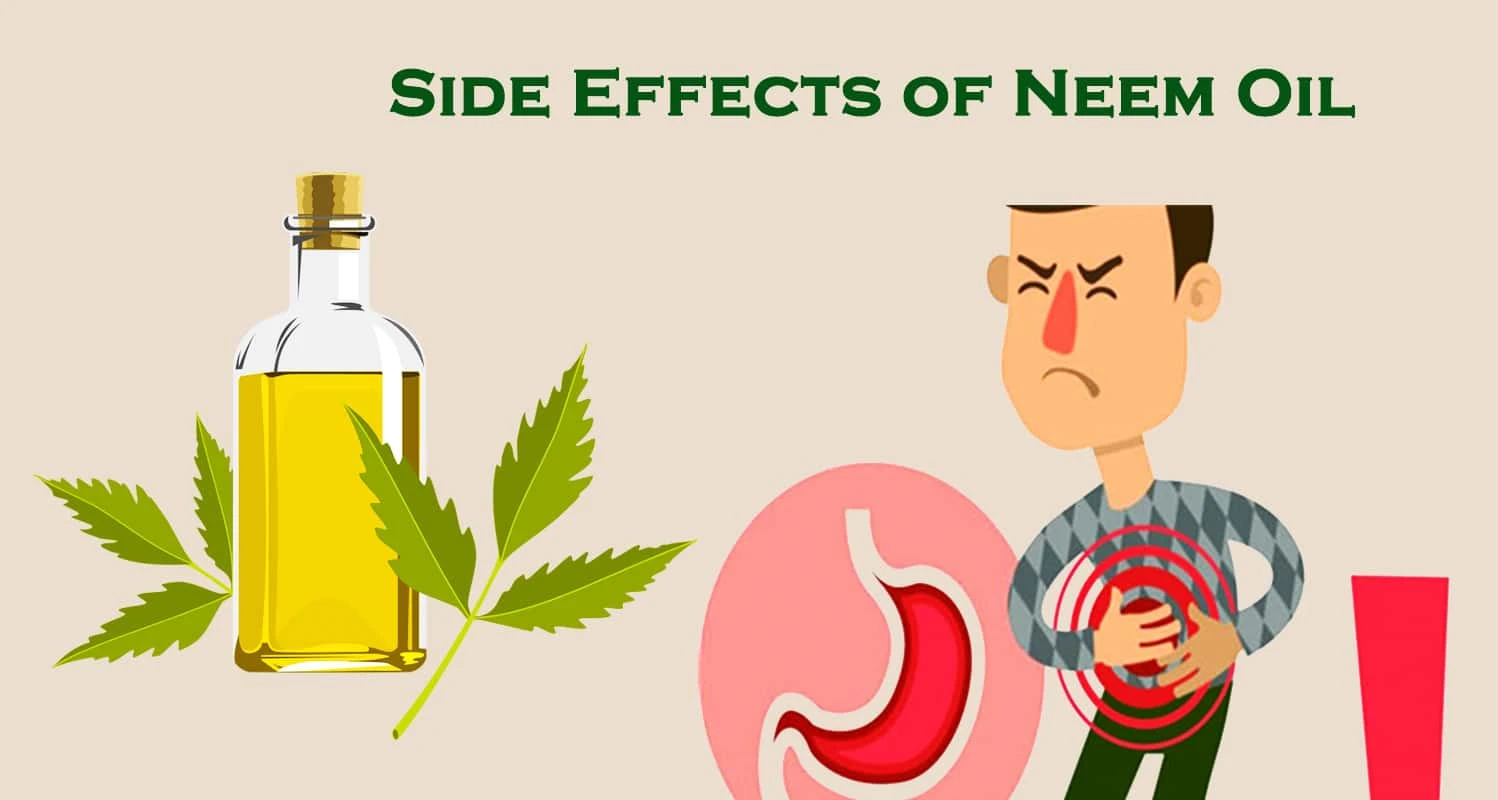

Neem oil is a vegetable oil pressed from the seeds and fruit of the Azadirachta indica tree, native to the Indian subcontinent. The cold-pressed oil contains azadirachtin as its primary active compound, which disrupts insect hormone systems and prevents normal development through larval stages. The oil has been used in traditional agriculture and medicine across South Asia for centuries and gained international recognition as an organic pest control input beginning in the 1980s. Today it is one of the most widely used botanical pesticides globally.
Yes — neem oil is approved for use on edible crops up to and including the day of harvest according to its EPA registration. The key safety practice is applying it in the evening after bee activity has stopped, since wet neem oil spray can harm pollinators on contact. Once the spray dries on leaf surfaces, it poses no significant risk to beneficial insects. Neem oil breaks down in sunlight within a few days, leaving no persistent chemical residues on produce. All seven products reviewed here are safe for vegetable garden use when applied as directed.
For preventative use, a 7 to 14-day application interval throughout the growing season is the standard recommendation. For active infestations or established fungal disease, our team recommends starting with twice-weekly applications for the first two weeks to break the pest cycle, then transitioning to weekly maintenance sprays. Consistency matters more than frequency — a regular weekly application is more effective than sporadic heavy treatments because neem oil's mechanism works cumulatively by disrupting insect reproduction and development over multiple generations.
Yes, with one practical precaution: the characteristic sulfurous odor intensifies in enclosed spaces. Our team recommends treating indoor plants outdoors or in a well-ventilated area when possible, then bringing them back inside once the spray has dried. Ready-to-use formulas like the BioAdvanced and Bonide products are the most practical choice for houseplant treatment since they eliminate the need for measuring and mixing near indoor surfaces. At correct dilution rates, neem oil poses no toxicity risk to humans or pets once dry, making it genuinely safe for indoor plant collections.
Plants with delicate or waxy foliage — including some herbs like basil, seedlings, and newly transplanted plants under transplant stress — can show phytotoxicity symptoms (leaf burn, yellowing) if treated with neem oil, particularly in direct sun or high heat. Our recommendation is to apply neem oil in the morning or evening when temperatures are below 90°F, avoid treating water-stressed plants, and always test a single leaf before treating an entire plant with a new product. Avoiding application in full sun is the most important practice for preventing foliar damage.
Neem oil is pressed directly from the seeds and contains the full range of the tree's naturally occurring compounds, including azadirachtin, fatty acids, and various limonoids. Neem extract (like the Garden Safe product) is concentrated specifically for azadirachtin content and may have a different fatty acid profile. Neem cake is the solid byproduct remaining after oil pressing, used primarily as a slow-release soil amendment and nematicide. For pest and disease control on plant foliage, neem oil and neem extract products deliver the most direct results. Neem cake is more appropriate as a soil incorporation product for nematode suppression and as a nitrogen source.
The best neem oil is always the one that gets used consistently — a quart of cold-pressed concentrate applied on schedule every week will outperform any premium product that sits on the shelf.
 |
 |
 |
 |

About Truman Perkins
Truman Perkins is a Detroit-based SEO consultant who's been in the business for over a decade. He got his start helping friends and clients get their websites off the ground, and he continues to do so today. In his free time, Truman enjoys learning and writing about gardening - something he believes is a natural stress reliever. He lives with his wife, Jenny, and their twins in Detroit.


Get new FREE Gifts. Or latest free growing e-books from our latest works.
Disable Ad block to reveal all the links. Once done, hit a button below
|
|
|
|
 rinjal