You walk down the lawn and garden aisle — or scroll through pages online — and suddenly you're staring at a wall of bottles, bags, and sprayers, all promising to wipe out every bug in your yard. It's genuinely overwhelming, especially when you're not sure whether your problem is above the soil, below it, or both. Finding the right lawn insect killer in 2026 doesn't have to mean buying the wrong product twice.
Lawn insects can do serious damage fast. Grubs chew through grass roots from underneath, chinch bugs suck moisture from blades, and fire ant colonies can take over an entire lawn in a single season. The good news is that there are proven products across every application style — granules, concentrates, ready-to-spray liquids, and even natural essential oil formulas — each suited to different situations and preferences.
This guide covers the top picks across all major categories, with honest breakdowns of what each product does well, where it falls short, and what kind of lawn problem it's actually built for. Whether you're dealing with a minor flea situation or a full-blown grub infestation, you'll find a match here. If you're also working on overall soil health, check out our guide on how to sterilize soil for planting — healthy soil and effective pest control go hand in hand. For background on how insecticides are regulated and evaluated, the EPA's lawn and garden pest control guidance is a reliable starting point.
Contents






The Ortho Bug B Gon 20 lb granule is one of the most versatile lawn insect killers you can buy in 2026. It targets an impressively wide range of pests — ants, fleas, ticks, chinch bugs, cutworms, mole crickets, sod webworms, and spiders — making it a genuinely useful product for homeowners who aren't always sure what they're dealing with. The granule format means you can apply it with a standard broadcast or drop spreader, and it activates when you water it in after spreading.
One of the standout claims is up to 3 months of protection both above and below the soil surface. That dual-action coverage is especially helpful when your problem isn't purely surface-level. You can also use it along the home perimeter, in ornamental beds, flower beds, and even on listed edible plants in vegetable gardens — though always read the label before applying near food crops.
The 20 lb bag covers a generous area, and most users find it easy to apply without any special equipment. It's a solid starting point if you're new to lawn insect control and want broad coverage without a lot of guesswork.
Pros:
Cons:
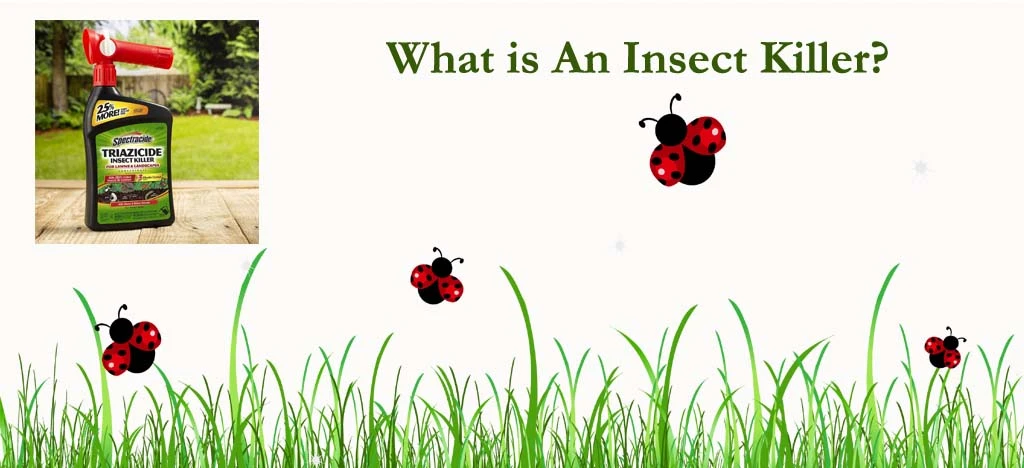
If you want fast results and you're dealing with a broad range of above-ground and below-ground insects, the Spectracide Triazicide concentrate is a strong choice. It connects directly to your garden hose (ready-to-spray format), which keeps setup minimal — no mixing, no measuring. The formula is designed to kill over 260 insect species by contact, including grubs, most ants, fleas, deer ticks, and Japanese beetles.
The 260+ insect kill claim is one of the broadest you'll find in this category. Coverage extends beyond the lawn to vegetables, fruit and nut trees, roses, flowers, and shrubs — which makes it a good all-property solution if you have more than just turf to protect. The non-staining formula is a nice bonus for homes where the perimeter treatment might get close to siding or painted surfaces, though the label notes that staining can vary depending on surface age and condition.
Keep in mind this is a concentrate attached to a hose — coverage and consistency depend on your water pressure and how evenly you walk the area. It's not ideal for pinpoint treatments, but for broad lawn and landscape coverage, it's hard to beat the convenience.
Pros:
Cons:
BioAdvanced's concentrate formula is purpose-built for the homeowner who suspects the problem is underground. Grubs are one of the most destructive lawn pests — they eat grass roots from below, and by the time you see yellowing or spongy turf, the damage is often already done. This two-way formula targets both soil-level insects and surface pests, with kill times of 24 hours on most listed insects including grubs, ants (except Pharaoh ants), ticks, mosquitoes, and 30+ other outdoor pests.
The 40 oz bottle covers up to 6,667 square feet — reasonable for a typical residential lot. You'll need a hose-end sprayer or pump sprayer for application, which adds a small step compared to ready-to-spray products, but gives you more control over where and how much product goes down. After applying, watering it in moves the active ingredient into the soil where grubs actually live.
Three months of subsurface protection is the headline number here. If you're treating in early summer before grub eggs hatch (late June–July is a common window), you can stop the infestation before it takes hold rather than reacting after the damage is visible.
Pros:
Cons:

If you prefer granules over liquid but still want the same BioAdvanced two-way protection, the 10 lb granule bag is the pick. It covers up to 10,000 square feet — significantly more than the concentrate version — which makes it a good match for larger lawns or properties where you're treating turf, garden beds, and the home perimeter in one pass.
The granule format is genuinely easy to use. Just load your broadcast or drop spreader, apply evenly, and water in. The same 24-hour kill time and 3-month subsurface protection carry over from the concentrate version, targeting grubs, ticks, mosquitoes, and 30+ other listed pests. For many homeowners, the granule format feels more predictable than spray — you can see where you've been and coverage is consistent regardless of water pressure.
This product is best applied in spring or early summer before the ground gets too dry and before grub eggs hatch. Pair it with a quality organic fertilizer routine to keep your lawn strong and more naturally resistant to pest pressure over time.
Pros:
Cons:
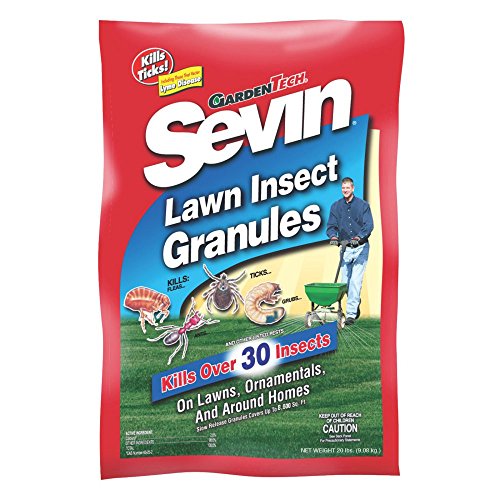
Sevin has been a household name in lawn pest control for decades, and the 20 lb granule bag is their go-to product for large-scale yard treatment. It kills over 30 listed pests and is approved for use on lawns, ornamentals, and around the exterior of homes — making it genuinely flexible across most common pest scenarios. If you're covering a large yard and want a trusted name at a competitive price, this is a reliable option.
The 20 lb size is designed for large-scale coverage — if you have a half-acre or more to protect, this bag is a practical choice over smaller packages. Application is straightforward: spread with a broadcast spreader and water in. Results are typically visible within days of application.
The active ingredient in Sevin granules is carbaryl (a broad-spectrum insecticide), which has been widely used for decades. It is effective, though worth noting that carbaryl is toxic to bees — apply in the early morning or evening when pollinators are less active, and avoid applying directly to flowering plants when possible. Always read the full product label before use.
Pros:
Cons:
If you have kids, dogs, or you're just wary of synthetic pesticides near your garden, Wondercide is the standout alternative in this category. It's made with natural essential oils and is safe around pets and people of all ages immediately after application — no waiting period, no re-entry restrictions. That's a major advantage for households where the backyard sees daily activity.
The 32 oz bottle attaches directly to a garden hose, making application easy and fast. It kills and repels mosquitoes, ants, fleas, ticks, roaches, flies, crickets, chinch bugs, Japanese beetles, gnats, and more. One bottle treats up to 5,000 square feet, though coverage will vary based on your water pressure and walking speed.
It's worth managing expectations here: Wondercide is effective for moderate pest pressure and ongoing prevention, but if you're dealing with a severe infestation — especially grubs — a synthetic insecticide will typically outperform it. Think of Wondercide as a solid maintenance product and a safer first line of defense, especially in areas where children or pets play regularly. You can refill the sprayer with their concentrate version to extend the value. It's also a good fit for use in vegetable beds and around edibles where you want to avoid synthetic chemicals. Pair it with a broader soil health approach, and visit our gardening reviews section for more product recommendations.
Pros:
Cons:
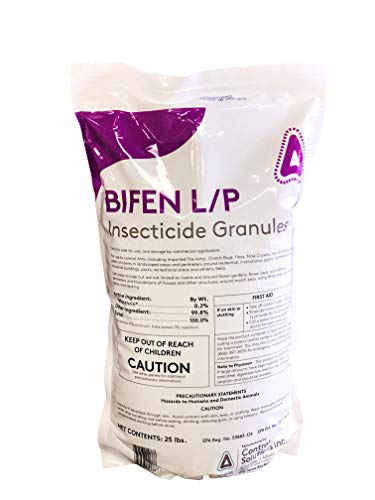
Bifen LP Granules are a professional-grade product that's also available to homeowners who want commercial-level performance. The active ingredient is bifenthrin (a synthetic pyrethroid), and it delivers up to 90 days of insect control across lawns, landscaped areas, and building perimeters — both residential and commercial properties. If you're maintaining a large yard, HOA common areas, or a property where pest control needs to last all season, this is the heavyweight option.
The 25 lb bag covers a substantial area and targets fleas, ticks, roaches, ants, scorpions, crickets, and many more listed pests. Because bifenthrin is a broad-spectrum insecticide, it works quickly on contact and provides a long residual barrier — particularly effective along foundation perimeters, in mulched beds, and across turf grass.
Application is standard: use a broadcast or drop spreader and water in for best results. The larger bag size and stronger active ingredient make this a better fit for someone with experience applying insecticides than for a first-time user. That said, it's not difficult to use — it just rewards careful label reading and proper protective equipment (gloves, eye protection) during application. This is the product to reach for when consumer-grade granules haven't done the job.
Pros:
Cons:
The format you choose affects how you apply it, what it's good at, and how predictable the coverage will be.
This is one of the most important buying decisions you'll make. Not all products reach underground.
Check the square footage claim on the label against your actual lawn size before buying.
All pesticides carry some risk, and it's worth knowing what you're applying around your family and garden.

Timing depends on the pest. For grubs, apply in late spring to early summer (May–July) before eggs hatch and larvae move deep into the soil. For surface pests like ants, fleas, and ticks, apply as soon as you notice activity — usually starting in late spring when temperatures consistently stay above 60°F. Fall applications can also help reduce overwintering pest populations. Always check the product label for seasonal guidance specific to your region and target pest.
Grub damage typically appears as irregularly shaped brown patches that feel spongy underfoot. You can confirm by peeling back a section of turf — if you find C-shaped white larvae (grubs) just below the soil surface, that's your culprit. Surface insect damage tends to cause yellowing, wilting, or discoloration in patterns that don't lift away from the soil. Chinch bugs, for example, cause dry patches that spread outward from a center point during hot, dry weather.
Most synthetic insecticides require a waiting period after application before pets and children should re-enter the treated area. This is typically 24–48 hours for granule products, or once the area has been watered in and fully dried for liquid sprays. The exception is Wondercide, which uses natural essential oils and is safe for pets and kids immediately after application. Always read the product label for the specific re-entry interval and follow it carefully.
Some products in this list are approved for use near edible plants — Ortho Bug B Gon specifically lists vegetable gardens among its approved use sites, and Wondercide is safe for use around edibles. Others, like Sevin and Bifen LP, require more careful application and label reading near food crops. Always check the product label for a list of approved use sites and pre-harvest intervals (the number of days between treatment and harvest) before applying near anything you plan to eat.
Residual protection varies by product. BioAdvanced granules and concentrate claim up to 3 months of subsurface protection. Bifen LP Granules claim up to 90 days. Ortho Bug B Gon also claims up to 3 months for listed insects. Wondercide and Spectracide Triazicide are generally shorter-residual products that may require more frequent reapplication, especially after heavy rain. Environmental factors like rainfall, heat, and UV exposure all reduce how long any insecticide remains active in the lawn.
Yes — nearly all granule-format lawn insect killers need to be watered in after application to activate. Water moves the insecticide off the granule carrier and down into the soil where it becomes available to kill pests. Without watering in, granules sit on top of the soil and provide limited benefit, especially for subsurface pests like grubs. Most labels recommend applying before rain or watering immediately after spreading. A light ½-inch watering is typically sufficient.
The best lawn insect killer is the one that matches your actual pest — know what's attacking your yard before you buy, and you'll treat it once instead of three times.
 |
 |
 |
 |

About Christina Lopez
Christina Lopez grew up in the scenic city of Mountain View, California. For eighteen ascetic years, she refrained from eating meat until she discovered the exquisite delicacy of chicken thighs. Christina is a city finalist competitive pingpong player, an ocean diver, and an ex-pat in England and Japan. Currently, she is a computer science doctoral student. Christina writes late at night; most of her daytime is spent enchanting her magical herb garden.


Get new FREE Gifts. Or latest free growing e-books from our latest works.
Disable Ad block to reveal all the links. Once done, hit a button below
|
|
|
|
 rinjal