reviewed by Truman Perkins
Which indoor plant fertilizer actually works — and which ones are just expensive colored water? Miracle-Gro Indoor Plant Food is our top pick for 2026, but the right fertilizer for your collection depends on your plants, your routine, and whether you want synthetic or organic nutrition. We tested and researched the most popular options on Amazon so you don't have to guess.
Your houseplants pull nutrients from a fixed amount of potting soil, and that soil gets depleted fast — usually within a few months of potting. Without regular feeding, you'll notice yellowing leaves, stunted growth, and flowers that never quite bloom. The good news is that a quality liquid fertilizer fixes all of that quickly. Fertilizers use an NPK ratio (nitrogen-phosphorus-potassium) to communicate what they deliver: nitrogen feeds leafy green growth, phosphorus supports roots and blooms, and potassium keeps the whole plant resilient. Understanding that shorthand helps you match a product to your actual plants before spending a dime.
In this guide, we cover seven of the best indoor plant fertilizers available in 2026, including liquid concentrates, ready-to-use formulas, and slow-release capsules. Whether you're feeding a fiddle leaf fig, a collection of succulents, or a windowsill herb garden, there's a pick here for you. For more fertilizer options across different plant types, check out our 15 Best Fertilizers for Indoor Plants roundup. And if you also grow edibles, our Best Fertilizers for Vegetable Gardens guide covers that angle in detail.

Contents






Miracle-Gro has been the household name in fertilizer for decades, and this liquid indoor formula earns that reputation. You get a ready-to-use concentrate that works on every indoor container plant imaginable — houseplants, herbs, flowers, vegetables, and more. The pack comes with two 8-ounce bottles, giving you plenty of formula to feed a decent-sized collection through an entire growing season without scrambling for a refill.
What makes this formula stand out as our top pick is the instant uptake. Liquid fertilizers deliver nutrients directly to the root zone, and this one is no exception. Plants that look tired and yellow after a rough winter can show noticeable improvement within a week or two of consistent feeding. The application couldn't be simpler: squeeze the dropper, add it to your watering can, and water normally. No measuring cups, no guessing. That simplicity is a big reason beginner and experienced plant parents both keep this one on their shelf.
Miracle-Gro's formula is synthetic (meaning it's derived from chemical salts rather than organic matter), which means faster nutrient absorption than most organic options. That's a trade-off worth considering: you get quicker results, but you won't be building long-term soil biology the way an organic fertilizer does. For most houseplant growers who just want healthy, lush plants without a complicated feeding schedule, this is the most practical, proven choice you'll find in 2026. According to University of Minnesota Extension, most houseplants benefit most from balanced, water-soluble fertilizers applied during the active growing season — exactly what this product delivers.
Pros:
Cons:
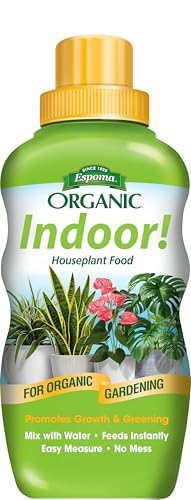
If synthetic chemicals are a non-starter for you — especially with kids or pets roaming around — Espoma's organic liquid concentrate is the smart move. This 8-ounce bottle is highly concentrated, which means a little goes a long way. The dosing is straightforward: half a cap per quart of water, applied every two to four weeks. It's formulated specifically for popular houseplants like pothos, fiddle leaf figs, monsteras, snake plants, and palms — the kinds of plants that live on most people's shelves and desks.
Espoma builds its formula around essential plant nutrients derived from organic sources, and the results are noticeably different from synthetic fertilizers in one key way: your soil improves over time. The organic ingredients feed beneficial microbial life in the potting mix, which makes nutrients more available and helps your plants handle stress better. You won't see the same overnight green-up that a synthetic product delivers, but the gradual improvement in plant vigor is real and lasting. Leaves come out larger, roots spread deeper, and your plants become more resilient to environmental swings like low humidity or temperature changes.
The product is also certified organic and safe to use around the family, which matters more than some growers realize. When you're mixing fertilizer in a kitchen sink next to food prep surfaces, knowing the ingredients are food-safe gives you genuine peace of mind. The mild, earthy scent dissipates quickly after application. For those building a more sustainable indoor garden — especially in tandem with something like a quality hydroponics system — this organic concentrate fits naturally into a thoughtful plant care routine.
Pros:
Cons:
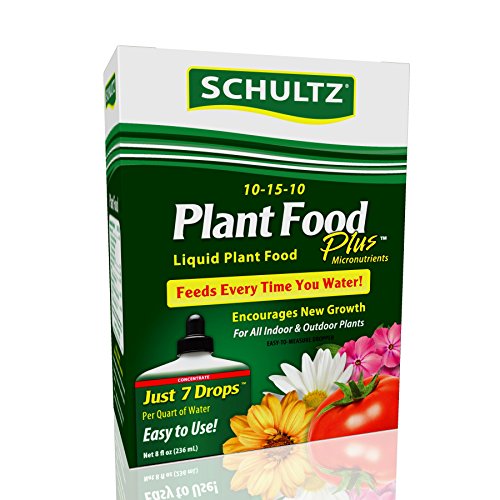
Schultz has been a trusted name in plant care for generations, and this 10-15-10 liquid concentrate shows why. The NPK ratio here tips toward phosphorus (the middle number), which means stronger root development and better flowering — great news if your houseplants aren't blooming or if you're trying to establish new plants you recently repotted. One 8-ounce bottle of concentrate goes an exceptionally long way because the dilution rate is low, making this one of the most cost-effective fertilizers per feeding on this list.
The formula works on an impressively broad range of plants: flowers, tomatoes, roses, vegetables, fruits, trees, shrubs, annuals, perennials, and houseplants. That versatility is the story here. If you have a mix of indoor plants and an outdoor container garden or vegetable patch, you only need to buy and store one product. The application is as simple as adding a few drops to your watering can — no complex mixing ratios to memorize. This is American-made, with a clean formulation that applies cleanly without clogging drippers or watering wands.
Where Schultz falls slightly short is in the specialization category. Products like the Espoma or EarthPods are tuned specifically for indoor plants' lower-light, lower-metabolism environment. Schultz is a generalist, which is great for versatility but means you'll want to use a lighter hand with delicate tropicals that don't need heavy phosphorus pushes. Still, for the price and the sheer range of what it feeds, this is the go-to pick if your budget is tight and your plant variety is wide.
Pros:
Cons:
Bonide takes a different philosophy from most fertilizers on this list: feed every single time you water, using an ultra-diluted dose. The idea is that plants prefer a steady, low-level supply of nutrients over the feast-or-famine cycle of weekly or biweekly feeding. The dilution is minimal — just 1/8 teaspoon per quart of water — which prevents salt buildup in the soil (a common problem when you fertilize heavily on a schedule) and keeps sensitive plants like orchids, succulents, and ferns consistently happy.
The 10-10-10 NPK ratio is perfectly balanced, delivering equal parts nitrogen, phosphorus, and potassium. That balance makes this one of the safest fertilizers to use across a diverse plant collection without worrying that you're over-feeding one nutrient at the expense of another. Bonide specifically designed this formula for common indoor houseplants, accounting for the reduced light and slower growth rates that indoor conditions impose. The result is a fertilizer that won't push aggressive vegetative growth your indoor plants can't sustain — just steady, healthy maintenance feeding.
The every-watering approach does require a small mental shift. You'll need to remember to mix the concentrate each time rather than doing one dedicated fertilizing session every few weeks. But for gardeners who water frequently and want to remove the guesswork entirely, this system is clean and reliable. The 8-ounce concentrate bottle goes a very long way when you're only using 1/8 teaspoon at a time, making the per-feeding cost negligible. If you already tend to water often and want your fertilizing to be invisible and effortless, Bonide is the pick.
Pros:
Cons:
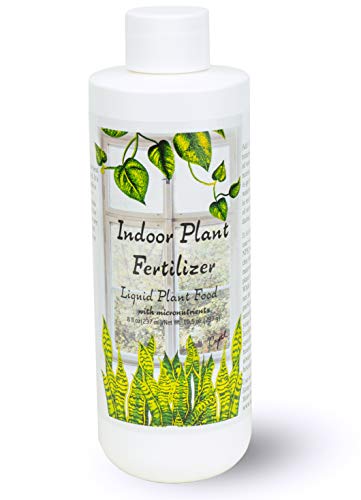
Aquatic Arts markets their fertilizer around what they call a "3-1-2 Miracle Ratio" — a nitrogen-heavy NPK of 3-1-2 that they claim is the ideal formula for most common houseplants. The nitrogen-forward ratio does make biological sense: indoor plants live in low-light environments where they prioritize leaf growth over flowering or fruiting, and nitrogen drives exactly that. The dosing is simple: one teaspoon per two cups of water, which gives you roughly a year's worth of feedings from a single bottle for a modest collection.
What earns this a beginner recommendation is the combination of an easy-to-remember dose, a gentle formula, and an extremely broad compatibility list. Aquatic Arts explicitly calls out poinsettias, pothos, spider plants, ZZ plants, aglaonema, jade plants, hoya, dracaena, azaleas, orchids, and snake plants — essentially the full cast of plants found in most first-time plant parents' homes. The gentle concentration also means you're unlikely to burn plants even if you accidentally add a bit more than the recommended amount, which happens to every new grower eventually.
The liquid is clear and odorless, which is a small but real quality-of-life advantage when you're feeding plants on a kitchen counter or near furniture. You won't deal with the earthy smell that organic concentrates can leave behind. The 3-1-2 ratio is lower in phosphorus and potassium than balanced formulas, so if you're growing heavy-flowering varieties or fruiting plants like tomatoes, this isn't the right match — but for foliage-first houseplants, it's excellent. This is also a solid companion if you're growing in controlled setups: see our guide to grow lights for succulents for the full indoor growing picture.
Pros:
Cons:
EarthPods takes a completely different approach from every other product on this list. Instead of a liquid you mix into water, these are small bio-organic capsules you push directly into the soil near the plant's root zone. Each capsule breaks down slowly over time, releasing a broad-spectrum blend of 70-plus natural minerals, nutrients, and beneficial soil biology. One tube contains 100 capsules — that's 100 individual feedings, which amounts to years of nutrition for a small collection.
The convenience factor is real. There's no measuring, no mixing, and no risk of over-applying because the release rate is controlled by the capsule itself. You push one capsule into the soil every two to three weeks, water normally, and walk away. The formula is built on premium worm castings (a form of decomposed organic matter rich in plant-available nutrients), humic acids (organic compounds that improve nutrient uptake at the root level), rock minerals, and beneficial microorganisms. Every batch is small-batch manufactured in the United States, which gives the product a quality consistency you don't always get with mass-produced fertilizers.
The slow-release mechanism means this won't rescue a severely deficient plant overnight — if your pothos is yellowing badly, a fast liquid like Miracle-Gro will address that more quickly. But for ongoing maintenance feeding, particularly for plants in larger containers where you don't want to be mixing fertilizer solutions constantly, EarthPods deliver excellent long-term results. The soil biology benefits compound over time: repeated use visibly improves potting mix structure and reduces the need for repotting frequency. If you hate the ritual of mixing fertilizer every week or two, these capsules eliminate that friction entirely.
Pros:
Cons:
Dr. Earth takes organic gardening seriously enough to use what they call "Human Grade" ingredients — the same quality of seafood, raw proteins, fruits, vegetables, and whole grains they'd buy for their own families. That's a marketing statement, but it does reflect something real about the ingredient sourcing: this formula uses no synthetic chemicals, no GMO chicken manure, and no toxic fillers. It's people-safe and pet-safe, which matters when your monstera sits two feet from where your dog sleeps.
The packaging is designed for absolute convenience. Two pumps of the dispenser delivers a measured dose of concentrate ready for your 16-ounce watering vessel — no caps, no droppers, no measuring spoons. At that dosing, the 16-ounce bottle delivers approximately two weeks of feedings per plant per pump, meaning this bottle covers a lot of feedings over its lifespan. The pump-and-go delivery system removes the single biggest friction point in a regular fertilizing routine: the hassle of measuring.
The formula is particularly well-suited for sensitive tropical plants that react badly to synthetic fertilizer salts — if you've ever seen crispy brown leaf tips appear after a fertilizing session, that's salt burn, and organic formulas like Dr. Earth essentially eliminate that risk. The nutrient release is gentler and more gradual than synthetics, so you won't see the dramatic two-week green flush some products advertise. What you will see is steady, healthy growth with no leaf burn, no soil salt crust, and noticeably improved root vigor over a full growing season. For growers who care about what goes into their home's soil, this is the most premium organic option on the list.
Pros:
Cons:
Every fertilizer label displays three numbers separated by dashes — this is the NPK ratio. The first number is nitrogen (N), which drives leafy green growth. The second is phosphorus (P), which supports root development and flower production. The third is potassium (K), which strengthens the plant overall and helps it resist stress. For most foliage houseplants, you want a formula where nitrogen is equal to or higher than the other two numbers — something like 10-10-10, 3-1-2, or 2-1-2. For flowering houseplants or orchids, a higher middle number (phosphorus) encourages bloom production. Match the ratio to your plant's primary goal: leaf growth, root health, or flowering.
Liquid fertilizers — whether concentrated or ready-to-use — deliver nutrients immediately because they dissolve directly into the water you're already giving your plants. This gives you precise control over when and how much your plants receive, and it lets you adjust feeding frequency with the seasons (less in winter when growth slows, more in the active spring and summer months). Slow-release formulas like EarthPods capsules or granular spikes release nutrients gradually over weeks or months, which is more hands-off but less flexible. If your plant suddenly shows signs of deficiency, a slow-release option won't help quickly. For most people with varied indoor collections, a quality liquid concentrate covers the most ground.
Synthetic fertilizers use chemically derived mineral salts that plants absorb instantly. You see faster results, but over time the salt buildup in potting soil can damage root tissue and kill beneficial microbes. Organic fertilizers use ingredients derived from natural sources — worm castings, kelp, fish emulsion, compost — that break down more slowly and feed soil biology in the process. Organic options are always safer around children and pets and they improve your soil structure over repeated use. The trade-off is pace: organics work more gradually. If you're rehabilitating a severely struggling plant, start with a synthetic for a quick boost; then switch to organic for long-term maintenance. Many experienced growers do exactly this.
Don't judge fertilizer value by bottle size alone. A highly concentrated product like Espoma's 8-ounce bottle can deliver far more feedings than a larger ready-to-use formula. Before you buy, look at the dilution ratio on the label and calculate how many feedings you get per ounce. As a general rule, concentrated liquid formulas offer significantly better cost-per-feeding than pre-diluted products. If you have a large collection — say, twenty or more pots — concentration matters a lot. For small collections of five to ten plants, the convenience of a dropper-top or pump dispenser may be worth the slightly higher cost per feeding. You can also browse our full gardening reviews section for more tools and supplies to pair with your fertilizer routine.
Most indoor plants do best with fertilizer applied every two to four weeks during the active growing season (spring through early fall). In winter, when growth slows due to lower light levels, you should reduce or stop feeding entirely. Over-fertilizing in winter is one of the most common mistakes — plants can't use the extra nutrients and salt builds up in the soil. Slow-release capsule users typically apply every four to six weeks year-round since the dose per application is smaller and more gradual.
Yes. Fertilizer burn happens when too much mineral salt accumulates in the soil around the roots, drawing moisture out of the root cells through osmosis. You'll see it as brown, crispy leaf tips or edges. It most commonly happens when you apply too much synthetic fertilizer or when you fertilize a dry, thirsty plant. Always water your plant before fertilizing, follow the dosing instructions exactly, and flush the soil with plain water every few months to wash out salt buildup. Organic fertilizers carry a much lower burn risk because their nutrient release is slower and gentler.
No — wait at least four to six weeks after repotting before you start fertilizing. Fresh potting mix already contains slow-release nutrients from the manufacturer, and the plant's roots have likely been disturbed during the repotting process. Applying fertilizer to stressed or damaged roots causes burn and delays recovery. Give the plant time to establish new root growth in its fresh soil before you begin a feeding routine.
Yes, organic fertilizers are generally safe for all houseplants and are especially recommended for sensitive species like orchids, ferns, and succulents that react poorly to synthetic salt-based formulas. Organic options are also the right choice for any edible plants you're growing indoors, such as herbs or cherry tomatoes, since you won't be ingesting synthetic chemicals. The only caveat: some organic fertilizers made from fish emulsion or bone meal have a noticeable odor that some people find unpleasant indoors. Read reviews before buying an organic formula if smell is a concern for you.
Low-light plants like pothos, snake plants, ZZ plants, and peace lilies grow more slowly than sun-loving plants, which means they need less fertilizer overall. A balanced or nitrogen-forward formula at half the recommended dose is usually the right approach. Products like Espoma Organic or Aquatic Arts work particularly well for low-light tropicals because their gentle, nitrogen-leading formulas match the slower growth pace without pushing aggressive vegetative growth that the plant can't sustain in dim conditions. Feeding every four weeks rather than every two is a safe interval for most low-light species in 2026.
You can use general-purpose outdoor fertilizers like Schultz All Purpose on indoor plants — it's designed for exactly this dual-use scenario. However, products made specifically for outdoor use, such as lawn fertilizers or granular tree spikes, are often too concentrated and too high in nitrogen for indoor containers. Heavy-nitrogen outdoor formulas push fast growth that indoor light levels can't support, resulting in weak, leggy stems. Stick to formulas labeled for houseplants or general-purpose indoor-outdoor use, and always halve the dose if you're experimenting with a new product on a plant you care about.
 |
 |
 |
 |

About Truman Perkins
Truman Perkins is a Detroit-based SEO consultant who's been in the business for over a decade. He got his start helping friends and clients get their websites off the ground, and he continues to do so today. In his free time, Truman enjoys learning and writing about gardening - something he believes is a natural stress reliever. He lives with his wife, Jenny, and their twins in Detroit.


Get new FREE Gifts. Or latest free growing e-books from our latest works.
Disable Ad block to reveal all the links. Once done, hit a button below
|
|
|
|
 rinjal