Nearly 70% of houseplant deaths are traced back to improper feeding — not overwatering, not poor light, but plain old nutrient starvation. If you've watched a perfectly healthy monstera go limp or a pothos shed leaves without explanation, chances are your fertilizer routine (or lack of one) is the culprit. In 2026, the indoor plant market has exploded, and so has the range of fertilizers available, from slow-release granules you forget about for six months to concentrated capsules you push into the soil in five seconds flat.
Choosing the right fertilizer isn't just about NPK ratios. It's about matching the delivery format, the nutrient profile, and the release speed to your specific plants, your watering habits, and how much time you actually want to spend on plant care. A liquid fertilizer that needs weekly application is useless if you travel for work. A slow-release granule that feeds for six months could be overkill for a succulent that barely grows. The right pick depends entirely on your situation — and that's what this guide breaks down for you.
We've tested and evaluated the top options on the market, from organic capsule formulas to water-soluble powders, to help you make a confident choice. Whether you're maintaining a single fiddle leaf fig or managing a living room full of tropical plants, you'll find the right fertilizer in this list. For broader fertilizer guidance beyond houseplants, our gardening reviews section covers everything from vegetables to fruit trees. And if you're also feeding outdoor plants, check out our deep dives on the best fertilizers for hibiscus plants and the best fertilizers for vegetable gardens — the principles overlap more than you'd think.

Contents





If there's one fertilizer that genuinely earns the "set it and forget it" label, it's Osmocote Smart-Release Plant Food Plus. Each granule is coated with a specialized resin that meters out nutrients in response to soil temperature — warmer soil means faster plant growth, and the coating releases more nutrients accordingly. This is one of the most elegant delivery mechanisms in the fertilizer market, and it's been refined over decades. The formula covers 11 essential nutrients, including the primary macronutrients nitrogen, phosphorus, and potassium, plus critical secondary nutrients and micronutrients that most budget fertilizers skip entirely.
In practice, you scoop the recommended amount into the soil, lightly work it in, and then largely ignore it for up to six months. That's the deal. Plants that would otherwise show mid-season deficiencies — yellowing lower leaves, stunted growth, weak stems — hold their color and vigor through the whole feeding cycle. The 2-lb bag goes a long way for container plants; you're using tablespoon-scale quantities for most houseplant pots. This product works in containers, raised beds, and in-ground gardens, so if you're feeding both indoor and outdoor plants, one bag handles both jobs. One honest caveat: because granules sit on or in the soil surface, they're visible and some people find them aesthetically distracting in decorative planters.
For the plant parent who forgets to fertilize for weeks on end — which, realistically, is most of us — Osmocote takes the memory work out of the equation entirely. The continuous-release design means you're not gambling on whether your plants got enough last week. The 11-nutrient formula also covers trace element gaps that single-element or basic 3-part formulas miss, which matters for plants like fiddle leaf figs and palms that are notoriously fussy about micronutrient deficiencies.
Pros:
Cons:
Miracle-Gro's liquid indoor plant food is the most recognized name in the category for a reason: it delivers results fast, it works across essentially every container plant you're likely to own, and the application process couldn't be simpler. You get two 8 fl. oz. bottles in the pack, which gives you a meaningful supply for a collection of five to ten plants watered on a biweekly schedule. The liquid formula feeds plants instantly on contact with roots — unlike slow-release products, you'll see a response in days rather than weeks when a plant is visibly nutrient-deficient.
The formula is designed for all indoor container plants: houseplants, flowers, herbs, vegetables, you name it. This breadth is useful if you keep a mixed collection and don't want to track which pot gets which fertilizer. Application is straightforward — a pump or cap measure directly into your watering can or onto the soil. Compared to an unfed control plant, the growth difference under regular Miracle-Gro feeding is visible within a single growing season, particularly in leaf size and stem strength. The immediate availability of nutrients makes this the right tool when a plant is showing deficiency signs and you need to act quickly rather than wait for slow-release granules to kick in.
The trade-off with any liquid fertilizer is frequency. You need to stay on schedule — typically every one to two weeks during the growing season — or the benefit gaps out. If you're disciplined about watering, adding a cap of this to your watering can each time is no extra burden. If your watering schedule is erratic, you might find the slow-release formats more forgiving. But for an actively growing collection in spring and summer 2026, this liquid formula gives you the most direct control over your plants' nutrition.
Pros:
Cons:
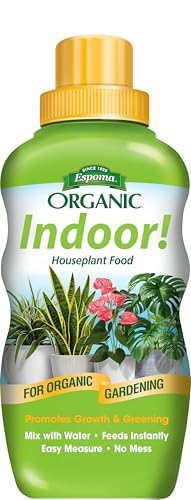
Espoma's organic concentrated indoor plant food occupies a specific niche that a lot of plant owners actively seek: genuinely organic nutrition that's safe around children and pets, with a gentle enough formulation to avoid salt buildup in container soil. The 8 oz. concentrated bottle is deceptively small but packs significant value — you're diluting half a cap per quart of water, meaning this bottle stretches across dozens of feedings. At that dilution rate, you're delivering organic nutrients to your plants without the risk of chemical burn that comes from over-applying synthetic liquid fertilizers.
The formula is designed for large and small plants alike — pothos, fiddle leaf figs, monsteras, snake plants, and palms are all explicitly called out on the label, covering most of the popular houseplant species of 2026. Application is simple: dilute, drench the soil thoroughly, and repeat every two to four weeks. The organic nutrient sources feed the soil biology as well as the plant directly, which matters long-term for container plants that don't get the natural microbial ecosystem of outdoor garden soil. This is a meaningful advantage over purely synthetic formulas — you're building soil health, not just delivering a quick nutrient hit.
Salt buildup is a real problem in containers over time, and organic formulas like Espoma's significantly reduce that risk compared to concentrated synthetics. If you've ever seen white crusty deposits around the rim of a terracotta pot, that's salt accumulation from synthetic fertilizers — Espoma's organic approach avoids this. For parents with toddlers who investigate houseplants or households with curious cats and dogs, the organic, pet-safe certification here is genuinely meaningful, not just marketing language.
Pros:
Cons:

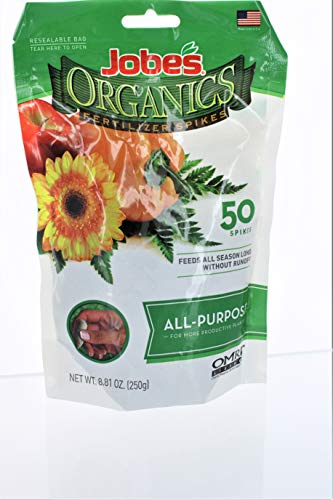
Fertilizer spikes are underrated in the indoor plant world, and Jobe's Organics version is the best execution of the format in the market right now. The 4-4-4 NPK ratio is balanced and moderate — not overly aggressive in any direction — which makes it genuinely safe for a wide range of houseplants without risk of nutrient burn. The 50-count pack is a full season's supply for a modest collection, and at the pre-measured spike format, there's no guesswork about how much you're applying. Push a spike into the soil near the base of the plant, and you're done.
What separates Jobe's Organics from conventional spike products is the inclusion of Biozome — their proprietary microorganism blend featuring the archaea strain that aggressively breaks down organic material in the soil. This accelerates nutrient availability compared to typical organic formulas, bridging the gap between "organic gentle" and "actually fast enough to see results." The product is OMRI listed for organic gardening by the USDA, which is the gold standard certification for organic status. Certified organic means no synthetic chemicals — a meaningful distinction if you're growing edible herbs indoors or if organic gardening principles matter to your household.
The time-release nature of spikes delivers nutrients directly to the root zone, which is where plants actually absorb them. Surface-applied granules or liquid poured over the soil have to migrate down to roots — spikes skip that journey. For established plants in deep containers, this root-zone delivery advantage is real. The trade-off is that spikes can create localized nutrient hotspots if placed too close to roots, so follow the label's positioning guidance. Also see our guide to the best bagged composts if you want to build a complete organic soil regimen alongside spike fertilization.
Pros:
Cons:
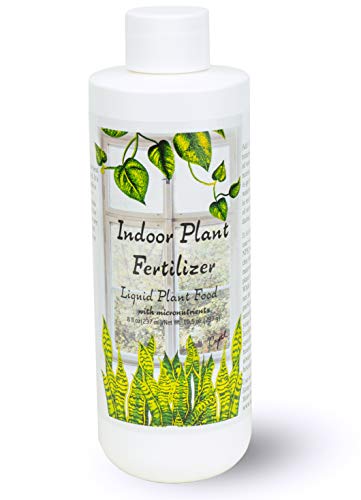
Aquatic Arts has built a following in the houseplant community partly because of their species specificity — they call out an impressive list of compatible plants right on the label: poinsettia, pothos, spider plant, ZZ plant, aglaonema, jade plant, hoya, plumeria, yucca, hostas, heuchera, dracaena, azalea, orchid, and snake plant. This isn't marketing padding; the 3-1-2 NPK ratio (nitrogen-phosphorus-potassium) is deliberately engineered to suit the actual nutrient demands of tropical foliage plants, which tend to need more nitrogen and potassium relative to phosphorus compared to flowering outdoor plants.
The 3-1-2 ratio is sometimes called the "miracle ratio" in houseplant circles for good reason. Most indoor plants are grown primarily for foliage, not flowers, and they need nitrogen for leaf growth and potassium for root strength and disease resistance more urgently than they need phosphorus for blooming. This formula targets that exact demand profile. Application is simple: one teaspoon per two cups of water, which lasts up to a year of regular feeding from a single bottle. The liquid form is immediately plant-available, so you're delivering nutrition in real-time rather than waiting for slow-release mechanisms to activate.
You're getting a formula tuned for how tropical houseplants actually grow, not a generic all-purpose ratio borrowed from outdoor garden formulas. For a mixed collection with five to fifteen different species — which is what most enthusiast plant parents maintain — having one formula that handles them all without switching products is a genuine convenience. The lightweight liquid bottle is also easy to store and handle compared to granule bags or bulky spike containers.
Pros:
Cons:
EarthPods occupy a unique space: they're simultaneously the most effortless fertilizer on this list and one of the most nutritionally comprehensive. The 100-count tube delivers up to 100 individual feedings — one capsule per application, pushed directly into the soil near the plant's base, then water as normal. That's it. The capsule breaks down gradually over time, releasing nutrients in the root zone without any measuring, mixing, or dilution. Five seconds of effort per plant, per feeding. For people who want to do right by their plants without making fertilization a whole project, this format is the answer.
The nutrient profile is what distinguishes EarthPods from other capsule or spike products: 70+ natural minerals and nutrients sourced from worm castings, humic acids, rock minerals, beneficial soil biology, and root-supporting micronutrients. This isn't a basic N-P-K formula — it's a complex organic blend that mimics what healthy, biodiverse outdoor soil provides. Worm castings alone contribute a broad spectrum of micronutrients and beneficial microbial life that synthetic fertilizers simply don't replicate. The product is hand-made in small quantities at a U.S. facility, which the company emphasizes as part of their quality control approach.
Every batch goes through a proprietary bio-organic process refined over 20 years, which sounds like marketing until you look at the depth of the ingredient list. For plants in long-term container situations — a 3-year-old fiddle leaf fig, a mature monstera that's been in the same pot for two seasons — the ongoing contribution to soil biology from these capsules matters more than the immediate nutrient hit. Healthy soil biology prevents compaction, improves water retention, and makes nutrients more bioavailable even between feedings. This is the only product on this list that genuinely builds the soil ecosystem rather than just feeding the plant.
Pros:
Cons:
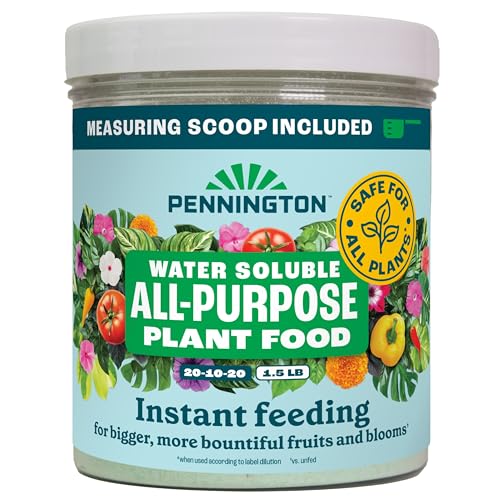
The 20-10-20 NPK ratio on Pennington's water-soluble plant food is one of the most aggressive formulas on this list, and that's exactly the point. The high nitrogen (20) drives vigorous vegetative growth, while the elevated potassium (20) supports strong cellular structure and stress tolerance. The moderate phosphorus (10) is enough for root development without overstimulating it at the expense of foliage. If you're running fast-growing houseplants — pothos that you want climbing a whole wall, monsteras pushing out new leaves every week, herbs you're harvesting regularly — this ratio delivers the nitrogen horsepower to keep up with that growth rate.
The water-soluble powder format comes in a wide-mouth jar with a measuring scoop included, which addresses one of the perennial frustrations with water-soluble fertilizers: getting product out of a narrow-mouth container without spilling. Pennington specifically engineered the wide mouth for this exact reason, and the formula is kept dry and free-flowing so it doesn't clump in storage. The 1.5-lb jar is a solid quantity for regular use, and the powder dissolves cleanly in water without clouding or leaving sediment in your watering can.
For plants under artificial grow lights in 2026 — a setup that's become increasingly common with the proliferation of compact LED plant lights — this high-nitrogen formula pairs exceptionally well. Artificially lit plants often grow faster than window-sill plants and correspondingly have higher nutrient demands. Pennington's formula was designed to feed that level of demand. The main caution: at 20% nitrogen, it's easy to overfeed. Follow the dilution instructions exactly; for sensitive plants, mix at half strength until you've confirmed your particular species tolerates it.
Pros:
Cons:
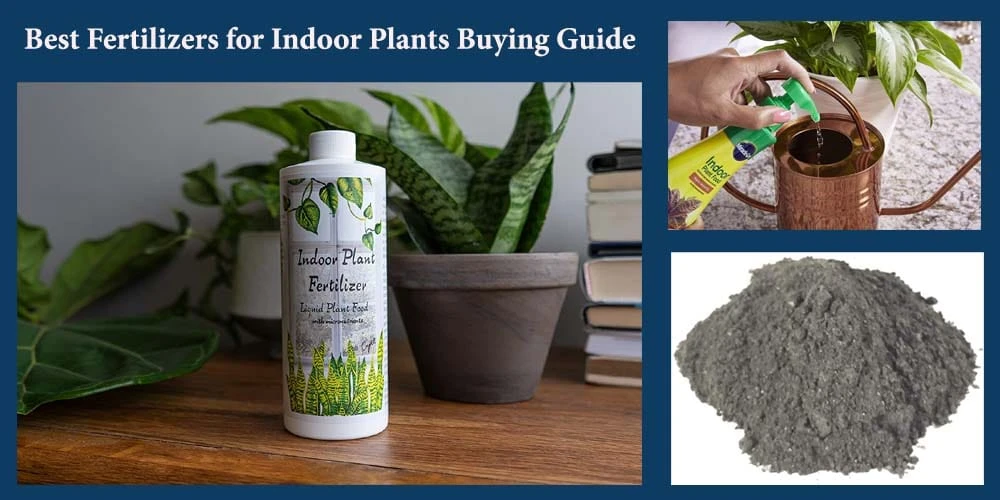
With seven solid options laid out above, the next question is which one is right for your specific situation. The answer depends on four key factors: your delivery format preference, your NPK requirements, your commitment to organic principles, and how much attention you realistically want to give your fertilizer routine. Here's how to work through each one.
This is the first decision to make because it determines your application routine. Liquid fertilizers (Miracle-Gro, Espoma, Aquatic Arts) deliver nutrients immediately and give you the most control over dosing frequency. They're the right choice when you want to see fast results or when a plant is showing deficiency symptoms right now. The trade-off is that you need to stay on a weekly or biweekly schedule.
Granules like Osmocote are the low-maintenance option. One application feeds for up to six months, and you genuinely don't have to think about it again until next season. They're ideal for stable, established plants that aren't in a rapid-growth phase and for plant owners who already have a lot to track. Spikes (Jobe's) and capsules (EarthPods) sit in between: you push them in once, they break down over weeks to months, and root-zone delivery is more targeted than surface-applied granules. Spikes work well for medium to large containers; capsules are excellent for smaller pots where precise root-zone delivery is harder with a full spike.
According to the Wikipedia overview of fertilizers, the three-number NPK designation represents nitrogen (N), phosphorus (P), and potassium (K) percentages by weight. For indoor plants, you generally want to think about what the plant is doing: growing leaves, growing roots, or flowering. Nitrogen drives leaf and stem growth — important for foliage plants like pothos, monsteras, and dracaenas. Phosphorus supports root development and flowering. Potassium improves overall plant resilience and water regulation.
For most houseplants in 2026, a balanced formula (like Jobe's 4-4-4) or a slightly nitrogen-forward formula (like Aquatic Arts' 3-1-2 or Pennington's 20-10-20) will serve you well. The same logic applies when choosing fertilizers for other specific plant types — our guide to the best fertilizers for tomatoes shows how NPK priorities shift when the goal is fruit production rather than foliage.
The organic vs. synthetic debate matters more in container gardening than in open garden beds. In containers, salt buildup from synthetic fertilizers is a real long-term problem — it accumulates in the potting mix and eventually creates toxic soil conditions that impair water uptake. Organic fertilizers (Espoma, Jobe's Organics, EarthPods) essentially don't contribute to salt buildup, and they actively build the microbial communities that keep container soil healthy over multiple seasons.
Synthetic formulas are faster and more immediately effective when a plant needs urgent intervention. If a monstera has gone yellow from nitrogen deficiency and you need results in days, a synthetic liquid is the tool. If you're maintaining a healthy plant for the long haul, organic formats deliver better soil health outcomes. Many experienced plant collectors use both: a slow-release organic background fertilizer plus occasional liquid synthetic boosts during peak growing season.
Not all houseplants have the same appetite. Succulents and cacti need very low NPK concentrations — they evolved in nutrient-poor environments and will burn on formulas designed for tropicals. Fast-growing tropicals like pothos, monsteras, and philodendrons are heavy feeders during spring and summer and can handle more aggressive formulas. Orchids have specific needs: they prefer dilute, frequent feeding rather than concentrated occasional doses. Slow-growing plants like ZZ plants and snake plants need minimal fertilizer — once a month at half strength during the growing season is often enough.
When in doubt, start at half the recommended concentration and observe the plant's response over two weeks. Overfertilization symptoms (burned leaf tips, yellowing, wilting despite moist soil) are common and avoidable with a cautious introduction approach. Under-fertilization just means slower growth — it's recoverable. Over-fertilization can cause permanent root damage that isn't.
Most indoor plants benefit from fertilization every two to four weeks during the active growing season (spring through early fall). In winter, most houseplants slow their growth significantly and should be fertilized once a month at most, or not at all. Slow-release granule and spike formats handle this timing automatically — they release more nutrients when temperatures are warmer and the plant is actively growing, and less when conditions slow down. For liquid fertilizers, simply reduce your application frequency to monthly in winter and resume biweekly feeding when you see new growth emerging in spring.
Yes, and it's more common than under-fertilization. Over-fertilization causes nutrient toxicity and salt buildup in the potting mix, which draws water out of roots through osmosis rather than allowing roots to absorb it. Symptoms include brown, crispy leaf tips, wilting despite moist soil, yellowing lower leaves, and white crusty deposits on the soil surface or pot rim. If you suspect over-fertilization, flush the potting mix thoroughly with plain water several times to leach out excess salts, and hold off on feeding for four to six weeks. Prevention is better: always start at half the recommended concentration with a new fertilizer formula.
For foliage-focused houseplants — pothos, monsteras, philodendrons, dracaenas, ferns, and similar plants grown primarily for their leaves — a nitrogen-forward ratio works best. Look for formulas where nitrogen is the highest number, such as 3-1-2, 20-10-20, or even a balanced 10-10-10 as a starting point. The 3-1-2 ratio (like Aquatic Arts' formula) is widely regarded as particularly well-suited to tropical foliage plants. For flowering houseplants like African violets or peace lilies, you want higher phosphorus during the bloom cycle to support flower production.
Fertilizer spikes are excellent for indoor plants, particularly for established plants in medium to large containers. They deliver nutrients directly to the root zone where plants actually absorb them, eliminating the migration journey that surface-applied granules or liquids must make downward. Pre-measured spikes also eliminate dosing errors entirely. The main limitation is localized nutrient concentration if placed too close to roots — follow label instructions on positioning and use multiple spikes around the perimeter of larger containers rather than one central spike. For very small containers or seedlings, liquid fertilizers give you more precise control over concentration.
In most cases, reduce or eliminate fertilization in winter. Most houseplants enter a semi-dormant or slow-growth phase when daylight hours shorten and indoor temperatures drop slightly. Feeding a dormant or slow-growing plant with the same frequency as an actively growing one leads directly to fertilizer salt buildup without the plant being able to process the nutrients. The exception is plants grown under full-spectrum grow lights on extended photoperiods — if a plant is receiving 14 to 16 hours of artificial light and actively pushing out new growth in January, it still needs feeding. Match your fertilizer schedule to the plant's actual growth rate, not the calendar season.
Quick-release fertilizers (most liquids and water-soluble powders) make nutrients immediately available to plant roots upon application. You'll see results within days, but the nutrients are also leached out of the soil with regular watering within a few weeks. Slow-release fertilizers (granules like Osmocote, organic spikes and capsules) encapsulate nutrients in resin coatings or organic matter that breaks down gradually over weeks or months. They're more forgiving of application frequency mistakes and maintain a steadier baseline nutrient level in the soil. Many experienced plant owners combine both: a slow-release base for consistent background nutrition plus occasional liquid feeding during peak growth for an extra boost.
The right indoor plant fertilizer isn't the most expensive one or the most complex — it's the one that matches how you actually care for your plants, and then consistently delivers the nutrients they need to grow.
 |
 |
 |
 |

About Christina Lopez
Christina Lopez grew up in the scenic city of Mountain View, California. For eighteen ascetic years, she refrained from eating meat until she discovered the exquisite delicacy of chicken thighs. Christina is a city finalist competitive pingpong player, an ocean diver, and an ex-pat in England and Japan. Currently, she is a computer science doctoral student. Christina writes late at night; most of her daytime is spent enchanting her magical herb garden.


Get new FREE Gifts. Or latest free growing e-books from our latest works.
Disable Ad block to reveal all the links. Once done, hit a button below
|
|
|
|
 rinjal