reviewed by Christina Lopez
Espoma Garden-Tone earns the top spot for vegetable gardens in 2026 — its 3-4-4 NPK (nitrogen-phosphorus-potassium) formula with 5% calcium feeds a wider range of crops than nearly any competing organic granular at its price. Choosing the right fertilizer separates a mediocre harvest from a genuinely productive one, and with so many options crowding the market, buyers deserve a straight answer on what actually works. This guide covers seven of the best fertilizers for vegetable gardens, tested and ranked by real-world performance, nutrient profiles, and overall value.
Vegetable gardens are demanding. Unlike ornamental beds that reward patience, edible crops require a steady, balanced supply of macronutrients throughout the season — nitrogen for leafy growth, phosphorus for root development and fruit set, and potassium for overall plant vigor and disease resistance. Organic fertilizers (those derived from plant, animal, or mineral sources) release nutrients slowly, building soil biology over time, while synthetic options act fast but contribute little to long-term soil health. Understanding that tradeoff is the first step toward selecting the right product. Buyers who also grow tomatoes specifically may want to cross-reference the Best Fertilizer for Tomatoes guide for crop-specific recommendations.
The products reviewed here span granular, liquid, and slow-release formats, covering everything from a small raised bed to a large in-ground plot. All are available through the gardening reviews category, alongside companion tools for the complete vegetable garden setup. For those growing fruit alongside vegetables, the Best Fertilizers for Fruit Trees roundup offers additional context on nutrient requirements for woody crops. One insider observation worth noting early: OMRI Listed (Organic Materials Review Institute — an independent nonprofit that certifies products as compliant with organic standards) products dominate this list, which reflects genuine market demand rather than marketing noise.

Contents
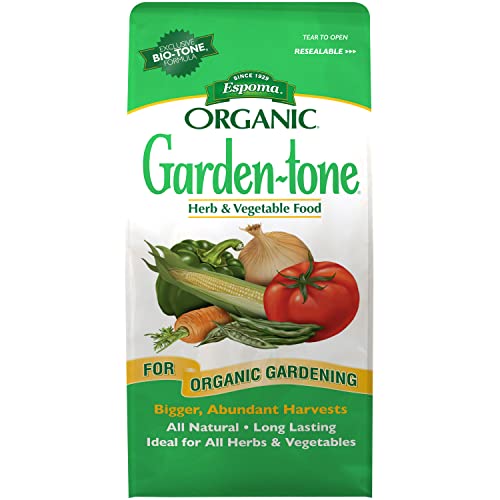




Espoma Garden-Tone has been the go-to granular organic fertilizer for serious vegetable gardeners for decades, and the 2026 formulation continues to justify that reputation. The 3-4-4 NPK ratio, combined with 5% calcium content, addresses one of the most overlooked deficiencies in vegetable beds — calcium-hungry crops like tomatoes, peppers, and squash suffer from blossom-end rot when calcium is absent, and most competing granulars simply ignore this. The proprietary Bio-tone formula adds beneficial microorganisms that establish in the soil and enhance nutrient availability well beyond the initial application period.
Application is genuinely foolproof. Buyers apply Garden-Tone monthly throughout the growing season, working it into the soil around the drip line (the outer edge of the plant canopy, where feeder roots concentrate) or alongside planting rows. No dilution, no measuring concentrate — the granules go straight from the bag to the soil. The formula works equally well for cool-season crops like lettuce, kale, and cabbage and for warm-season producers like melons and beans, making it a single-bag solution for gardeners growing a mixed plot. Independent testing consistently shows improved leaf color, fruit set, and overall yield when compared to unfed control beds, and the lack of sludges or synthetic inputs keeps it safe for certified organic production.
One practical note that experienced users appreciate: Garden-Tone's slow-release mechanism means there is virtually no risk of burning plant roots even when applied generously — a meaningful advantage over faster-acting synthetic competitors that punish any over-application with scorched foliage and stunted growth.
Pros:
Cons:
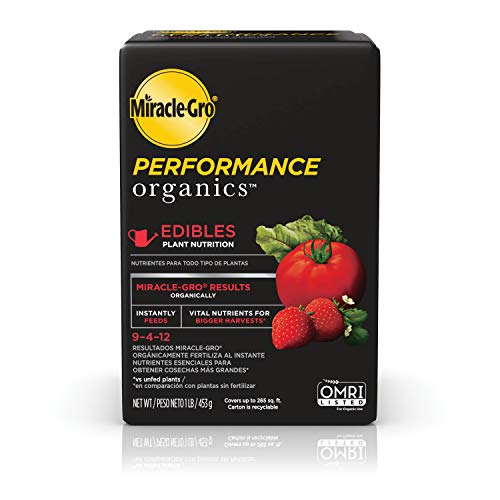
The central selling point of Miracle-Gro Performance Organics Edibles is instant feeding from a certified organic formula — a combination that was genuinely difficult to find before this product category emerged. Most organic fertilizers sacrifice speed for safety, but this granular product dissolves quickly when watered in, delivering nutrients to roots within days rather than weeks. The OMRI Listed certification confirms it meets organic production standards, which matters for home gardeners who care about what ends up in their vegetables and the surrounding ecosystem.
Designed specifically for tomatoes, vegetables, herbs, and fruits, the formula targets the exact crops that home gardeners grow most. Application is compatible with the Miracle-Gro Performance Organics Garden Feeder (a hose-end sprayer sold separately) or a standard watering can, giving buyers flexibility in how they apply it. The granular form disperses evenly across soil surfaces and raised beds without the uneven coverage that plagues some liquid concentrates when applied by hand. Users who need a visible response quickly — for example, plants showing nitrogen deficiency (yellowing of lower leaves) mid-season — find this product delivers that turnaround faster than any competing organic granular.
The 1 lb bag is a meaningful limitation for buyers with larger gardens. Frequent applicators will want to purchase multiple units or move to a larger format, as the recommended feeding schedule depletes a single bag rapidly across a full vegetable plot. That said, for raised-bed and container growers, the 1 lb size is perfectly proportioned.
Pros:
Cons:
Dr. Earth Organic 5 occupies a premium tier in the organic fertilizer market, and the 2-pack format makes a meaningful difference in the price-per-pound calculation. The brand's signature claim — handcrafted from human and feed grade ingredients — is more than marketing language. The formula specifically excludes GMO-infested chicken manure, which is a known source of antibiotic residues in lower-cost organic products, and replaces synthetic shortcuts with multi-minerals, humic acids (carbon-based compounds that improve nutrient retention in soil), proteins, and carbohydrates that feed soil microorganisms directly.
The resulting soil biology improvement is genuinely measurable. Gardeners who apply Dr. Earth Organic 5 consistently over multiple seasons report noticeably improved soil texture, water retention, and drainage — outcomes that trace back to the microbial activity stimulated by the humic acid and protein content. This is particularly valuable for gardeners working with heavy clay soil or sandy soil that struggles to retain nutrients through rain events. The people-and-pet-safe formulation means no waiting period after application before children or animals can return to the garden, which is a practical daily-life advantage that most competing products cannot offer without reservation.
At the 2-pack 4 lb configuration, buyers receive 8 lbs total, which provides enough material for a medium-to-large vegetable garden through a full growing season when applied at the recommended rate. The price point is higher than mass-market options, but the ingredient quality justifies the premium for gardeners who prioritize what goes into their produce.
Pros:
Cons:
Down To Earth's 4-4-4 Vegetable Garden formula earns its spot among the best fertilizers for vegetable gardens through a combination of precise balance, ecological safety, and genuine versatility across crop types. The equal-ratio 4-4-4 NPK profile makes it the easiest formula for beginner gardeners to apply without overthinking — it provides balanced nutrition to whatever vegetables are in the ground without risking over-application of any single nutrient. Non-toxic formulation keeps beneficial insects, pollinators, and pets safe throughout the growing season, which is increasingly important as home gardeners recognize the role of soil biology in productive harvests.
The slow-release mechanism is particularly well engineered in this formulation. Nutrients dissolve gradually as soil microbes break down the organic components, meaning a single application supports plants over an extended period rather than delivering a nutrient surge followed by a deficit. This reduces both feeding frequency and the risk of nutrient leaching (the loss of dissolved nutrients into groundwater during heavy rain), which matters for gardeners on well-drained sandy soils. The 5 lb box is easy to apply directly to soil surfaces or mix into bed preparation, and the box format — rather than a bag — provides better moisture resistance in storage.
Gardeners with wide-ranging plantings appreciate that this formula performs reliably across greens, root vegetables, and fruiting crops without needing to switch products mid-season. For those also managing lawn areas, the principles described here parallel what makes the Best Fertilizer for Grass choices effective — balanced NPK and slow-release delivery.
Pros:
Cons:
Neptune's Harvest Fish & Seaweed stands out as the definitive liquid organic option for vegetable gardens in 2026. The formula combines 75% hydrolyzed fish with 25% seaweed — a ratio developed to deliver balanced, plant-ready nutrients that absorb faster than any granular alternative. Hydrolyzed fish (fish processed at low temperature to preserve amino acids and growth factors rather than heat-processed fish meal) provides a richer nutrient spectrum than simple fish emulsion, while the seaweed component adds natural growth hormones, trace minerals, and compounds that improve stress tolerance in plants under heat or drought conditions.
Application flexibility is a genuine strength of this product. The 2-3-1 NPK liquid dilutes at 1 oz per gallon for soil drenching (pouring directly at the root zone) or foliar feeding (spraying on leaves, where nutrients absorb through stomata for especially fast uptake). Indoor container herbs and vegetables respond exceptionally well to the weekly feed schedule at 1 tablespoon per gallon. Outdoor beds benefit from the every-1-to-2-week regime at 1/8 cup per gallon, and transplants establish notably faster when drenched at planting time compared to unfed transplants. The 36 oz bottle covers a full season for most home gardeners at recommended rates.
One category-wide insider observation: liquid fertilizers consistently outperform granulars in cool soil conditions below 50°F (10°C), when microbial activity that breaks down granular formulas slows significantly. Neptune's Harvest is therefore the preferred option for early-season feeding when soil has not yet warmed, making it an excellent complement to a granular like Espoma for gardeners who want season-long coverage from two products rather than one.
Pros:
Cons:
Jobe's Organics Granular All Purpose fertilizer delivers a 100% organic formulation with a fast-acting profile that is rare among purely organic products. The granular form minimizes wasteful runoff compared to liquid applications on sloped or compacted ground, and the 4 lb bag provides genuine value per dollar for budget-conscious gardeners who do not want to compromise on organic integrity. The fast-acting formula sets Jobe's apart from most granulars in this category — the manufacturer's proprietary Biozome ingredient (a specific blend of beneficial microorganisms) accelerates breakdown of organic material in the soil, making nutrients available faster than standard slow-release granulars without sacrificing safety.
For buyers growing a mixed garden that includes vegetables, flowers, shrubs, and trees, the all-purpose designation is genuinely useful. A single product handles multiple plant types without requiring a separate formula for each section of the garden. Gardeners who also maintain ornamental shrubs like boxwoods can apply the same bag used for vegetables — though highly specialized crops may still benefit from dedicated formulas found in the Best Boxwood Fertilizer guide for optimal results. The production process is engineered to avoid the mess and odor associated with some competing organic granulars, which makes it more suitable for close-quarters urban garden beds where neighbors are nearby.
One limitation to acknowledge honestly: the all-purpose NPK profile is not specifically calibrated for heavy-feeding vegetable crops the way Espoma Garden-Tone or Dr. Earth Organic 5 are. For gardeners growing maximum-yield vegetable beds, Jobe's works best as a supplemental option or for lower-demand crops like herbs and greens rather than as the primary feed for tomatoes, peppers, and squash.
Pros:
Cons:
FoxFarm Happy Frog All Purpose fertilizer takes the most biology-forward approach of any product on this list. Beyond standard NPK nutrition, the formula is packed with beneficial soil microbes and mycorrhizal fungi — mycorrhizae (my-cor-RY-zee) are symbiotic fungi that attach to plant root systems and dramatically expand the effective root surface area, allowing plants to access water and nutrients from a much larger soil volume than roots alone could reach. This is not a marketing claim: the science behind mycorrhizal inoculation is well-documented in peer-reviewed agricultural research and is recognized by organizations including the USDA as a valid soil health strategy.
The OMRI Listed certification places Happy Frog firmly in the certified organic category, and the slow-release delivery means plants receive a sustained, gentle feed over the course of weeks rather than a single nutrient surge. The gentle feeding profile makes this product particularly well-suited for seedlings and recently transplanted starts, which are vulnerable to nutrient burn (the scorching of tender roots and leaves from concentrated fertilizer exposure) that faster-acting products can cause. For ornamental vegetables grown in containers or raised beds where soil biology depletes faster than in-ground beds, the microbial component provides ongoing reinoculation that keeps the growing medium healthy across multiple plantings.
FoxFarm Happy Frog works equally well on ornamentals and fruiting crops, which positions it as the most versatile formula on this list for gardeners who blend edibles and ornamentals in the same beds. The 4 lb bag is the standard available size, adequate for one or two medium raised beds per season.
Pros:
Cons:
The three numbers on every fertilizer label represent the percentage by weight of nitrogen (N), phosphorus (P), and potassium (K) — the three primary macronutrients that determine how a plant grows. Nitrogen drives leafy vegetative growth, phosphorus supports root development and flowering, and potassium governs overall plant health and disease resistance. Vegetable gardens generally perform best with balanced formulas in the 3-4-4 to 4-4-4 range, rather than high-nitrogen lawn fertilizers that push green growth at the expense of fruit and root production. Heavy-feeding fruiting crops like tomatoes and peppers benefit from slightly elevated phosphorus during flowering, which is why products like Espoma Garden-Tone include 5% calcium alongside the core NPK nutrients.
Organic fertilizers derive from plant, animal, or mineral sources and release nutrients as soil microbes break down the organic material. Synthetic fertilizers deliver nutrients in immediately soluble chemical form. Both feed plants, but the mechanisms differ substantially in their long-term effects on soil health. Organic options build soil biology over time — improving structure, water retention, and microbial diversity — while synthetic products deliver fast results but contribute nothing to the underlying soil ecosystem. For edible gardens where buyers consume what they grow, the absence of synthetic residues is a meaningful consideration. The USDA National Organic Program certifies specific products as compliant with organic standards, and OMRI Listed certification provides independent verification that a product qualifies.
Granular fertilizers are the most common format for vegetable gardens because they apply easily, store without degradation, and release nutrients gradually through microbial breakdown. Liquid fertilizers — like Neptune's Harvest — work faster and absorb through both roots and foliage, making them valuable for mid-season rescue feeding and for cool-soil conditions where granular breakdown slows. Many experienced gardeners use both in combination: a granular base at planting for season-long soil nutrition and a liquid supplement for targeted boosts during heavy fruiting periods. Pairing these approaches delivers the broadest coverage without relying on any single product to do everything.
Applying fertilizer without knowing what the soil already contains is one of the most common and costly mistakes in vegetable gardening. Excess phosphorus, for example, locks out zinc and iron, causing deficiency symptoms in heavily fertilized beds even when nutrients are present. A basic soil test — available through county extension services for under $20 — identifies pH, existing nutrient levels, and organic matter content, allowing buyers to select a fertilizer that corrects actual deficiencies rather than adding to existing excesses. Following label application rates precisely is equally important — more fertilizer does not mean more production, and over-application of even organic products can create nutrient imbalances that reduce yields and damage soil biology.
Espoma Organic Garden-Tone 3-4-4 is the best overall fertilizer for most vegetable gardens in 2026. Its balanced NPK with 5% calcium, Bio-tone microorganism blend, and compatibility with both cool- and warm-season crops make it the most versatile and reliable granular organic formula available. Buyers growing primarily tomatoes or peppers should also consider Dr. Earth Organic 5 for its richer ingredient profile and soil-building properties.
Granular organic fertilizers like Espoma Garden-Tone should be applied monthly throughout the growing season. Liquid formulas like Neptune's Harvest apply more frequently — every one to two weeks for outdoor beds and weekly for indoor containers. Following the specific product label is important, as application rates vary by formula concentration and NPK strength. Over-feeding does not increase yields and can cause nutrient imbalances that harm plants.
For vegetable gardens specifically, organic fertilizers offer significant advantages. They build soil biology over multiple seasons, eliminate the risk of synthetic residue in produce, protect beneficial insects and soil microorganisms, and reduce nutrient leaching into groundwater. Synthetic fertilizers act faster but deplete soil health over time and carry a higher burn risk. Most experienced vegetable gardeners and organic certification programs recommend organic formulas for edible crops.
Yes — over-application of any fertilizer, including organic products, can cause root burn and foliar scorch. Synthetic fertilizers carry a substantially higher burn risk because nutrients dissolve immediately on contact with soil moisture. Organic slow-release granulars like Espoma Garden-Tone and FoxFarm Happy Frog present minimal burn risk at recommended rates. Liquid concentrates require precise dilution; applying undiluted liquid fertilizer directly to roots or foliage causes rapid damage.
A balanced ratio in the 3-4-4 to 4-4-4 range works best for most mixed vegetable gardens. This profile supports vigorous vegetative growth without over-stimulating nitrogen at the expense of flowering and fruiting. Fruiting crops like tomatoes and peppers benefit from slightly higher phosphorus during flower development. Leafy greens tolerate and benefit from slightly higher nitrogen ratios. Avoiding high-nitrogen lawn fertilizers on vegetable beds prevents excessive leaf growth with poor fruit production.
The most effective timing for granular organic fertilizers is at bed preparation before planting, then monthly throughout the growing season. Liquid fertilizers apply at transplanting to support root establishment, then every one to two weeks during active growth. Avoid applying any fertilizer during drought stress without watering immediately after — dry soil concentrates nutrient salts and increases burn risk. In 2026, with extended growing seasons in many regions, a final late-season application in late summer supports fall crops through harvest.
 |
 |
 |
 |

About Christina Lopez
Christina Lopez grew up in the scenic city of Mountain View, California. For eighteen ascetic years, she refrained from eating meat until she discovered the exquisite delicacy of chicken thighs. Christina is a city finalist competitive pingpong player, an ocean diver, and an ex-pat in England and Japan. Currently, she is a computer science doctoral student. Christina writes late at night; most of her daytime is spent enchanting her magical herb garden.


Get new FREE Gifts. Or latest free growing e-books from our latest works.
Disable Ad block to reveal all the links. Once done, hit a button below
|
|
|
|
 rinjal