reviewed by Truman Perkins
If you want a fertilizer that greens up your lawn without the risk of burning it, Milorganite is the safest, most consistent choice in 2026. It works on nearly every grass type, and you can apply it without timing the weather perfectly.
Grass needs three core nutrients to thrive: nitrogen (N), phosphorus (P), and potassium (K) — those three numbers printed on every bag. Nitrogen drives green, leafy growth. Phosphorus builds deep roots. Potassium helps your lawn handle heat, drought, and foot traffic. Pick the wrong fertilizer and you'll end up with burned stripes, patchy growth, or wasted product. Pick the right one and your lawn transforms fast.
We've put together this guide to help you find the best fertilizer for grass in 2026. Whether your lawn is thin, yellow, starting from seed, or just needs a seasonal boost, one of these seven picks is the right match. Browse our full gardening reviews for more lawn care and garden product recommendations while you're here.

Contents
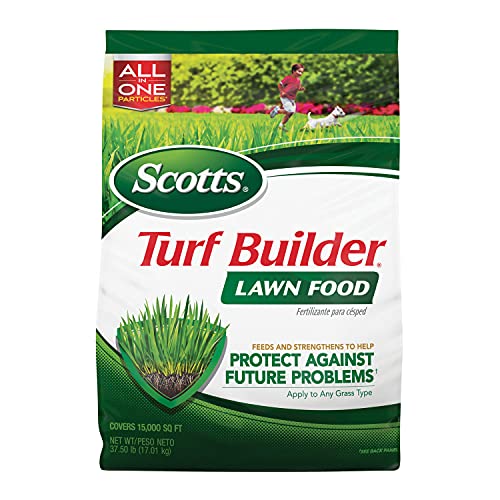





If you have a large northern lawn — think cool-season grasses like bluegrass, fescue, or ryegrass — this Scotts formula is built for you. One 15,000 sq. ft. bag covers a serious amount of ground. That alone makes it one of the most cost-effective options you'll find for big yards. You apply it to a wet or dry lawn, spread it evenly, and the nutrients go to work building stronger, deeper roots.
The formula is designed specifically for northern climates where lawns go dormant in winter and need a strong seasonal recharge. It improves your lawn's ability to absorb water and nutrients compared to an unfed lawn. Think of it as giving your grass a full meal after a long winter fast. The root-strengthening effect is one of this product's biggest advantages — a deeper root system means your lawn handles summer stress and drought better through the season.
Apply it with a broadcast or drop spreader and water it in if it hasn't rained. It's a granular formula, so it's easy to handle and store. For really large yards, this bag delivers serious value per square foot.
Pros:
Cons:
Milorganite is the fertilizer you reach for when you don't want to stress about timing. This is the safest fertilizer on this list for beginners and experienced lawn owners alike. The 6-4-0 formula (6% nitrogen, 4% phosphorus, no potassium) releases slowly, which means your lawn gets steady nutrition over weeks — not a sudden surge that burns turf. You can apply it in summer heat without worrying about scorching your grass.
The iron content is what separates Milorganite from basic nitrogen fertilizers. Iron is what gives grass that deep, vibrant green you see on golf courses. Milorganite delivers organically complexed iron throughout the feeding period — and here's the important part — it won't stain your concrete or driveway the way iron salts in synthetic fertilizers can. Apply it on the lawn, and the iron stays where you put it. No orange stains on your sidewalk.
It's also an organic product made from heat-dried microbes. That means virtually no salts, which is exactly why it doesn't burn. Use it on lawns, flowers, shrubs, and garden beds. The 32 lb. bag is versatile and lasts a solid season on a typical suburban lawn. For warm-season grasses like Bermuda, check out our guide on the best fertilizer for Bermuda grass for more tailored options.
Pros:
Cons:
This is what lawn professionals use, and now you can get it too. The Andersons PGF Complete 16-4-8 is a balanced, complete fertilizer with quick- and slow-release nitrogen, iron, micronutrients, and Humic DG (humic acid in a dispersible granule). Humic acid improves soil structure, enhances nutrient uptake, and stimulates root growth at the microbial level. It's the kind of ingredient that makes a measurable difference over time.
The super-fine granules set this product apart from standard fertilizers. You get twice the number of particles per square foot compared to typical granular products. That means more even coverage, fewer missed spots, and less risk of striping. The 16-4-8 NPK ratio gives your lawn a strong hit of nitrogen upfront, while the slow-release component continues feeding for up to 8 weeks. One application goes a long way.
The 40 lb. bag covers a large area, making the per-square-foot cost very competitive for a professional-grade product. If you're serious about your lawn — or you want the same results your local lawn service delivers — this is the fertilizer to use in 2026.
Pros:
Cons:
Want green grass in a hurry? Scotts Green Max is built for speed. You'll see deep greening in as little as 3 days — that's faster than almost anything else on this list. It works through a dual-action formula that combines standard lawn fertilizer with extra iron supplementation. Nitrogen feeds growth, iron accelerates color. Together they deliver fast, visible results.
The 5,000 sq. ft. coverage makes this a great pick for average-sized suburban lawns. It's granular, easy to spread, and Scotts guarantees it won't stain your driveway or sidewalks when used as directed. If you have a lawn that's gone dull and yellow mid-season, or you need it to look good before an outdoor event, this is the product that delivers on a short timeline.
This isn't a slow-build soil health product. It's a performance fertilizer for when you need visible results fast. Pair it with good watering practices and you'll notice a clear difference within the first week of application.
Pros:
Cons:
If you're starting a new lawn, laying sod, or repairing bare patches, this liquid booster from Simple Lawn Solutions is your go-to product. It comes in a ready-to-use 32 oz. hose-end sprayer, so there's no mixing, no measuring, no spreader needed. Just attach it to your hose and spray. The concentrated formula contains nitrogen, phosphorus, and humic acid — a combination specifically designed to accelerate both vertical and lateral grass growth.
Humic acid (a natural organic compound found in soil) helps roots absorb nutrients more efficiently. This is especially valuable for new sod and freshly seeded areas where root establishment is the priority. This product is the best pick for lawn repair and establishment in 2026. It works on any grass type — cool-season or warm-season — which gives it versatility the granular products on this list don't have.
The liquid delivery also means nutrients reach the root zone faster than granular applications. For nutrient-deficient lawns or thin spots that need a quick recovery, this booster gives your grass the jumpstart it needs without overcomplicating the application process.
Pros:
Cons:
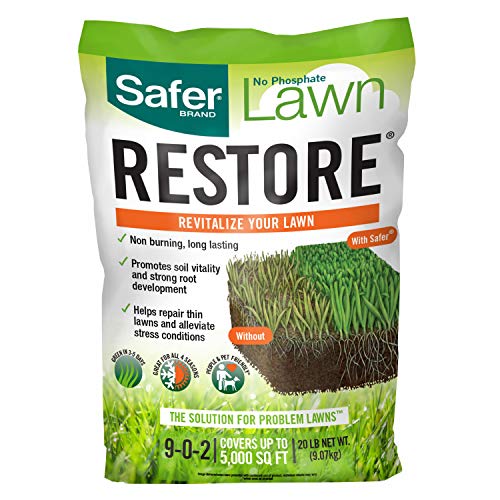
Safer Brand Lawn Restore takes a soil-first approach to lawn care. The 9-0-2 formula (high nitrogen, no phosphorus, light potassium) is made from natural ingredients that feed your grass while actively improving the microbial environment in your soil. Healthier soil means healthier roots. Healthier roots mean thicker, more resilient turf over time. This isn't a quick-fix product — it's a long-term lawn investment.
Results start showing in 3 to 5 days, which is faster than most organic formulas. The non-burning formula is one of the safest on this list, and it won't strip nutrients from your soil the way some high-salt synthetic fertilizers can. That makes it especially valuable in summer when heat stress turns lawns thin and brown. One 5,000 sq. ft. bag revitalizes depleted turf without risking damage.
If your lawn has been through chemical fertilizer cycles for years and the soil feels compacted or lifeless, this is the product to break that cycle. Pair it with aeration and overseeding for best results in fall. Managing weeds alongside fertilization? Check out our guide to the best crabgrass killers so you're treating both problems at once.
Pros:
Cons:
Espoma's Spring Lawn Booster is the top organic-only choice in 2026 for homeowners who want to avoid synthetic chemicals entirely. The 8-0-0 formula focuses entirely on nitrogen — specifically the slow-release kind — enhanced with extra calcium. Calcium is often overlooked in lawn care, but it plays an important role in cell wall strength and root development. This is the kind of detail that separates Espoma from generic organic products.
The formula uses a rich blend of natural ingredients with no sludges or toxic additives. It won't burn your lawn and it won't leach out of the soil when it rains, which is a common problem with fast-release synthetic fertilizers. Slow-release nitrogen from organic sources feeds your lawn over an extended period, building deep green color that holds up week after week rather than spiking and fading.
This product works on both cool-season and warm-season grasses — fescue, bluegrass, ryegrass, St. Augustine, and zoysia are all good fits. Apply it in early spring with a broadcast or drop spreader. The 30 lb. bag covers up to 5,000 sq. ft., and it fits naturally into an organic lawn care program. If you want to understand how to apply granular fertilizers evenly without streaks, a quality spreader makes a big difference — see our broadcast spreader reviews for the best options.
Pros:
Cons:
Every fertilizer bag displays three numbers — the NPK ratio. These stand for nitrogen (N), phosphorus (P), and potassium (K). Here's what each one does for your lawn:
For an established lawn with healthy soil, a high-nitrogen formula like 16-4-8 or 9-0-2 is usually all you need. For new grass or bare patches, look for a balanced formula or a high-phosphorus starter fertilizer. According to the Wikipedia overview of fertilizers, NPK ratio selection is the single most important factor in matching a product to your soil and plant needs.
This is one of the most important decisions you'll make when choosing a fertilizer. Here's the difference:
The best fertilizers — like The Andersons PGF Complete — combine both. You get the quick green-up from fast-release, plus the sustained feeding from slow-release. That's the most effective approach for most lawns in 2026.
Both work. The right choice depends on your priorities:
If you have children or pets using the lawn regularly, organic or no-burn formulas like Milorganite are the safer choice. If you're chasing maximum performance and you're careful about application rates, synthetic gives you more control.
Not all fertilizers work the same on every grass. Keep these rules in mind:
If you're specifically feeding a Bermuda grass lawn, you'll want to look at formulas engineered for warm-season performance — our guide on the best fertilizer for Bermuda grass covers that in detail.
The best overall fertilizer for grass in 2026 is Milorganite for its no-burn, all-season versatility. For the fastest color results, use Scotts Green Max. For large northern lawns, Scotts Turf Builder Northern is the top value pick. For professional-level results, The Andersons PGF Complete 16-4-8 with Humic is hard to beat.
Timing depends on your grass type. Cool-season grasses (fescue, bluegrass, ryegrass) respond best to fertilization in early fall and late spring. Warm-season grasses (Bermuda, zoysia, St. Augustine) should be fertilized in late spring through midsummer when they're actively growing. Avoid fertilizing any lawn when it's dormant or heat-stressed — you'll waste product and risk burning the turf.
NPK stands for nitrogen (N), phosphorus (P), and potassium (K) — the three primary macronutrients grass needs to grow. The numbers on the bag (like 16-4-8 or 6-4-0) show the percentage of each nutrient by weight. Nitrogen drives green leafy growth, phosphorus builds roots, and potassium strengthens the grass against stress and disease.
Yes, but choose carefully. High-nitrogen synthetic fertilizers applied in extreme heat can burn stressed, dry grass. If you need to fertilize in summer, use a slow-release or organic formula like Milorganite or Safer Brand Lawn Restore — both are specifically formulated to be safe in hot, dry conditions. Always water your lawn well after applying any fertilizer in summer.
Most lawns benefit from 2 to 4 fertilizer applications per year. A basic program includes one spring feeding, one summer feeding, and one fall feeding. Slow-release formulas like Milorganite can be applied every 6 to 8 weeks. Fast-release synthetic formulas may need reapplication every 4 to 6 weeks. Always follow the label instructions — more fertilizer is not always better and over-application causes more problems than it solves.
It depends on your goals. Organic fertilizers are safer for kids, pets, and the environment. They improve soil health over time and carry almost no burn risk. Synthetic fertilizers deliver faster, more predictable results and cost less per application. The best approach for most homeowners is to use organic formulas for routine feeding and save synthetic products for when fast results are needed — like before an event or after a hard summer.
 |
 |
 |
 |

About Truman Perkins
Truman Perkins is a Detroit-based SEO consultant who's been in the business for over a decade. He got his start helping friends and clients get their websites off the ground, and he continues to do so today. In his free time, Truman enjoys learning and writing about gardening - something he believes is a natural stress reliever. He lives with his wife, Jenny, and their twins in Detroit.


Get new FREE Gifts. Or latest free growing e-books from our latest works.
Disable Ad block to reveal all the links. Once done, hit a button below
|
|
|
|
 rinjal