reviewed by Truman Perkins
If you need one fertilizer that delivers dense, dark-green Bermuda grass from late spring through the dog days of summer, The Andersons Deep Green 24-0-11 earns its reputation — the combination of 2% iron, manganese, and a dual quick-and-slow-release nitrogen formula keeps color consistent for up to eight weeks without a single scorched blade.
Bermuda grass is a warm-season, sun-loving turf that rewards aggressive feeding but punishes the wrong formula. It grows fast, recovers well from wear, and handles heat better than most grass types — but it also demands more nitrogen than cool-season lawns, benefits strongly from iron supplementation, and responds noticeably to potassium during drought stress. Picking the right fertilizer isn't just about grabbing the highest nitrogen number off the shelf. Timing, particle quality, release speed, and micronutrient content all play into whether your lawn stays thick and green or fades to yellow by August.
This guide covers seven of the best fertilizers for Bermuda grass in 2026 — from budget-friendly bags sized for small suburban yards to professional-grade blends built for larger properties. You'll find honest reviews of each product, a practical buying guide, and answers to the questions homeowners ask most. If you're also dealing with unwanted competition in your lawn, check our review of the best crabgrass killers before you start your fertilization program. And for more lawn and garden product picks, browse our full gardening reviews section.

Contents



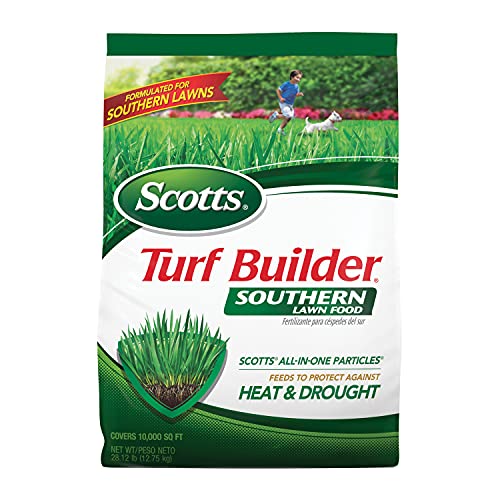




Scotts has been a household name in lawn care for decades, and the Southern Lawn Food formula shows why the brand keeps earning loyal customers. This product is specifically engineered for the challenges that warm-season grasses like Bermuda face in the South — heat stress, compacted soils, and the relentless cycle of summer drought and rain. The Scotts All-in-One Particles are designed to break down evenly across the lawn surface, so you don't end up with dark-green striping next to pale patches — a common problem with lower-quality granulars that have inconsistent particle size.
The formula improves your lawn's ability to absorb both water and nutrients compared to an unfed lawn, which is particularly useful for Bermuda grass established in sandy Southern soils that drain quickly and leach nutrients fast. You'll notice an improvement in turf density and color within two to three weeks of application when conditions are right. At 5,000 square feet of coverage, this bag is sized for the average suburban backyard — if you're managing a larger property, you'll want to look at the 10,000-square-foot version below or consider a higher-coverage option. Apply with a quality spreader for best results; for spreader recommendations, see our guide to the best broadcast spreaders.
One thing to keep in mind: this is a complete fertilizer that's designed for seasonal use rather than weekly spot applications. Scotts recommends feeding no more than four times per year, so if you're looking for something to use on a frequent maintenance schedule, a slow-release professional blend may suit your workflow better. That said, for homeowners who want a reliable, straightforward Southern lawn fertilizer that doesn't require a lot of measuring or mixing, this bag delivers consistent results season after season.
Pros:
Cons:
This is essentially the same trusted Southern Turf Builder formula in a larger bag, and if your Bermuda lawn runs anywhere from 6,000 to 10,000 square feet, this is the more cost-effective choice over buying two smaller bags. The All-in-One Particle technology carries over directly — you're getting the same even distribution and the same focus on heat and drought tolerance that makes the smaller bag popular. For a mid-size lawn in Georgia, Alabama, Texas, or anywhere else Bermuda is king, a single bag handles your entire yard in one pass.
The feeding benefits are identical to the 5,000-square-foot version: improved nutrient absorption, better water retention at the root zone, and enhanced resistance to the kind of heat stress that turns Bermuda lawns brown in late July and August. The difference here is purely practical — you save on per-application cost and you're making fewer trips to the store across the season. If you're running a spreader anyway, handling a larger bag is minimal extra effort for meaningful savings over the course of a full growing season.
This product also pairs well with a pre-emergent or weed control program. Keep in mind that Scotts Southern Turf Builder is a fertilizer-only formula — no herbicide is included — so if weeds are already present, you'll want to address that separately before or after application. Overall, this is a dependable, no-fuss fertilizer for homeowners who want a brand they can trust on a lawn that's already in decent shape.
Pros:
Cons:
This is the product that lawn care enthusiasts keep coming back to when they want Bermuda grass that looks like it belongs on a golf course. The Andersons Deep Green 24-0-11 is a professional-grade formulation, and the label tells you exactly why — 2% iron and manganese work together to intensify chlorophyll production, which directly drives that dark, saturated green color you can't achieve with nitrogen alone. If you've ever noticed that your lawn looks green but somehow flat or dull, iron deficiency is usually the culprit. This product addresses that directly.
The 24-0-11 NPK ratio is well-matched to Bermuda grass needs: high nitrogen to support rapid shoot growth and recovery, zero phosphorus (appropriate for most established Southern lawns where phosphorus is already sufficient or restricted by local regulations), and an 11% potassium level that supports cell wall integrity, drought tolerance, and disease resistance. The dual quick-and-slow-release nitrogen system delivers an immediate green-up within days while extending feeding for up to eight weeks — meaning you're not watching your lawn fade after two weeks and scrambling for another application. For a 40-pound bag covering 10,000 square feet, the per-application cost is competitive with professional-service alternatives.
The Andersons is known among turf professionals for its particle quality, and you'll notice the difference immediately when you pour this into a spreader versus a standard consumer-grade granular. The particles are uniform, dense, and calibrated to spread consistently. Hot summer conditions are where this product genuinely earns its place — while other fertilizers struggle to prevent yellowing during peak heat, the iron and manganese content in Deep Green 24-0-11 keeps Bermuda turf from showing the stress symptoms that otherwise creep in during July and August.
Pros:
Cons:
Where the Deep Green 24-0-11 is built around color and visual impact, the PGF 16-0-8 with Humic DG takes a different approach — it's designed to improve the soil and root system beneath your Bermuda grass, with above-ground results that follow naturally. The headline ingredient here is Humic DG (Dispersing Granule), a form of humic acid that dissolves rapidly when watered in and penetrates deep into the soil profile. Humic acid improves cation exchange capacity, helps sandy soils hold nutrients and moisture longer, and stimulates microbial activity that makes existing nutrients more available to your grass's root system.
The 16-0-8 NPK ratio is moderate and balanced — lower nitrogen than the Deep Green or Yard Mastery options, but that's intentional. This product is designed to be used as part of a systematic program rather than as a single-application color booster. The phosphorus-free formula respects the reality that most Southern soils already test high in phosphorus, and adding more can interfere with iron and zinc uptake. The potassium level at 8% is meaningful for stress resistance without pushing the ratio too aggressively. Quick- and slow-release nitrogen combination provides eight weeks of feeding, same as the Deep Green line.
The super-fine particle technology means you get twice the particle density per square foot compared to standard granulars — more contact points with the soil surface translates directly to more even nutrient uptake. If you've struggled with patchy green-up in the past, this particle size difference can actually solve the problem without you changing anything else about your application routine. At 10,000 square feet per 40-pound bag, coverage is solid for the price. This is a great choice if you're building a long-term lawn program rather than chasing a quick visual fix.
Pros:
Cons:
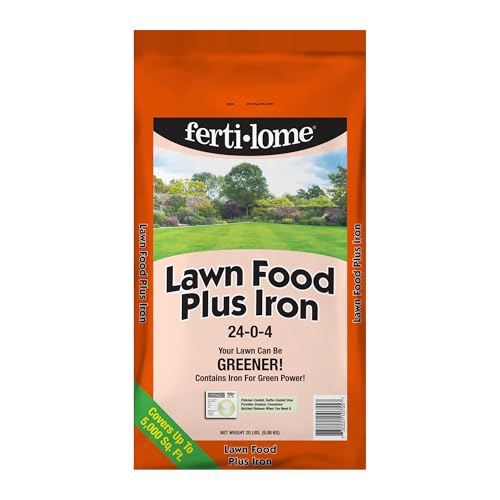
Ferti-Lome is a brand that doesn't get the same marketing spotlight as Scotts or The Andersons, but it has a devoted following among homeowners and independent lawn care pros who care more about results than brand recognition. The Lawn Food Plus Iron 24-0-4 formula is straightforward — high nitrogen at 24%, a modest potassium contribution at 4%, and added iron for that color punch that straight NPK fertilizers can't deliver on their own. The combination produces fast, visible greening within days of application, making it one of the best options when your Bermuda lawn is coming out of winter dormancy and you need to jumpstart growth quickly in spring.
At 5,000 square feet per 20-pound bag, this product is sized for smaller lawns or for targeted applications in specific lawn areas. The price point is genuinely affordable compared to professional-grade products, which makes it a strong choice if you're fertilizing frequently throughout the growing season and don't want to spend top dollar every time. The 24% nitrogen is mostly fast-release, which means you'll see quick results but you'll need to reapply more often than with a slow-release dominant product — roughly every 6 to 8 weeks during peak growing season for Bermuda grass.
One practical note: because the nitrogen here acts quickly, you need to water this product in thoroughly after application and avoid applying during extreme heat or on drought-stressed turf. Quick-release nitrogen on dry, stressed Bermuda grass can tip toward fertilizer burn if conditions aren't right. Time your application for when rain is expected or plan to run your irrigation system the same day. When you apply it correctly, the results are hard to argue with — Bermuda grass responds fast to this kind of immediate nitrogen hit, and the iron content keeps the color from looking washed out in that first flush of growth.
Pros:
Cons:
Yard Mastery has built a following in the online lawn care community, particularly among the "lawn nerds" who obsess over soil biology and micronutrient programs. The Flagship 24-0-6 fertilizer represents that philosophy well — it's not just feeding your Bermuda grass, it's feeding the soil ecosystem that supports your grass. Bio-Nite is the standout ingredient here: it's a stabilized chicken manure-based nitrogen source that feeds soil microbes while releasing nutrients steadily. The result is a more biologically active soil over time, which makes your lawn more self-sufficient and responsive to each subsequent application.
The NPK ratio of 24-0-6 makes sense for Bermuda: strong nitrogen for growth and color, zero phosphorus for responsible application on established turf, and 6% potassium for stress tolerance. The 3% iron content delivers meaningful color enhancement — not as high as Deep Green's 2% iron plus manganese combination, but enough to keep your Bermuda from yellowing under summer heat. The 45-pound bag covering 15,000 square feet is genuinely competitive from a cost-per-square-foot standpoint, making this one of the better values for homeowners managing larger properties. The 24% slow-release nitrogen means you're getting a steady, sustained feed that won't spike your growth unevenly or put excess nitrogen into groundwater.
The micronutrient package beyond iron is another differentiator — most standard consumer fertilizers stop at NPK and iron. Yard Mastery includes additional micronutrients that address deficiencies that often go undiagnosed in Southern soils. If your lawn has been on the same fertilizer program for years and you're getting diminishing returns, switching to a product like this for one or two cycles can reset the soil chemistry and get your Bermuda grass responding the way it used to. The one real drawback is price: this is a premium product, and the cost reflects it. But if you're maintaining a large Bermuda lawn and you're serious about long-term turf health, it earns its keep.
Pros:
Cons:
Sunday has positioned itself as a modern, science-backed lawn care brand with an accessible identity, and the Green Machine 30-0-5 granular fertilizer is their flagship product for serious lawn feeding. The NPK ratio of 30-0-5 is aggressive on nitrogen — 30% is high even by warm-season grass standards — but the key here is the slow-release formulation that spreads that nitrogen delivery over up to 120 days. That's four full months of feeding from a single 12-pound bag, which is a compelling proposition if you'd rather set your fertilizer schedule and forget it for a season rather than reapplying every six weeks.
The organic matter additions set this product apart from purely synthetic options. Humic acid improves nutrient uptake efficiency and water dispersal at the root zone — which is genuinely valuable for Bermuda grass in compacted or clay-heavy soils. Wood ash and leaf compost add carbon and slow-acting nutrients that support microbial activity over the same 120-day window. This isn't just nitrogen for the grass; it's feeding the living system in your soil at the same time. For Bermuda lawns that have been on heavy synthetic programs for years, adding this organic matter layer can make a noticeable difference in turf resilience.
The practical limitation is coverage: 12 pounds covers only 4,000 square feet, which is smaller than most of the alternatives in this lineup. If your lawn is larger, you'll need multiple bags, and the cost can add up quickly compared to higher-coverage products. That said, for a smaller Bermuda lawn where you want a low-maintenance, organically enriched feeding program, the 120-day release window is hard to match. Pair it with supplemental iron applications during midsummer if you find color fading — the 30-0-5 formula doesn't include an iron component, which is the one gap in an otherwise strong product. You can learn more about how fertilizer chemistry works to better understand why iron matters independently of NPK ratios.
Pros:
Cons:
Before you commit to a fertilizer, it helps to understand what Bermuda grass actually needs and why the products above are structured the way they are. Bermuda grass (Cynodon dactylon) is a warm-season perennial that thrives in USDA zones 7 through 10. It enters dormancy when temperatures drop below 50°F and comes roaring back once the soil warms above 65°F in spring. Your fertilizer program should work with this growth cycle — feeding when the grass is actively growing and withholding input during dormancy. Here's what to evaluate before you buy in 2026.
Nitrogen (N), phosphorus (P), and potassium (K) are the three primary macronutrients in any fertilizer, listed in that order on every bag you'll see. Bermuda grass needs a nitrogen-dominant formula — look for an N value between 16 and 32 for most applications. Phosphorus is generally not needed on established Southern lawns, which is why you'll notice many professional-grade fertilizers in this list are phosphorus-free (middle number is zero). This isn't a gimmick — it reflects the reality that most Southern soils test adequate to high in phosphorus, and adding more can lock out iron and zinc uptake.
Potassium in the 6–11% range supports drought tolerance, disease resistance, and cell wall strength — all critical for Bermuda grass heading into the stress of a Southern summer. If your lawn is in a hot, sandy region with fast-draining soil, lean toward a product with higher potassium numbers like the Deep Green 24-0-11 or the Yard Mastery 24-0-6.
This is one of the most consequential decisions in your fertilizer selection. Quick-release nitrogen is water-soluble and immediately available to the grass — you'll see results within days, but the feeding window is short (typically 2–4 weeks) and the risk of burning is higher if you over-apply or apply to dry turf. Slow-release nitrogen feeds steadily over 6–12 weeks, produces more even growth, reduces the risk of burn, and is generally better for the environment because less nitrogen leaches into groundwater.
Most of the professional-grade products in this list use a dual system — quick-release for immediate green-up, slow-release for sustained feeding. This is the gold standard for Bermuda grass because you get the fast response you want at the start while the slow-release component keeps the lawn fed through the feeding window. If you're only applying fertilizer two or three times per year, prioritize slow-release or dual-release formulas. If you're on a frequent 4–6 week schedule, a predominantly quick-release product like the Ferti-Lome can work well.
Bermuda grass is notably responsive to iron. If your lawn looks green but lacks that deep, rich color, iron deficiency is often the reason — particularly in alkaline soils where iron becomes chemically unavailable even when it's present in the soil. Products like The Andersons Deep Green 24-0-11 (2% iron + manganese) and Yard Mastery 24-0-6 (3% iron) address this directly. The difference between a lawn that looks okay and one that draws compliments from neighbors is often just the iron content in the fertilizer program.
Manganese works synergistically with iron to support chlorophyll production. If you're in a region where your soil pH tends to run high (above 7.0), both iron and manganese can become locked out even with adequate soil levels, making foliar-available forms in your granular fertilizer particularly valuable. Beyond micronutrients, soil amendments like humic acid (as in the Andersons PGF 16-0-8) and organic matter (as in the Sunday Green Machine) can improve the overall nutrient availability in your soil, making every fertilizer application more efficient over time. For more on improving your soil foundation, see our bagged compost reviews for supplemental organic matter options.
Matching the bag's coverage area to your lawn size prevents both waste and underfunding. Measure your lawn before you buy — a 10,000-square-foot bag applied to a 5,000-square-foot lawn at the correct rate will last two applications, which is fine. But applying double the recommended rate to stretch a bag further causes burn and nutrient imbalance. Always follow the label's spreader settings.
Particle quality matters more than most homeowners realize. Uniform, dense granules spread evenly and break down consistently. Cheaper fertilizers with inconsistent particle sizes lead to uneven feeding — the dark stripes and pale patches that indicate some areas received too much and others too little. Professional-grade products from The Andersons address this specifically with their calibrated particle technology. For timing, fertilize Bermuda grass after full green-up in spring — typically when daytime temperatures are consistently above 70°F — and make your final application at least six weeks before your expected first frost date to avoid pushing tender growth that won't harden off before dormancy.
Bermuda grass thrives with a nitrogen-dominant formula. A ratio like 24-0-11, 24-0-6, or 16-0-8 covers most established lawn applications well — high nitrogen for growth, zero or very low phosphorus (most Southern soils don't need more), and meaningful potassium for stress resistance. Avoid high-phosphorus starter fertilizers on established Bermuda unless a soil test specifically identifies a phosphorus deficiency.
Start your first application once Bermuda grass has fully greened up and soil temperatures are consistently above 65°F — in most Southern regions, that's late April through May. Continue feeding every 6–8 weeks through the growing season, then stop roughly six weeks before your first expected frost. Fertilizing too late in fall pushes growth that won't harden before dormancy and can weaken the turf over winter.
Most Bermuda lawns benefit from 3–5 fertilizer applications per growing season. The exact frequency depends on your product choice — quick-release formulas need reapplication every 4–6 weeks, while slow-release or dual-release products like those from The Andersons or Sunday Green Machine can stretch to 8–12 weeks between applications. A soil test once a year helps you calibrate exactly what your lawn needs rather than guessing.
Yes, and the consequences are real. Too much nitrogen at once causes fertilizer burn — brown, scorched patches that take weeks to recover. Over-fertilizing can also push excessive leafy growth at the expense of root development, making your lawn less drought-tolerant. Excess nitrogen and phosphorus that aren't taken up by the grass can leach into groundwater or run off into nearby water bodies, creating environmental problems. Always follow the bag's recommended application rate and spreader settings.
Both have their place. Quick-release is ideal for spring green-up when you want fast results after dormancy, or when correcting a nitrogen deficiency quickly. Slow-release is better for routine feeding throughout the growing season — it's lower maintenance, reduces burn risk, and produces more even growth. A dual-release formula that combines both types, like those found in The Andersons product line, gives you the best of both in a single application.
It doesn't strictly require iron supplementation if your soil pH is optimal and iron levels test adequate, but most Bermuda lawns respond visibly and positively to added iron. The deep green color that Bermuda grass is capable of producing is largely driven by chlorophyll, and iron is essential to chlorophyll synthesis. In alkaline soils common in many Southern and Western states, iron becomes chemically unavailable to the grass even when the soil contains it. Products with 2–3% iron content, like The Andersons Deep Green and Yard Mastery Flagship, address this efficiently without a separate iron application step.
 |
 |
 |
 |

About Truman Perkins
Truman Perkins is a Detroit-based SEO consultant who's been in the business for over a decade. He got his start helping friends and clients get their websites off the ground, and he continues to do so today. In his free time, Truman enjoys learning and writing about gardening - something he believes is a natural stress reliever. He lives with his wife, Jenny, and their twins in Detroit.


Get new FREE Gifts. Or latest free growing e-books from our latest works.
Disable Ad block to reveal all the links. Once done, hit a button below
|
|
|
|
 rinjal