reviewed by Christina Lopez
Drip irrigation conserves up to 50 percent more water than conventional flood methods — a figure that carries particular weight in India, where groundwater depletion is accelerating across Rajasthan, Punjab, and Maharashtra. Farmers and home gardeners evaluating the best drip irrigation kits India has to offer will find a mature, competitive market spanning affordable terrace packs, rooftop garden kits, and full-scale agricultural systems. Browse the complete collection of cultivation guides at Trinjal's plants, herbs, and farming hub for broader context on how drip irrigation fits into an integrated growing strategy.
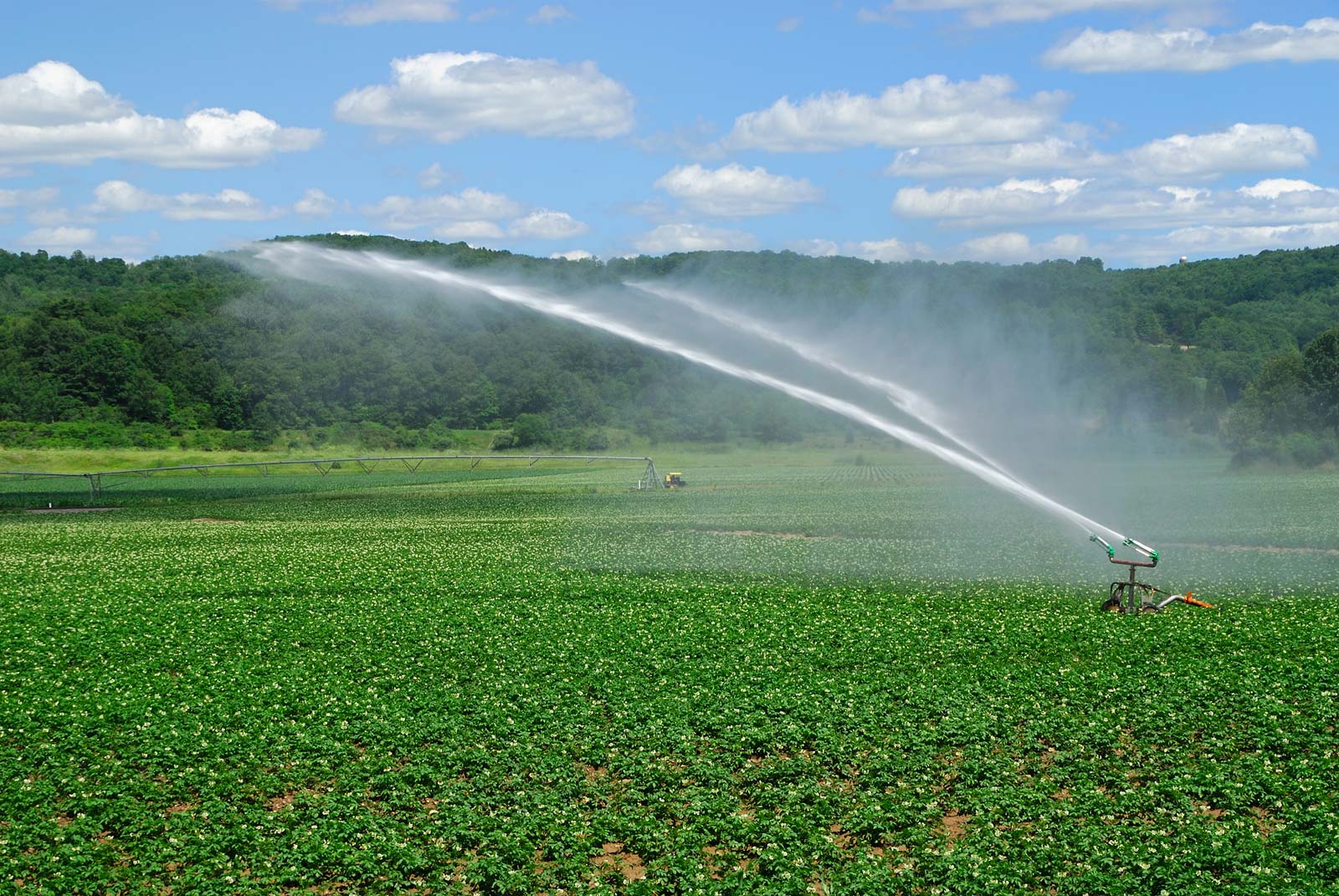
Drip irrigation — also called trickle or micro-irrigation — delivers water slowly and precisely to a plant's root zone through a network of pipes, tubing, valves, and emitters. According to Wikipedia's overview of drip irrigation, the technology emerged in the 1960s and has since been adopted on every continent as one of the most water-efficient crop production methods available. Central government subsidies under the Pradhan Mantri Krishi Sinchayee Yojana have accelerated adoption in India, making quality hardware accessible to smallholders and urban gardeners who previously depended on hand-watering or uncontrolled flood channels.
Whether the goal is sustaining a kitchen herb plot like basil through the dry months, watering a raised vegetable bed on a city terrace, or irrigating rows of crops on a small farm, drip systems offer consistent root-level moisture that surface and overhead methods cannot replicate. The sections below cover irrigation method comparisons, hardware essentials, top products on the Indian market, and the maintenance knowledge that keeps these systems productive season after season.
Contents
India's agricultural tradition encompasses several irrigation approaches, each suited to different scales, crops, and water availability. Placing drip irrigation in context against these methods clarifies why uptake has accelerated so dramatically in recent years.
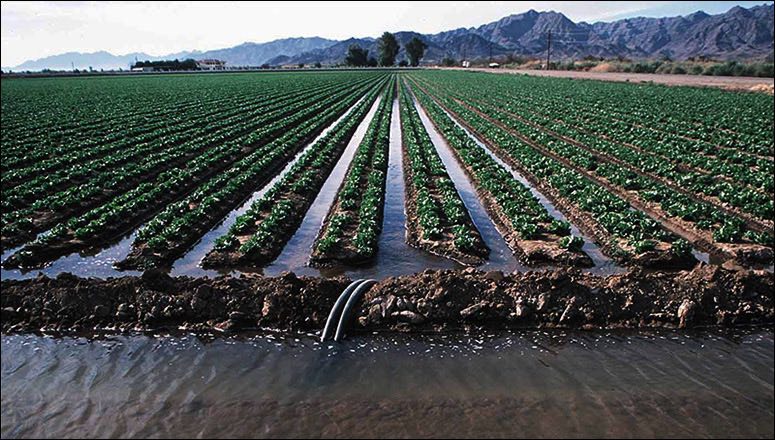
Surface irrigation floods a leveled field or directs water through shallow channels — called furrows — running between crop rows. It requires no equipment investment beyond basic earthworks, making it the historical default on small farms across the Gangetic plain.
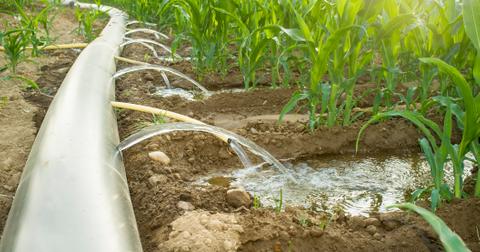
The efficiency limitation is substantial. Water spreads across the entire soil surface rather than concentrating at the root zone. Evaporation losses run high, waterlogging can suffocate shallow roots in clay-heavy soils common across Maharashtra and Andhra Pradesh, and sandy soils in western India drain away water before plants absorb a meaningful share.
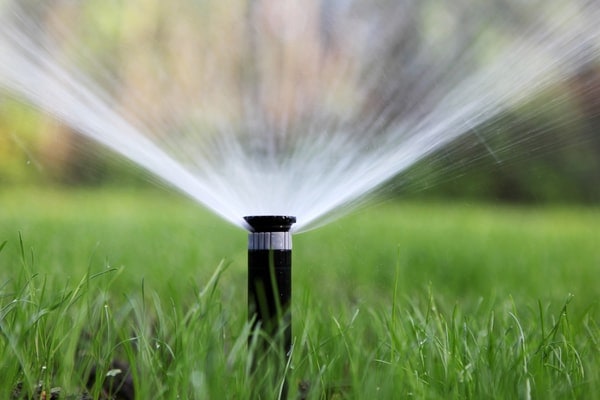
Sprinkler systems mimic rainfall, distributing water through overhead nozzles across a broad area — suitable for lawns, nursery beds, and closely spaced crops. Growers already familiar with tools like a backpack sprayer for foliar feeding will recognize the overhead delivery logic. The limitation is evaporation: sprinklers still lose a notable share of water to heat during India's pre-monsoon months, and uneven pressure on sloped terrain reduces coverage consistency.
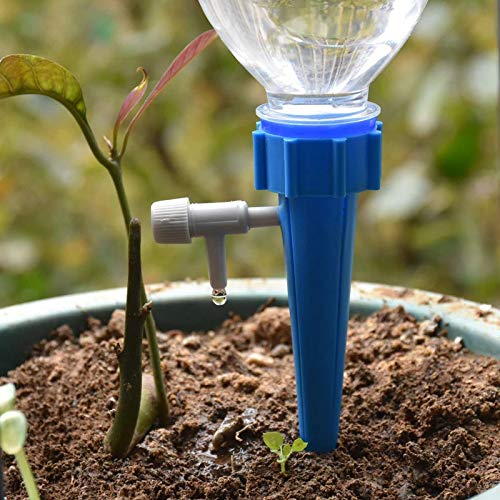
Drip emitters deliver water at controlled rates — typically 0.5 to 4 litres per hour — directly at the root zone, keeping foliage dry and reducing fungal disease pressure. Pairing drip with a layer of organic material from quality bagged compost as mulch cuts surface evaporation further, creating a closed-loop efficiency that flood and sprinkler methods cannot approach.

A functional drip system relies on a small set of interconnected components. Understanding each part helps buyers evaluate whether a given kit is genuinely complete or requires additional purchases before the first watering run.
The mainline — typically a 16mm or 20mm black polyethylene pipe — carries water from the source into the field or garden. Lateral lines of 12mm or smaller branch from the mainline to reach individual plant rows. Emitters, also called drippers, are the critical terminal components that regulate flow to each plant. Adjustable emitters allow different flow rates on the same lateral — essential in mixed kitchen gardens where tomatoes and cucumbers share a line with herbs requiring significantly less water. Most Indian home kits include enough emitters for 20 to 100 plants, depending on price tier.
A mesh or disc filter between the water source and the mainline traps sediment that would otherwise clog emitters within weeks. Skipping the filter is the single most common installation error among first-time buyers. Pressure regulators cap incoming line pressure to the 0.5–2 bar range most drip systems require — important where municipal water pressure runs high. Digital or mechanical timers add automation. Kits that bundle all three accessories — filter, regulator, and timer — represent better long-term value even when priced higher than bare-bones alternatives.
The Indian drip irrigation market offers kits across a wide price and quality spectrum. The table below compares three widely available options on key functional criteria, followed by brief assessments of each.
| Kit | Coverage | Emitter Type | Filter Included | Timer Compatible | Best For |
|---|---|---|---|---|---|
| M Dripkit | Up to 100 plants | Adjustable drippers | Yes (inline) | Yes | Home gardens, terraces |
| Cinagro Kit | Up to 50 plants | Arrow drippers | Yes (mesh) | Manual only | Containers, balconies |
| Trustbasket Kit | Up to 30 plants | Adjustable drippers | Yes (mesh) | Yes | Small raised beds, kitchen gardens |
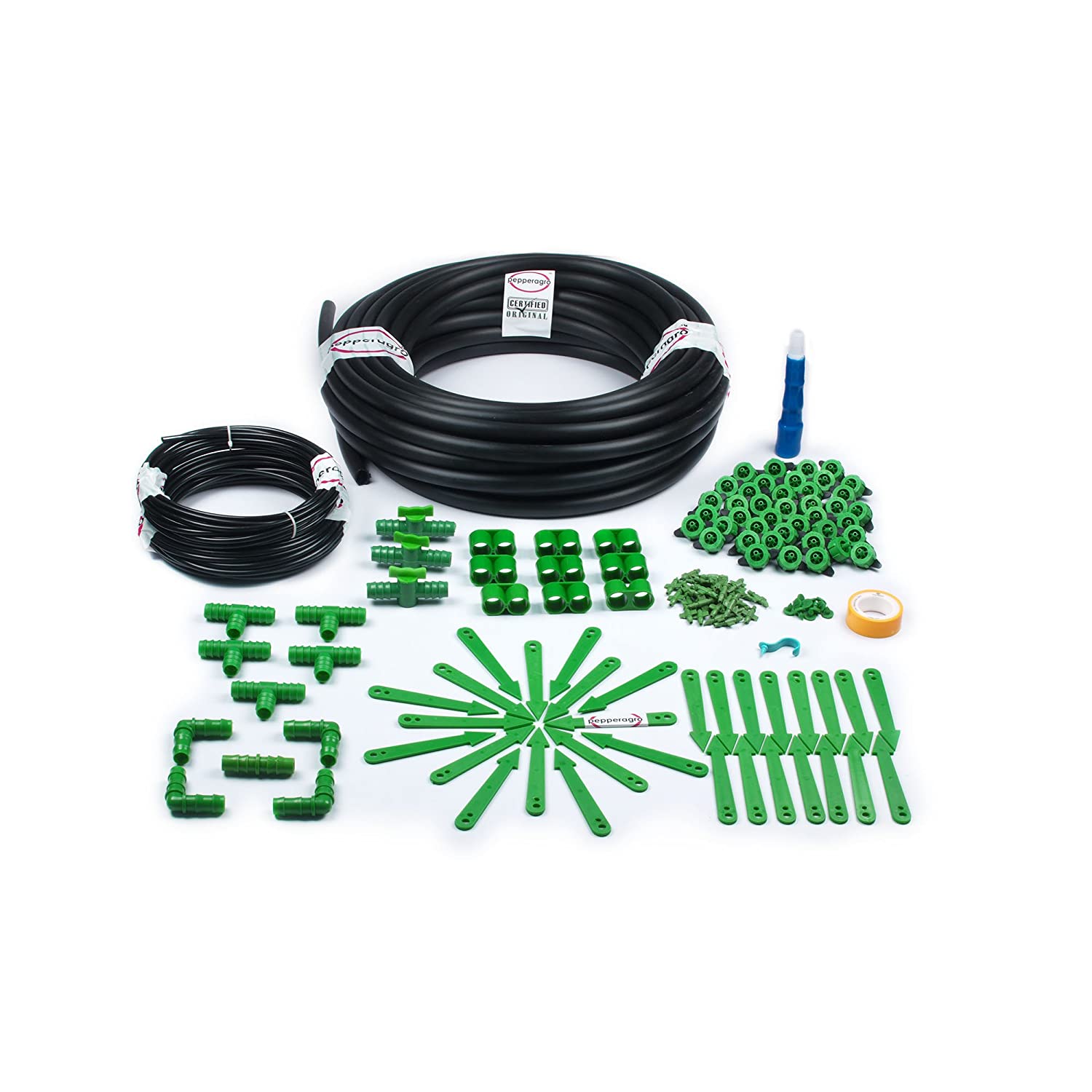
The M Dripkit is among the most widely purchased starter kits for Indian home gardeners, offering coverage for up to 100 plants at an accessible price point. It includes an inline filter, adjustable drippers, and enough mainline and lateral tubing for a standard terrace or backyard layout. Assembly requires no tools beyond a punch — most buyers complete setup in an afternoon. For growers managing succulents and other low-water plants in India, the adjustable drippers make it easy to dial down flow to minimal trickle rates without purchasing separate components.
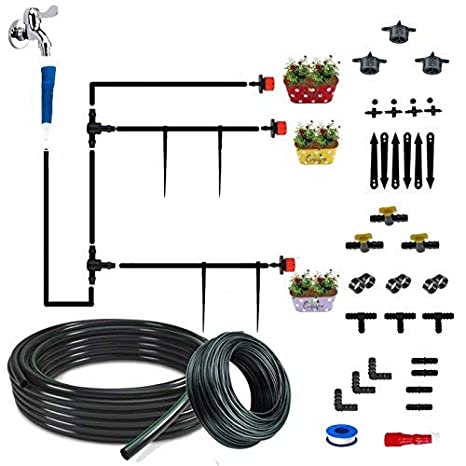
The Cinagro kit targets balcony and container gardeners with arrow drippers that push directly into grow bags or pots. Its mesh filter is functional, though growers using hard borewell water should plan monthly cleaning rather than seasonal. The kit's smaller scale makes it an accessible entry point for urban households new to drip irrigation.
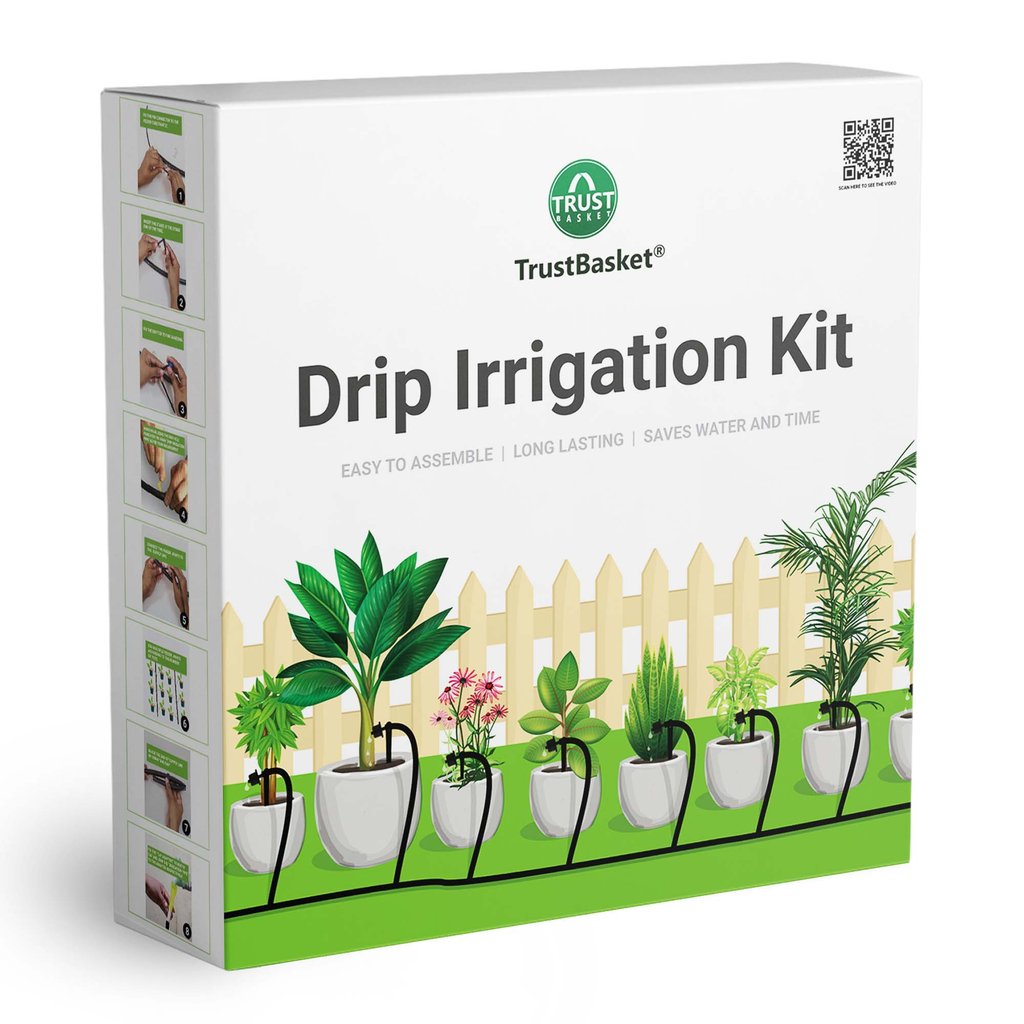
The Trustbasket kit suits small raised beds and kitchen garden setups. Its timer-compatible design makes automated scheduling straightforward — useful during extended travel or peak summer when daily hand-watering becomes unsustainable. Coverage of up to 30 plants fits most apartment-scale growing setups comfortably.
Before purchasing a kit, mapping the garden into irrigation zones pays dividends over the life of the system. A zone groups plants with similar water needs and roughly equal distances from the water source. Grouping thirsty vegetables — tomatoes, capsicums, gourds — separately from drought-tolerant herbs or ornamentals prevents over-watering one group while under-serving another.
Pressure calculation is the step most home installers skip, and it frequently explains why distant emitters deliver noticeably less water than nearby ones. A simple pressure gauge at the tap, combined with the friction loss data in a kit's documentation, clarifies whether a single mainline run will maintain consistent output or whether the layout needs a manifold to split into parallel zones. Planning this from the start avoids the more expensive exercise of relaying pipe after plants are in the ground. Systems designed with expansion in mind — adding a zone for a new raised bed or herb corner — avoid the restart costs that frustrate growers who outgrow their initial layout within a season or two.
Laying the mainline before connecting laterals keeps installation orderly and makes subsequent emitter additions straightforward. Punching holes with a calibrated punch tool — not a nail or screwdriver — ensures laterals seat without air gaps that reduce emitter output. Goof plugs should be included in every kit purchase; holes made in the wrong location are easily sealed rather than abandoned.
Water scheduling varies by season and crop stage. Seedlings need short, frequent runs — sometimes twice daily. Established plants in the vegetative stage typically require one daily run in summer, tapering to three or four times weekly during cooler months. Research on electrolyte water for plants suggests that mineral balance in irrigation water affects uptake efficiency, making consistent scheduling more important than raw water volume. Keeping foliage dry by design also reduces conditions that favour aphid colonies and other pests — growers managing existing infestations can find detailed options in a dedicated aphid control guide.
Beyond correct installation, a handful of practices separate gardens that genuinely thrive under drip irrigation from those that merely get by.
Applying a 5–8 cm layer of organic mulch — straw, dried leaves, or composted material — over the lateral lines and emitter zones cuts soil surface evaporation by 30 to 50 percent in Indian summer conditions. The mulch layer moderates soil temperature and gradually decomposes into the topsoil, building organic matter season over season. This approach works particularly well on terraces and raised beds, where exposed container surfaces dry rapidly under direct sun.
Pro tip: Run the drip system for 10–15 minutes before applying mulch — wetting the soil first lets the mulch settle into direct contact with the surface rather than bridging above it, improving moisture retention from the first day.
Scheduling irrigation for early morning — between 5:00 and 7:00 a.m. — reduces evaporation losses compared to midday runs and gives roots time to absorb moisture before peak temperature hours. During the monsoon, many growers pause drip runs entirely when rainfall exceeds 20mm in a 24-hour period. Failing to reduce frequency during the monsoon is one of the more common causes of root rot in container-grown vegetables on Indian terraces. A simple rain gauge makes these threshold decisions objective rather than guesswork.
Even well-designed drip systems require regular attention to maintain uniform output. Two maintenance tasks — line flushing and emitter cleaning — resolve the majority of performance issues before they become plant health problems.
Flushing at the start and end of each growing season removes accumulated sediment, algae, and mineral deposits from lateral lines. The process is simple: remove end caps from each lateral, run water at full pressure for two to three minutes, then replace the caps. Emitters showing reduced output can be soaked overnight in dilute vinegar to dissolve calcium buildup — a common issue with borewell-sourced water across peninsular India. Identifying a clogged emitter is easy: the plant it serves wilts while neighboring plants on the same lateral remain healthy.
Uneven plant growth across a drip zone is almost always traceable to one of three causes: a clogged emitter, a cracked lateral losing water before the end of the run, or excessive pressure drop across a long mainline. Systematically checking each cause — inspecting laterals visually, measuring flow from end-of-line emitters, testing filter cleanliness — typically identifies the issue within a single inspection session. Replacing emitters is inexpensive; the real cost of ignoring uneven distribution is the crop loss from chronically under-watered plants in the far zones of the garden.
For most home terrace setups, the M Dripkit (up to 100 plants) and Trustbasket (up to 30 plants) offer a strong balance of coverage, adjustability, and bundled accessories. The right choice depends on plant count and whether timer-based automation is a priority. Both include filters and adjustable drippers suited to typical borewell or municipal water sources found across Indian cities.
Drip irrigation typically reduces water consumption by 40 to 60 percent compared to conventional flood irrigation, depending on crop type, soil texture, and local climate. In arid regions of India, savings can be higher when drip is combined with mulching to suppress surface evaporation. Government subsidy programs for drip systems are partly justified by these documented efficiency gains.
In areas with hard water or mineral-heavy borewell sources, emitters benefit from cleaning every four to six weeks during active growing seasons. Growers using treated municipal water may find quarterly cleaning sufficient. The clearest sign of a clogged emitter is a single wilting or stunted plant while neighboring plants on the same lateral line appear healthy and well-watered.
Yes. Smaller kits with arrow drippers and adjustable flow rates work effectively for indoor containers. The main adjustment is setting emitter flow rates low — 0.5 to 1 litre per hour — and shortening run durations to prevent oversaturation. Indoor installations eliminate many of the evaporation and pressure variables present outdoors, making consistent results easier to achieve once the initial schedule is calibrated.
Choosing among the best drip irrigation kits India has to offer is ultimately about matching system capacity to garden scale, water source quality, and long-term growing ambitions. Start with a kit that covers the current footprint, invest in a proper filter and pressure regulator if they are not included, establish a seasonal maintenance routine, and expand one zone at a time as the garden grows. A well-chosen drip system — maintained consistently — will deliver reliable results across many growing seasons without the inefficiency or labor of conventional watering methods.
 |
 |
 |
 |

About Christina Lopez
Christina Lopez grew up in the scenic city of Mountain View, California. For eighteen ascetic years, she refrained from eating meat until she discovered the exquisite delicacy of chicken thighs. Christina is a city finalist competitive pingpong player, an ocean diver, and an ex-pat in England and Japan. Currently, she is a computer science doctoral student. Christina writes late at night; most of her daytime is spent enchanting her magical herb garden.


Get new FREE Gifts. Or latest free growing e-books from our latest works.
Disable Ad block to reveal all the links. Once done, hit a button below
|
|
|
|
 rinjal