reviewed by Truman Perkins
If you want one backpack sprayer that handles professional herbicide applications without dripping chemicals down your back, the Field King Max 190348 is the one to beat in 2026. That said, the right pick for you depends on tank size, pump type, and whether you want to skip the manual pumping entirely — so read on before you decide.
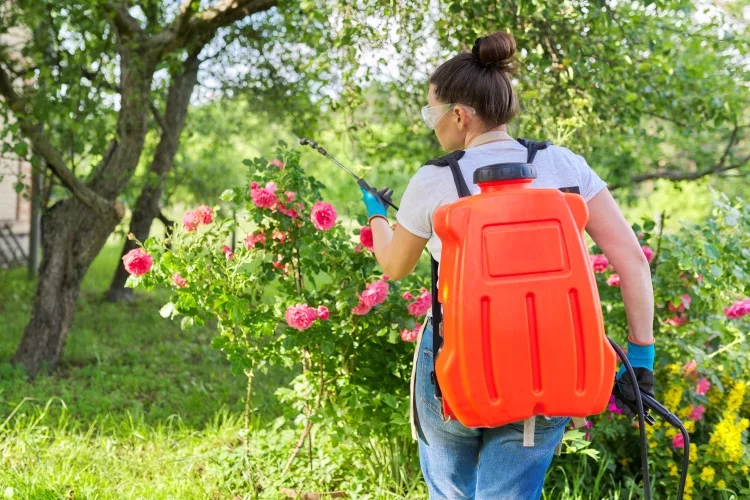
A quality backpack sprayer is one of those tools that makes or breaks your lawn and garden workflow. Whether you're applying herbicides across a large property, treating trees for pests, or keeping weeds under control on a commercial site, the wrong sprayer slows you down and wears out your body. The best ones feel balanced on your back, maintain consistent pressure, and don't give you grief when you're dealing with harsh chemicals. If you're also fighting pests and need something targeted, check out our guide to the 11 Best Aphid Killers — a good sprayer pairs well with the right solution.
We've put together this guide to walk you through seven of the top-rated backpack sprayers on the market right now. You'll get detailed reviews, a buying guide breaking down the specs that matter, and answers to the questions buyers ask most. Whether you're a weekend gardener or a landscaping professional, there's a sprayer on this list that fits your needs and budget. For more gardening product reviews, browse our full category.
Contents
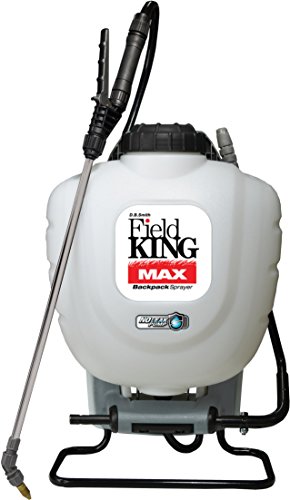




The Field King Max 190348 earns the top spot because it solves the single biggest complaint about backpack sprayers: chemical leakage. The internal no-leak pump design keeps the entire pumping mechanism sealed inside the tank, so there's zero risk of herbicide dripping down your back during a long spray session. For professional applicators working with concentrated chemicals, that's not a luxury — it's a safety requirement.
The build quality here matches the professional intent. You get a 21-inch stainless steel wand, which holds up far better than poly wands when you're working with aggressive formulations. The Viton seals are specifically engineered for chemical resistance, and the brass components on the lockable shut-off give you confidence that the valve will hold up over thousands of trigger pulls. The in-line filter catches debris before it reaches the nozzle, keeping clogs to a minimum even when spraying wettable powders.
In terms of real-world performance, this sprayer delivers consistent, high pressure that covers ground quickly. The ergonomics are thoughtfully designed — the padded straps and back frame distribute the weight evenly so you can handle a full tank across large properties without excessive fatigue. If you're applying herbicides or pesticides on a regular basis and need a sprayer you can trust season after season, the Field King Max is the benchmark others are measured against in 2026.
Pros:
Cons:
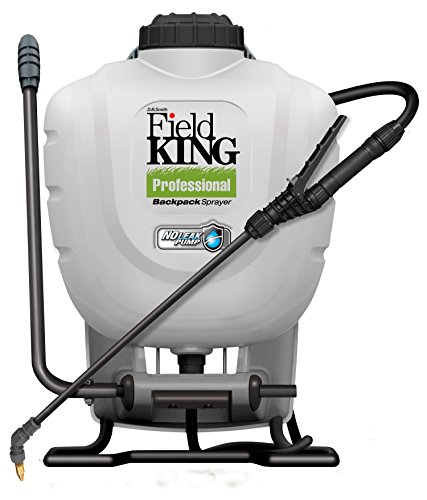
If the Field King Max is out of your budget but you still want that same no-leak pump technology, the Field King 190328 is the answer. It shares the same core internal piston pump design that keeps chemicals sealed away from your body, delivering up to 150 PSI — enough pressure for most lawn and garden applications. You're getting genuine professional-grade engineering at a more accessible price.
The key difference from the Max model is the wand material: you get a poly wand here instead of stainless steel. That's the main trade-off. The poly wand with Viton seals still handles wettable powders and liquid formulations effectively, and it's rated for all standard applications. The internal piston pump does the work of both a piston and diaphragm backpack sprayer, which makes this a surprisingly versatile option for a single tool. The lockable brass shut-off and in-line filter are identical to the Max — you're not giving those up.
This is the sprayer to buy if you want Field King reliability without the premium stainless steel price tag. For homeowners with larger properties or small landscaping operations where a professional-grade pump matters but extreme chemical resistance is less critical, the 190328 delivers excellent value. The 4-gallon capacity is the sweet spot for most applications — enough volume to cover a substantial area without becoming too heavy to carry comfortably.
Pros:
Cons:
Chapin has been building sprayers in Batavia, New York for decades, and the 61900 Tree and Turf Pro is the clearest expression of what that American manufacturing heritage produces. This is a sprayer designed and produced in the USA with US-based customer service and technical support — and it backs that up with a 5-year limited warranty that puts most competitors to shame. If buying American-made matters to you, this is the one.
The 4-gallon translucent poly tank is a practical design win. You can see exactly how much chemical is left while you're working, which saves constant guessing and prevents running dry mid-application. The 5-inch wide fill opening with a filter cap makes refilling fast and catches debris before it enters the system. Chapin added a 3-stage standard filtration system with filters at the shut-off, inside the tank near the pump, and at the cap — three separate lines of defense against nozzle clogs.
The stainless steel wand and three included nozzles give you flexibility for different spray patterns right out of the box. Commercial-grade build quality throughout, with all the filtration thoughtfulness you'd expect from a brand with this track record. If you're dealing with trees, turf, and varied spray conditions across a season, the Chapin 61900 delivers the kind of reliable performance that makes the five-year warranty feel like a reasonable promise rather than marketing fluff. It's also worth noting that proper chemical application pairs well with a healthy growing environment — if you're managing soil health too, our guide on the benefits of electrolyte water for plants covers some complementary strategies.
Pros:
Cons:
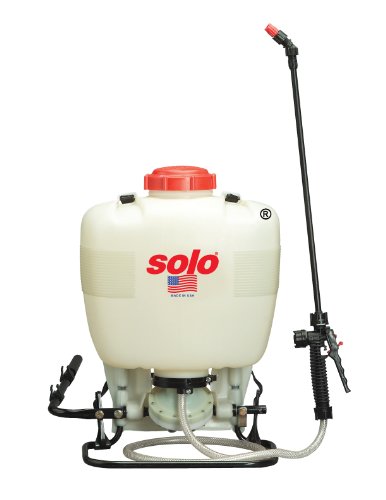
The SOLO 425 has been a trusted name in backpack sprayers for years, and in 2026 it still earns its place on this list through sheer versatility. The high-performance piston pump handles everything — liquid disinfectants, fertilizers, herbicides, pesticides — making it a single tool for multiple tasks across your property. Up to 90 PSI of pressure gives you the range to cover trees, shrubs, and ground-level plants with equal effectiveness.
The reach system on the SOLO 425 is well thought out. You get a 20-inch unbreakable wand that connects to a 48-inch nylon-reinforced high-pressure hose, which gives you extended reach without straining. Four commercial-grade nozzles are included: a plastic adjustable, fan spray, hollow cone, and jet stream — covering the full spectrum of spray patterns. The system is also TeeJet compatible, so you can swap in specialty nozzles if your application demands something specific. That kind of flexibility is rare at this price point.
The build is solid and purpose-built for regular use. The piston pump delivers consistent pressure without excessive pump strokes, which reduces arm fatigue during extended sessions. If you're looking for a reliable, multi-purpose sprayer that can handle a wide range of chemicals and spray tasks without requiring you to buy separate tools, the SOLO 425 is a logical choice. It's not as feature-rich as the Field King Max, but it covers more spray scenarios than most single-purpose competitors.
Pros:
Cons:
Most backpack sprayers will fail fast if you run bleach solutions through them — the seals degrade, the pump corrodes, and suddenly you're shopping for a replacement. The SOLO 475-B was built specifically for that problem. The diaphragm pump made with Tivilon material provides outstanding resistance to harsh chemicals, including bleach solutions, that would destroy a standard piston pump assembly within a season.
The diaphragm design has another meaningful advantage beyond chemical resistance: it passes small abrasive particles through without damage to the pump assembly. That matters when you're working with wettable powders or formulations that aren't perfectly dissolved. Standard piston pumps wear down under abrasive particles; this one handles them without complaint. Pressure tops out at 60 PSI, which is lower than the piston-based options on this list, but more than sufficient for standard application distances and coverage patterns.
If your spraying tasks include sanitation work, mold treatment, or any application that calls for bleach-based or highly corrosive solutions, this is the only sprayer on this list built to handle that reliably. The 4-gallon capacity gives you a solid working volume, and the overall build is aimed at durability over an extended service life. Think of it as the specialty tool in your arsenal — the one you reach for when the job calls for chemistry that would ruin anything else.
Pros:
Cons:
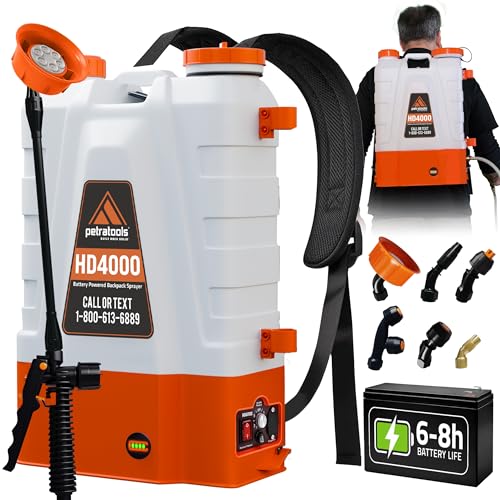
If you've ever spent an afternoon manually pumping a backpack sprayer across a large property, you already understand the appeal of the PetraTools HD4000. This is a battery-powered electric backpack sprayer, and the difference in fatigue between a long session with this versus a manual pump is significant. The 12V 8AH battery delivers 6-8 hours of continuous use and can pump over 200 gallons per charge — that's 4 times longer than 2.0 lithium battery competitors, according to PetraTools. For large-scale operations, that runtime is a genuine differentiator.
The comfort engineering on the HD4000 is above average. Double-padded straps and a padded back panel distribute the weight of a full 4-gallon tank across your body properly, and the squeeze handle with locking feature reduces hand fatigue during extended spraying. Six spray nozzles are included, and pressure is adjustable up to 90 PSI, which gives you control over flow rate depending on your target area and chemical concentration.
PetraTools is an American family-owned company that's been in the business since 2019, and they back the HD4000 with 24/7 US-based customer support and a 100% satisfaction guarantee. If you manage large lawns, farms, or commercial properties and want to eliminate the physical toll of manual pumping, this is the electric sprayer that delivers the battery life to match professional-scale work. The upfront cost is higher than manual options, but the labor savings over a season make it worthwhile for frequent users.
Pros:
Cons:
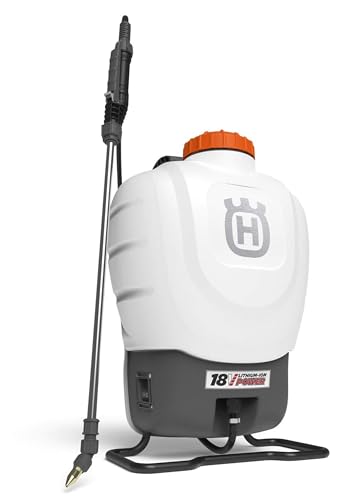
Husqvarna needs no introduction in the outdoor power equipment space — and they've brought that same engineering discipline to their 4-gallon battery backpack sprayer. The 18V battery system powers the sprayer without any manual pumping, and both battery and charger are included in the box. For existing Husqvarna battery platform users, this integrates directly into your existing tool ecosystem.
The design follows Husqvarna's professional equipment philosophy: reliable, purposeful, and built to last through demanding use. The internal no-leak pump design keeps chemicals sealed inside the unit, preventing drips and exposure during operation. A 25 PSI pressure regulator delivers constant, consistent pressure — which matters more than peak PSI for even chemical distribution across lawns and garden beds. Maximum pressure reaches 151 PSI for applications that demand it.
The versatility is solid: this sprayer handles wettable powders and liquids for all standard applications, from lawn chemicals to herbicides to fertilizers. The battery-powered convenience combined with Husqvarna's build reputation makes this a compelling option for homeowners and landscapers who already trust the brand. If you're comparing battery sprayers, the choice between this and the PetraTools HD4000 comes down to battery ecosystem preference and runtime requirements — Husqvarna buyers get brand confidence and integration, PetraTools buyers get longer per-charge runtime. You also might find our article on aquaponics fish tank kits interesting if you're building out a more comprehensive growing setup where chemical-free pest control is part of the strategy.
Pros:
Cons:
The pump is the heart of any backpack sprayer, and your choice here shapes everything else about how the tool performs. Piston pumps deliver higher pressure — typically up to 90-150 PSI — and are the standard choice for most lawn, garden, and herbicide applications. They're efficient and reliable, but they wear faster with abrasive chemicals or wettable powders. Diaphragm pumps operate at lower pressure (around 60 PSI) but excel with harsh chemicals like bleach solutions and abrasive particles that would damage a piston assembly over time. If you're doing sanitation work or running corrosive formulations, you want a diaphragm pump — the SOLO 475-B is the clear example here. Battery-powered sprayers eliminate manual pumping entirely, which is a major advantage on large properties. They cost more upfront, but if you're spraying frequently across significant acreage, the reduction in physical fatigue pays real dividends over a season. According to the EPA's pesticide application guidance, proper equipment selection also reduces chemical waste and applicator exposure risk — another reason pump type matters beyond simple convenience.
Four gallons is the sweet spot for backpack sprayers, and every model on this list hits that mark. It's enough to cover substantial ground without becoming uncomfortably heavy — a full 4-gallon tank adds roughly 33 pounds of water weight alone. Tank material matters for both durability and usability. Translucent poly tanks let you monitor fluid levels while you work without stopping to check, which is a practical advantage the Chapin 61900 capitalizes on well. Opaque tanks require you to estimate or check more frequently. All tanks on this list are compatible with standard lawn and garden chemicals, but if you're running concentrated acids or highly aggressive formulations, verify chemical compatibility before filling up.
The wand is your direct interface with the spray target, and material and length both matter. Stainless steel wands hold up better over time with harsh chemicals — they resist corrosion and maintain their structural integrity through years of use. Poly wands are lighter and more than adequate for standard applications, but they degrade faster with aggressive chemistry. Most sprayers on this list use 20-21 inch wands, which gives you reasonable reach without awkward extension. Hose length determines how far you can move from the unit — a 48-inch reinforced hose like the SOLO 425 offers meaningful range for working around obstacles or reaching into tight spots without repositioning your entire body.
A sprayer that hurts to carry is a sprayer you won't use properly. Padded shoulder straps and a back pad are non-negotiable for any extended application session — look for double-padded designs if you're carrying a full tank across significant distances. The weight distribution matters as much as the padding; a well-designed frame transfers load to your hips rather than hanging entirely from your shoulders. Lockable shut-off triggers reduce hand fatigue by letting you spray without maintaining constant grip pressure. Battery-powered options naturally reduce overall fatigue by eliminating the pumping motion, which accumulates significant strain across a long work session. If you're buying for professional use or large properties, invest in ergonomics — your back will notice the difference by the end of the day.
A piston pump delivers higher pressure — up to 90-150 PSI — and is the right choice for most standard lawn and garden applications with liquid chemicals and fertilizers. A diaphragm pump operates at lower pressure (around 60 PSI) but handles harsh chemicals like bleach, wettable powders, and abrasive particles without damaging the pump assembly. If you're spraying bleach solutions or highly corrosive formulations regularly, a diaphragm pump like the SOLO 475-B is the better long-term investment. For general herbicide and pesticide applications, a piston pump delivers better pressure and efficiency.
Battery life varies significantly between models. The PetraTools HD4000 leads the field with a 12V 8AH battery rated for 6-8 hours of continuous use and 200+ gallons per charge, which is exceptional for large-scale operations. The Husqvarna battery sprayer uses an 18V system but doesn't publish a specific runtime — check with the retailer or manufacturer for your specific use case. In general, battery-powered sprayers are designed for extended sessions, but if you're managing very large acreage, confirm runtime specifications before committing to a battery model over a manual one.
Most standard backpack sprayers are not designed for bleach solutions — the seals, gaskets, and pump components degrade rapidly when exposed to chlorine-based chemicals. The SOLO 475-B is specifically engineered for bleach resistance, using a Tivilon diaphragm pump that withstands harsh chemical exposure. If you need to spray bleach solutions for sanitation, mold treatment, or disinfection work, the 475-B is the only sprayer on this list you should use for that purpose. Using a non-rated sprayer with bleach will shorten its lifespan significantly.
For most lawn and garden applications — herbicides, pesticides, fertilizers — 60-90 PSI is more than sufficient. Higher pressure (100-150 PSI) gives you faster coverage and better penetration on dense foliage or when applying to taller trees, but it also increases spray drift if you're not careful. The Field King models deliver up to 150 PSI for professional-grade reach. For homeowner applications on standard lawns and gardens, anything in the 60-90 PSI range works well. Calibrate your pressure to your nozzle type and target distance — more is not always better when drift is a concern near sensitive plantings.
Filtration is your first line of defense. Choose a sprayer with multiple filtration stages — the Chapin 61900's 3-stage system (at the cap, inside the tank, and at the shut-off) is a good example of comprehensive clog prevention. Always pre-mix your chemicals thoroughly before filling the tank, and use the manufacturer-specified water temperature. After each use, flush the entire system with clean water to clear residual chemical from the pump, hose, wand, and nozzle. Store nozzles in clean water or remove and rinse them separately. For wettable powder applications, stir the solution periodically during use to prevent settling.
Manual backpack sprayers from reputable brands like Field King, Chapin, and SOLO typically range from around $50 to $120 depending on features, wand material, and pump type. Professional-grade models with stainless steel components and premium seals sit at the higher end of that range. Battery-powered sprayers carry a premium — the PetraTools HD4000 and Husqvarna battery models typically run $150-$250 depending on current pricing and promotions. The higher upfront cost of a quality sprayer pays back quickly in durability and performance compared to replacing a cheap unit after one or two seasons of regular use.
The right backpack sprayer makes a genuine difference in how efficiently and safely you can manage your property — start with the Field King Max 190348 if professional herbicide application is your priority, choose the PetraTools HD4000 if you want to eliminate manual pumping on large acreage, and reach for the SOLO 475-B if harsh chemicals or bleach are part of your routine. Pick the one that matches your actual use case, check current pricing on Amazon, and get your spraying done right in 2026.
 |
 |
 |
 |

About Truman Perkins
Truman Perkins is a Detroit-based SEO consultant who's been in the business for over a decade. He got his start helping friends and clients get their websites off the ground, and he continues to do so today. In his free time, Truman enjoys learning and writing about gardening - something he believes is a natural stress reliever. He lives with his wife, Jenny, and their twins in Detroit.


Get new FREE Gifts. Or latest free growing e-books from our latest works.
Disable Ad block to reveal all the links. Once done, hit a button below
|
|
|
|
 rinjal