If you're serious about dialing in your indoor garden in 2026, the Gorilla Grow Tent Pro deserves the first look — its adjustable height and 300 lb hang capacity simply outclass most of the competition. That said, every grower's setup is different, and there are excellent tents at every price point that might suit your space or budget better.
A 5×5 grow tent gives you 25 square feet of canopy space — enough to run a serious personal grow with several large plants under a high-output LED. Whether you're cultivating cannabis, herbs, tomatoes, or ornamentals, the tent is the foundation of your entire environment. Get the tent wrong and everything else suffers — light leaks waste energy, flimsy poles collapse under heavy equipment, and poor zippers invite pest infiltration. This guide cuts through the noise and helps you choose the right 5×5 for your situation.
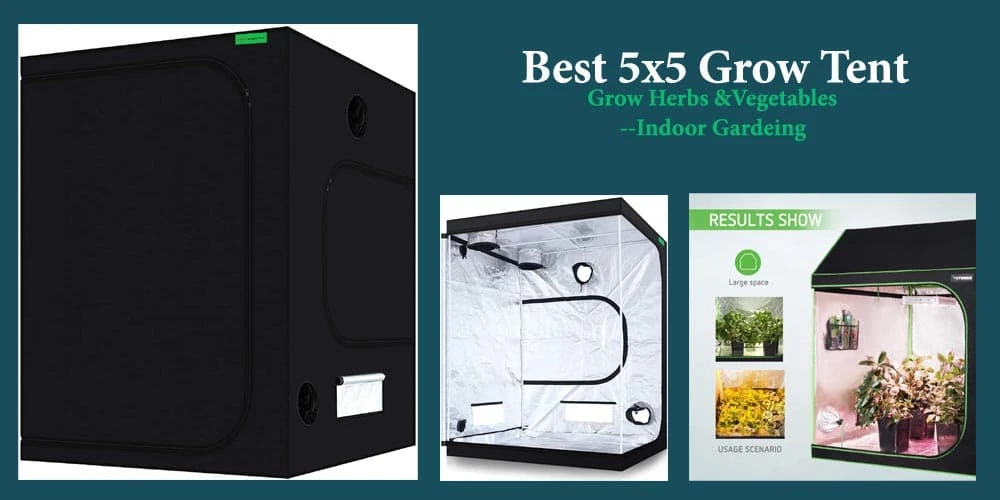
We've rounded up the top picks across categories — budget-friendly builds, pro-grade canvas, smart integrated kits, and more. If you're also weighing a smaller footprint, check out our 10 Best 4×4 Grow Tents guide for a side-by-side look at the next size down. But if 5×5 is your target, read on — we've got every angle covered. According to the Wikipedia overview of hydroponics, controlled-environment agriculture continues to grow as more home growers invest in indoor systems — and a quality tent is the first step.
Contents
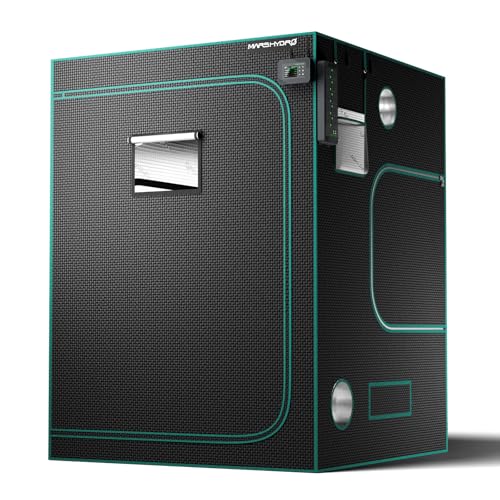






The MARS HYDRO 5×5 Advanced Grow Tent is one of the more thoughtfully designed tents in this size class, and it shows from the moment you start assembling it. The 1680D canvas is thick and stiff — noticeably more substantial than standard 600D tents — and the reflective mylar inside is diamond-patterned for better light distribution. The tent measures a full 60"×60"×80", giving you plenty of vertical clearance for most LED setups including the popular TS3000, FC6500, FC-E6500, and FC8000 from MARS HYDRO's own lineup.
The observation window is generously sized and positioned so you can do a quick visual check without unzipping the whole door. The floor tray is included and fits snugly, which is a real quality-of-life feature when you're dealing with runoff or accidental spills. The smooth zipper is one detail that growers often overlook until they're fighting a sticky one at 2 AM — the zippers on this tent glide consistently and have a light-blocking flap backing them up. Overall, this is a polished, purpose-built enclosure at a fair price point that works especially well if you're already running MARS HYDRO lights.
Assembly is tool-free and straightforward, with clearly labeled poles and corner connectors that lock together firmly. The metal poles feel solid underfoot and the top crossbars are rated for substantial hanging weight. If you're pairing this tent with one of MARS HYDRO's flagship lights and a quality inline fan setup, you're looking at a very capable grow environment right out of the box in 2026.
Pros:
Cons:
VIVOSUN is one of the most recognized names in the budget-to-mid-range grow tent market, and the S558 is their core 5×5 offering. At 60"×60"×80", it matches the footprint and height of most competitors in its class. The canvas is 600D Oxford fabric with a reinforced PE layer and 100% reflective mylar lining — a solid foundation that keeps light in and contamination out. What sets this tent apart at its price point is the top bar rating of up to 165 lbs, which gives you meaningful headroom for heavier lighting and ventilation rigs without worrying about structural failure.
The upgraded zipper design is a highlight. VIVOSUN added a black inner lining at the zipper track specifically to prevent light bleed — a common complaint with cheaper tents that use bare zippers with no backing. You can zip up fully and trust that the seal is light-tight. The lower observation window doubles as a passive heat dissipation point, which is a smart addition for warm climates or setups without dedicated intake fans. The removable floor tray makes cleanup much less of a chore, especially when dealing with medium spills or routine maintenance between grows.
The 340g high-density fabric is double-stitched throughout, so the seams hold up to repeated assembly and disassembly without fraying. For growers who want a reliable, no-frills tent at a competitive price, the S558 hits a practical sweet spot. It won't turn heads with premium materials, but it will keep your plants happy and your light where it belongs.
Pros:
Cons:
Spider Farmer's updated 2025 tent brings a meaningful set of quality-of-life improvements over older versions, and if you're running a SF7000, SE7000, or G7000, this tent is clearly designed with those lights in mind. The 1680D Oxford canvas with diamond reflective mylar sets the material baseline on par with premium options, and the dual-layer zipper system — premium SBS zippers backed by a zipper flap with double stitching — is one of the better light-seal solutions in this price range. You won't be chasing light leaks with this build.
What Spider Farmer added in the 2025 revision are the grower-convenience features: dedicated hooks for a controller and power strip, a Velcro strap system for cable organization, and an enlarged view window measuring 11.8"×15.7" — noticeably bigger than the observation windows on most competing tents. There's also a side buckle to secure the main door when you need quick, hands-free access. The tool bag included with the tent is a small touch that experienced growers will genuinely appreciate, since cable clutter and misplaced accessories are a real daily friction point in a busy grow room.
The waterproof floor tray is standard, the frame is tool-free metal construction, and the tent's overall build quality feels consistent from corner to corner. For anyone building a Spider Farmer ecosystem, this tent is the obvious companion. But even as a standalone purchase, it delivers a premium-leaning experience at a mid-range price in 2026.
Pros:
Cons:
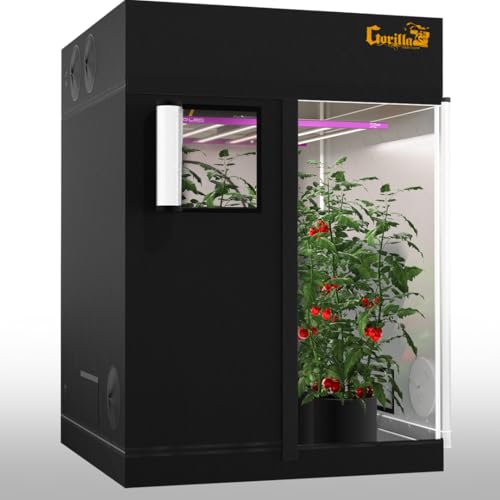
The Gorilla Grow Tent Pro is in a different league when it comes to construction quality, and that difference is immediately apparent when you handle the canvas and frame poles for the first time. The 1680D threaded, reflective fabric is advertised as 3–9 times denser than standard competitor canvas — that might sound like marketing hyperbole, but the material really does feel dramatically more substantial. The frame uses an all-steel interlocking design that Gorilla claims is 2–5× stronger than the competition, and with a 300 lb hang capacity, you can safely run the heaviest commercial LEDs, multiple fans, carbon filters, and reservoirs without a second thought.
The standout feature is the adjustable height system. The Pro ships at 6'11" with a 1' extension kit included, taking you to 7'11". An optional additional 1' kit pushes it to 8'11" — that's a meaningful advantage if you're growing tall strains or using high-hanging light fixtures that need extra vertical separation from the canopy. Industrial-strength zippers with reinforced stitching complete the light-blocking envelope. There's essentially no weak point in this tent's construction.
You're going to pay for this quality, and the Gorilla Pro sits at the top of the price range in this roundup. But if you're building a serious, long-term grow operation and you want a tent you won't be replacing in 18 months, the investment makes sense. This is the tent that professional cultivators and serious hobbyists reach for when they're done compromising on gear.
Pros:
Cons:
SECRET JARDIN is a Belgian grow tent brand with a loyal following among European growers and serious hobbyists in North America. The Dark Room 150 v4.0 is their flagship 5×5 offering — the "150" refers to the 150cm (roughly 5') footprint dimension, and at 85" tall it clears the ceiling clearance of most grow rooms with ease. This is a tent designed with precision rather than spectacle. The build quality is consistent and refined, the frame system is sturdy without being overbuilt, and the canvas thickness hits the right balance between durability and weight.
The v4.0 revision brings incremental improvements over previous Dark Room versions — tighter zipper seals, improved corner connections, and an interior that maximizes light reflectivity through the brand's signature mylar treatment. SECRET JARDIN tents have a reputation for clean construction, and the Dark Room 150 lives up to that. The vent sock system uses a flexible sleeve design that seals more cleanly around ducting than standard drawstring designs, which reduces unwanted light or air intrusion around your inline fan connections.
If you're comparing this against the Gorilla Pro, the Dark Room is slightly more compact at 5'×5'×85" versus Gorilla's adjustable height range, but it's also easier to work around and maneuver. It's a premium pick for growers who value build refinement and reliability over maximum hang capacity or height flexibility.
Pros:
Cons:
The zazzy Grow Tent doesn't carry the brand recognition of Gorilla or Spider Farmer, but if you're setting up your first 5×5 grow and you don't want to spend heavily on the enclosure itself, it's a legitimate contender. The 600D mylar canvas is double-stitched throughout, and the 95%-reflective interior lining does a solid job of bouncing light back to your canopy — particularly useful if you're running a single mid-range LED and need every photon working for you. The heavy-duty all-steel poles are rated for at least 110 lbs, which covers most standard LED and fan combinations without issue.
At 78" tall, this tent is slightly shorter than the 80" standard — not a dealbreaker for most growers, but worth noting if you're running particularly tall plants or need extra room between your light and canopy during late flower. The observation window is clearly positioned for monitoring without disturbing the environment, and the door unzips smoothly from user reports. For a first-time indoor grower testing the waters, the zazzy delivers a functional, reasonably well-made environment at a price that doesn't hurt if you later upgrade to something heavier-duty.
Pairing this tent with smart watering practices — like exploring the benefits of electrolyte water for your plants — can help you squeeze more performance out of a budget setup. The tent itself provides the controlled microclimate; your feeding strategy fills in the rest. For growing herbs indoors, the zazzy also works well as a compact propagation and veg tent if you eventually scale up to a separate flower enclosure.
Pros:
Cons:
The VIVOSUN GIY Smart Grow Tent Kit is a different kind of product from the standalone tents in this roundup — this is a fully integrated system designed to get you growing with minimal sourcing friction. The kit includes the 60"×60"×80" tent, a 645W full-spectrum bar LED grow light, an 8" AeroZesh G8 inline fan, a GrowHub E42A WiFi controller, two 6" AeroWave E6 clip fans, an 8" carbon filter, 25 feet of ducting, trellis net, grow bags, pruning shears, twist ties, sticky traps, plant tags, rope hangers, and more. It's genuinely everything you need to start growing in one box.
The GrowHub E42A controller is the centerpiece of the smart functionality. Connected via WiFi, it lets you automate ventilation based on temperature and humidity readings from inside the tent, schedule light cycles, and monitor your grow environment remotely. The 645W LED with daisy-chain support and adjustable intensity levels covers the full spectrum from 380–780nm, handling seedling through late flower without swapping fixtures. The AeroZesh fan uses PWM speed control for quiet, efficient operation — important when your grow tent is in a bedroom or living space.
If you're new to indoor growing and want to avoid the equipment rabbit hole that trips up most beginners, this kit short-circuits the research process entirely. It's also a strong option if you're expanding an existing operation and want a second tent running without building from scratch. The trade-off is flexibility — you're committed to VIVOSUN's ecosystem and won't be swapping in third-party equipment as easily. But for most growers in 2026 who want results fast, the GIY system is a serious shortcut.
Growing your own herbs is one of the most rewarding indoor growing projects, and if you're planning to use your new tent for culinary plants, our guide to the 6 best herbs to grow indoors for a chef's garden is worth a read before you plan your canopy layout.
Pros:
Cons:
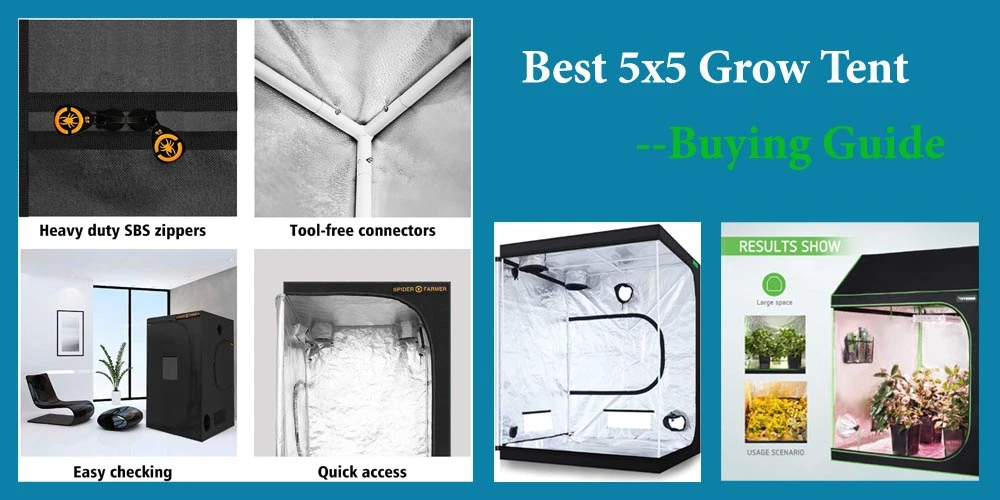
Not all 5×5 grow tents are built to the same standard, and the differences matter more than they might appear on a spec sheet. Here's what to actually pay attention to when you're comparing options in 2026.
Canvas is rated in denier (D) — a measure of fabric thread density. You'll see tents listed as 600D, 1000D, and 1680D. Higher denier means denser, more durable fabric that's better at blocking light, resisting tears, and surviving multiple grow cycles. Budget tents at 600D are functional but will show wear faster, especially around zipper seams and pole connection points. If you're planning to run the same tent for 3+ years, spending up for 1680D is worthwhile. The interior reflective lining should be 95–100% reflective mylar in a diamond or square pattern — this bounces light back to your canopy and meaningfully improves your light distribution efficiency.
Your tent's frame has to support your grow light, inline fan, carbon filter, and potentially a reservoir or SCROG net. Add those up and it's easy to reach 60–80 lbs on a basic setup, and well over 150 lbs in a fully loaded room. Check the manufacturer's stated hang capacity and leave yourself a safety margin. The Gorilla Pro's 300 lb rating is overkill for most setups but gives you total peace of mind. Mid-range tents in the 165 lb range — like the VIVOSUN S558 — cover most realistic configurations. Poles should be metal throughout, not plastic-reinforced — and corner connectors should lock rather than just friction-fit.
Zipper failure is the most common grow tent complaint after frame collapse. Cheap zippers stick, split, or separate from the canvas over time. Look for heavy-duty coil zippers (SBS or equivalent), and check whether the tent includes a light-blocking flap behind the zipper track. Without this flap, even a good zipper will allow micro-leaks that interrupt your dark period. If you're growing light-sensitive strains, the zipper and its backing are non-negotiable factors. Observation windows should close fully with hook-and-loop fasteners or a zippered cover, not just a velcro tab that gaps over time.
A 5×5 tent running a high-output LED will generate significant heat. You need adequately sized intake and exhaust ports to move enough air for proper temperature and CO₂ management. Count the number and diameter of vent ports before you buy — you'll want at least one 6–8" port for your inline fan and filter, plus smaller ports for passive intake and power cord pass-throughs. Check port placement relative to where you plan to mount your equipment. Also consider whether you might run supplemental CO₂ in the future — some tents have dedicated CO₂ injection ports while others require you to improvise. Browse our gardening reviews section for related equipment guides including inline fans and carbon filters.
A 5×5 tent covers 25 square feet of canopy, and most growers target 30–50 watts of actual LED draw per square foot during flower. That puts you in the 600–800W actual draw range for a fully loaded flower tent. Popular options include the MARS HYDRO FC6500, Spider Farmer SF7000, and VIVOSUN's 645W bar light included in their GIY kit. Always check the manufacturer's recommended coverage area for the specific light rather than relying on wattage alone — beam spread patterns vary significantly between designs.
The answer depends on your training method and plant size. In a Sea of Green (SOG) setup with small plants, you could fit 16–25 plants. Running 4–9 larger plants in a SCROG or LST setup is more common for home growers. Most experienced cultivators run 4–6 plants in a 5×5 for a manageable canopy that fills the space without overcrowding. Your lighting uniformity, airflow, and training approach will influence how many plants you can successfully manage in the space.
If odor control is any concern at all, yes. A carbon filter paired with a matched inline fan is the standard solution for odor elimination in a sealed indoor tent. For a 5×5 tent, an 8" filter and fan combination typically provides sufficient airflow to manage both smell and heat. Carbon filters typically need replacing every 12–18 months under continuous use. If you're running a kit like the VIVOSUN GIY, the filter is included — otherwise budget for one separately when planning your setup cost.
Temperature management starts with adequate ventilation — your inline fan should be sized to exchange the entire air volume in the tent at least once per minute. From there, the most common issues are high temps from large LEDs and low temps in unheated spaces during winter. An oscillating clip fan improves air circulation and prevents hot spots at the canopy. A dedicated temperature/humidity controller like the GrowHub E42A automates ventilation responses to temperature spikes. In very hot climates, an inline duct booster or small portable AC may be necessary for summer grows.
Not at all — a 5×5 is one of the most popular sizes precisely because it's large enough to produce meaningful yields while remaining manageable for a first grow. The main consideration is whether your grow space physically accommodates it: you'll need the 5×5 footprint plus working room on at least two sides. If space is your constraint, check out our best 4×4 grow tents guide for a comparison of the smaller format. If you have the space, a 5×5 gives you more room to learn training techniques and maximize your light's potential from the start.
Denier (D) measures the linear mass density of the fibers used in the canvas — higher numbers mean denser, heavier fabric. 600D canvas is the standard for budget tents: functional and light-blocking, but more prone to pinhole leaks and wear over time. 1680D canvas is significantly denser, more tear-resistant, and better at maintaining a light-tight seal across many grow cycles. For occasional or first-time growers on a budget, 600D is fine. For growers running multiple cycles per year or those who plan to keep the tent for several years, investing in 1680D pays off in durability and reliability.
You've got strong options across every budget and use case in this 5×5 lineup — from the budget-friendly zazzy and VIVOSUN S558 all the way up to the Gorilla Grow Tent Pro's industry-leading construction and the VIVOSUN GIY kit that hands you a ready-to-run system. Take stock of what you actually need: your equipment weight, your growing goals, your available space, and how long you plan to run this setup — then match those requirements to the tent that checks your most important boxes and get growing in 2026.
 |
 |
 |
 |

About Truman Perkins
Truman Perkins is a Detroit-based SEO consultant who's been in the business for over a decade. He got his start helping friends and clients get their websites off the ground, and he continues to do so today. In his free time, Truman enjoys learning and writing about gardening - something he believes is a natural stress reliever. He lives with his wife, Jenny, and their twins in Detroit.


Get new FREE Gifts. Or latest free growing e-books from our latest works.
Disable Ad block to reveal all the links. Once done, hit a button below
|
|
|
|
 rinjal