reviewed by Truman Perkins
Agave potatorum — commonly called the butterfly agave — belongs to a genus of over 200 recognized species, yet this compact Mexican native consistently ranks among the most sought-after ornamental succulents in cultivation worldwide. Any reliable agave potatorum care guide begins with one foundational truth: this plant thrives on neglect far more reliably than it tolerates excess moisture. Originating from the rocky hillsides of Puebla and Oaxaca, Mexico, it has evolved to handle thin, nutrient-poor soils, intense sun, and months without rainfall. Readers looking to expand their plant knowledge will find related resources in the plants, herbs, and farming section of this site.
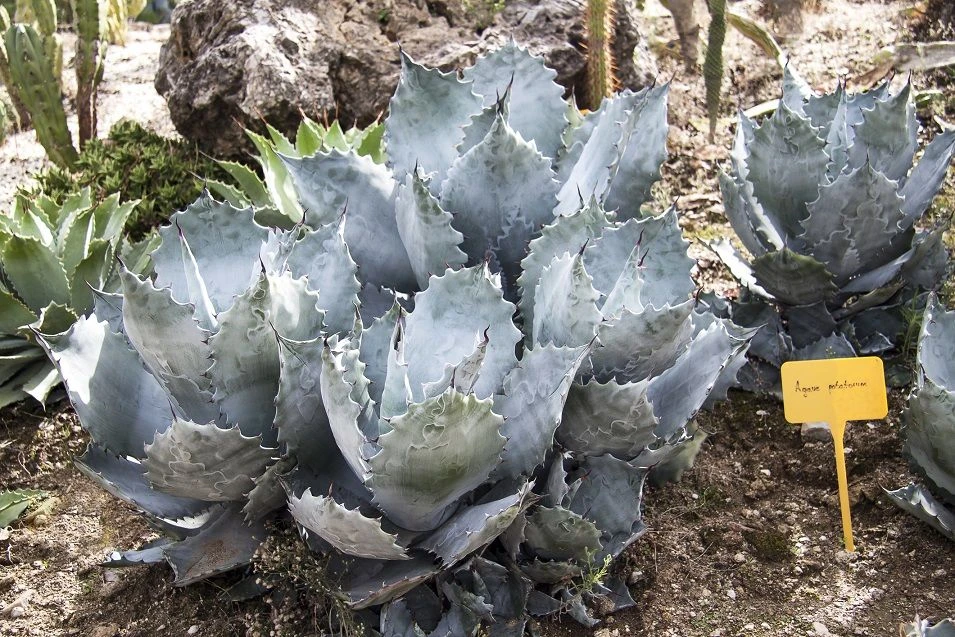
According to Wikipedia, agave potatorum produces a dense rosette of blue-gray to gray-green leaves edged with irregular reddish-brown teeth and terminated by a sharp dark terminal spine. At maturity, the rosette typically spans 60–90 cm tall and 90–120 cm wide — compact enough for container culture while still commanding attention as a landscape specimen. Like all agaves, it is monocarpic: it flowers once, sends up a towering bloom spike, and then dies. Offsets — small pup rosettes at the base — typically ensure the colony carries on.
Understanding the plant's biology makes caring for it straightforward. Most problems trace directly to two root causes: overwatering and poorly draining soil. The sections below address every stage of ownership, from initial planting through multi-year maintenance.
Contents
Before following any agave potatorum care guide, it helps to understand the plant's basic biology and how it compares to similar species. The butterfly agave belongs to the Asparagaceae family and is classified as a succulent — not a cactus, despite the shared preference for dry conditions and similar visual profile.
The leaves are the most distinctive element. Each one is broad, fleshy, and edged with teeth that curve slightly — giving the rosette its characteristic butterfly-wing silhouette when viewed from above. The terminal spine at each leaf tip is rigid and sharp enough to cause injury if handled carelessly. Leaf coloration ranges from blue-gray to silvery green depending on light levels and water availability.
| Feature | Agave Potatorum | Agave Parryi | Agave Americana |
|---|---|---|---|
| Common Name | Butterfly Agave | Parry's Agave | Century Plant |
| Mature Height | 60–90 cm | 50–75 cm | 150–200 cm |
| Mature Spread | 90–120 cm | 90–120 cm | Up to 300 cm |
| Leaf Color | Blue-gray / silver-green | Gray-green / blue | Gray-green |
| Cold Hardiness | USDA Zone 8b (−9°C) | USDA Zone 5 (−28°C) | USDA Zone 8 (−12°C) |
| Offset Production | Moderate | High | High |
| Bloom Timing | 10–25 years | 15–25 years | 10–30 years |
Several cultivars have been selected for compact form or unusual leaf patterning. 'Kissho Kan' is the most widely cultivated — a miniature form with dramatic white bud imprints pressed into each leaf face, created by the tight overlapping of leaves during early rosette development. 'Cubic' and 'Verschaffeltii' are also common in specialist collections. Each requires the same fundamental care as the species parent.
Pro Insight: The white markings on 'Kissho Kan' are cosmetic imprints, not variegation or disease. They are a normal developmental feature of this cultivar and fade slightly in very intense direct sun — this is expected, not a sign of stress.
Growing agave potatorum successfully does not require an elaborate toolkit. Having the right materials on hand, however, prevents the most common setup mistakes — particularly around drainage and container selection, which determine the plant's long-term health more than almost any other variable.
Terracotta pots are the first choice for agave potatorum. Their porous walls allow excess moisture to evaporate from the sides, which significantly reduces root rot risk compared to sealed containers. Plastic and glazed ceramic pots retain moisture longer — workable in low-humidity climates but problematic in humid regions. For a detailed comparison of materials and drainage performance across pot styles, this guide to types of planter pots is a practical starting point. For readers focused specifically on desert succulents, the same drainage logic applies whether growing agaves or sansevierias — the review of best pots for snake plants provides useful guidance on how pot material choices affect moisture retention.
Standard potting mix retains too much moisture for agave potatorum. A well-draining mix is essential. The target structure should allow water to pass through within seconds, not linger for hours after watering.
The single most consequential decision in agave potatorum care is knowing when to water — and more critically, when to stop. Overwatering kills more butterfly agaves than any other cause, including frost and pest damage combined.
Agave potatorum follows a straightforward rule: water deeply, then wait for the soil to dry completely before watering again. In summer, this typically means watering every 2–3 weeks. In winter, the plant enters semi-dormancy and may need water only once every 4–6 weeks — or not at all in naturally rainy climates.
Warning: If the soil is still damp from the previous watering, do not add more water regardless of the calendar schedule. Root rot in agaves develops rapidly once established and is almost always fatal.
Agave potatorum is a low-nutrient plant by nature. Excess nitrogen produces overly soft, floppy growth that is prone to rot and pest damage. If fertilizing at all, apply a diluted, low-nitrogen succulent fertilizer once in spring only. Some growers prefer incorporating worm castings at roughly 10–15% of the total soil volume — a slow, gentle nutrient source that will not overstimulate growth or alter drainage structure.
Whether starting from a nursery specimen or a rooted offset, the planting process follows the same sequence. This agave potatorum care guide step-by-step focuses on container setup, where most home growers encounter their first challenges.
Offsets (pups) appear at the base of established mother plants. Removing and establishing them independently is one of the most reliable ways to propagate the species:
Part of what makes agave potatorum so versatile is its controlled size. Unlike the enormous Agave americana, the butterfly agave fits comfortably in spaces where a large specimen plant would be impractical or visually overwhelming.
Xeriscape and drought-tolerant gardens are the natural home for this plant. Butterfly agave performs well as:
In USDA Zone 8b and warmer, it can be grown in the ground year-round. In colder zones, container growing allows the plant to be relocated indoors before the first hard frost without disrupting its root system.
Growing agave potatorum indoors is achievable with the right light setup. The plant requires a minimum of 6 hours of bright, direct or near-direct light daily — south-facing windows are the best placement in the northern hemisphere. In spaces with limited natural light, growers have succeeded using supplemental lighting; the best LED grow lights offer full-spectrum output that supports compact growth and healthy coloration in succulents without the heat risk of older HID bulbs.
Indoor plants typically grow more slowly and produce fewer offsets than outdoor specimens. However, their compact size and low-maintenance needs make them practical choices for apartment growers who want an architectural, statement-making plant with minimal daily attention.
A well-sited agave potatorum can live for 10–25 years before blooming and completing its monocarpic life cycle. Long-term care is less about active intervention and more about consistently avoiding the few conditions known to cause decline.
When agave potatorum reaches reproductive maturity, it sends up a tall panicle — sometimes reaching 3–4 meters — covered in yellow-green flowers. Nothing halts the bloom once it begins, and the mother rosette dies after setting seed. Practical responses include:
For growers interested in the plant's cultural dimension, the sap of Agave potatorum is used in Oaxaca to produce artisanal mezcal, adding culinary significance to its ornamental appeal. Agave-derived products like those explored in guides on agave nectar drink recipes are a reminder that this genus contributes far beyond the garden fence.
Tip: Remove offsets when they reach approximately one-fifth the size of the mother rosette — any earlier and they may lack sufficient root development to establish independently without supplemental care.
Agave potatorum is largely pest-resistant, but a handful of problems surface under poor conditions:
Even experienced succulent growers make avoidable errors with agave potatorum. The following represent the most frequently documented problems in cultivation guides and grower communities.
Always wear thick gloves and eye protection when handling agave potatorum, pruning dead outer leaves, or removing offsets. The terminal spines are sharp enough to puncture skin and cause serious eye injury. Cutting off spines to reduce hazard permanently disfigures the leaf and opens a wound that invites pathogens — a trade-off that is rarely worth making.
In active growth during warmer months, water every 2–3 weeks, allowing the soil to dry completely between sessions. In winter dormancy, reduce to once every 4–6 weeks or withhold water entirely in naturally wet climates. Soil moisture, not a fixed calendar schedule, determines the correct interval.
Agave potatorum tolerates temperatures down to approximately −9°C (15°F), placing it in USDA Hardiness Zone 8b. In colder regions, container growing allows the plant to be moved indoors before hard frosts. Established plants typically survive brief light frosts without lasting damage, but prolonged freezing conditions cause irreversible tissue injury.
Most plants take 10–25 years to reach flowering maturity under typical cultivation conditions. The bloom is triggered by accumulated age and stress, not by any single environmental event. Once the flower spike emerges, the mother rosette dies after seed set — but established offsets continue the plant's presence in the garden without interruption.
Yes, provided it receives a minimum of 6 hours of bright direct light daily. South-facing windows are the optimal indoor placement. Without sufficient light, the rosette etiolates and loses its compact form. Full-spectrum LED grow lighting compensates effectively in darker spaces. Indoor specimens grow more slowly than outdoor plants and typically produce fewer offsets, but remain healthy and structurally sound with consistent care.
 |
 |
 |
 |

About Truman Perkins
Truman Perkins is a Detroit-based SEO consultant who's been in the business for over a decade. He got his start helping friends and clients get their websites off the ground, and he continues to do so today. In his free time, Truman enjoys learning and writing about gardening - something he believes is a natural stress reliever. He lives with his wife, Jenny, and their twins in Detroit.


Get new FREE Gifts. Or latest free growing e-books from our latest works.
Disable Ad block to reveal all the links. Once done, hit a button below
|
|
|
|
 rinjal