Picture this: you've got a windowsill lined with pots of basil, thyme, and mint, but the winter sun just isn't cutting it. Your herbs are leggy, pale, and struggling to produce enough to flavor a single pasta dish. That's exactly the situation that sends most indoor herb gardeners searching for the right grow light — and in 2026, the options are better than ever. Whether you're squeezing a compact strip light onto a shelf or setting up a full 2×2 tent, there's a light built for your setup.
Grow lights aren't just a winter workaround. They let you extend your growing season year-round, control light cycles precisely, and grow herbs that would otherwise demand a climate you simply don't live in. The challenge is that the market is flooded with options — from cheap clip-on lamps to professional-grade LED panels — and the spec sheets can feel overwhelming. PPFD, PPE, full spectrum, dimmable — these terms matter, but only once you understand what they mean for your herbs.
This guide breaks down seven of the most popular grow lights available today, each suited to different growing needs and budgets. If you're also growing in containers or grow bags alongside your herb setup, you might want to check out our guide on 30 Seeds to Sow in Containers and Grow Bags for inspiration on what to pair with your new light. Browse all of our plant care coverage in the gardening reviews section. Let's get into the picks.
Contents







Each light below has been selected based on its specifications, user feedback, and real-world suitability for herb growing — whether that's a dedicated grow tent, a kitchen shelf, or a windowsill supplement. Read through the details to find the one that fits your space and your budget.
The Spider Farmer SF1000 has built a well-deserved reputation among indoor growers, and the upgraded version available in 2026 continues that trend. It uses premium LED chips with a system PPE of 2.5 µmol/J — a genuinely strong number at this price point — and the diode layout has been refined to deliver more even light distribution across your canopy. If you're running a 2×2 or pushing into a 3×3 tent, this light covers the footprint comfortably without hot spots that can stress your herbs.
The fanless design is one of the SF1000's most practical selling points. Grow rooms can get noisy fast when multiple fans compete, and the passive cooling on this unit means you won't hear it at all during quiet hours. The full spectrum output — covering 3000K, 5000K, 660nm red, and 760nm IR — gives your herbs what they need at every stage, from seedling to vegetative growth to the transition into flower if you're running flowering herbs like chamomile or lavender. The blue-weighted spectrum is particularly effective for compact, bushy veg growth, which is exactly what you want from kitchen herbs like basil and cilantro.
Spider Farmer backs this light with a 5-year warranty serviced through local centers in the US, Canada, UK, EU, and Australia — a genuinely meaningful commitment in a market full of lights that disappear from support lists after a year. If long-term reliability matters to you, that warranty is worth factoring into the price comparison.
Pros:
Cons:
MARS HYDRO updated the TS600 for 2026, and the headline addition is a proper dimming function — something the original model lacked. This matters more than it might seem. Seedlings are sensitive to intense light and can bleach or curl under full power; being able to dial the TS600 back to 30–50% during early stages and ramp it up as your herbs mature gives you much finer control over the growing environment. The dimming range is smooth and the dial feels solid, not flimsy.
The patented 120° white reflector design concentrates scattered light back into the canopy rather than letting it escape sideways. When you pair this with a Mars Hydro tent (which uses high-reflectivity mylar interior walls), you're capturing nearly every photon the diodes produce. The total PPF sits at 190 µmol/s with a PPE of 2.0 µmol/J — slightly below the SF1000 on raw efficiency but still well ahead of HPS or MH equivalents. The spectrum itself covers 730–740nm red IR alongside 3200–4200K and 5200–6800K warm and cool whites, making it genuinely useful across the full growth cycle.
PPFD distribution is notably even across a 2×2 footprint, which is important if you're growing multiple herbs in the same tray and don't want the plants at the edges getting shortchanged. For a single-tent herb operation, the TS600 gives you a great deal of control for the money.
Pros:
Cons:
If you're running a multi-shelf herb growing setup — say, a wire rack with three or four levels of herbs in your garage or basement — the Barrina T5 8-pack is one of the most cost-effective ways to light every tier. Each 2-foot strip draws just 10W, but the 8-strip set combines for 80W total with 400 individual LEDs delivering output equivalent to 500W of traditional plant lighting. You'll cover a serious amount of growing space for very little electricity cost.
The installation process is genuinely straightforward. Each strip comes with double-sided tape, clips, and cable ties, so you can mount them under shelves or in any configuration without drilling or wiring. Linking up to 16 lights in a daisy-chain series means you can expand this system as your herb collection grows — you're not locked into the 8-strip starter kit. The full spectrum output is tuned to match natural light absorption ratios for plants, supporting seedlings, vegetative growth, and blooming cycles equally well.
One thing to be realistic about: these are strip lights, not panel lights. They work best for low-growing herbs on shelving systems. If you're trying to light a single tall plant or penetrate a deep canopy, a panel light will serve you better. But for growing trays of basil, parsley, mint, and thyme across multiple shelf levels, the Barrina system is hard to beat at this price point. This kind of vertical space usage pairs nicely with the concepts in our 10 Tips for Vertical Gardening guide.
Pros:
Cons:
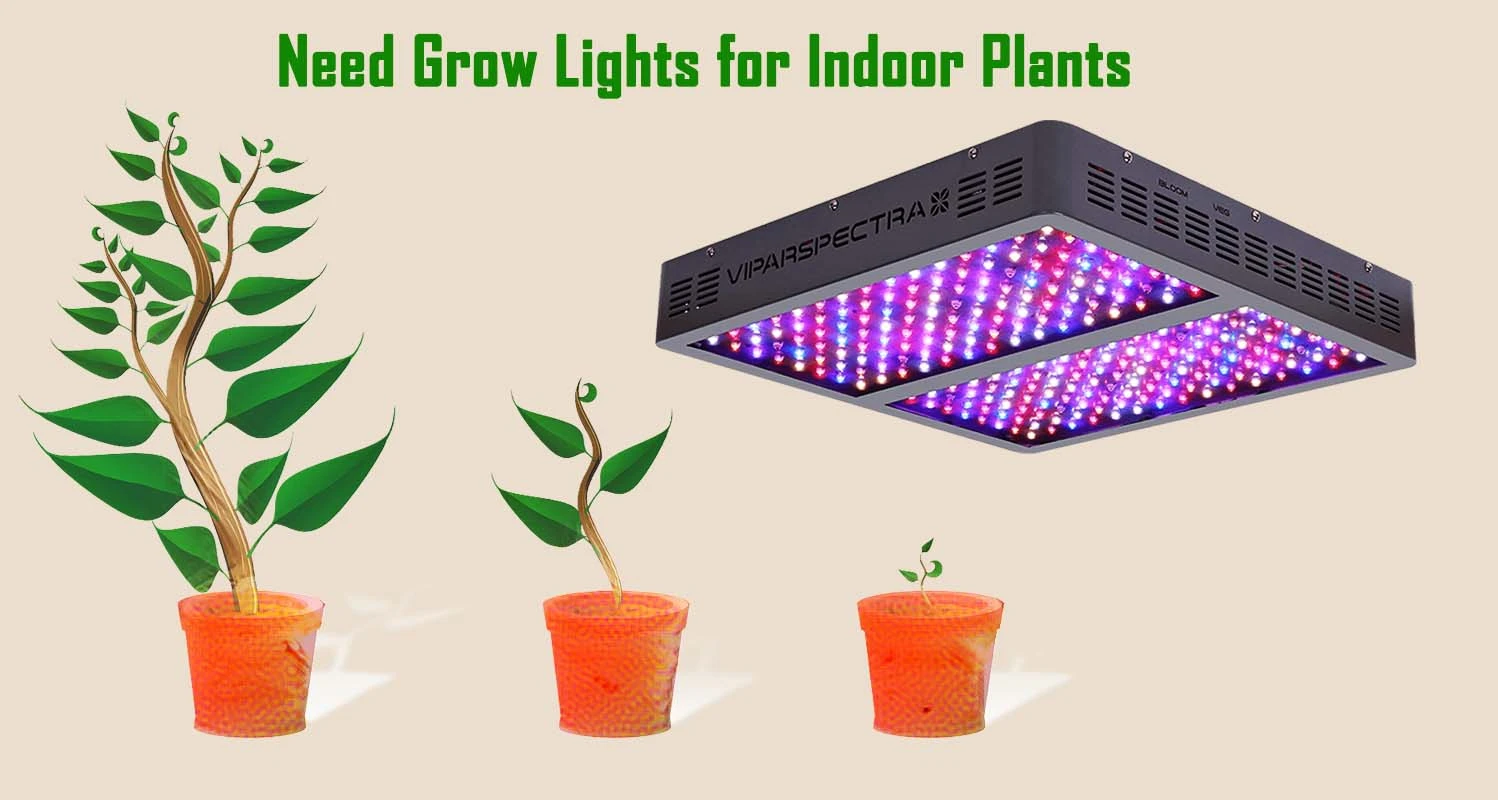
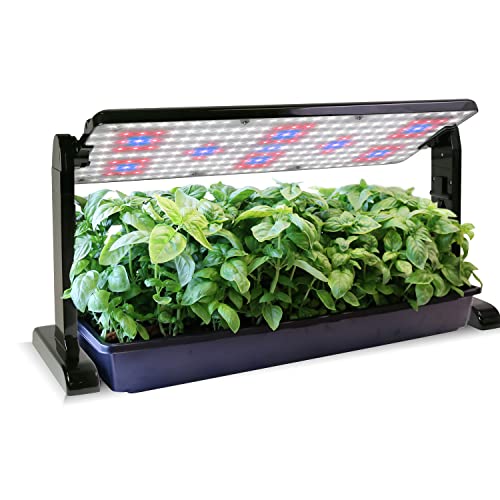
AeroGarden built its reputation on countertop herb growing systems, so it's no surprise that their standalone grow light panel takes a practical, user-friendly approach. The 45W LED panel comes with both a stand and a hanging kit right out of the box, which gives you flexibility most other lights don't offer at this price. Set it on the stand next to a seed tray on your kitchen counter, or hang it above a shelf system — either configuration works, and switching between them takes less than a minute.
The 360-degree rotation on the stand is particularly useful during the seed starting phase. You can angle the light to hit trays from the side, reduce intensity by increasing the angle, or go straight overhead — whatever your seedlings need. This kind of physical adjustability is something panel lights mounted on fixed rails simply can't match. For herb growers who start from seed every season, having that flexibility through the critical first few weeks of growth is genuinely valuable.
At 45W, this isn't the highest-output panel on this list, and it won't light a full 2×2 tent at adequate intensity levels. Where it excels is as a dedicated seed-starting station or a supplement light for an existing setup — positioned close to seedlings on a countertop or shelf, it does exactly what it promises. The build quality feels solid and distinctly better than many budget options in this category.
Pros:
Cons:
If you're looking for a no-fuss solution for a few potted herbs on a shelf or windowsill, the Mosthink 2-pack strips deserve a serious look. They cover the full spectrum from 380nm to 800nm — genuinely close to natural sunlight in wavelength coverage — and at 15W for the pair, they draw almost nothing from your electricity bill. For casual herb growers who just want their basil or parsley to stay healthy through the darker months, that's an honest value proposition.
The built-in auto timer is the standout feature at this price point. You set a cycle of 2, 4, or 8 hours, and after that initial setup, the light turns itself on and off at the same time every day — no smart plug required, no separate timer to buy. For busy people who forget to switch their lights, this automatic cycling is a real quality-of-life feature. The four brightness levels (25%, 50%, 75%, 100%) add another practical layer of control, letting you match intensity to what each herb variety actually needs.
Be honest with yourself about what this light is designed for, though. The Mosthink strips are best positioned 6–12 inches above small plants — they don't have the punch to push useful light through a 24-inch gap or cover a wide footprint. For a small collection of herbs on a single shelf, they're excellent. For a serious growing setup, you'll outgrow them quickly.
Pros:
Cons:
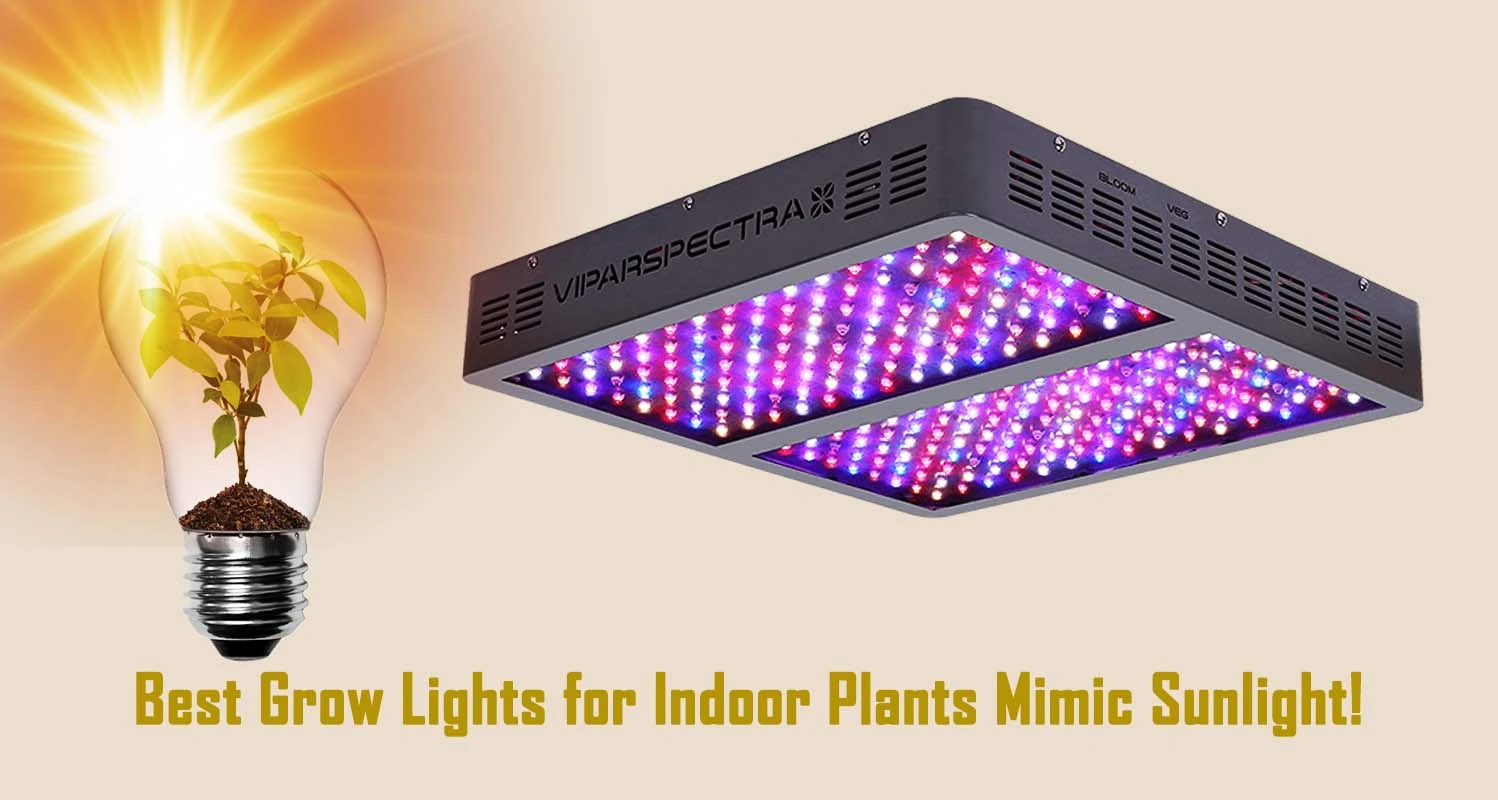
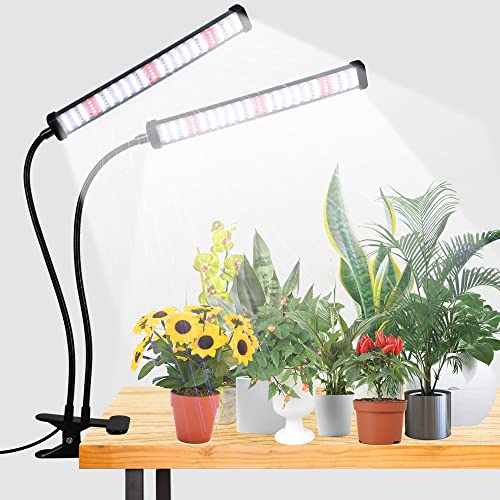
The GooingTop 100W clip light packs a lot of brightness into a compact, clamp-on form factor. With 144 white LEDs plus 10 red LEDs, the 6000K output closely mimics midday sunlight — ideal for herbs that crave intensity. The gooseneck design is flexible enough to position the light head at practically any angle, and the clamp is strong enough to hold the arm steady without drooping over time, which is a common failure point on cheaper clip lights.
The timer function covers 4, 8, and 12-hour cycles running on a 24-hour repeat, similar to the Mosthink strips — once it's set, you don't need to touch it. Brightness is adjustable, though the steps aren't as granular as dedicated dimmer-equipped panel lights. At 100W equivalent output (actual draw is much lower), the GooingTop delivers noticeably more punch than the basic clip lights that flood the market at similar price points. The plug design also promises more stable, efficient power delivery than USB-powered alternatives.
Where this light shines is in situations where you need to direct light at a specific plant or cluster of plants on your desk or countertop. It's the best option for someone who wants targeted coverage without mounting anything permanently. If your herb garden lives on a kitchen counter or office desk, the clip-and-go convenience is genuinely useful. It won't replace a panel light for a full shelf system, but that's not what it's designed for.
Pros:
Cons:
Sometimes the simplest solution is the right one. If you already have a lamp or pendant fixture you want to repurpose as a grow light, the SANSI 10W bulb gives you a genuine full-spectrum upgrade without buying any new hardware. It screws into a standard E26 base — the same socket as most household bulbs — and delivers 4000K daylight output spanning 400nm to 780nm with a color rendering index close to 100. That's nearly indistinguishable from natural sunlight in terms of spectral quality.
The real engineering story here is SANSI's patented COC (Chip on Ceramic) technology. By mounting the LED chip directly onto a ceramic heat sink instead of the traditional aluminum substrate, SANSI achieves significantly faster heat dissipation. The result is a rated lifespan of 25,000 hours — well above most LED grow lights in this category. The secondary optical lens design concentrates and redistributes light for a PPFD of 97.91 µmol/m²/s at one foot, which is useful output for herbs that don't demand extreme intensity.
You get two bulbs in the pack, which means you can cover a couple of fixtures simultaneously. For apartment herb growers who want grow light capability without any specialized equipment, this 2-pack is one of the most practical and low-commitment options available in 2026. It won't replace a dedicated grow panel for serious production, but for keeping kitchen herbs healthy and productive through winter, it's a genuinely clever approach. According to Wikipedia's overview of grow lights, full-spectrum LEDs like this are now the dominant technology for indoor plant lighting due to their efficiency and spectral flexibility.
Pros:
Cons:
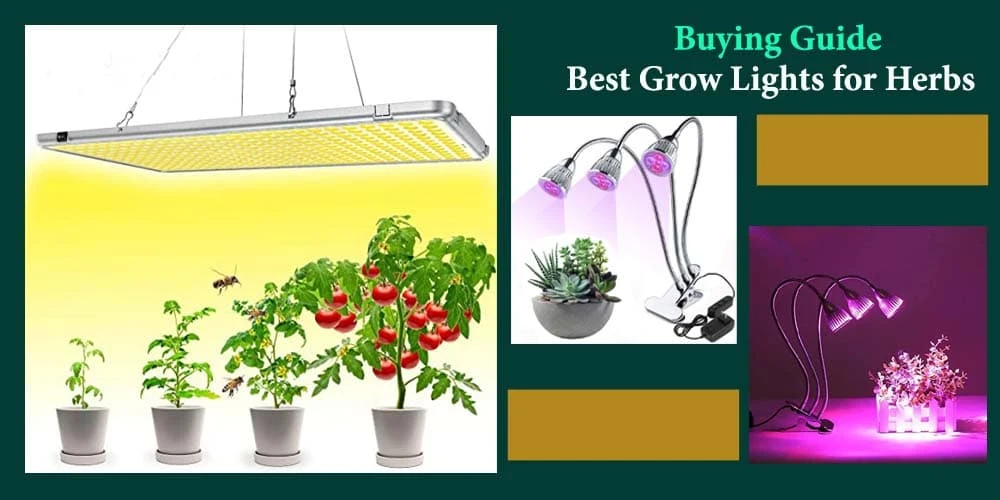
Before you spend money on a grow light, it's worth spending ten minutes understanding what your herbs actually need. Choosing based on wattage alone — or just picking whatever ranks highest on the search page — often leads to disappointment. Here are the factors that actually matter.
PPFD stands for Photosynthetic Photon Flux Density, and it measures how many photons of usable light land on your plant surface per second, per square meter (µmol/m²/s). Most culinary herbs — basil, cilantro, parsley, mint, thyme — thrive at PPFD levels between 200 and 400 µmol/m²/s. Some higher-light herbs like rosemary or lavender can handle 400–600 µmol/m²/s. Anything dramatically above that is unnecessary for herbs and just wastes electricity. When a light lists PPFD, always check the measurement distance — a number taken at 6 inches will look far more impressive than the same light measured at 18 inches, but your plants are the ones at 18 inches.
PPE (Photon Efficiency, measured in µmol/J) tells you how efficiently the light converts electricity into plant-usable light. Higher is better. Modern premium LEDs hit 2.0–2.7 µmol/J; budget LEDs often fall below 1.5 µmol/J. This number directly affects your ongoing electricity cost, so it's worth paying attention to if you plan to run your lights 12–16 hours per day.
You'll see grow lights marketed as "red/blue only" (the classic purple-pink light) or "full spectrum" (which looks white or close to white). For herbs, full spectrum lighting generally produces better results. Plants use the full range of visible light for different biological processes — chlorophyll synthesis, root development, stem elongation, and flowering response are all influenced by different wavelengths. Blue light (5000–6500K) drives compact vegetative growth, which is exactly what you want from a kitchen herb. Red light (620–700nm) accelerates flowering and fruiting. A good full-spectrum light provides both.
If you want to dive deeper into how plants interact with light and air quality, our guide on 30 Plants That Absorb Carbon Dioxide and Purify Indoor Air covers the underlying photosynthesis mechanics in more detail.
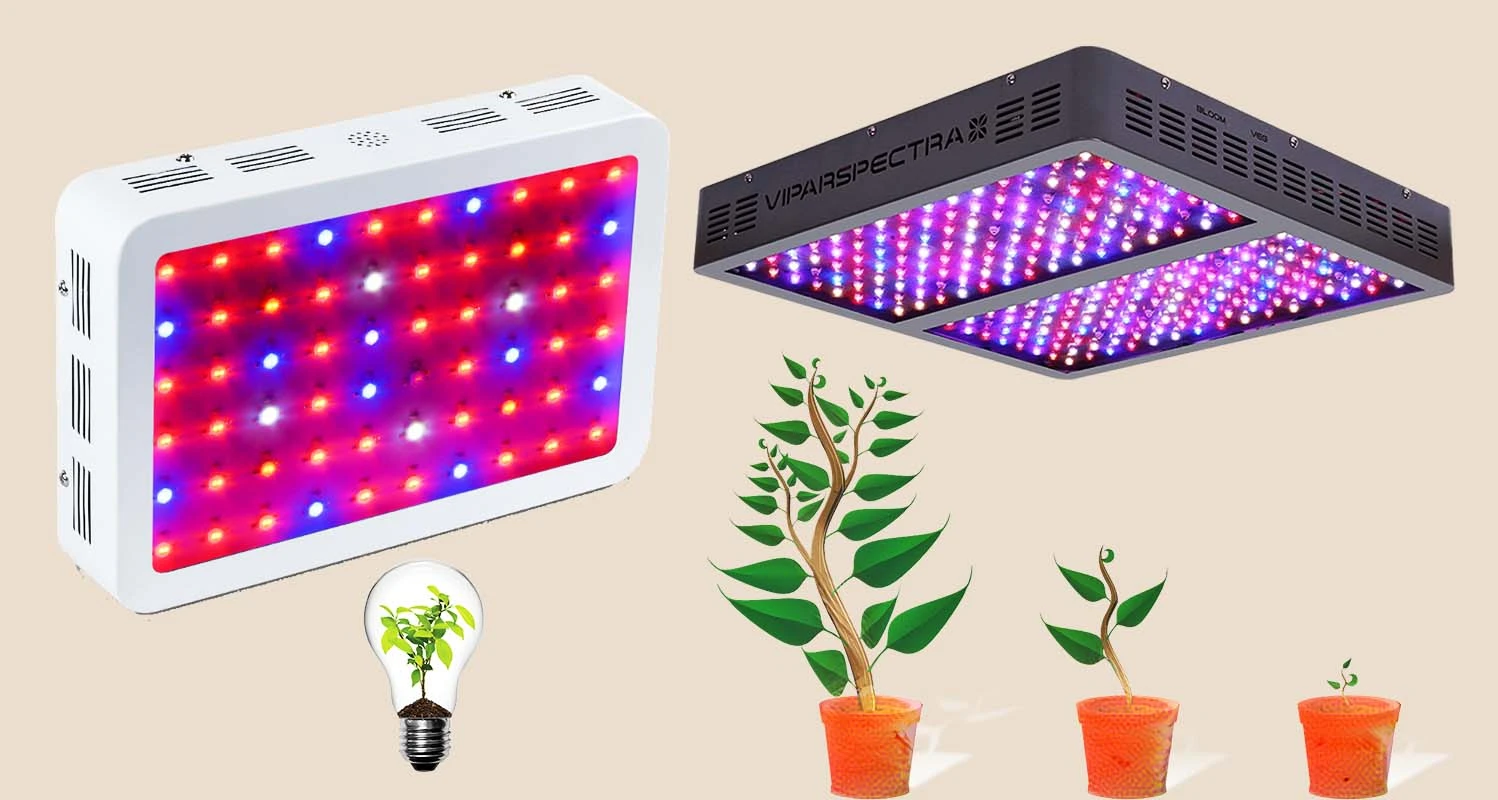
One of the most common mistakes is buying a light that's either too small or dramatically too large for your actual growing space. For a 2×2 foot tent or a standard shelf, a 100W LED panel (actual draw, not equivalent) is generally sufficient for herbs. For a 3×3 space, you'll want to push toward 200–300W actual draw. For single-pot or small-tray growing on a countertop, a clip light or strip light drawing 15–30W is more than enough — and using a 100W panel at close range risks bleaching your herbs.
Also think about mounting. Panel lights need overhead clearance and a hanging point. Strip lights need horizontal surfaces to mount under. Clip lights need a shelf edge or pot rim. The best light for your setup is the one that physically fits into the space you have.
Herbs generally want 12–16 hours of light per day depending on the variety. If your light doesn't have a built-in timer, you'll need to buy a separate one — and most people forget to eventually. Lights with integrated timers are worth the small premium for the convenience alone. Similarly, dimming capability lets you start seedlings at lower intensity and ramp up as they develop, which reduces transplant stress and light bleaching.
Noise is often overlooked until it becomes a problem. Lights with cooling fans run constantly, and in a bedroom or office setting, that white noise adds up. Fanless LED panels (like the Spider Farmer SF1000) run completely silently. If your growing setup is in a living space rather than a dedicated room, silent operation is a meaningful quality-of-life factor.
Most culinary herbs do best with 14–16 hours of light per day when grown indoors under artificial lighting. This mimics a long summer day and keeps herbs like basil, cilantro, and parsley in active vegetative growth. Herbs that naturally go dormant in winter (like some mint varieties) can handle less — around 12 hours. Always give plants at least 8 hours of darkness per day; continuous lighting stresses most plants and disrupts their natural rest cycle.
The ideal distance depends on the light's output. High-intensity LED panels (100W+) typically work best positioned 12–24 inches above the plant canopy. Lower-output lights like strip lights and clip lights should be positioned closer — 6–12 inches — to deliver useful PPFD levels. Watch your plants for signs of too much or too little light: bleached or curling leaves mean the light is too close, while stretching and pale green color means it's too far away. Most manufacturers list a recommended hanging height in their specifications.
You can, but results will be limited. Standard white LED bulbs don't optimize their spectrum for plant growth — they're designed to look pleasant to human eyes, not to maximize photosynthesis. A proper grow light bulb like the SANSI model reviewed above delivers a specifically tuned full spectrum at much higher intensity than a household LED at the same wattage. For a single plant on a windowsill with decent natural light as a supplement, a regular bulb might work passably. As your primary light source for serious herb growing, it won't be sufficient.
Modern LED grow lights are quite efficient compared to older HPS or fluorescent technology. A 100W LED panel running 14 hours a day consumes 1.4 kWh per day, which at an average US electricity rate of around $0.16/kWh costs roughly $0.22 per day — about $6.70 per month. Strip lights drawing 10–15W are even cheaper to run. The bigger efficiency question is PPE: a light with 2.5 µmol/J delivers more plant-usable light per watt than one at 1.5 µmol/J, meaning you grow more per dollar spent on electricity over time.
For herbs in vegetative growth — which is most culinary herbs most of the time — a color temperature between 5000K and 6500K (cool white / daylight range) promotes compact, bushy growth with high essential oil concentration. This blue-weighted spectrum keeps plants from stretching toward the light. If you're growing flowering herbs like chamomile or lavender through their bloom cycle, adding warmer red spectrum (2700–3000K, or 660nm red LEDs) accelerates flowering. Full-spectrum lights that combine multiple color temperatures are the most versatile choice across all herb types.
LED grow lights are generally safe for indoor use. They don't emit significant UV radiation (unlike some older HID lights), don't run hot enough to pose a fire risk when properly installed, and don't produce harmful gases. However, some blue-spectrum grow lights are very bright and can cause eye discomfort with direct viewing — the same caution you'd apply to any bright light source. Keep lights positioned so they're not shining directly at eye level in living spaces. For pets, the main concern is simply not having a light positioned where a cat or dog could knock it onto plants or into water.
 |
 |
 |
 |

About Truman Perkins
Truman Perkins is a Detroit-based SEO consultant who's been in the business for over a decade. He got his start helping friends and clients get their websites off the ground, and he continues to do so today. In his free time, Truman enjoys learning and writing about gardening - something he believes is a natural stress reliever. He lives with his wife, Jenny, and their twins in Detroit.


Get new FREE Gifts. Or latest free growing e-books from our latest works.
Disable Ad block to reveal all the links. Once done, hit a button below
|
|
|
|
 rinjal