Gardening Reviews

Hoop House vs. Greenhouse: Key Differences Explained

reviewed by Christina Lopez

A hoop house is a simple, affordable structure made from curved metal or PVC frames covered in polyethylene film, while a greenhouse is a permanent, rigid-framed building with glass or polycarbonate panels designed for precise climate control. That's the short answer to the hoop house vs greenhouse comparison, but the real question is which one fits your space, budget, and growing goals. Whether you're extending your season by a few weeks or building a year-round growing operation, the differences between these two structures affect everything from your harvest to your wallet. If you're also looking at tools and gear to outfit your setup, check out our gardening reviews for tested recommendations.
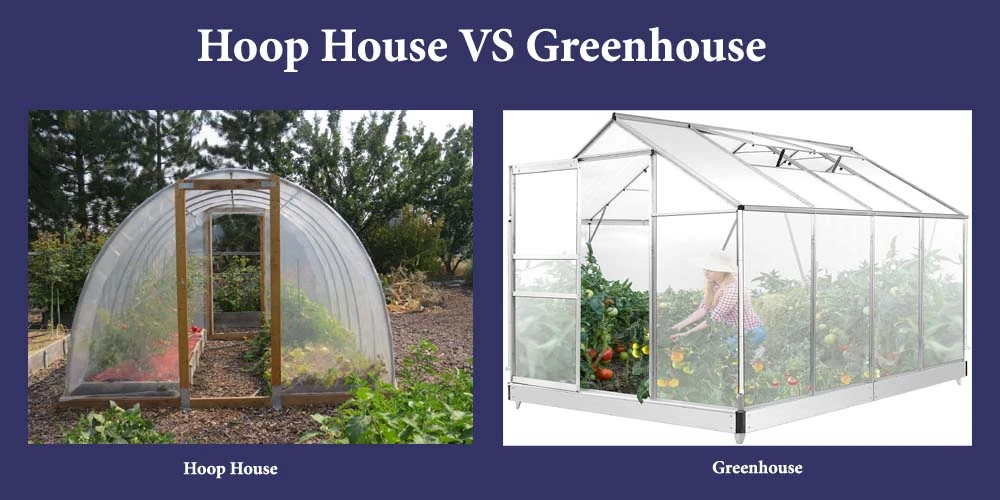
Hoop House VS Greenhouse: Differences

Both structures serve the same core purpose — protecting plants from harsh weather and extending the growing season — but they do it in very different ways. A hoop house relies on passive solar heating and ventilation through roll-up sides, while a greenhouse can incorporate heating systems, exhaust fans, automated vents, and even supplemental lighting. The level of environmental control you need dictates which structure makes sense for you.

Below, you'll find a detailed breakdown covering construction, cost, climate control, durability, and the most common mistakes gardeners make when choosing between the two. By the end, you'll know exactly which structure deserves a spot in your garden.

Hoop House vs Greenhouse Comparison at a Glance

Before diving into the details, here's a side-by-side snapshot of the key differences. This hoop house vs greenhouse comparison table covers the factors that matter most when you're making your decision.

FeatureHoop HouseGreenhouse
Frame MaterialPVC pipe or galvanized steel tubingAluminum, steel, or wood framing
CoveringSingle or double-layer polyethylene filmGlass, polycarbonate, or acrylic panels
Typical Lifespan3–5 years (covering); 10–15 years (frame)20–30+ years with maintenance
Cost per Sq Ft$1–$5$10–$35+
Climate ControlPassive (roll-up sides, shade cloth)Active (heaters, fans, automated vents)
FoundationGround stakes or base railsConcrete slab, footings, or knee wall
PortabilityRelocatable in most casesPermanent structure
Permit RequiredRarelyOften (varies by municipality)
Wind ResistanceModerate (up to 50–60 mph)High (engineered for local codes)
Best ForSeason extension, row crop protectionYear-round growing, tropical plants

Structural Differences

The frame is where these two structures diverge most visibly. Hoop houses use a series of curved ribs — usually galvanized steel or schedule 40 PVC — set into the ground at regular intervals and connected by purlins running the length of the structure. The covering is a single sheet of 6-mil greenhouse-grade polyethylene, secured with channel locks or clips.

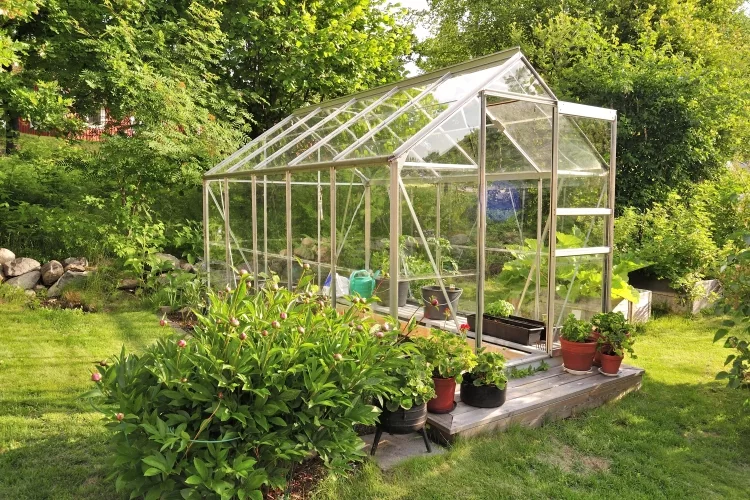
Greenhouses, on the other hand, use rigid framing (aluminum extrusions, steel, or treated wood) designed to hold solid panels. The panels themselves — tempered glass, twin-wall polycarbonate, or corrugated acrylic — provide better insulation and light diffusion than poly film. This rigid construction also allows for more complex roof designs, including gable, lean-to, and gothic arch shapes.

Climate Control Capabilities

Here's where the gap gets serious:

  • Hoop houses — ventilation comes from roll-up sidewalls, end-wall doors, and optional ridge vents. Heating is typically passive (thermal mass, row covers inside the structure). You can add a space heater, but the poly covering leaks heat fast.
  • Greenhouses — designed for active climate management. You can install thermostat-controlled heaters, exhaust fans, evaporative cooling pads, circulation fans, and automated roof vents. Twin-wall polycarbonate panels retain heat significantly better than poly film.

If you're germinating seeds indoors and want to transplant them into a controlled environment, a greenhouse gives you far more precision. A hoop house works well for hardening off seedlings and extending shoulder seasons, but it won't maintain consistent temperatures during deep winter without serious supplemental heat.
Pros and Cons of Each Structure

Hoop Houses Pros & Cons

Hoop House Advantages and Drawbacks

Advantages:

  • Low cost — a 14×30 ft hoop house runs $300–$1,500 depending on materials
  • Fast assembly — two people can build one in a weekend
  • No foundation or permits needed in most jurisdictions
  • Easy to relocate if you practice crop rotation
  • Excellent for season extension (adds 4–8 weeks on each end)
  • Works well for cool-season crops like lettuce, spinach, and kale
  • Scalable — add more hoops to increase length at minimal cost

Drawbacks:

  • Poly film degrades in UV light and needs replacing every 3–5 years
  • Minimal insulation — temperature swings of 30°F+ between day and night
  • Vulnerable to heavy snow loads and high winds if not properly braced
  • Limited headroom at the sidewalls
  • No effective way to cool below ambient temperature

Pro tip: If you're in a windy area, go with galvanized steel ribs spaced 4 feet apart instead of PVC. The extra cost is minimal, and the structural integrity is night-and-day different.

Greenhouse Advantages and Drawbacks

Advantages:

  • Year-round growing capability with proper heating
  • Precise temperature, humidity, and ventilation control
  • Durable — polycarbonate panels last 15–20 years; glass even longer
  • Better insulation reduces heating costs in cold climates
  • Higher resale value and adds property value
  • Supports advanced systems: hydroponics, misting, supplemental lighting

Drawbacks:

  • Significantly higher upfront cost ($5,000–$25,000+ for a quality kit)
  • Requires a level foundation (concrete, gravel pad, or deck blocks)
  • Building permits often required — setback and height restrictions apply
  • Not portable once constructed
  • Glass panels are fragile and expensive to replace
  • Ongoing utility costs for heating, cooling, and ventilation

How to Choose the Right Structure for Your Garden

This isn't just about budget — it's about matching the structure to your actual growing needs. Follow this framework to narrow it down.

Assess Your Growing Goals

Start by asking yourself these questions:

  1. What are you growing? Cool-season greens and root vegetables do well in an unheated hoop house. Tropical plants, orchids, or year-round tomatoes need a greenhouse.
  2. How long is your natural growing season? If you're in USDA zones 6–8 and just want to push spring earlier and fall later, a hoop house delivers excellent ROI. Zones 3–5 with harsh winters demand the insulation and heating of a greenhouse.
  3. Are you growing commercially or for your household? Market growers often start with hoop houses because they can cover more square footage for less money. Hobby gardeners who want a dedicated growing space year-round lean toward greenhouses.
  4. How much maintenance are you willing to do? Hoop houses need periodic poly replacement and frame inspections. Greenhouses need less frequent covering maintenance but more attention to mechanical systems.

Step-by-Step Decision Framework

Use this process to make a confident choice:

  1. Define your budget ceiling. Include not just the structure but also site prep, irrigation, and any heating or ventilation equipment.
  2. Check local regulations. Call your county building department. Some areas classify greenhouses as permanent structures requiring permits, while hoop houses fly under the radar as temporary or agricultural.
  3. Evaluate your site. You need a level area with full sun exposure (minimum 6 hours direct sunlight). The long axis of either structure should run east-west to maximize solar gain. According to the Wikipedia article on greenhouses, orientation and glazing angle significantly impact light transmission and thermal performance.
  4. Match structure to climate. If your average winter low drops below 20°F and you want to keep growing, you need the insulation value of a greenhouse. If winter lows stay above 25°F, a double-layer poly hoop house with row covers can keep hardy crops alive.
  5. Plan for the future. If you think you'll want to scale up, hoop houses are easier to expand. If you want a permanent fixture that adds to your property, go with a greenhouse.

Warning: Don't skip the site drainage check. Both hoop houses and greenhouses fail fast if water pools around the base — rotting wooden frames, rusting steel, and drowning plant roots.

Once you've picked your structure, you'll need to harden off plants properly before moving them from indoor starts into either environment, especially in early spring when nighttime temperatures still dip.

Breaking Down the Costs

Cost is usually the deciding factor. Here's an honest breakdown of what you'll spend — not just upfront, but over the first five years.

Upfront Investment

For a comparable growing area of roughly 420 square feet (14×30 ft):

  • DIY hoop house: $300–$800 for materials (steel or PVC ribs, poly film, channel locks, ground stakes, end-wall lumber)
  • Hoop house kit: $800–$2,500 depending on gauge of steel and poly quality
  • Greenhouse kit (polycarbonate): $3,000–$8,000 for a basic hobby greenhouse
  • Greenhouse kit (glass): $8,000–$20,000+ for a quality glass structure
  • Custom-built greenhouse: $15,000–$35,000+ depending on materials and contractor rates

These numbers don't include site preparation. A greenhouse foundation (concrete slab or footings) adds $500–$2,000. A hoop house typically needs nothing more than leveled ground and maybe a gravel perimeter for drainage.

Long-Term and Hidden Costs

The sticker price is deceptive. Over five years, here's what ongoing costs look like:

  • Poly film replacement — $150–$400 every 3–4 years for a hoop house. That's $200–$500 total in a five-year window.
  • Heating costs — a greenhouse in zone 5 running a propane heater through winter can cost $50–$150 per month (4–5 months). That's $1,000–$3,750 over five years. A hoop house with no active heat? $0.
  • Repairs — poly tears from wind or hail run $20–$50 per patch. Replacing a cracked polycarbonate panel costs $50–$200. A broken glass panel can hit $100–$400 installed.
  • Electricity — fans, automated vents, and supplemental lighting in a greenhouse add $20–$60 per month to your electric bill.

The five-year total cost of ownership for a hoop house typically lands between $1,000 and $3,000. For a greenhouse, expect $5,000–$15,000+ depending on how aggressively you heat and automate. The greenhouse costs more, but it also produces more — you get year-round harvests instead of seasonal ones.

Mistakes That Cost You Time and Money

After helping dozens of gardeners set up growing structures, these are the errors that come up repeatedly. Avoiding them saves you hundreds of dollars and a lot of frustration.

Sizing and Placement Errors

  • Building too small. Every gardener who builds a 10×12 ft structure wishes they'd gone 14×24 ft. You'll fill the space faster than you think with benches, walkways, and storage.
  • Ignoring wind patterns. Place the end walls (not the broadside) facing prevailing winds. A hoop house oriented broadside to wind acts like a sail and will lift off the ground.
  • Poor sun exposure. Placing either structure under trees or on the north side of a building defeats the purpose. Full southern exposure is non-negotiable.
  • Forgetting access paths. You need to get a wheelbarrow in and out. Plan door width accordingly — 4 feet minimum on at least one end.
  • Skipping the level check. Even a 2-inch slope across a 14-foot span causes water to pool on one side and leaves the other side bone dry. Level the site before you build.

Material and Maintenance Oversights

  • Using hardware-store PVC for a hoop house frame. Schedule 40 PVC is fine for a temporary cold frame, but for a structure over 10 feet wide, galvanized steel conduit or purpose-built greenhouse bows are the way to go. PVC sags under heat and snaps in cold.
  • Buying cheap poly film. Standard construction poly breaks down in UV light within one season. Spend the extra $50–$100 on greenhouse-grade 6-mil poly with UV stabilization — it lasts 4 years instead of 1.
  • Neglecting ventilation in a greenhouse. Overheating kills more greenhouse plants than cold does. You need at least one square foot of vent opening per 10 square feet of floor space. Automated vent openers (wax-cylinder type) cost $25–$40 each and eliminate the need to babysit your greenhouse on warm days.
  • Skipping pest management planning. An enclosed growing space is a paradise for aphids, whiteflies, and spider mites. Without natural predators or airflow, infestations explode. Plan your pest control strategy before you start planting, not after the first outbreak.
  • Not anchoring properly. Ground stakes for a hoop house need to go at least 18 inches deep. Greenhouses on deck blocks (not bolted to a slab) can shift in freeze-thaw cycles. Anchor for your worst-case weather, not your average conditions.

Frequently Asked Questions

Can a hoop house be used year-round?

In mild climates (USDA zones 7–10), a hoop house with row covers and thermal mass (water barrels) can keep cold-hardy crops growing through winter. In zones 3–6, production drops significantly from December through February unless you add supplemental heat, which defeats the cost advantage. For true year-round growing in cold climates, a greenhouse is the better investment.

How long does it take to build a hoop house compared to a greenhouse?

A basic hoop house (14×30 ft) takes two people one weekend — roughly 12–16 hours of labor. A kit greenhouse of similar size takes 2–4 weekends depending on complexity, plus additional time for the foundation. If you're pouring a concrete slab, add another weekend for prep and curing time before you can start assembly.

Do hoop houses need building permits?

In most U.S. jurisdictions, hoop houses are classified as temporary agricultural structures and do not require permits. However, this varies by county and municipality. Some areas require permits for any structure over a certain square footage (often 120–200 sq ft). Always check with your local building department before construction. Greenhouses almost always require permits because they have permanent foundations.

Final Thoughts

You now have a clear picture of what separates hoop houses from greenhouses — and more importantly, which one fits your situation. If you're still on the fence, start with a hoop house. It's the lowest-risk way to test whether protected growing works for your garden, and you can always upgrade to a greenhouse later once you've confirmed the commitment. Pick your structure, prep your site this weekend, and get growing.

Christina Lopez

About Christina Lopez

Christina Lopez grew up in the scenic city of Mountain View, California. For eighteen ascetic years, she refrained from eating meat until she discovered the exquisite delicacy of chicken thighs. Christina is a city finalist competitive pingpong player, an ocean diver, and an ex-pat in England and Japan. Currently, she is a computer science doctoral student. Christina writes late at night; most of her daytime is spent enchanting her magical herb garden.


Follow Christina:

Get new FREE Gifts. Or latest free growing e-books from our latest works.

Disable Ad block to reveal all the links. Once done, hit a button below