Picture this: you've been babying your tomato seedlings on a windowsill all winter, only to watch a late frost wipe them out the moment you move them outside. Or maybe you've spent spring weekends hunting for a portable shelter that actually fits your balcony without requiring a contractor. If either scenario sounds familiar, you're in the right place. A good small greenhouse solves both problems — and in 2026, the options have never been better.
Small greenhouses range from compact tabletop propagators to full walk-in structures, and choosing the wrong one for your space or climate is an expensive mistake. After reviewing dozens of models, we narrowed the field to the seven that consistently deliver on protection, durability, and value. Whether you're a weekend gardener or a serious grower, this list has something for you. Browse all our picks in the gardening reviews section for even more recommendations.
Before you buy, it helps to understand what separates a great greenhouse from a mediocre one. Frame material, panel UV rating, and ventilation design are the three factors that will make or break your investment. We'll break those down in the buying guide below — but first, let's get into the picks.

Contents
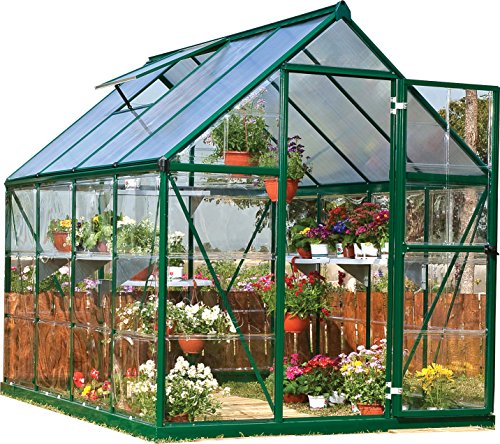




The Palram Canopia Hybrid earns its top spot by doing what most small greenhouses fail at: balancing light transmission with UV protection without compromising structural rigidity. The 4 mm twin-wall polycarbonate roof panels block up to 99.9% of UV rays while diffusing sunlight evenly, which means your most sun-sensitive plants — orchids, ferns, young seedlings — won't scorch even on brutal summer afternoons. The crystal-clear polycarbonate side panels transmit 90% of available light, so your plants get what they need without the damaging wavelengths.
The rust-resistant aluminum frame is the real foundation here. It doesn't flex under snow load or rattle in wind the way cheaper steel-tube frames do. With 48 square feet of growing space, you can fit a meaningful collection of raised containers, hanging baskets, and shelving units. This is a greenhouse that a serious hobby gardener can grow into over multiple seasons — not just a single spring. For context, it pairs extremely well with quality growing media; check out the 13 best potting soils for herbs to make the most of your interior space.
Assembly requires patience and ideally two people, but the parts are labeled and the instruction quality is above average for this category. Once it's standing, it feels permanent. The forest green color is an aesthetic bonus that blends naturally into garden settings.
Pros:
Cons:
If you want a walk-in greenhouse without the walk-in price, the Outsunny 8' x 6' x 7' is the one to beat in 2026. It's a portable structure, not a permanent installation — the PE cover and steel frame go up in an afternoon without any concrete or hardware anchoring. The large roll-up zipper door is a practical detail that matters every single day: you can seal the greenhouse completely to hold heat overnight, or open it wide for rapid ventilation when temperatures climb.
The four-tier metal shelving is the feature that elevates this above bare-bones alternatives. You get 18 slots across the shelves, enough to organize plants by type, size, or growth stage. That kind of vertical organization matters when you're working in a small footprint. The PE cover blocks UV and traps warmth effectively for a fabric covering, though it won't perform like rigid polycarbonate in sustained cold. Think of this as your three-season solution or a warm-climate year-round option.
The steel frame is lighter than solid aluminum greenhouse frames, so weight it down or stake it on windy sites. That's the main trade-off for the price. For the casual grower who needs more space than a mini greenhouse but can't commit to a permanent structure, this hits the mark squarely.
Pros:
Cons:
Not everyone has a yard. If you're gardening on a balcony, patio, or small deck, the Outsunny 4 Tier Mini Greenhouse deserves serious attention. At 27.6" x 19.7" x 62.2", it takes up roughly the footprint of a kitchen trash can while giving you four wire shelves of growing space stacked vertically. The double-layer roof design is a clever engineering choice: the mesh layer lets rain reach your plants and provides ventilation, while the zip-up PE cover closes over it for cold nights or heavy weather.
The 140 GSM PE cover is rated UV-resistant and allows 85% sunlight penetration — that's genuinely good light transmission for a fabric cover at this price. The roll-up zippered door with top-fixing straps makes daily access easy without fumbling. Wire shelves mean air circulates around your pots rather than trapping moisture underneath them, which reduces fungal issues with densely packed plants.
If you're starting seeds indoors and need somewhere to harden them off before outdoor planting, this mini greenhouse handles that transition perfectly. Pair it with a quality seed starting setup — our guide to the 15 best seed starter kits has everything you need to fill those shelves — and you have a complete early-season system at minimal cost.
Pros:
Cons:
VEVOR built this greenhouse around one specific promise: you can get it standing in minutes, not hours. The heavy-duty rust-proof tubes and pre-organized component system deliver on that. Shelves rated to 33 lbs each give you real carrying capacity for heavy pots, grow bags, and lighting hardware — not just light seedling trays. That's a meaningful distinction if you're planning to use grow lights or heavy terracotta containers inside.
The waterproof PE tarp carries a level 6 UV protection rating and is designed for high light transmittance without the leaf-burning hot spots you sometimes get with lower-quality covers. The roll-up zipper door handles access and ventilation in one motion. At roughly 55 inches square and 78.7 inches tall, this is genuinely walk-in capable for most adults, though it's compact enough to fit on a generous patio or small backyard corner.
The VEVOR earns its "quick setup" label honestly. If your situation calls for a greenhouse that deploys fast — maybe for seasonal use, or because you move between properties — this is the most practical option on this list. The build quality is solid without being overbuilt, and the price reflects that pragmatic balance.
Pros:
Cons:
The HOWE 8x8x7.5 FT is built for gardeners who live where the weather doesn't play nice. With a snow load capacity of 15.4 psf and a wind rating of 56 mph, this is a structure you can leave standing year-round without anxiety. The 6 mm twin-wall translucent polycarbonate panels block 99.99% of UV rays — a full step up from the 4 mm panels on most competitors — while still diffusing light to protect plants from burn. Four corner posts and two middle posts anchor this greenhouse deep into soil or concrete, which is where the real structural confidence comes from.
The upgraded 6-foot swing door is a practical quality-of-life improvement over narrower greenhouse doors. Moving large containers, wheelbarrows, or just walking in with full hands becomes significantly easier. The two adjustable roof vents and lockable swing door give you precise control over temperature and humidity — critical during transition seasons when daytime temps spike and nights drop fast.
This is the greenhouse for serious hobbyists. It costs more and takes longer to assemble than fabric-frame options, but it's a multi-decade investment if you maintain it. If you're also planning to grow herbs year-round inside, pair it with appropriate pots for basil and other culinary herbs to maximize your interior layout.
Pros:
Cons:
Most greenhouses give you a structure and leave you guessing about what's happening inside. This 6x8 FT model bundles in a hygrometer — a humidity and temperature monitor — so you actually know your growing conditions rather than assuming them. That's a meaningful practical advantage. Knowing your interior humidity prevents the two most common small greenhouse mistakes: overheating in summer and excess moisture buildup in winter that leads to mold and root rot.
The 4 mm double-wall polycarbonate panels at 580g are thick and impact-resistant, letting in plenty of light while blocking harmful UV wavelengths. The reinforced aluminum alloy frame with strengthened corners handles tough outdoor conditions — strong wind, heavy rain, and seasonal snow — without the flex you get from thinner extrusions. The vented roof window is included, giving you passive ventilation control without an add-on purchase. Assembly is designed with clearly labeled parts and included tools, which puts it ahead of competitors that require you to source your own hardware.
If you want to seal the panel gaps for maximum insulation, the manufacturer recommends silicone (not included), which is a worthwhile upgrade for year-round use. For the data-oriented gardener who wants visibility into their plants' environment, this greenhouse stands out from every other model on this list.
Pros:
Cons:
The EarlyGrow Domed Propagator occupies a completely different niche from every other product on this list — and it fills that niche better than anything else here. At 15" x 9" x 7", this is a countertop-scale seed propagation tool, not an outdoor growing structure. The domed design traps warmth and humidity precisely where germinating seeds need it most: immediately around the soil surface. The high-quality PP plastic won't shatter or splinter, which matters more than you'd think when you're handling it with wet, muddy hands every morning.
The heavy-duty PP tray is the component that distinguishes this from cheaper propagators. It's built to carry mature plants without flexing or moisture damage, so you can transport starts from a heat mat to a windowsill to an outdoor hardening-off station without the tray failing mid-move. That structural integrity over the plant's lifecycle — not just the germination phase — is what earns EarlyGrow its reputation among serious seed starters.
This isn't a greenhouse in the traditional sense, but if your goal is to get seeds started earlier in the season, this is the tool that makes it happen. It's reusable across multiple seasons, easy to clean, and sized to fit standard seed trays. Think of it as the first step before your seedlings graduate to one of the larger structures on this list. According to Wikipedia's overview of greenhouse technology, controlled-environment propagation has been used by professional growers for centuries — the EarlyGrow brings that principle to your kitchen counter.
Pros:
Cons:
The frame is the skeleton of your greenhouse, and the material determines how long it lasts and how it holds up to weather. Aluminum frames are the gold standard for longevity: they don't rust, they hold their shape under snow load, and they're lighter than heavy-gauge steel, which makes assembly easier. The trade-off is cost — a quality aluminum frame greenhouse like the Palram Canopia or HOWE will cost more upfront.
Steel tube frames (used in the Outsunny walk-in and VEVOR models) are perfectly serviceable for three-season or mild-climate year-round use, but you need to either coat them annually to prevent rust or accept that they'll have a shorter lifespan. If you're in a region with high humidity or salt air, aluminum wins outright. If you're in a dry climate and replacing every five to seven years doesn't bother you, steel saves real money.
This is the single most important decision in greenhouse selection. Polycarbonate panels — specifically 4 mm or 6 mm twin-wall — provide significantly better insulation, higher light diffusion, and more consistent UV protection than PE film covers. They don't degrade as quickly in UV exposure, and they hold up to hail, falling branches, and physical contact without tearing. If you're investing in a permanent or semi-permanent structure, polycarbonate is non-negotiable.
PE covers are lighter, cheaper, and perfectly appropriate for portable or seasonal greenhouses. They allow high light transmission (85–90% on quality models), handle UV reasonably well for one to three seasons, and are easy to replace when they degrade. The Outsunny walk-in, VEVOR, and Outsunny mini greenhouse all use PE covers — and all three are excellent options in the contexts they're designed for. Just don't expect a PE cover to perform like polycarbonate in a hard freeze.
Overheating kills plants faster than cold does. A greenhouse without adequate ventilation becomes a killing chamber on any sunny day above 60°F. Look for roof vents, not just door openings. A roll-up door lets in air at ground level, which is helpful, but hot air accumulates at the top of the structure. Roof vents — either manual or automatic — are what actually regulate temperature.
The HOWE and the 6x8 Hygrometer model both include roof vents as standard. The Outsunny and VEVOR models rely primarily on the roll-up door for ventilation, which works in moderate climates but requires more active management on hot days. If you're in a warm or hot climate, prioritize any model with a vented roof.
Match the greenhouse to your actual space and growing goals before you purchase. A walk-in greenhouse on a 6-foot balcony is a disaster. A mini propagator for someone who grows 200 pepper plants per season is a waste of time. Measure your available space, then add 20% to your plant count estimate — because greenhouse gardeners almost always expand beyond their initial plans.
For most beginners, a 6x8 or 8x8 polycarbonate greenhouse provides enough space to learn without overwhelming you with maintenance. If you're starting seeds only, a mini 4-tier portable greenhouse or a domed propagator handles the job at a fraction of the cost. Start smaller than you think you need — you can always expand, and an oversized greenhouse is harder to heat efficiently in your first season.
Yes, with the right model and setup. Polycarbonate greenhouses — especially 6 mm twin-wall models like the HOWE — hold heat significantly better than PE cover models. In USDA zones 5 and colder, you'll need supplemental heating regardless of greenhouse type. A small electric or propane heater combined with a quality polycarbonate structure extends your growing season dramatically. PE cover greenhouses work for overwintering hardy plants but struggle to maintain above-freezing temps without heating in hard freeze conditions.
Most vegetables and fruiting plants need 6–8 hours of direct or diffused sunlight per day. Quality polycarbonate panels and PE covers both transmit 85–90% of visible light, so light isn't usually the limiting factor in a well-sited greenhouse. Position your greenhouse to maximize southern exposure (in the Northern Hemisphere) and avoid shading from trees or structures. In winter, you may need supplemental grow lights for sun-hungry crops like tomatoes and peppers.
Portable greenhouses are absolutely worth it if your situation calls for flexibility — renters, gardeners who move, or growers who only need seasonal protection. They cost significantly less and go up without permits or permanent ground modification. The trade-off is durability and insulation: PE cover portables last three to five years versus ten-plus for polycarbonate permanent structures, and they don't hold heat as well. If you're staying put and want a year-round growing environment, invest in permanent polycarbonate. If you need flexibility, portable models like the Outsunny or VEVOR deliver excellent value.
Ventilation is your primary humidity control tool — open vents and doors on warm days to exchange moist interior air for drier outside air. In wet climates or during humid summers, a small battery-operated fan helps circulate air and prevent stagnant pockets where mold thrives. For temperature, shade cloth reduces heat gain in summer; a small heater handles cold nights in winter. The 6x8 FT model with an included hygrometer takes the guesswork out of this by giving you real-time readings — which is exactly why monitoring matters for consistent growing results.
Most small greenhouses in the 6x8 to 8x8 range don't require a poured concrete foundation. A level gravel pad, paving stones, or treated lumber base is sufficient for most installations and allows for drainage. The HOWE model includes corner and middle posts designed to anchor into soil or concrete for maximum stability in high-wind regions. Fully portable models like the Outsunny and VEVOR require no base at all, though staking them down in exposed locations is strongly recommended. For permanent polycarbonate structures, a level base significantly improves panel alignment and long-term structural integrity.
The right small greenhouse is out there for your space, budget, and growing goals in 2026 — whether that's a heavy-duty polycarbonate structure like the Palram Canopia or HOWE for year-round serious growing, a portable walk-in from Outsunny or VEVOR for seasonal flexibility, or a compact EarlyGrow propagator to kick off seed season on your countertop. Pick the model that matches your actual situation, not an aspirational one, and your plants will thank you for it. Click through to Amazon to check current pricing and availability, and start growing sooner rather than later.
 |
 |
 |
 |

About Christina Lopez
Christina Lopez grew up in the scenic city of Mountain View, California. For eighteen ascetic years, she refrained from eating meat until she discovered the exquisite delicacy of chicken thighs. Christina is a city finalist competitive pingpong player, an ocean diver, and an ex-pat in England and Japan. Currently, she is a computer science doctoral student. Christina writes late at night; most of her daytime is spent enchanting her magical herb garden.


Get new FREE Gifts. Or latest free growing e-books from our latest works.
Disable Ad block to reveal all the links. Once done, hit a button below
|
|
|
|
 rinjal