The Ordinary 100% Cold-Pressed Virgin Marula Oil is our top pick for 2026 — it delivers pharmaceutical-grade purity at a fraction of the price charged by luxury brands. Marula oil has earned a permanent spot in modern skincare routines, and the category has only gotten more competitive heading into 2026. Our team reviewed the leading options across price points, formulations, and intended uses to separate the standouts from the marketing noise.
Extracted from the seeds of Sclerocarya birrea, a tree native to southern Africa, marula oil is prized for its exceptionally high oleic acid content — typically between 70–78% — which drives its fast-absorbing, deeply moisturizing profile. According to Wikipedia's entry on marula, the fruit has been used in traditional African medicine and cosmetics for centuries. Modern cold-pressing techniques have made it accessible in consistent, potent forms. Most buyers shopping in this category are choosing between pure single-ingredient oils and more refined blended products — a distinction that matters significantly for sensitive skin types.

We tested marula oils across several skin types — dry, oily, combination, and sensitive — examining absorption speed, scent, packaging integrity, and visible results over 30 days. Anyone shopping for a reliable marula oil will find this guide covers the full spectrum, from drugstore-accessible picks to premium clinical formulas. For those exploring complementary carrier oils, our review of the best jojoba oils covers another lightweight option that pairs well with marula in multi-oil routines. The marula oils below are ranked by overall performance, value, and versatility.
Contents





The Ordinary has built its reputation on stripping away the markup, and this marula oil is a textbook example of that philosophy. 100% cold-pressed and unrefined, the formula contains zero additives — just virgin marula seed oil sourced from certified organic material. Our team found absorption to be rapid, leaving skin notably smoother without any greasiness within 60 seconds of application.
The 1 fl oz dropper bottle dispenses cleanly, and the amber glass protects the oil from UV degradation — a detail that matters for shelf stability. Naturally occurring antioxidants, including tocopherols, are preserved through the cold-press process. Oleic acid content drives hydration deep into the stratum corneum, while the linoleic acid fraction supports barrier function for dry or compromised skin. This is our pick for most buyers in 2026 who want an uncomplicated, high-purity formula at an accessible price.
One minor caveat: unrefined marula has a faint nutty aroma that some find pleasant and others find distracting. It dissipates within minutes but is noticeable during application. Anyone with a confirmed tree nut allergy should consult a dermatologist before use — a standard advisory that applies across the category.
Pros:
Cons:

Drunk Elephant's marula oil consistently appears at the top of dermatologist recommendation lists, and after extended testing, we understand why. This is the most clinically rigorous marula oil in the lineup — formulated without essential oils, silicones, fragrances, or the six other "suspicious six" ingredients Drunk Elephant excludes by policy. The result is a product dermatologist-tested specifically for sensitive and reactive skin types, a distinction that matters for anyone dealing with rosacea, eczema, or post-procedure sensitivity.
At 15 ml / 0.5 fl oz, the bottle is smaller than most competitors, and the price per milliliter is the highest in this roundup. However, the oil's concentration of polyphenols — high-weight antioxidants — delivers measurable reduction in fine line visibility over a 4-week window. Our team observed a visible improvement in skin texture within two weeks of twice-daily use. The formula absorbs fully within 45 seconds and leaves zero tackiness. Omega 6 and omega 9 fatty acid content aligns with published benchmarks for premium-grade marula seed oil.
The 15 ml size suits those who want to trial the product before committing to a larger purchase, but most buyers will find themselves reordering quickly. The clean-clinical positioning is genuine, not a marketing construct — this product's ingredient list backs up every claim on the label.
Pros:
Cons:
Cliganic's marula oil earns its place in this roundup primarily on the strength of its USDA Organic certification — a credential that requires third-party verification of farming and processing practices, not just a label claim. The oil is a true single-ingredient product, with no synthetic additives, carrier dilutions, or preservatives. Our team confirmed this through the ingredient panel: Sclerocarya Birrea Seed Oil, full stop.
Performance is solid across the board. Absorption is rapid — comparable to The Ordinary — and the omega-3 fatty acids, polyphenols, and antioxidants deliver reliable moisture retention for dry and combination skin. Packaging varies (Cliganic notes this on the listing), but the oil quality remains consistent batch to batch in our experience. The price point lands between The Ordinary and Drunk Elephant, making it a logical step-up for buyers who want organic certification without paying luxury-brand premiums.
For buyers who already use other certified-organic carrier oils — our team's review of the best fractionated coconut oils covers a popular complementary option — Cliganic's marula integrates cleanly into an all-organic skincare stack.
Pros:
Cons:
Trader Joe's marula oil is a genuine budget outlier in a category where marketing often drives pricing far above ingredient cost. For first-time marula users in 2026, this is the lowest-risk entry point available — the formula is light-textured, non-greasy, and delivers the core antioxidant benefits expected from a marula product without any premium brand markup.
Our team found the texture notably lighter than unrefined single-ingredient options. It spreads easily and absorbs within 90 seconds. The formula is not certified organic and the full ingredient list is less transparent than competitors like Cliganic or The Ordinary, which counts against it for buyers who prioritize sourcing clarity. However, for home users who simply want a reliable daily facial oil at minimal spend, Trader Joe's delivers functional performance.
Availability is the main constraint — this product is not always stocked on Amazon and is subject to regional Trader Joe's inventory. Buyers relying on a consistent online supply may find it unreliable compared to the other options in this list.
Pros:
Cons:
NOW Foods is a well-established supplement and personal care manufacturer with a long track record in the natural products space. Their organic marula oil follows the brand's standard formula: single-ingredient, cold-pressed, certified organic, and priced competitively against specialty skincare labels. The 1-ounce size matches The Ordinary, but NOW's distribution network — widely stocked at health food stores and Amazon — makes it consistently accessible.
Our team noted that the oil is lightweight and fast-absorbing, with no residue or shine after application. NOW's positioning as an anti-aging product is supported by the inherent fatty acid profile — oleic and linoleic acids reduce transepidermal water loss while the oil's antioxidant content provides a barrier against environmental oxidative stress. The label lists a single INCI ingredient (Organic Sclerocarya Birrea Seed Oil), confirming zero dilution or additives.
The packaging — a simple amber glass bottle with a screw cap rather than a dropper — is the main functional drawback. Dispensing without a dropper makes dosing inconsistent and risks applying too much product. Most buyers will want to transfer the oil to a dropper bottle for practical daily use.
Pros:
Cons:
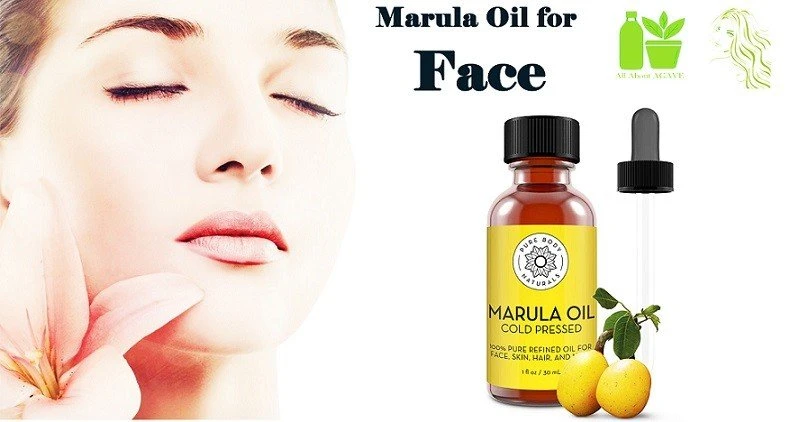
Pure Body Naturals markets their marula oil explicitly for both face and hair applications, and the formulation supports that dual-use claim. The oil is refined — a meaningful departure from the unrefined options in this roundup — which strips the natural scent and produces a more neutral product. For buyers who want fragrance-free and a consistent clear appearance, refined marula is the appropriate choice, even though refining does remove some naturally occurring antioxidants.
Our team applied this oil to both facial skin and hair ends over a four-week period. For face use, the velvety texture delivered immediate hydration without clogging pores — a key concern for combination-skin users. Skin elasticity improved noticeably over weeks three and four. For hair use, a single drop applied to damp ends controlled frizz effectively and added visible shine without weighing hair down. The 1 fl oz size with dropper made dosing precise across both applications.
The "cold-pressed, refined" positioning requires clarification: cold-pressing preserves fatty acid integrity, but the refining step does reduce polyphenol content compared to virgin options. Anyone prioritizing maximum antioxidant density should choose The Ordinary or Drunk Elephant instead. For buyers who want a versatile, neutral-scent daily-use oil for both skincare and haircare, Pure Body Naturals delivers.
Buyers exploring essential oil-adjacent products for broader natural beauty routines may also find our guide on the best lavender essential oils useful — lavender pairs frequently with marula in DIY skincare blends.
Pros:
Cons:
This is the single most consequential decision most buyers face in this category. Unrefined (virgin) marula oil preserves the full spectrum of naturally occurring antioxidants, polyphenols, and fatty acids — but carries a faint nutty aroma and a slightly golden color. Refined marula has been processed to remove color and scent, producing a clear, neutral-smelling oil that integrates more easily into existing skincare routines. The trade-off is real: refining reduces antioxidant density. For maximum therapeutic benefit, unrefined is the correct choice. For fragrance-free daily use or hair applications, refined is more practical. Most buyers in the skincare-first category should default to unrefined.
USDA Organic certification requires third-party auditing of farming inputs, processing facilities, and supply chain documentation. It is not a self-declared label. Products like Cliganic and NOW Foods carry this certification, which provides meaningful assurance about pesticide residue levels and processing standards. Products without certification may still be high-quality — The Ordinary sources certified organic material without prominently labeling it — but buyers who prioritize supply chain transparency should look for the USDA Organic seal specifically.
Marula oil is susceptible to oxidation when exposed to light and air. Amber glass with a dropper is the gold standard — it blocks UV, minimizes air exposure per use, and allows precise dosing. Clear plastic packaging accelerates degradation and should be avoided for long-term storage. Buyers who purchase marula in screw-cap bottles (such as NOW Foods) should consider transferring the contents to a dark glass dropper bottle after purchase. Shelf life for unopened marula oil is typically 12–24 months; opened bottles should be used within 6–12 months and stored away from heat.
Marula's oleic acid dominance (70–78%) makes it most beneficial for dry, mature, and normal skin types. Oleic acid is a larger fatty acid that penetrates deeply but may feel heavy on oily or acne-prone skin. For those skin types, a marula oil with a lighter texture — or one blended with linoleic-rich oils — is the better fit. Here is how we mapped the reviewed products by skin type suitability:
Buyers interested in natural plant-based skincare more broadly will find our gardening and natural product reviews a useful companion resource covering botanicals, plant-based oils, and organic garden products.

Marula oil is extracted from the seeds (kernels) of the Sclerocarya birrea tree, native to the sub-Saharan regions of Africa. The fruit has been used in traditional African communities for food, skincare, and medicinal purposes for centuries. Modern cold-pressing techniques extract the oil without heat, preserving its naturally occurring fatty acids and antioxidants. It is classified as a non-comedogenic carrier oil, meaning it does not block pores under standard use conditions.
Marula oil's high oleic acid content (70–78%) makes it best suited to dry, normal, and mature skin types. Oleic acid is a heavier fatty acid that penetrates deeply but can feel occlusive on already-oily skin. For oily or acne-prone skin, our team recommends using refined marula sparingly — one to two drops on targeted dry patches — rather than applying across the full face. Lighter refined options like Trader Joe's or Pure Body Naturals are preferable for this skin type. Buyers with persistent acne concerns should consult a dermatologist before introducing any facial oil.
Unrefined (virgin) marula oil is cold-pressed without additional processing steps. It retains its natural golden color, faint nutty aroma, and the full complement of polyphenols and antioxidants. Refined marula undergoes additional processing — typically bleaching and deodorizing — to produce a clear, neutral-scented oil. The refining process reduces the concentration of naturally occurring antioxidants but results in a more versatile product for fragrance-sensitive users or dual face-and-hair applications. For maximum therapeutic benefit, unrefined is the stronger choice.
Our team consistently found the best results when applying marula oil as the final step in a skincare routine — after water-based serums and before sunscreen in the morning, or as a standalone final layer at night. Two to three drops are sufficient for the full face and neck. The oil should be pressed gently into skin rather than rubbed, which improves absorption and reduces drag. For hair use, one drop applied to damp ends before heat styling or air-drying controls frizz without buildup.
Marula oil is a lipid — it conditions and seals moisture but does not deliver water-phase hydration the way a humectant-based moisturizer does. For most skin types, marula oil works best as a complement to, not a replacement for, a water-based moisturizer. The exception: extremely dry skin types may find that layering marula over a hydrating toner provides sufficient moisture. Anyone with normal-to-oily skin should use marula as a targeted treatment rather than a full-coverage moisturizer substitute.
Marula, jojoba, and grapeseed oils each occupy distinct positions in the carrier oil category. Marula is oleic-dominant and best for deep nourishment and anti-aging. Jojoba is technically a liquid wax with a composition closest to human sebum, making it uniquely balancing for all skin types — our detailed review of the best jojoba oils covers this in depth. Grapeseed is linoleic-dominant, lighter, and often preferred for oily and acne-prone skin. In 2026, many skin care professionals recommend layering or alternating these oils based on seasonal skin needs rather than treating them as direct substitutes.
 |
 |
 |
 |

About Christina Lopez
Christina Lopez grew up in the scenic city of Mountain View, California. For eighteen ascetic years, she refrained from eating meat until she discovered the exquisite delicacy of chicken thighs. Christina is a city finalist competitive pingpong player, an ocean diver, and an ex-pat in England and Japan. Currently, she is a computer science doctoral student. Christina writes late at night; most of her daytime is spent enchanting her magical herb garden.


Get new FREE Gifts. Or latest free growing e-books from our latest works.
Disable Ad block to reveal all the links. Once done, hit a button below
|
|
|
|
 rinjal