You're standing in your garden in early spring, eyeing that half-built hoop house frame and wondering which plastic film will actually survive a full season without turning brittle, tearing, or yellowing into uselessness by July. It's a fair concern — the wrong greenhouse cover can cost you an entire growing season, while the right one pays for itself within the first harvest. We've tested and reviewed the top options available in 2026 so you don't have to guess.
Greenhouse plastic covers are the unsung heroes of controlled-environment gardening. Whether you're running a modest backyard tunnel or managing a commercial hoop house operation, the film you choose determines how much light reaches your plants, how well your structure holds heat overnight, and how many seasons you get before replacement. For serious growers, these aren't trivial decisions — they're agronomic ones. You can pair your cover with a great vegetable garden fertilizer all you want, but if your plastic is letting in the wrong spectrum of light or venting heat you need to retain, your yields will suffer regardless.
In this guide, we cover the best greenhouse plastic films across a range of sizes, thicknesses, and use cases. We've broken down the specs that matter — mil thickness, UV resistance rating, light transmission percentage, and material construction — so you can make an informed decision based on your actual growing setup. Whether you're protecting tender seedlings or running a year-round operation, there's a cover on this list built for your situation. For more gardening product reviews, browse our full category page.

Contents





The Agfabric 6-mil polyolefin film earns its spot at the top of this list through sheer scale and agricultural performance. At 16 feet wide and 100 feet long, this roll covers serious ground without requiring seams — a major advantage when you're covering a full hoop house row or running multiple tunnel beds. The clear polyolefin construction transmits light efficiently and resists UV degradation at a level appropriate for multi-season outdoor use.
What sets Agfabric apart from commodity poly films is the documented yield improvement. The manufacturer reports up to 12% higher and earlier yields compared to uncovered growing, a claim backed by the film's ability to retain radiant heat overnight and accelerate soil warming in early spring. Weed suppression is a genuine secondary benefit — the film blocks enough sunlight to stop weed germination without compromising the growing zone inside the tunnel.
The compatibility with drip irrigation systems is worth noting if you're already running subsurface or surface drip lines. The film integrates cleanly into that setup without requiring modifications. For growers transitioning from row cover fabric to hard poly, this film offers a significant upgrade in structure and performance.
Pros:
Cons:
Grower Select enters the market with a premium 6-mil polyethylene film that backs its UV resistance with a hard guarantee: four years minimum, even in high-UV environments. That's 33% longer than comparable films, according to the manufacturer, and it's the kind of specification that matters when you're calculating replacement costs across a multi-tunnel operation. The film ships folded on a roll in a 10' x 25' format — manageable for small to medium tunnel installations.
The 91% light transmission per layer is among the highest figures you'll find in this category. That's not just marketing language — proper light transmission directly affects photosynthesis rates, canopy temperature, and overall crop vigor. Even light distribution across your growing space reduces hot spots and cold corners, which translates to more consistent plant development from row to row. This film does that job well.
One important note from Grower Select: do not allow this film to contact PVC piping without a protective barrier. The plasticizers in PVC interact with the film chemistry and will degrade it prematurely, voiding the warranty. Use their batten tape or white felt as a buffer wherever PVC framing makes contact. It's a minor installation consideration that pays off in longevity.
Pros:
Cons:
chicarry's 12 x 25ft greenhouse film delivers solid performance at a price point that makes it accessible for hobby growers and small-scale farmers who need reliable coverage without a premium budget. The standout manufacturing detail here is 5-Layer Co-Extrusion technology — a construction method that layers different polymer formulations to achieve better mechanical strength and flexibility than single-layer films of the same thickness. The result is a 6-mil film that resists tearing under tension during installation and stretching across hoop frames.
High-quality polyethylene forms the base material, giving the film the right balance of flexibility in cold temperatures and rigidity under UV exposure. The UV resistance is built into the material rather than applied as a surface coating, which matters for long-term performance. Even sunlight distribution throughout the greenhouse keeps temperature variance low, which is especially important in early spring and late fall when outside temperature swings are wide and your plants need consistent internal conditions.
For growers managing a modest tunnel garden or protecting raised beds through the winter, this film hits the right notes. The 12' width covers most standard hoop frames, and the 25' length handles typical row lengths without requiring piecing. It's not the largest option on this list, but the combination of co-extrusion construction and competitive pricing makes it a smart starting point.
Pros:
Cons:
VEVOR has built a reputation for producing functional, no-nonsense agricultural tools, and their 12 x 25ft greenhouse film lives up to that brand identity. The 6-mil polyethylene construction is tear-resistant and UV-stabilized for hot, high-radiation growing environments — a critical spec for growers in the American Southwest, high-altitude farms, or any region where summer UV exposure is intense. The film unfolds quickly from its roll format and lies flat during installation without excessive handling.
Temperature management is where VEVOR distinguishes itself. The film is specifically engineered to work bidirectionally — blocking UV radiation during hot weather peaks while retaining warmth during cold nights. Reduced dust accumulation is a less-discussed but practical advantage — films that attract and hold dust lose light transmission over time, compromising the environment inside your tunnel. VEVOR's formula addresses this directly, which contributes to more consistent performance over multiple seasons.
For hoop house operators who need a reliable workhorse film at a competitive price, this is the one. It's not loaded with specialty features, but it executes the core job — protect plants, transmit light, hold heat — without failure points. Pair it with a solid garden sprinkler system and you've built a productive controlled-environment growing setup without breaking the budget.
Pros:
Cons:
When you're covering a full commercial greenhouse or a substantial hoop house range, the Jiggly Greenhouse film at 28' x 60' is the most practical large-format option on this list. That's 1,680 square feet of coverage from a single sheet — enough to fully cover a standard commercial tunnel without midpoint seams. Seams are structural weak points and light leak sources, so eliminating them entirely through proper sizing is a real operational advantage.
The 6-mil, 4-year UV-stabilized polyethylene formula delivers exactly what commercial growers need: a guaranteed service life, documented light performance metrics, and construction thick enough to handle mechanical stresses from wind loading and crop contact. The 90% light transmission figure is competitive, and 23% light diffusion spreads photons evenly across your canopy rather than creating concentrated high-radiation zones. This is agronomically significant — diffuse light reaches deeper into the plant canopy than direct beam light, improving overall photosynthesis efficiency.
Jiggly has positioned this product for growers who understand the economics of greenhouse covering: one high-quality installation lasting four years beats two budget replacements over the same period. For any operation running 1,000 square feet or more under cover, this film merits serious consideration as the most cost-effective professional-grade option at this price tier.
Pros:
Cons:
Farm Plastic Supply has long been a reliable name in agricultural film, and their 6-mil clear polyethylene cut-to-size option is built for growers who need precision fit for small-format tunnels, cold frames, or mini hoop structures. The anti-aging UV additives are blended directly into the film material rather than applied as a surface treatment — this is the right construction approach for longevity, because surface UV coatings wear off with rain and handling while internal additives remain active throughout the film's service life.
At 40" x 90", this is the most compact option on this list, which positions it perfectly for raised bed covers, small portable tunnels, or repair patches on existing larger installations. The light transmission quality matches what you'd expect from a professional-grade product — even light distribution prevents hot spots and cold edges that would compromise plant development in a small enclosed space. Farm Plastic Supply understands that small-scale growers have the same light quality requirements as commercial operators.
The multi-purpose designation is accurate. This film works on cold frames, season-extension row covers, temporary storage protection, and any application where you need clear, durable polyethylene. For growers experimenting with cold-season growing and looking for a low-investment starting point, this is the responsible entry into greenhouse film without overcommitting to a large roll.
Pros:
Cons:
This 16-mil clear covering occupies a different category from the 6-mil films reviewed above. At nearly three times the standard agricultural thickness, this is a heavy-duty structural cover built for extreme weather conditions — high winds, abnormal freeze events, and situations where standard poly film would tear or fail. The 8' x 10' dimensions and pre-installed grommets make it a ready-to-deploy cover without any additional rigging hardware required.
The reinforced internal string grid and hemmed edges are the construction details that define this product. Standard poly films rely entirely on material thickness for tear resistance; this cover adds a mechanical reinforcement layer that distributes pulling forces across the entire panel rather than concentrating stress at attachment points. That hemmed edge and internal grid combination is what separates a tarp-style cover from a basic flat sheet — and for winter protection duty, it's a meaningful engineering difference.
Light transmission through 16-mil clear poly is naturally lower than 6-mil equivalents, and this product is honest about its role: it's a protection cover, not an optimized growing film. Use it for chicken coops, equipment shelters, temporary enclosures, and hard-weather greenhouse protection where structural resilience outweighs light transmission optimization. For season-extension growing where you're maintaining heat during a cold snap, it performs exactly as described. Those shopping for the best flower bed liners for winter protection will find this thickness philosophy familiar — sometimes thicker really does mean better when cold is the enemy.
Pros:
Cons:
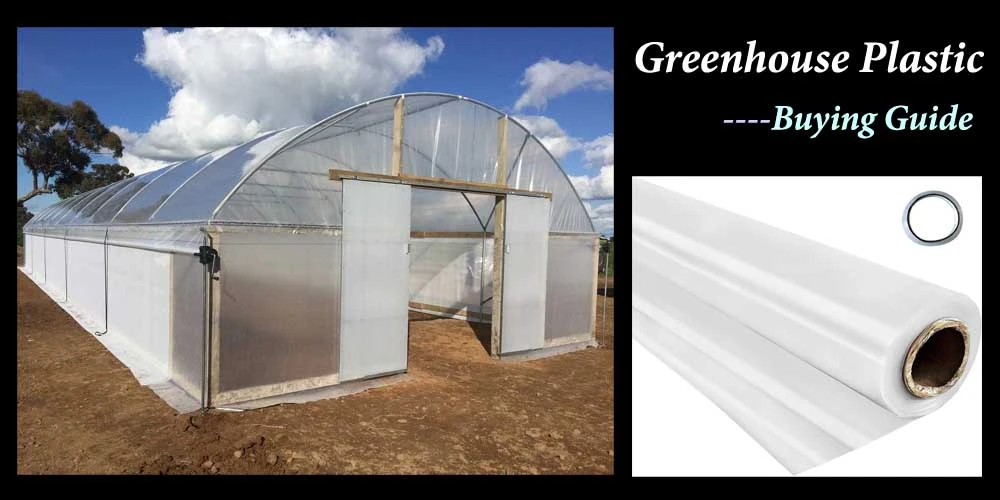
Selecting a greenhouse cover isn't complicated once you understand the four variables that govern performance. According to Wikipedia's overview of greenhouse structures, the covering material is one of the most critical determinants of internal climate — affecting temperature, humidity, and light quality simultaneously. Here's what to evaluate before you buy in 2026.
Mil thickness is the first specification to nail down, and the right answer depends entirely on your application. Standard agricultural poly runs at 4 to 6 mil for growing applications, offering the right balance of durability, flexibility, and light transmission. Six-mil is the professional standard for hoop houses and commercial tunnels — thick enough to resist tearing under wind load and UV degradation, light enough to handle and roll.
Heavy-duty applications — cold weather protection, structural covers, multipurpose tarps — justify 12 to 16 mil. You trade some light transmission for dramatically improved mechanical strength and weather resistance. The 16-mil option reviewed above illustrates this: it's built for protection duty, not optimized growing. Choose 6 mil for active growing environments, 12–16 mil for extreme weather zones or non-growing applications.
All polyethylene films degrade under UV exposure — the question is how fast. Unprotected PE film can yellow and become brittle within a single season. Quality agricultural greenhouse films include UV stabilizers that extend service life to 3, 4, or more years depending on formulation and climate.
Always look for a stated UV service life in years rather than generic "UV resistant" language. Films with explicit 4-year guarantees like Grower Select and Jiggly Greenhouse are priced accordingly, but the math usually favors them over budget replacements. High-altitude growers and those in southern US climates face accelerated UV degradation — in these regions, a 4-year rated film may perform closer to 3 years, but a non-rated budget film may fail in one.
One insider observation worth noting: how the UV additives are integrated matters. Surface-treated films lose protection faster than films with additives blended into the polymer during extrusion. If a manufacturer doesn't specify the UV treatment method, that's usually a sign the surface-coat approach was used.
Light transmission tells you what percentage of incident sunlight passes through the film. For growing applications, higher is better — most quality greenhouse films land at 88–92% per layer. Diffusion percentage tells you how much of that transmitted light scatters before reaching your canopy. Some diffusion (15–25%) is beneficial for deep canopy penetration; too much reduces intensity for light-hungry crops.
Clear films maximize transmission and minimize diffusion — ideal for most vegetables, herbs, and fruiting crops that need strong direct light. Diffuse or "anti-drip" films scatter light more evenly, which benefits dense plantings where canopy shading is a concern. For a standard hoop house growing tomatoes, peppers, or cucumbers, clear 6-mil film with 88–91% transmission is the right choice. For dense lettuce or herb production where hot spots are a problem, a modest diffusion percentage helps.
The simplest sizing rule: your film should cover the structure in one piece if at all possible. Seams are the weakest points in any greenhouse covering — they leak air, collect condensation, and tend to fail first under wind stress. Measure your hoop house perimeter (ground to ridge to ground plus end overlap) and match it to a film width that covers the full span.
For framing compatibility, verify your attachment system against the film material. Standard spring wire channels, wiggle wire, and batten tape all work with polyethylene. If your frame uses PVC pipe directly, use felt or batten tape between the pipe and film to prevent plasticizer migration. Roll storage before and after installation should be in a cool, shaded location — UV and heat exposure while stored accelerates pre-installation degradation more than most growers account for.
Six mil is the professional standard for active greenhouse growing. It provides the right balance of durability, flexibility, and light transmission for hoop houses and tunnel structures. Thicker films (12–16 mil) are appropriate for extreme weather protection or non-growing applications where structural strength matters more than light optimization.
Quality 6-mil polyethylene greenhouse films with UV stabilizers typically last 3 to 4 years under normal outdoor conditions. The exact lifespan depends on UV exposure intensity (higher altitude and southern latitudes accelerate degradation), proper installation tension, and whether the film contacts UV-degrading materials like bare PVC. Films with explicit 4-year UV guarantees from reputable manufacturers are your most reliable investment in 2026.
Both are petroleum-based polymer films, but polyolefin (POF) uses a different polymer blend than standard polyethylene (PE). Polyolefin films often offer better clarity, higher tear resistance, and slightly different heat retention characteristics compared to standard PE. Polyethylene is the industry standard and the most widely available; polyolefin films like the Agfabric option on this list are used in specialty agricultural applications where specific optical or physical properties are required.
Yes, but with an important precaution. Plasticizers in PVC pipe migrate into polyethylene film on contact, degrading the film chemistry and dramatically shortening its service life. Always place a barrier — batten tape, white felt, or foam pipe wrap — between PVC framing and the film. Some manufacturers, like Grower Select, explicitly void their warranty if the film contacts bare PVC. This is a common installation mistake that costs growers a full replacement cycle.
For most vegetable and fruit crops, aim for 88–92% light transmission per layer. This range provides enough incident light for strong photosynthesis rates without the heat concentration issues that can occur with very high transmission in hot climates. If you're growing light-hungry crops like tomatoes, cucumbers, or peppers, prioritize the higher end of that range. Leafy greens and herbs tolerate slightly lower transmission and benefit from mild diffusion to prevent tip burn.
Store rolled greenhouse film in a cool, dry, shaded location away from direct sunlight and heat sources. UV exposure and heat during storage pre-ages the film before installation, shortening its effective service life. Avoid storing rolls in contact with gasoline, oils, solvents, or fertilizer compounds that can degrade the polymer. Rolls stored properly in a climate-controlled or shaded barn can maintain full performance specifications for 12–18 months before installation.
The right greenhouse plastic cover is out there for your specific setup — whether you're running a single raised-bed cold frame or managing a full commercial hoop house operation in 2026. Review the size, mil thickness, UV rating, and light transmission specs against your structure and climate, then commit to a quality film that matches your growing goals. A well-chosen cover pays for itself in extended seasons, higher yields, and fewer weather losses — so choose confidently and get your structure covered before the next planting window opens.
 |
 |
 |
 |

About Christina Lopez
Christina Lopez grew up in the scenic city of Mountain View, California. For eighteen ascetic years, she refrained from eating meat until she discovered the exquisite delicacy of chicken thighs. Christina is a city finalist competitive pingpong player, an ocean diver, and an ex-pat in England and Japan. Currently, she is a computer science doctoral student. Christina writes late at night; most of her daytime is spent enchanting her magical herb garden.


Get new FREE Gifts. Or latest free growing e-books from our latest works.
Disable Ad block to reveal all the links. Once done, hit a button below
|
|
|
|
 rinjal