Every spring, the same scene plays out: a homeowner walks the perimeter of their lawn, spots those telltale wide-bladed clumps pushing up between the turf, and starts searching for a solution. Crabgrass is aggressive, heat-tolerant, and spreads fast — and the window to stop it is narrow. We spent weeks testing the top options available in 2026 so anyone shopping for a crabgrass killer can skip the trial-and-error phase and go straight to what works.
Whether the goal is pre-emergent prevention before seeds germinate, post-emergent control after crabgrass is already visible, or a combination approach, the right product makes a measurable difference. Our team evaluated seven leading formulas across different grass types, application methods, and weed pressures. We looked at active ingredients, residual control windows, turf safety, and ease of application. The results are below — organized for both the weekend homeowner and the serious lawn care enthusiast.
For a broader look at lawn care tools and garden products, the gardening reviews section covers everything from soil amendments to sprayers. And if applying concentrate herbicides is part of the plan, our guide on the best backpack sprayers covers the equipment side of that equation.

Contents





Roundup's latest iteration in the lawn-safe crabgrass category delivers a meaningful upgrade over previous formulas. The Crabgrass Destroyer2 is engineered specifically for post-emergent control — meaning it targets actively growing crabgrass and grassy weeds rather than preventing seeds from germinating. The 64 oz ready-to-use bottle comes with an integrated sprayer, making application accessible for anyone who wants to spot-treat without measuring or mixing. Our team found visible wilting in treated patches within 3–5 days under warm conditions, which aligns with Roundup's stated performance claims.
What sets this apart from older Roundup lawn formulas is the revised active ingredient profile designed to work on tough, mature crabgrass that other RTU products sometimes struggle with. It's cleared for use on Kentucky bluegrass, fine fescue, perennial ryegrass, and tall fescue — four of the most common cool-season turf grasses in North American lawns. The formula also targets foxtail and goosegrass, two grassy weeds that frequently co-invade alongside crabgrass. Home users dealing with mixed grassy weed infestations get broad coverage without switching products.
The main limitation is the same one shared by all post-emergent herbicides: timing matters. Once crabgrass has gone to seed in late summer, eliminating visible plants won't prevent next year's germination. We recommend pairing this with a pre-emergent the following spring for full-season control. The RTU format also means higher per-square-foot cost compared to concentrates, so large infestations may require multiple bottles.
Pros:
Cons:
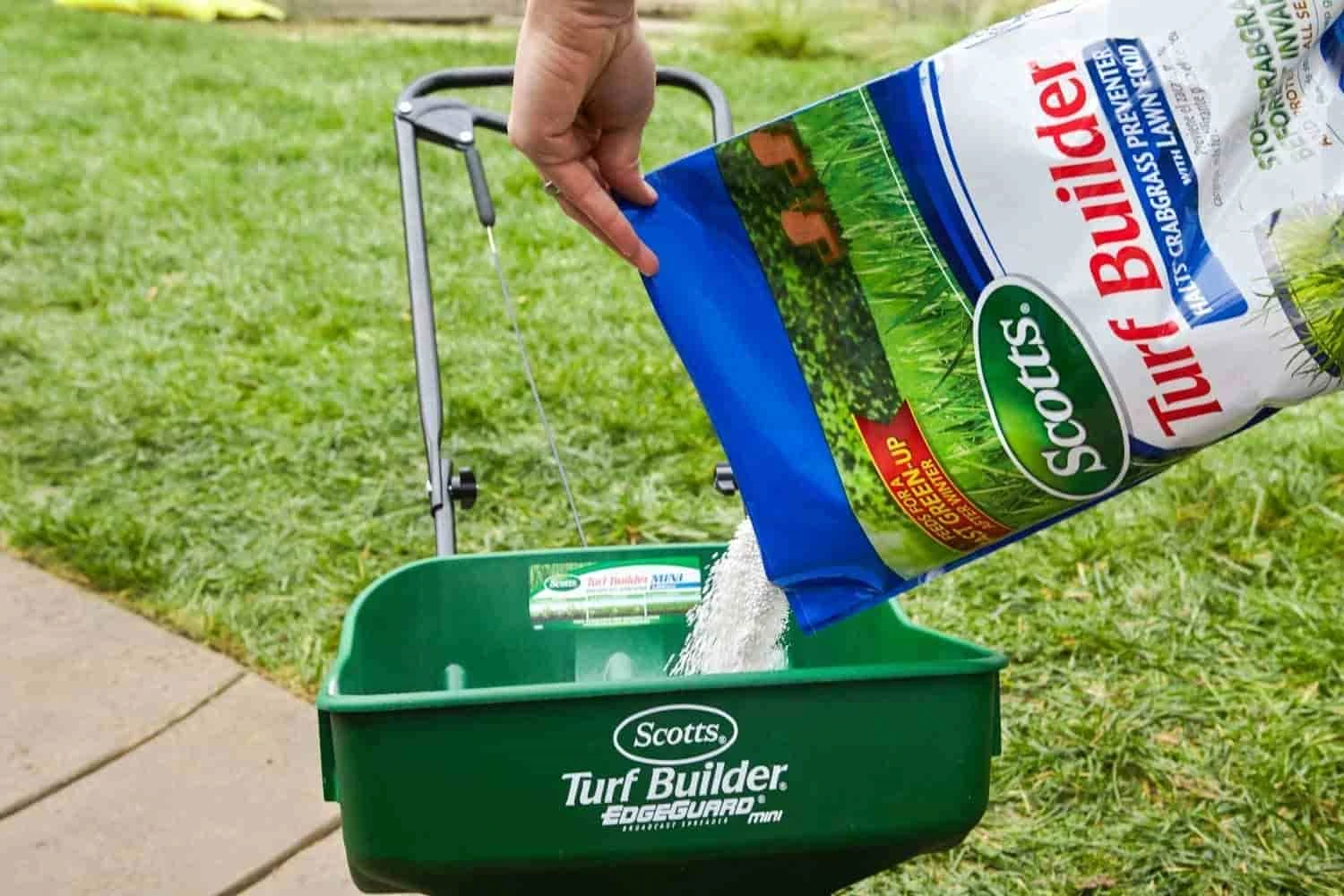
The Scotts Halts is the product most lawn care veterans recommend as the spring cornerstone of crabgrass prevention, and after our 2026 testing season, we understand why. It combines a pre-emergent barrier — pendimethalin as the active ingredient — with Scotts' Turf Builder fertilizer blend in a single granular application. The result is a two-step job done in one pass: the lawn gets fed for a fast green-up after winter dormancy while the herbicide simultaneously creates a chemical barrier that stops crabgrass seeds from completing germination. Applied before soil temperatures hit 55°F (the trigger point for crabgrass germination), it delivers all-season protection from a single treatment.
The 5,000 sq. ft. coverage bag hits an accessible price point for the average suburban lawn, and Scotts also offers larger bag sizes for properties needing broader coverage. Our team appreciated that rain, snow, and freezing temperatures after application don't compromise the product's performance — a critical detail for early spring applications when weather is unpredictable. The fertilizer component feeds existing turf and strengthens root systems, which in turn increases turf density and reduces the bare-soil patches where crabgrass typically gets its foothold.
Using a quality broadcast spreader ensures even coverage without hot spots or gaps — our review of the best broadcast spreaders covers the spreader side of pre-emergent applications. The only real limitation of the Halts formula is that it cannot be applied to newly seeded areas or overseeded lawns — the same barrier that stops crabgrass seeds also inhibits desirable grass seed germination. Timing the application correctly is essential.
Pros:
Cons:
The Ortho Weed B Gon Plus Crabgrass Control stands as the most versatile product in our 2026 roundup. Where most crabgrass killers focus narrowly on grassy weeds, this gallon-sized ready-to-use formula attacks over 200 weed species — including crabgrass, dandelions, clover, and dozens of broadleaf weeds that commonly co-exist in neglected or high-pressure lawns. The Comfort Wand applicator is Ortho's articulating spray wand design that lets most buyers treat weeds at a comfortable upright stance without crouching over the lawn, which makes a notable difference during longer spot-treatment sessions.
Root-kill action is the defining performance feature here. The formula penetrates down to the root system rather than simply burning the visible leaf tissue, which reduces regrowth compared to contact-only killers. The 1-gallon RTU format provides substantial coverage for a ready-to-use product, making it practical for lawns with widespread mixed weed pressure rather than isolated crabgrass patches. Our testing showed reliable performance on younger crabgrass plants; mature, established clumps showed slower response but ultimately succumbed with adequate coverage.
The broadleaf control capability is what earns this product its place in our top picks. For anyone managing a lawn where dandelions and crabgrass both need elimination in the same season, running two separate products is less efficient than this combined formula. The trade-off is that, like all post-emergent RTU products, the cost per square foot is higher than concentrates, and the ready-to-use format means no flexibility in concentration adjustments.
Pros:
Cons:
BioAdvanced's All-In-One concentrate is built for lawn owners who want the efficiency of mixing their own application without paying professional-service prices. The 40 oz concentrate formula dilutes with water and delivers control over more than 200 broadleaf weeds alongside crabgrass — a spectrum that rivals the Ortho RTU at a fraction of the per-application cost. The active ingredient combination targets both the leaf tissue and the root system, making it harder for treated weeds to recover through resprouting. Our team found the mixing process straightforward, and the resulting solution sprayed cleanly through standard pump and backpack sprayers.
The all-in-one formulation is the primary draw — most competing concentrates either handle grassy weeds like crabgrass or broadleaf weeds like dandelion and clover, rarely both. BioAdvanced combines that spectrum in one bottle without requiring separate treatments or tank mixes, which simplifies scheduling for the average home user. Penetration to the root level means visible collapse of treated plants rather than temporary browning of surface tissue, which is a meaningful distinction anyone evaluating these products will notice during the weeks after application.
Turf safety is worth addressing: BioAdvanced specifies which grass types this concentrate is compatible with, and home users must match their turf variety to the label before applying. The concentration ratio matters for both efficacy and safety — over-mixing is the most common application error. Provided the label directions are followed, this formula performs reliably across warm- and cool-season turf applications and represents strong value for anyone treating mid-to-large lawn areas in 2026.
Pros:
Cons:

BASF Drive XLR8 is the product that lawn care professionals reach for when crabgrass pressure is severe, and it's available to serious home users willing to work with a concentrate-level product. The active ingredient is quinclorac — a selective herbicide recognized by the EPA for its effectiveness against grassy weeds including crabgrass at all growth stages. What distinguishes Drive XLR8 from consumer-market options is its water-based formulation that promotes faster plant uptake and the extended 30-day residual control window, which keeps treated turf clear of new crabgrass germination for a full month after application. In our testing across multiple lawn panels with active crabgrass infestations, Drive XLR8 delivered the fastest visible decline of mature plants of any product in this roundup.
The broad-spectrum weed control profile is impressive even by professional standards. Beyond crabgrass, Drive XLR8 handles foxtail, kikuyu grass, signal grass, torpedo grass, bindweed, clover, dandelion, black medic, and horseweed — a roster that covers most of the common grassy and broadleaf weeds found in North American lawns. The rainfast window of under one hour means a brief rain event shortly after application doesn't require retreatment, which is a practical advantage in humid climates or spring weather with unpredictable showers.
The 64 oz concentrate format treats large areas efficiently, which makes the per-application cost competitive despite the higher unit price. The formula does require a methylated seed oil (MSO) adjuvant for best performance on established crabgrass — an additional purchase most home users don't anticipate. For anyone treating serious infestations or maintaining multiple lawn areas, Drive XLR8 in 2026 is the strongest performing single-product solution we evaluated.
Pros:
Cons:
Tenacity occupies a unique position in the crabgrass control landscape: it's one of the only products that functions effectively as both a pre-emergent and a post-emergent herbicide in a single systemic formulation. The active ingredient, mesotrione, inhibits carotenoid biosynthesis in susceptible weeds, causing bleaching of affected tissue before complete plant death. This bleaching effect is the clearest visual confirmation that the product is working, and it's a reliable indicator our team looks for during the evaluation period. Tenacity is a systemic product — meaning it moves through plant tissue from contact point to root — rather than a contact-only killer that simply burns what it touches.
The target pest list for Tenacity is among the most comprehensive of any single herbicide in this category, covering barnyardgrass, carpetweed, chickweed, clover, large and smooth crabgrass, dandelion, foxtail, goosegrass, henbit, yellow nutsedge, purslane, thistle, and wild carrot. This spectrum covers virtually every major weed category a lawn manager encounters during the growing season. The pre-emergent capability makes it particularly valuable as a seeding-time application — unlike many pre-emergents that prevent all seed germination including desirable grasses, Tenacity can be used safely during new lawn establishment with certain turf species.
The 8 oz bottle treats up to 32,000 square feet at pre-emergent rates — exceptional coverage per dollar for anyone managing large turf areas. Post-emergent applications require slightly higher rates and may need a repeat treatment 2–3 weeks after the first application for complete control of established crabgrass. The bleaching effect on treated weeds temporarily creates a whitened appearance in the lawn, which some home users find unsightly during the treatment window. It resolves as plants die back, but it's a visual trade-off worth knowing in advance.
Pros:
Cons:
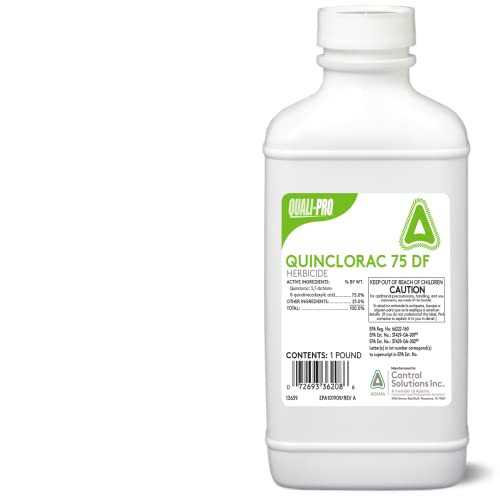
Quali-Pro's Quinclorac 75 DF is the dry-flowable version of the same quinclorac chemistry found in BASF Drive XLR8, packaged in a 1 lb format that is familiar to commercial applicators but increasingly adopted by advanced home users in 2026. The 75% active ingredient concentration is among the highest available in consumer-accessible herbicide products, making accurate measurement and mixing essential — this is not a product for casual or first-time herbicide users. Used correctly, it delivers comparable performance to the Drive XLR8 liquid at a different price-per-pound equation that favors high-volume applications across commercial turfgrass, golf courses, sports fields, and sod farms.
The weed spectrum for this product reads like a comprehensive turf management checklist. Crabgrass, clover, foxtail, dandelion, black medic, English daisy, morningglory, dollarweed, speedwell, torpedograss, kikuyugrass, barnyardgrass, bindweed, signalgrass, and violet are all labeled targets. For commercial applicators maintaining large turf areas where multiple weed species compete with desirable grass, this scope of control from a single active ingredient is operationally efficient. The dry flowable format mixes cleanly into water without the solubility issues sometimes associated with wettable powder formulations.
The primary audience for Quali-Pro Quinclorac 75 DF is anyone managing turf at a semi-professional level — property managers, landscape contractors, and serious home users with larger properties who have the spray equipment and mixing experience to handle a 75% AI product safely. For the average homeowner treating a standard residential lawn, the RTU or lower-concentration concentrate options on this list represent a more appropriate entry point. For those who qualify, however, this product offers the same professional-level control at a cost structure that scales well across multiple applications throughout the season.
Pros:
Cons:
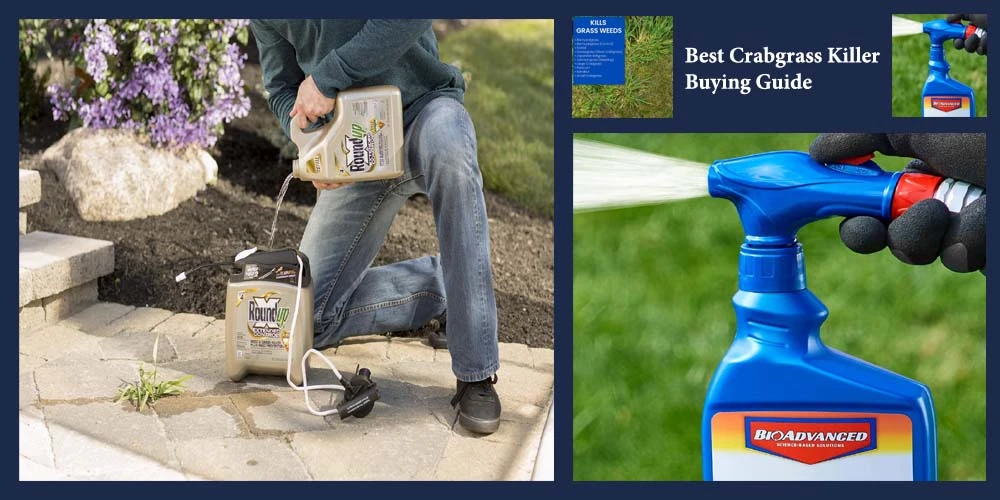
Selecting the right crabgrass killer is less about brand preference and more about matching the product's mechanism to the problem stage. The seven products reviewed above cover the full spectrum of crabgrass management approaches — the following criteria are what our team uses to narrow down the right choice for any specific situation.
This is the single most important distinction in crabgrass control. Pre-emergent herbicides create a chemical barrier in the soil that prevents crabgrass seeds from completing germination. They must be applied before soil temperatures reach 55°F at the 4-inch depth — typically early to mid-spring depending on climate zone. Products like the Scotts Halts fall into this category. Post-emergent herbicides, by contrast, kill crabgrass plants that are already visible and actively growing. Roundup Crabgrass Destroyer2, Ortho Weed B Gon, BioAdvanced All-In-One, BASF Drive XLR8, and Quali-Pro Quinclorac all function post-emergently. Tenacity is exceptional in that it handles both modes. For most home users, a spring pre-emergent paired with a post-emergent spot-treatment later in the season represents the most complete program.
Active ingredients define what a crabgrass killer can and can't do. Quinclorac (Drive XLR8, Quali-Pro) is the gold standard for post-emergent grassy weed control and requires a methylated seed oil adjuvant for peak performance on mature crabgrass. Mesotrione (Tenacity) is the dual-mode option that bleaches and kills through carotenoid inhibition — the only AI on this list that doubles as a pre-emergent without blocking new turf seeding on compatible grass types. Pendimethalin (Scotts Halts) is the reliable pre-emergent standard, best paired with fertilizer for spring lawn preparation. Understanding which AI is in a product tells most buyers what to expect from timing, application requirements, and compatibility with their specific turf type.
Ready-to-use products (Roundup Destroyer2, Ortho Weed B Gon) are the right choice for spot-treating isolated crabgrass patches on small to medium lawns. They require no mixing, no spray equipment beyond what's built in, and minimize the risk of application errors. Concentrate products (BioAdvanced, Drive XLR8, Quali-Pro, Tenacity) cost less per square foot and cover more area per purchase — the practical choice for larger lawns or properties with widespread crabgrass pressure. Anyone planning to use concentrate products should review equipment options first; our picks for the best backpack sprayers cover the application equipment side of that decision.
Not every crabgrass killer is safe on every grass type. Always confirm turf compatibility before purchasing. Most products are labeled for common cool-season grasses (Kentucky bluegrass, tall fescue, perennial ryegrass, fine fescue) and some warm-season varieties (bermudagrass, zoysiagrass). Certain formulations — particularly quinclorac-based products — require care with St. Augustinegrass. Mesotrione (Tenacity) has its own compatibility list that includes newer fine fescue varieties and some bentgrasses. Reading the label's turf compatibility section is non-negotiable, and the EPA registration number on the label confirms the product has passed federal review standards.
The optimal application window depends on whether a pre-emergent or post-emergent product is being used. Pre-emergents should go down in early spring before soil temperatures at the 4-inch depth reach 55°F — the germination trigger for crabgrass. In most of the continental U.S., that means applying between late February and mid-April. Post-emergent products are most effective when applied to young, actively growing crabgrass, typically from late spring through mid-summer before plants set seed. Applying a post-emergent after crabgrass has gone to seed in late summer eliminates visible plants but does nothing to prevent next year's crop from the seeds already deposited in the soil.
Selective herbicides are formulated to target specific weed species while leaving compatible turf grasses unharmed — but turf compatibility varies by product and grass type. Roundup's Crabgrass Destroyer2 specifies compatibility with Kentucky bluegrass, fine fescue, perennial ryegrass, and tall fescue. Quinclorac-based products like Drive XLR8 and Quali-Pro require checking against specific warm-season varieties. Tenacity (mesotrione) causes temporary bleaching on sensitive turf species even when used correctly. The label's listed grass types represent products where efficacy on weeds and turf safety have been tested — applying any product outside its labeled turf type runs the risk of turf damage.
Pre-emergent herbicides disrupt the germination process at the cellular level rather than killing established plants. When crabgrass seeds begin the germination sequence — triggered by warming soil temperatures — the root and shoot growth mechanisms encounter the chemical barrier laid down by the pre-emergent. Cell division in the emerging seedling is interrupted, preventing development past the earliest germination stage. The barrier is created by the herbicide binding to soil particles near the surface layer, which is why watering or rainfall shortly after application helps activate many granular pre-emergent products. Once the barrier breaks down — typically 10–16 weeks depending on the product and conditions — a second application may be needed for extended protection in warm climates with long crabgrass germination seasons.
Quinclorac is widely considered the most effective post-emergent active ingredient for crabgrass control, particularly against mature and established plants that other herbicides struggle to eliminate. Its dual mode of action — disrupting both auxin regulation and cell wall synthesis — makes it effective across multiple growth stages. For pre-emergent control, pendimethalin and dithiopyr are the more appropriate active ingredients. For dual pre- and post-emergent capability, mesotrione (Tenacity) is the standout option. The best active ingredient depends on the application timing and the growth stage of existing crabgrass — quinclorac leads for post-emergent performance, but it isn't a pre-emergent tool.
Most selective lawn herbicides reviewed here are labeled for turfgrass only and should not be applied to or near garden beds, vegetable gardens, ornamental plantings, or areas with desirable non-grass plants. Drift during application — wind-carried spray droplets landing on non-target plants — is the most common accidental damage scenario. Applying in calm wind conditions, using a low-pressure spray with a fan nozzle rather than a mist setting, and maintaining a buffer from garden edges are the practical steps for protecting ornamentals. Products with quinclorac are particularly active on broadleaf ornamentals and should be handled with care near flower beds and shrub borders.
For post-emergent control of young, actively growing crabgrass, a single application of a well-matched product applied at the correct rate typically eliminates the visible infestation. Mature crabgrass in its later growth stages — thick-stemmed plants with multiple tillers — frequently requires a second application 2–3 weeks after the first for complete control, particularly with Tenacity (mesotrione) at post-emergent rates. Pre-emergent products require annual application since the herbicide breaks down over the season and provides no persistent soil activity into the following year. A complete crabgrass management program in 2026 typically combines a spring pre-emergent with a post-emergent on any germination that breaks through, maintained consistently over 2–3 seasons for lawns with heavy historical seed banks.
 |
 |
 |
 |

About Christina Lopez
Christina Lopez grew up in the scenic city of Mountain View, California. For eighteen ascetic years, she refrained from eating meat until she discovered the exquisite delicacy of chicken thighs. Christina is a city finalist competitive pingpong player, an ocean diver, and an ex-pat in England and Japan. Currently, she is a computer science doctoral student. Christina writes late at night; most of her daytime is spent enchanting her magical herb garden.


Get new FREE Gifts. Or latest free growing e-books from our latest works.
Disable Ad block to reveal all the links. Once done, hit a button below
|
|
|
|
 rinjal