What's the single most important factor in growing flavorful, lush basil? Most gardeners obsess over sunlight and watering schedules — but experienced herb growers know the soil is where it all starts. Pick the wrong mix and your basil will yellow, bolt early, or simply refuse to thrive no matter how carefully you tend it. The good news: after testing and researching the top options on the market in 2026, FoxFarm Ocean Forest Potting Soil is our top pick — but several strong contenders deserve your attention depending on your setup.
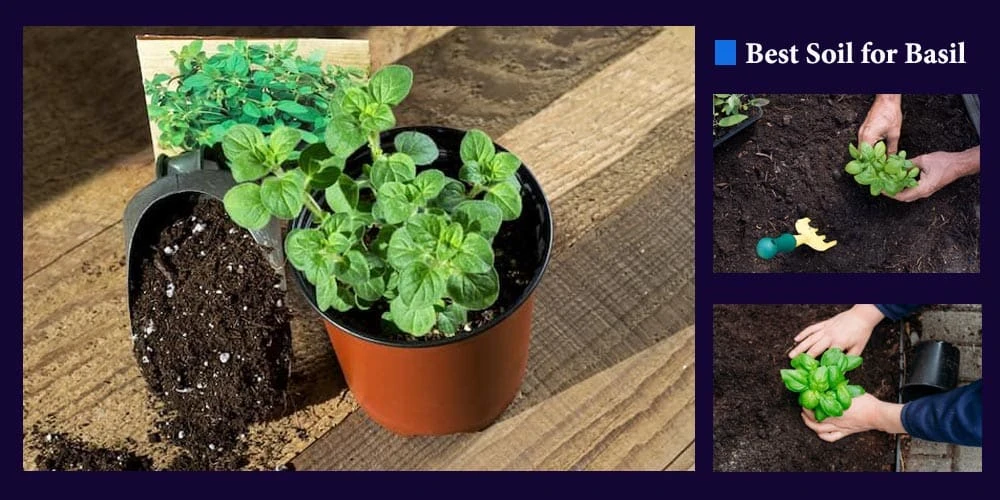
Basil demands well-draining, nutrient-rich soil with a slightly acidic to neutral pH (around 6.0–7.0). It hates waterlogged roots and compacted mix. The right potting soil keeps moisture balanced, feeds those roots consistently, and supports the beneficial microbial activity that translates directly into aromatic, flavorful leaves. Whether you're growing Genovese in a kitchen windowsill pot or Thai basil in an outdoor raised bed, your soil choice determines everything downstream.
This guide covers the 7 best soils for basil available right now, drawn from our hands-on testing and deep product research. We've included a full buying guide and FAQ so you leave here knowing exactly what to buy and why. If you're also choosing the right container, check out our picks for the 12 Best Pots for Basil — pairing the right soil with the right pot makes a measurable difference. For a broader look at our garden picks, visit the gardening reviews hub.
Contents





FoxFarm Ocean Forest is the benchmark that serious herb gardeners measure every other potting mix against. This all-purpose container blend sits at a slightly acidic pH of 6.3–6.8 — the ideal sweet spot for basil — and combines aged forest products, sphagnum peat moss, sandy loam, and Pacific Northwest sea-going fish and crab meal. The result is a biologically active, nutrient-dense mix that gives your basil a running start from the moment you transplant. You'll notice stronger, darker green growth within days compared to generic mixes.
The drainage structure in Ocean Forest is what sets it apart for basil specifically. Basil roots are notoriously sensitive to overwatering — soggy soil invites fusarium wilt and root rot within a single week. This mix's aeration profile keeps the root zone oxygenated between waterings without drying out so fast that you're watering twice a day in summer heat. It's ready to use straight from the bag, no amendments needed for a standard basil grow. The 1.5 cubic foot bag gives you enough for multiple large containers.
One insider note: some growers report that this soil runs slightly hot for seedlings due to its nutrient load. If you're starting basil from seed, consider cutting it 30% with perlite until plants reach transplant size. Established plants in containers, however, love every bit of what Ocean Forest delivers.
Pros:
Cons:
If Ocean Forest is FoxFarm's power mix, Happy Frog is the biological powerhouse. Where Ocean Forest emphasizes raw nutrient density, Happy Frog leads with its custom blend of beneficial soil microbes — mycorrhizal fungi and beneficial bacteria that colonize your basil's root zone and dramatically improve nutrient uptake efficiency. The result is a plant that extracts more value from every watering, every feeding, every square inch of root surface area.
Happy Frog is amended with earthworm castings, bat guano, and aged forest products — all slow-release organic inputs that won't burn tender basil roots. The earthworm castings alone improve soil structure by creating microscopic channels that enhance both drainage and water retention simultaneously. This 12-quart bag is sized for indoor container growers who want a premium soil without committing to a massive bag. For kitchen herb gardens and window box basil, this is arguably the superior pick over Ocean Forest.
The pH of Happy Frog is adjusted to 6.2–6.8, consistent with what basil thrives in. It's formulated for both indoor and outdoor containers, and it performs noticeably well in scenarios where you're growing basil in lower-light indoor conditions — the microbial activity compensates for some of the reduced photosynthesis efficiency. You won't need to supplement with fertilizer for the first 4–6 weeks at minimum.
Pros:
Cons:
Espoma has been making organic soil amendments since 1929, and their potting mix reflects nearly a century of refinement. The base is a rich blend of sphagnum peat moss, humus, and perlite — the classic trifecta for container herb growing — enriched with earthworm castings, alfalfa meal, kelp meal, and feather meal. That's a comprehensive organic fertilizer profile built directly into the soil. For growers who want completely clean, organic basil — especially culinary use — Espoma is the straightforward choice.
The proprietary Myco-Tone formula adds both endo and ecto mycorrhizae to the mix, similar in concept to FoxFarm Happy Frog but with Espoma's own strain selection. The perlite inclusion is particularly valuable for basil — it creates the air pockets in the root zone that basil's sensitive root system requires. This 16-quart bag is a practical size for herb gardeners maintaining several containers at once. It's OMRI Listed for organic gardening, which matters if you're growing culinary basil and care about what goes in your body.
Espoma's mix tends to retain moisture slightly longer than FoxFarm Ocean Forest, which is a plus in hot, dry climates and a minor consideration in humid environments. If you're growing basil outdoors in the Southwest or Southern US summer, this mix's moisture retention gives you a buffer against rapid drying. Pair it with a container that has excellent drainage holes and you eliminate any concern about overwatering.
Pros:
Cons:
Miracle-Gro Potting Mix is the workhorse of the container gardening world, and for good reason. This 2-pack of 8-quart bags delivers up to 6 months of continuous slow-release fertilizer feeding — a genuinely useful feature for container basil growers who don't want to remember a supplemental fertilizing schedule through the entire growing season. The mix is engineered to support twice the growth of unfed plants, and real-world results with basil bear that out: plants grown in this mix are visibly larger and bushier at the 8-week mark compared to control plants in unamended soil.
The tradeoff here is that Miracle-Gro uses synthetic fertilizers rather than organic inputs. If you're growing basil strictly for cooking and prefer organic inputs, look at the Espoma or FoxFarm options instead. But if you're growing ornamental or culinary basil without a strict organic requirement, the performance value of this mix is hard to beat at its price point. The formulation handles a wide range of container plants — flowers, vegetables, herbs, shrubs — so it's genuinely versatile across your whole container garden.
One thing experienced container growers know: Miracle-Gro's mix can compact over time as the growing season progresses. By mid-summer, you may notice slightly reduced drainage in containers that were packed full at planting. To counteract this, consider mixing in 15–20% perlite at potting time, especially in smaller containers where basil roots will fill the space quickly.
Pros:
Cons:
Burpee's entry into the premium potting soil market brings a genuinely differentiated ingredient: coconut coir as the primary moisture management component. Unlike peat moss, which is mined from finite bog deposits, coconut coir is a renewable byproduct of coconut processing. For basil growers who water inconsistently — whether by travel, schedule, or forgetfulness — the coir in this mix provides a meaningful buffer by holding the right amount of water between waterings while still releasing it readily to roots.
This OMRI Listed mix includes built-in plant food that feeds instantly on first watering, then transitions to a slow-release feed lasting up to 3 months. That dual-action feeding approach suits basil well: the immediate nutrition supports fast establishment after transplanting, and the sustained release keeps growth consistent through the productive weeks of summer. The 9-quart bag size is practical for balcony and indoor herb gardens.
Burpee's focus on seed and root development is evident in the formulation. Basil grown from seed in this mix shows strong, consistent germination rates and rapid early root development. If you're starting your 2026 basil crop from seed — which gives you access to specialty varieties you won't find as transplants — this mix earns a strong recommendation. For gardeners interested in complete growing setups, our review of the 15 Best Seed Starter Kits pairs naturally with this soil choice.
Pros:
Cons:
Coast of Maine takes a regional, terroir-driven approach to potting soil that yields genuinely excellent results for herbs. The Bar Harbor Blend is built on sphagnum peat moss, compost, and perlite — a solid structural foundation — but the distinguishing ingredients are the lobster and crab shell meal combined with kelp meal. These marine-sourced ingredients provide a unique micronutrient and chitin profile that supports not just plant nutrition but also beneficial soil biology. Chitin from crustacean shells is known to stimulate plants' natural defense responses while feeding beneficial fungi.
The drainage and aeration profile of this mix is one of the best in this review. Perlite is used generously enough that you'll see visible white particles throughout — a good sign for basil growers who tend to over-water. The blend specifically notes formulation for herbs, flowers, and container vegetables, and basil responds particularly well to the nutrient balance. The 16-quart bag offers good coverage for medium herb garden setups.
This is a specialty product that commands a premium price, but the results justify it for dedicated herb growers. The revitalizing effect on soil structure is real: repotting tired basil plants into Bar Harbor Blend mid-season produces a visible recovery response within 10–14 days. If you take your herb growing seriously, this mix belongs in your rotation. For growers also thinking about smart watering systems to complement their soil, our Best Smart Sprinkler Controller guide is worth a read.
Pros:
Cons:
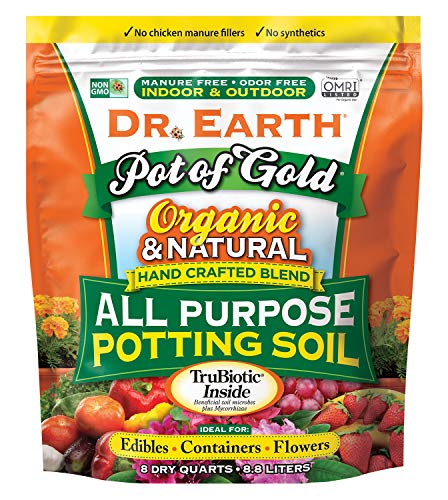
Dr. Earth's Pot of Gold is a cult favorite among serious herb gardeners, and the brand's commitment to handcrafted, small-batch quality is evident in the product. This all-purpose potting soil is specifically called out for herbs, vegetables, and indoor gardens — not an afterthought mention, but a core part of the formulation intent. Dr. Earth uses only organic and natural ingredients, with no synthetic fertilizers, GMO products, or chicken manure, making it one of the cleanest inputs for culinary basil on the market.
The 8-quart bag is sized for container gardeners who maintain several herb pots rather than large outdoor beds. It works in any size container — from small 4-inch kitchen herb pots to full-size outdoor planters and hanging baskets. The texture of Pot of Gold is noticeably well-aerated right out of the bag, with good particle diversity that prevents compaction as the season progresses. Basil roots expand freely through this mix, and the organic nutrient base supports steady, even growth without the surge-and-crash pattern that synthetic fertilizer mixes can produce.
One characteristic to note: Dr. Earth mixes tend to dry out slightly faster than moisture-retentive mixes like Burpee's coir-based formula. In high-heat environments or small containers, check moisture levels every 1–2 days during peak summer. This is easy to manage but worth knowing going in. For growers who want to understand more about pairing their soil with the right containers, our review of 15 Best Pots for Herbs covers everything you need.
Pros:
Cons:
Not all potting soils are created equal, and basil has specific requirements that eliminate several otherwise decent mixes from consideration. Here's what actually matters when you're evaluating a soil for this particular herb.
Basil performs best in a slightly acidic to neutral pH range of 6.0–7.0, with the sweet spot sitting around 6.5. Outside this window, nutrient lockout begins — your plant cannot absorb the nitrogen, potassium, and micronutrients it needs regardless of how much fertilizer you add. Check the product label or brand website for pH specs before purchasing. Most quality potting mixes in this review fall in the right range, but generic "garden soil" or raw topsoil often doesn't.
Basil has one of the lowest tolerances for waterlogged soil among common culinary herbs. Its roots need oxygen. Fusarium wilt — the most common basil disease — thrives in poorly drained, compacted soil. A good basil soil drains freely within 30–60 seconds of watering, with no standing water pooling at the base of the container for more than a few minutes. Look for mixes containing:
If your preferred mix doesn't list perlite as an ingredient, buy a separate bag and amend at 20–25% by volume. It's one of the highest-ROI moves in container herb growing. According to Royal Horticultural Society guidelines, adding 20–30% perlite to standard potting compost significantly improves drainage for herb container growing.
Basil is a moderate to heavy feeder — it grows fast during the warm months and demands consistent nitrogen to produce the leafy growth you want to harvest. Your soil needs to provide a nutritional foundation, though you'll likely supplement with liquid fertilizer every 2–3 weeks for peak production. Key considerations:
Match your bag size to your actual need. A single basil plant in a 6-inch pot uses roughly 1–1.5 quarts of soil. A 12-inch container holds approximately 6–8 quarts. Running the math before you order saves you from paying for shipping on multiple small bags or wasting opened soil that's been exposed to air. General guidelines:

The best soil for container basil is a well-draining potting mix with a pH between 6.0 and 7.0. Look for mixes that contain perlite for aeration, organic matter for nutrition, and ideally some form of slow-release fertilizer. FoxFarm Ocean Forest and Happy Frog are two of the top-performing options in 2026 specifically for container basil. Avoid garden soil or topsoil in containers — they compact too densely and restrict root oxygen.
Standard potting soil works, but purpose-selected mixes produce noticeably better results. Generic potting mixes often lack the nutrient diversity, optimal pH calibration, and beneficial microbiology that premium herb mixes include. If you're using a basic mix, amend it with perlite (20% by volume) and organic slow-release fertilizer pellets. The investment in a quality mix pays back in faster growth, more aromatic leaves, and fewer disease problems across the growing season.
Replace or significantly amend container soil every 1–2 growing seasons. Over time, soil structure breaks down — perlite compresses, organic matter decomposes, and the nutrient supply depletes. Reused soil also accumulates salts from fertilizer applications and can harbor pathogens. At minimum, add a 1–2 inch top dressing of fresh premium mix each season. For best results with culinary basil, start with fresh soil annually.
Basil prefers slightly acidic to neutral soil — a pH range of 6.0 to 7.0, with 6.5 being the ideal target. In overly acidic soil (below 6.0), you risk manganese and aluminum toxicity that causes yellowing leaves and root damage. In alkaline soil (above 7.0), nutrient lockout prevents the plant from absorbing the iron and nitrogen it needs even when those nutrients are present. All the premium potting mixes in this review are pH-adjusted within the correct range.
Most quality potting mixes include a starter fertilizer load that sustains plants for 4–8 weeks. After that initial period, basil benefits from supplemental nitrogen feeding. Use a balanced liquid fertilizer (10-10-10 or similar) diluted to half strength every 2–3 weeks during active growing season. If your mix includes a 3–6 month slow-release component (like Miracle-Gro Potting Mix), you can skip supplemental feeding for most of the season. Always observe your plant: yellow lower leaves signal nitrogen deficiency.
The terms are often used interchangeably by brands, but technically: potting soil contains actual soil (loam or clay components) while potting mix is soilless, based on peat, coir, perlite, and organic matter. For container basil, potting mix is generally superior — it's lighter, drains better, and is less prone to compaction. True potting soil can work well in larger outdoor containers where weight adds stability, but for most indoor and balcony herb growing, a soilless potting mix delivers better results.
 |
 |
 |
 |

About Truman Perkins
Truman Perkins is a Detroit-based SEO consultant who's been in the business for over a decade. He got his start helping friends and clients get their websites off the ground, and he continues to do so today. In his free time, Truman enjoys learning and writing about gardening - something he believes is a natural stress reliever. He lives with his wife, Jenny, and their twins in Detroit.


Get new FREE Gifts. Or latest free growing e-books from our latest works.
Disable Ad block to reveal all the links. Once done, hit a button below
|
|
|
|
 rinjal