Studies show that houseplants can remove up to 87% of airborne volatile organic compounds within 24 hours, according to NASA's Clean Air Study. That single fact makes finding the best indoor plants for bedroom one of the highest-return improvements you can make to your sleep environment. Your bedroom is where you spend roughly a third of your life — the air quality, humidity, and atmosphere there affect your recovery, your mood, and your sleep quality far more than most people realize. The right plants don't just look good on your nightstand. They actively work for you while you sleep. Explore our full plants, herbs, and farming category for more guides covering everything from soil prep to indoor growing setups.

The indoor plant market has surged globally as more people bring nature into their homes — and bedrooms have become the most popular destination. Plants like snake plant, peace lily, lavender, and bamboo palm thrive in the low-light, temperature-stable conditions a typical bedroom provides. They purify air, regulate humidity, reduce cortisol levels, and transform a plain room into a space that feels intentional and alive. The challenge is knowing which plants actually perform well in bedroom conditions, how to set them up correctly, and how to keep them thriving long-term. This guide covers all of it.

Contents
Getting your bedroom plant setup right from day one prevents the frustration of watching plants slowly decline. Most plant failures aren't about bad luck — they come down to mismatched conditions. A shade-tolerant snake plant will thrive where a sun-hungry lavender will suffer. Before you buy anything, spend a few minutes understanding what your room actually offers.
Observe your bedroom throughout the day. Note which direction your windows face and how many hours of actual light the space receives. This determines everything.
If your bedroom genuinely lacks adequate natural light, don't let that stop you. A compact grow light on a timer solves the problem cleanly. Check out the 10 Best Grow Light Timers to automate lighting without adding another daily task to your routine.
Scale matters more than most people expect. A bamboo palm can reach six feet tall — a dramatic statement piece in a spacious bedroom, an overwhelming obstacle in a small one. Measure your available floor space, windowsill depth, and shelf space before choosing. Smaller pots work well on nightstands and bookshelves. Floor plants need clearance from walls and furniture for airflow. Plan the placement before you buy rather than after.
Drainage is non-negotiable for bedroom plants. Always use pots with drainage holes — sitting water at the root zone causes rot faster than almost anything else. Pair that with the right potting mix. A standard indoor potting mix works for most species. Succulents, lavender, and rosemary need a grittier, faster-draining blend. Peace lily and bamboo palm prefer a richer mix that retains a bit more moisture. Getting this right from the start protects the plant's root system and saves you from replacing dead plants every few months.
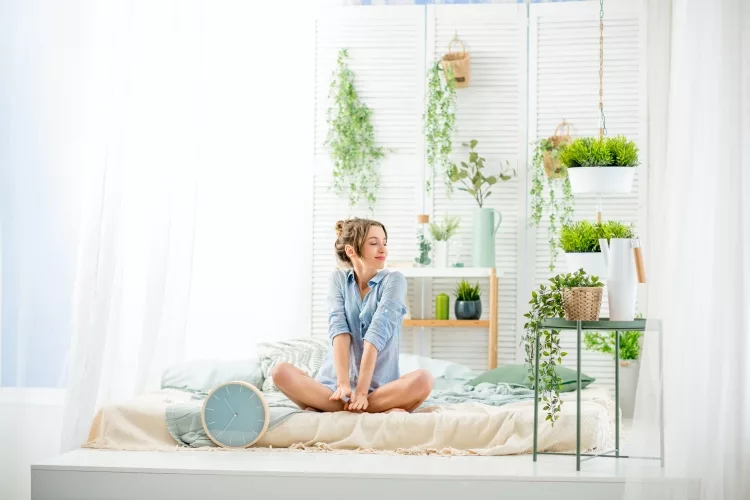
Knowing what kills bedroom plants is just as important as knowing what keeps them alive. These three mistakes account for the majority of houseplant failures.
Overwatering kills more houseplants than underwatering, pests, and poor light combined. The instinct to water frequently feels caring, but it creates anaerobic conditions at the root zone that destroy roots within days. Before every watering, stick your finger an inch into the soil. If it still feels moist, wait. Snake plants, ZZ plants, and pothos are particularly prone to root rot and can go two to four weeks without water during cooler months. When in doubt, underwater — almost every bedroom plant recovers from drought faster than from soggy roots.
A peace lily sitting in direct afternoon sun will scorch within a week. A lavender plant in a dim corner will stretch, weaken, and become susceptible to fungal issues within a month. The fix is simply matching the plant to the light your room provides — not the light you wish it had. If your bedroom is naturally dim, choose species adapted to low light rather than fighting nature with a plant that needs brightness. When you do need supplemental lighting, a quality grow light makes the difference between a thriving plant and a struggling one.
Bedrooms with central heating or air conditioning typically run at 30–40% relative humidity — much drier than tropical plants prefer. Bamboo palm, peace lily, and gloxinia all want 50–60% humidity to grow well. In a dry room, their leaf tips brown, their growth stalls, and they become more vulnerable to spider mites. A small humidifier near your plant collection resolves this issue immediately and benefits your own skin and airways at the same time.

Bedroom plants come with some real trade-offs you should know about before committing. Certain flowering plants produce pollen that aggravates allergies and asthma — lavender and jasmine can be problematic for sensitive individuals despite their sleep benefits. Overwatered pots attract fungus gnats, which are harmless but annoying. Several popular species — including pothos, peace lily, and snake plant — are toxic to cats and dogs, which matters if pets share your bedroom. And if you travel regularly, you need a plan for watering during your absence, or you need to choose drought-tolerant varieties that handle neglect gracefully.

Where you are in your plant journey determines which picks belong in your bedroom right now. Starting with the wrong plant sets you up for early failure and discouragement. Start where you are, not where you want to be.
If you're new to indoor plants, choose species that tolerate inconsistent watering, low to medium light, and occasional neglect. These plants rebound quickly and provide clear feedback when something is wrong:

Once you're comfortable reading your plants and maintaining consistent care habits, these species reward your attention with more dramatic results:

The gap between a plant that survives and one that genuinely thrives is consistent, informed care. These practices apply across nearly every species on this list.
Water deeply, not frequently. When you water, soak the soil until water runs freely from the drainage hole, then wait until the appropriate dryness level before watering again — this varies by species. Shallow, frequent watering encourages surface roots and makes plants more drought-sensitive. For fertilizing, most bedroom plants benefit from a balanced indoor formula during the active growing season. The guide to the 15 Best Fertilizers for Indoor Plants is a reliable reference for matching the right product to your specific plants. Stop feeding entirely in winter when growth slows naturally — overfertilizing a dormant plant causes salt buildup and leaf burn.
Dusty leaves can't photosynthesize efficiently. Wipe large-leafed plants like peace lily and bamboo palm with a damp cloth every few weeks — this also removes spider mites before they establish. Remove yellow, brown, or dead leaves immediately rather than waiting. Dead foliage drains energy and creates entry points for fungal disease. For compact plants like rosemary and lavender, light pruning after flowering keeps growth bushy and productive. Pinch back leggy stems to encourage branching rather than letting plants stretch toward the light and lose their shape.

Use this table to match the right plant to your specific bedroom conditions at a glance. Light, watering frequency, and pet safety are the three most important factors for most people making their first picks.
| Plant | Light Needs | Watering Frequency | Pet Safe | Best For |
|---|---|---|---|---|
| Snake Plant | Low to bright indirect | Every 2–6 weeks | No | Air purification, beginners, night oxygen |
| Peace Lily | Low to medium indirect | Weekly | No | Low-light rooms, visible watering cues |
| Lavender | Bright direct or indirect | Every 1–2 weeks | Yes | Sleep improvement, natural fragrance |
| Pothos | Low to bright indirect | Every 1–2 weeks | No | Trailing decor, forgiving care |
| Spider Plant | Medium indirect | Weekly | Yes | Pet owners, propagation, air quality |
| Bamboo Palm | Medium to bright indirect | Every 1–2 weeks | Yes | Statement piece, humidity boost |
| Rosemary | Bright direct or indirect | Every 1–2 weeks | Yes | Fragrance, culinary herb dual use |
| Gloxinia | Bright indirect | Weekly | No | Bold color, experienced growers |
| ZZ Plant | Low to medium indirect | Every 2–3 weeks | No | Drought tolerance, minimal care |
| Aloe Vera | Bright indirect | Every 2–3 weeks | No | Air quality, functional household use |

Yes, for the vast majority of people it is completely safe. The concern that plants consume too much oxygen at night is a myth — the volume they absorb is negligible compared to human respiration. Several species, including snake plant and aloe vera, actually release oxygen during the night, making the air marginally better while you sleep. The only real exceptions are heavy allergy sufferers who react to plant pollen or mold in overwatered soil.
Two to four medium-sized plants provide meaningful air quality benefits without overwhelming the space. A practical starting point is one larger floor plant like a bamboo palm combined with one or two smaller plants on a shelf or nightstand. Scale your collection to your room size and your available time for care — maintaining four plants well is better than neglecting eight.
Lavender is the top evidence-backed choice for sleep improvement. Its scent has been clinically shown to slow heart rate, lower blood pressure, and reduce anxiety — the three physiological conditions most associated with poor sleep onset. Place it on a south or east-facing windowsill where it receives at least four hours of bright light daily. For rooms without adequate natural light, a grow light keeps it healthy and fragrant year-round.
The best indoor plants for bedroom are the ones that match your actual light conditions, your lifestyle, and your willingness to show up for them consistently. Pick one or two low-maintenance plants from the beginner list, learn their rhythms over a few weeks, then build your collection from there. Browse the full plants, herbs, and farming section on Trinjal for detailed growing guides on every plant type — your bedroom environment is worth investing in, and the right guide makes getting started straightforward.
 |
 |
 |
 |

About Christina Lopez
Christina Lopez grew up in the scenic city of Mountain View, California. For eighteen ascetic years, she refrained from eating meat until she discovered the exquisite delicacy of chicken thighs. Christina is a city finalist competitive pingpong player, an ocean diver, and an ex-pat in England and Japan. Currently, she is a computer science doctoral student. Christina writes late at night; most of her daytime is spent enchanting her magical herb garden.


Get new FREE Gifts. Or latest free growing e-books from our latest works.
Disable Ad block to reveal all the links. Once done, hit a button below
|
|
|
|
 rinjal