Up to 30% of the water and fertilizer you apply to your lawn never reaches the root zone when thatch exceeds half an inch — it simply gets absorbed by the dead organic mat sitting between soil and grass. If you've been noticing spongy turf, patchy growth, or water rolling off instead of soaking in, you're likely facing a thatch problem. Understanding the power rake vs dethatcher debate is your first step toward fixing it. Both tools remove thatch, but they're built differently and suited to different levels of buildup. Explore our gardening reviews for more in-depth tool comparisons.
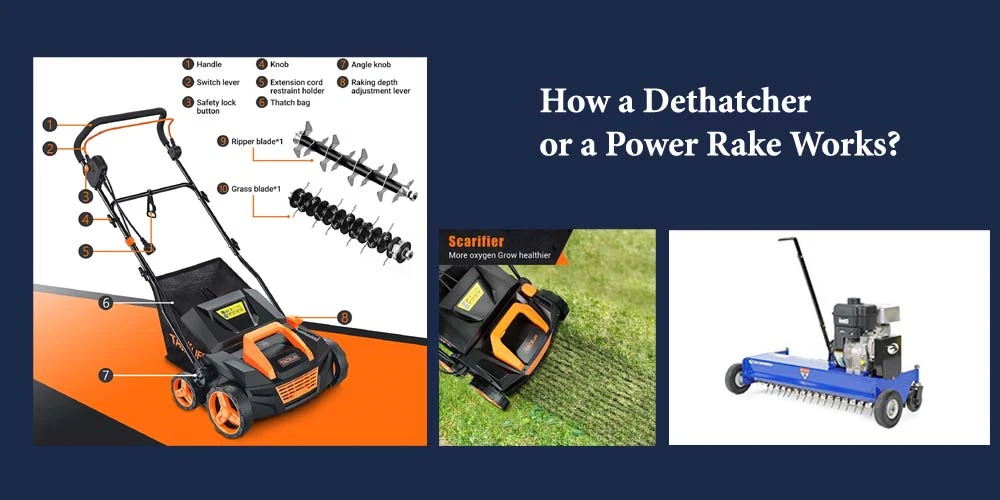
Thatch itself isn't the enemy. A thin layer — under a quarter inch — actually insulates soil, retains moisture, and cushions the turf from foot traffic. The problem begins when that layer thickens beyond half an inch. At that point, roots can't breathe, water can't penetrate, and your grass weakens from the inside out. Lawn thatch is a well-documented issue in turf management, and choosing the right removal tool is critical to a fast recovery.
Both a power rake and a dethatcher can get your lawn back on track — but using the wrong one on the wrong lawn is a fast way to do more harm than good. Here's everything you need to know to make the right call.
Contents
The core distinction is aggression. A power rake uses rotating steel blades or rigid tines to cut deeply through compacted thatch, physically tearing it apart. A dethatcher uses flexible spring tines to comb through the turf and lift loose surface thatch with far less soil disturbance. Same goal — very different approach.
| Feature | Power Rake | Dethatcher |
|---|---|---|
| Thatch thickness target | ½ inch or thicker | ¼ to ½ inch |
| Aggression level | High — cuts and tears | Low to moderate — combs and lifts |
| Typical power source | Gas (most common) | Electric corded, battery, or tow-behind |
| Machine weight | 50–100 lbs | 20–40 lbs |
| Best grass types | Warm-season (Bermuda, Zoysia) | Cool-season (fescue, bluegrass, ryegrass) |
| Turf disruption | Significant — expect bare patches | Minimal — grass recovers quickly |
| Typical use frequency | Every 2–3 years (or as needed) | Once per growing season |
A power rake looks similar to a walk-behind lawn mower but does an entirely different job. It uses a horizontal drum fitted with hardened steel flail blades or rigid tines that spin at high RPM. Those blades cut directly into the thatch layer, lift the debris, and deposit it on the lawn surface for collection.
A dethatcher uses spring-steel or fixed tines on a rotating drum to comb through your turf. The tines flex slightly on contact, which protects healthy grass crowns from unnecessary tearing. Think of it as a deep-cleaning rake — efficient, but not aggressive.
Knowing how each machine is built helps you predict what it'll do to your turf — and prevents costly mistakes before you even start.
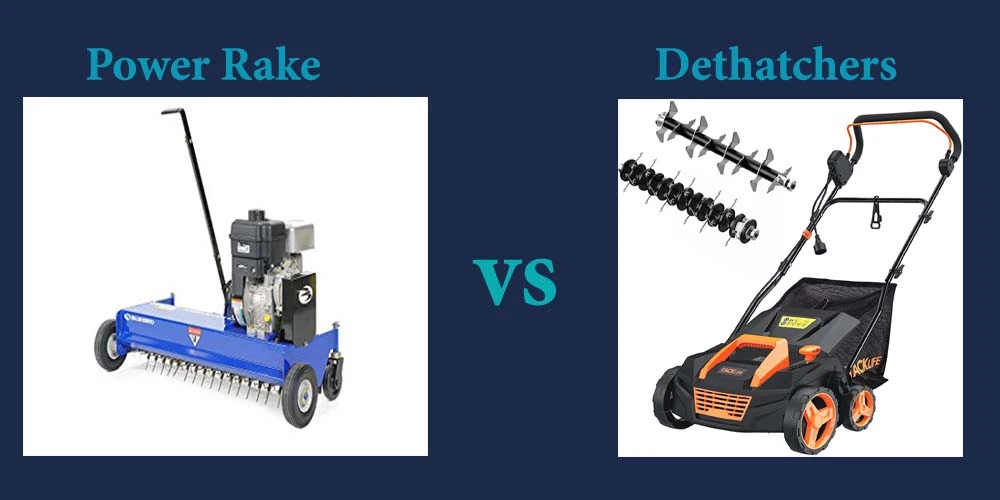
Power rakes are heavy-duty machines, typically weighing 50 to 100 pounds and running on gasoline engines. The working element is a drum spinning at high speed, fitted with C-shaped or straight steel blades. On each pass, those blades slice through the thatch and eject the loosened material backward onto the lawn surface.
Before running a power rake — or any aggressive lawn renovation tool — it's worth taking a moment to test your soil pH. Renovation is the perfect opportunity to address soil health at the same time. If your lawn needs deeper conditioning beyond thatch removal, our guide on how to till a garden walks through what that process looks like.
Dethatchers are lighter and quieter. Consumer-grade electric models typically weigh 20 to 40 pounds. The tines attach to a drum spinning at moderate speed, combing through the top inch or so of the grass canopy to lift loose, dead material without cutting into soil.
Common dethatcher configurations include:
Proper technique matters as much as picking the right tool. Rushing through either process can stress your lawn far more than the thatch ever did.
As you dethatch, you may expose soil-dwelling pests that have been sheltering under the thatch. Natural insecticides made from chilli and garlic offer a non-toxic way to manage them before they establish in the exposed turf.
Most lawn setbacks after dethatching trace back to a handful of avoidable errors. Knowing what to watch for saves your lawn — and your patience.
Problem: The lawn looks shredded after the job, with large areas of bare exposed soil.
Cause: Using a power rake on thin thatch, setting blades too deep, or making too many passes in the same area.
Fix:
Problem: The lawn shows prolonged stress or develops bare patches that simply won't fill in after dethatching.
Cause: Dethatching during dormancy, drought stress, or peak summer heat when the grass has no energy to recover.
Fix:
The power rake vs dethatcher decision becomes straightforward once you know your thatch depth and grass type. Use this framework to decide before you rent or buy anything.
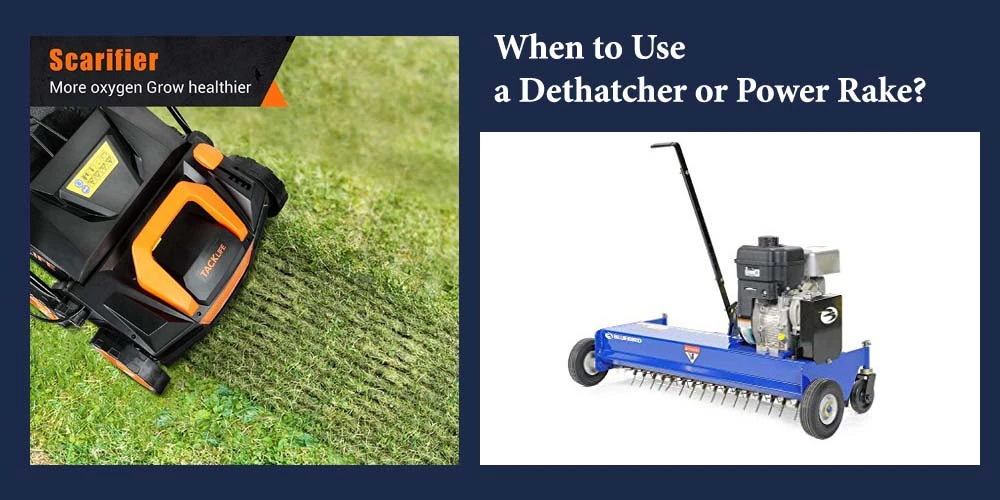
Reach for a power rake when:
Avoid a power rake when:
A dethatcher is your tool when:
A dethatcher fits naturally into a low-effort garden maintenance routine — it does meaningful work without demanding heavy setup, intensive cleanup, or lengthy recovery windows.
Skip both tools entirely when:
Yes, if your thatch layer is under half an inch thick. For light to moderate buildup, a dethatcher handles the job with far less turf disruption. Reserve the power rake for severe cases where thatch has exceeded the half-inch mark or the lawn needs a full renovation before overseeding.
Most lawns benefit from dethatching once per growing season. Power raking is more aggressive and typically needed only every two to three years — or whenever thatch visibly exceeds half an inch. Check your thatch depth each spring to determine what level of intervention is actually warranted.
For cool-season grasses like fescue and Kentucky bluegrass, early fall or early spring is ideal. For warm-season varieties like Bermuda and Zoysia, late spring to early summer works best when the grass is in peak active growth. Never dethatch during dormancy, drought stress, or extreme heat.
It causes short-term stress, but a healthy lawn recovers quickly with the right aftercare — consistent watering, fertilization, and overseeding wherever bare patches appear. The real damage comes from using the wrong tool for the thatch depth, setting blades too deep, or dethatching at the wrong time of year.
 |
 |
 |
 |

About Christina Lopez
Christina Lopez grew up in the scenic city of Mountain View, California. For eighteen ascetic years, she refrained from eating meat until she discovered the exquisite delicacy of chicken thighs. Christina is a city finalist competitive pingpong player, an ocean diver, and an ex-pat in England and Japan. Currently, she is a computer science doctoral student. Christina writes late at night; most of her daytime is spent enchanting her magical herb garden.


Get new FREE Gifts. Or latest free growing e-books from our latest works.
Disable Ad block to reveal all the links. Once done, hit a button below
|
|
|
|
 rinjal