If you're serious about turning kitchen scraps and yard waste into rich, garden-ready compost without the backbreaking work of turning a pile by hand, the FCMP Outdoor IM4000 Dual Chamber Tumbling Composter is the one most gardeners reach for first — and for good reason. But the right tumbling composter for your yard depends on your space, your volume of waste, and how fast you want results.
Composting is one of the most rewarding habits a gardener can build. According to the U.S. Environmental Protection Agency, composting food scraps and yard trimmings at home keeps organic material out of landfills while producing a free soil amendment (a material mixed into soil to improve its structure and nutrients) that beats anything you can buy in a bag. If you're already paying attention to your soil amendments and conditioners, adding a tumbling composter to your routine is the next logical step.
In 2026, the tumbling composter market has more solid options than ever — dual-chamber models that let you batch compost continuously, insulated tumblers that work through cooler months, and compact units sized for apartment balconies or small urban lots. We dug through the top picks so you can spend less time researching and more time gardening. Browse our full gardening reviews for more tools to level up your outdoor space.

Contents





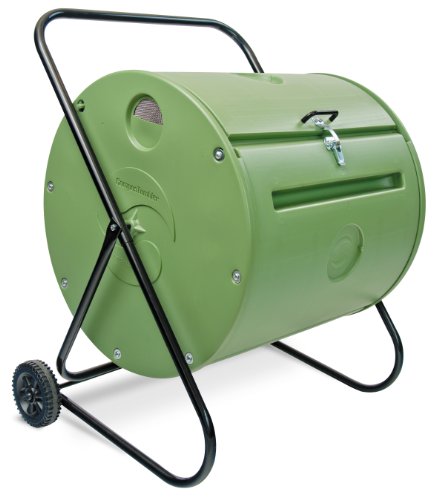


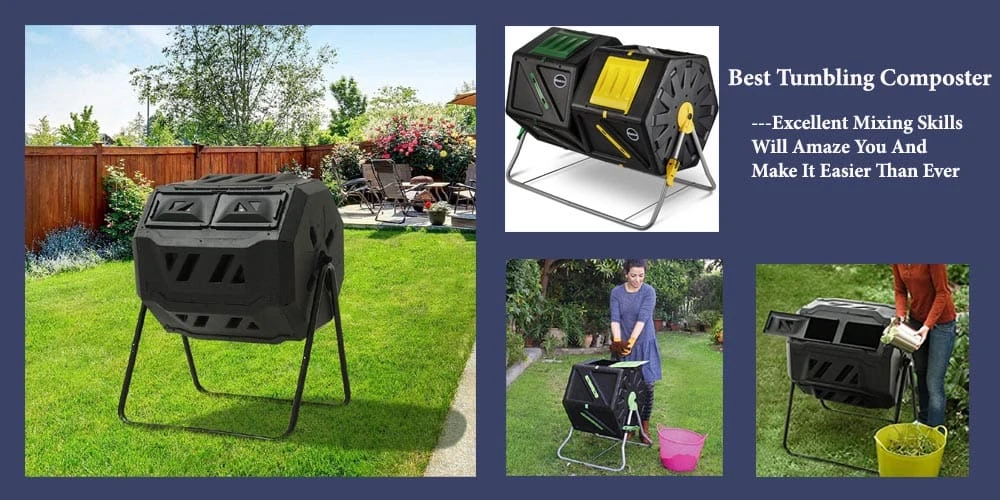
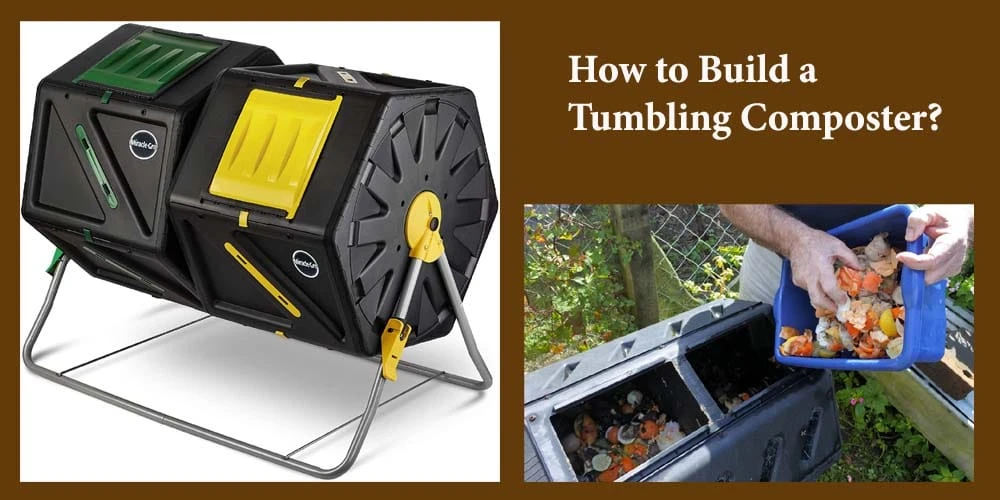
The FCMP Outdoor IM4000 has been the benchmark tumbling composter for years, and in 2026 it still holds up remarkably well. Made in Canada from 100% post-consumer recycled plastic, this 37-gallon (roughly 5 cubic feet) unit features an eight-sided dual-chamber design that makes spinning genuinely easy. Each chamber is independent, so you can load fresh scraps into one side while the other finishes curing — a workflow that gives you a near-continuous supply of finished compost rather than waiting months for a single batch.
The rotation mechanism is simple and smooth. FCMP recommends giving it five to six turns every two to three days, and in warm, sunny conditions with a balanced mix of greens (nitrogen-rich materials like food scraps) and browns (carbon-rich materials like dry leaves), you can have finished compost in as little as two weeks. The sliding doors open wide enough to load bulkier yard trimmings without a fight, and the deep interior fins help break up clumps as you spin. Build quality is solid — the frame is galvanized steel and the chambers have held up to years of user reports without cracking or warping.
If you're just getting into composting or want a reliable workhorse that doesn't demand a lot of attention, this is the one to start with. It's not the largest capacity on this list, but for a typical household generating kitchen scraps and seasonal yard waste, 37 gallons is plenty. Pair it with a soil pH tester to dial in exactly when your compost is ready to use.
Pros:
Cons:
If your household generates a lot of compostable material — think large vegetable gardens, fruit trees, or a family that cooks from scratch most nights — the Lifetime 60072 is built for your pace. Two separate 50-gallon barrels (that's 6.7 cubic feet each, or about 189 liters per side) sit on a durable frame and rotate independently. That means you're working with roughly double the capacity of the FCMP model and can handle bulkier loads of lawn clippings, garden trimmings, and kitchen scraps without overstuffing a single chamber.
Lifetime has a well-earned reputation for UV-resistant, high-density polyethylene (HDPE) products, and this composter reflects that. The barrels feel solid and resist fading from sun exposure better than cheaper alternatives. The rotation system is smooth — the barrels sit on a roller mechanism that makes turning feel effortless even when the chambers are loaded. You'll save real time and physical effort compared to manually pitchforking a traditional compost heap, especially if you're managing a larger property.
The trade-off for all that volume is footprint. This unit takes up more horizontal space than most alternatives, so measure your available yard area before ordering. Assembly is straightforward, and most reviewers get it done in under an hour. For serious gardeners who hate running out of compost mid-season, the Lifetime 60072 delivers peace of mind at a competitive price point.
Pros:
Cons:
East Oak's dual-chamber composter punches above its price class. Each of the two chambers holds 18.5 gallons — 37 gallons total — and the same alternating-batch workflow applies: fill one side while the other finishes. The design includes generously sized aeration holes (openings in the drum that let air flow in, which is essential for aerobic decomposition) and deep interior fins that actively break up clumps as the drum spins. That combination of airflow and mechanical mixing makes for efficient, odor-controlled composting even in humid conditions.
The 360-degree rotation design eliminates hand-mixing entirely. East Oak includes detailed installation instructions and a video walkthrough, and most buyers report completing assembly without frustration. The locking system keeps the doors sealed during rotation, preventing half-composted material from spilling out when you're giving it a spin. For gardeners who want a capable dual-chamber tumbler without spending top dollar, this is the strongest entry point on this list.
At 18.5 gallons per side, individual chambers are smaller than the FCMP or Lifetime models. That's fine for one to two people generating modest kitchen waste and occasional garden trimmings. But if you're managing a larger household or a vegetable garden, you may find yourself filling chambers faster than the compost can cure on the other side.
Pros:
Cons:
VIVOSUN has built a solid reputation in the gardening tool space, and their 43-gallon tumbling composter is a well-rounded performer. The twin-chamber design operates on the same principle as the other dual-batch models here — one side maturing while you load fresh waste into the other. What sets VIVOSUN's execution apart is the combination of air vents and deep eight-panel fins that work together to keep internal air circulating and prevent pressure buildup from gas produced during decomposition.
The 360-degree tumbling design makes mixing hands-free. The black color absorbs heat from sunlight, which raises internal temperatures and speeds up the breakdown of organic material — a meaningful advantage if you're in a cooler climate or composting during shoulder seasons (spring and fall). At 43 gallons total capacity, this sits in a sweet spot between compact budget models and the larger high-volume units.
Assembly takes most people around 30–45 minutes and the instructions are clear. The sliding doors are wide enough to load yard clippings without breaking them down first, which saves time when you're clearing out garden beds. The black finish can show scratches over time, and the base isn't quite as heavy-duty as the Lifetime or FCMP steel frames — but for the price point, VIVOSUN delivers strong value.
Pros:
Cons:
Not everyone has a sprawling backyard to dedicate to composting. If you're working with a small urban lot, a townhouse patio, or a compact back porch — hence the name — the Mantis Back Porch ComposTumbler is designed with your situation in mind. It's smaller and more contained than most of the dual-chamber options on this list, which is exactly the point. The fully enclosed design is its most practical feature: no odors escaping to annoy neighbors, and no openings for raccoons, rats, or other wildlife to investigate.
The removable door makes filling and emptying the barrel straightforward. You're not wrestling with a hatch or cramming material through a narrow slot — the door opens wide and the barrel empties cleanly when compost is ready. Mantis has been in the composting equipment business for decades, and the build quality reflects that experience. This isn't a flimsy unit that wobbles under a full load.
The limitation here is capacity. This is a single-chamber barrel composter, not a dual-chamber model. That means you're working with a batch system — you fill it, let it finish, then empty and refill. You won't have continuous compost output the way you do with a dual-chamber unit. For a single person or couple with modest kitchen scraps and no major yard waste, that's perfectly fine. But if you're managing a bigger household or want to compost more aggressively, you'll quickly outgrow it.
Pros:
Cons:
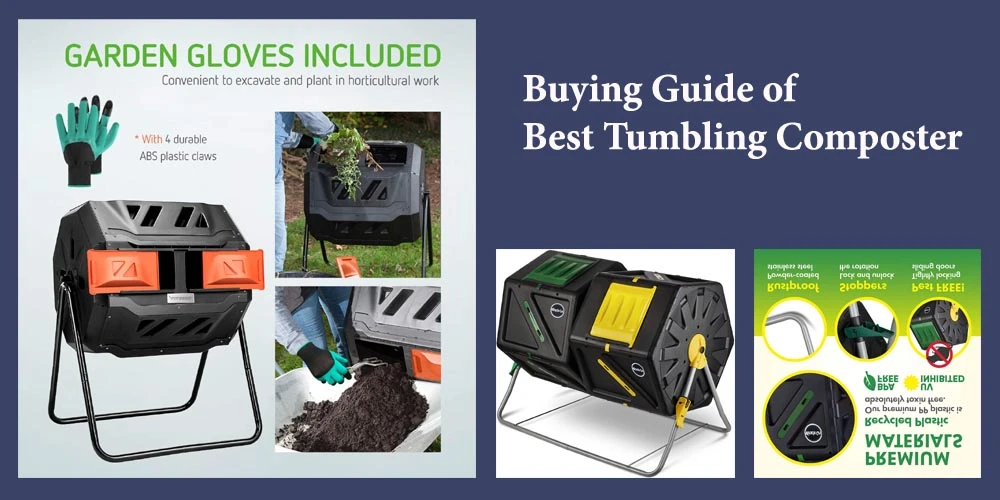
The Jora JK 400 is in a different league when it comes to cold-weather performance. Most tumbling composters slow to a crawl once ambient temperatures drop — decomposing microorganisms need warmth to stay active. Jora solves this with food-grade, non-toxic insulation built into the walls of the tumbler, which traps heat generated by decomposition itself and allows internal temperatures to climb above 160°F (71°C). At those temperatures, you're not just composting faster — you're also killing weed seeds and harmful pathogens that would survive in a cooler pile.
The JK 400 holds up to 106 gallons total across its two chambers and can process 13 to 21 gallons of finished compost per week at peak operation. That's a remarkable throughput rate for a home unit. Like the other dual-chamber models, you can load one side while the other matures, but because of the insulation, both sides work faster year-round. For gardeners in colder climates who want to compost through winter, this is the most capable unit on this list by a significant margin.
The price reflects the engineering. The Jora JK 400 costs considerably more than the FCMP or VIVOSUN models, and it's heavier and more substantial. Think of it as the professional-grade option — you're paying for the insulation technology and the ability to generate consistent, high-temperature compost even in below-freezing outdoor conditions. If budget isn't a limiting factor and you compost seriously, this one earns its cost.
Pros:
Cons:
Miracle-Gro isn't just a fertilizer brand — their large dual-chamber tumbler has earned genuine praise from serious gardeners who want finished compost fast. At 55.4 gallons total (two 27.7-gallon chambers), it sits in a practical middle ground between the compact FCMP and the commercial-scale Jora. The rotating system is engineered specifically for ease of use — the barrel turns smoothly even when fully loaded, and the sliding doors are wide and accessible. Miracle-Gro claims finished compost in as little as four to six weeks, which is realistic when you maintain good green-to-brown ratios and turn regularly.
The all-season design is a genuine selling point. While it doesn't use active insulation like the Jora, the heavy-duty construction and tight-sealing doors trap enough residual heat to keep decomposition moving during mild-to-cool weather. For most gardeners in USDA zones 6 and above, this means you can compost productively through most of the year. The two sliding door panels (one per chamber) make loading and unloading clean and convenient — no fumbling with latches mid-wheelbarrow run.
If you're growing a vegetable garden and want a reliable source of compost to feed your beds each season, the Miracle-Gro tumbler covers a lot of ground. It pairs naturally with attention to your soil quality — if you're also thinking through the best soil mixes for raised beds, homemade compost from a unit like this gives you full control over what goes into the ground. The brand name also means solid parts availability and customer support if anything goes wrong.
Pros:
Cons:
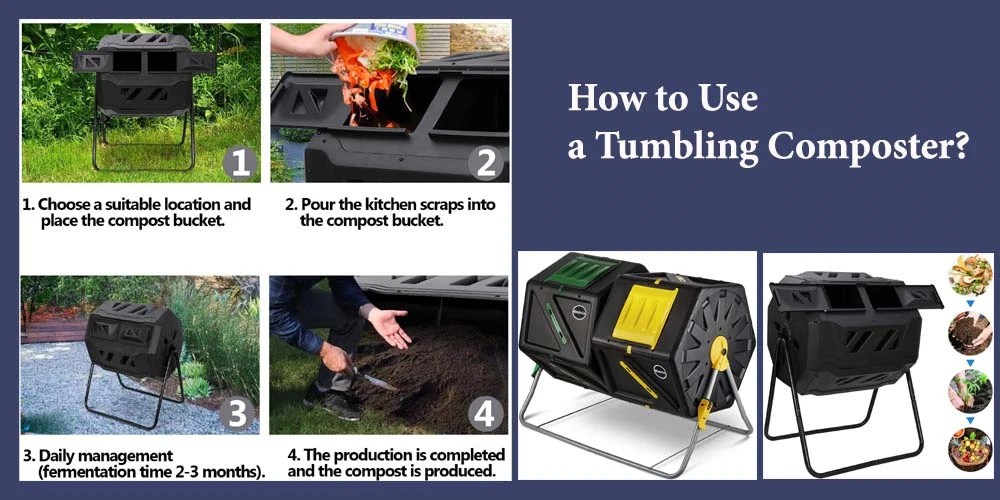
With so many solid options available in 2026, knowing which features actually matter will save you from buyer's remorse. Here's what to evaluate before you add one to your cart.
Capacity is measured in gallons and directly determines how much organic waste you can process at once. As a rough starting point: a single person or couple generating kitchen scraps from daily cooking typically works well with 18–25 gallons per chamber. A family of four with a vegetable garden producing yard trimmings will want 40–55 gallons total — or more.
Dual-chamber models give you continuous output that single-chamber tumblers can't match. When one side is curing, you keep loading the other. For anyone composting more than a small amount of material, dual-chamber is the smarter investment even if it costs a bit more upfront. Single-chamber units like the Mantis Back Porch work best for light composters with limited space who are comfortable with a batch-and-wait approach.
Aerobic decomposition (the kind that produces good compost without bad odors) requires oxygen. The holes, fins, and panel design inside a tumbling composter directly affect how well air circulates through your material. Models with both air vents and deep internal fins — like the East Oak and VIVOSUN — tend to produce faster results because they keep the pile loose and oxygen-rich with each rotation.
If your compost pile tends to get wet and compact, a model with more aeration will help you avoid anaerobic conditions (decomposition without oxygen), which produce the sulfur-like smell many people associate with bad compost. Rotation frequency matters too — more frequent turning introduces fresh oxygen. The general rule is five to six turns every two to three days, though you can turn more often without harm.
A tumbling composter that wobbles when you spin it is both annoying and a sign it won't last long. Look for a galvanized steel or powder-coated steel frame — not plastic legs that flex under load. The FCMP IM4000 and Lifetime 60072 both use galvanized steel frames that stay stable on uneven ground and resist rust over years of outdoor exposure.
Check whether the plastic drum is UV-resistant. Direct sunlight degrades cheaper plastics over time, causing cracking and brittleness. High-density polyethylene (HDPE) with UV inhibitors is what you want. Most quality composters will specify this in their product description. If they don't mention UV resistance, treat it as a question mark.
Standard tumbling composters rely on the heat generated by microbial activity inside the drum. In warm weather, that's plenty to maintain active decomposition. In cold weather — below 50°F (10°C) — that microbial activity slows down dramatically, and an uninsulated composter may essentially go dormant through winter.
If you compost year-round in a cold climate, the Jora JK 400's insulation is a genuine differentiator. For everyone else, placing your tumbler in a sun-facing location and maintaining good green-to-brown ratios will extend your active composting season into fall and restart it earlier in spring. Compost that's already partially broken down in late fall will often resume decomposition as soon as temperatures rise above 50°F — you don't necessarily need to start over from scratch each spring.
Once your compost is ready, you'll want to know how to get the most from it. Pairing finished compost with the right base soil makes a big difference — check our guide to the best soils for vegetables in pots if you're growing in containers.
In ideal conditions — warm weather, a balanced mix of greens and browns, and regular turning — a quality tumbling composter can produce finished compost in two to four weeks. In cooler or less optimal conditions, expect four to eight weeks. The FCMP IM4000 advertises as little as two weeks in warm, sunny weather. Most real-world users see finished compost in three to six weeks during spring and summer.
You can compost fruit and vegetable scraps, coffee grounds and filters, eggshells, grass clippings, dry leaves, small plant trimmings, cardboard torn into small pieces, and paper. Avoid meat, fish, dairy, oils, and pet waste — these attract pests and create odors. Maintaining a rough 3:1 ratio of browns (carbon-rich dry material like leaves) to greens (nitrogen-rich wet material like food scraps) is key to fast, odor-free composting.
A quality tumbling composter with fully enclosed chambers and secure latching doors significantly reduces pest access compared to open compost bins or piles. The sealed design of models like the Mantis Back Porch ComposTumbler is specifically engineered to keep animals out. Avoid putting meat, dairy, or cooked food in any composter to minimize odor and pest attraction, regardless of the model you choose.
Most manufacturers recommend turning your tumbling composter five to six rotations every two to three days. More frequent turning introduces more oxygen and speeds decomposition, so turning daily is fine if you have the time. The key is consistency — a pile that sits unturned for a week will slow down and may develop odors from reduced airflow. The good news is that spinning a tumbler takes only about 30 seconds, so it's easy to build into your daily routine.
Standard uninsulated tumblers slow down significantly in cold weather because the microorganisms that break down organic material are temperature-sensitive. Below 50°F (10°C), decomposition slows to a near halt. You can continue adding material through winter and the pile will resume composting when temperatures rise in spring. For true year-round composting in cold climates, the Jora JK 400 with its insulated design is the only unit on this list that maintains active composting temperatures even in freezing outdoor conditions.
For most gardeners, yes. A dual-chamber tumbler lets you load fresh material into one side continuously while the other side finishes curing — this gives you a near-constant supply of finished compost rather than a batch-and-wait cycle. If you're actively gardening and need compost on a regular basis, the dual-chamber design pays for itself in convenience and output. Single-chamber models like the Mantis Back Porch are a better fit for light composters or those with very limited space.
Whether you're drawn to the proven reliability of the FCMP IM4000, the massive throughput of the Lifetime 60072, the cold-weather capability of the Jora JK 400, or the urban-friendly footprint of the Mantis Back Porch, there's a tumbling composter on this list built for your situation — pick the one that fits your space and composting goals, grab it while it's in stock, and start turning your kitchen scraps into the best free soil amendment your garden has ever had.
 |
 |
 |
 |

About Truman Perkins
Truman Perkins is a Detroit-based SEO consultant who's been in the business for over a decade. He got his start helping friends and clients get their websites off the ground, and he continues to do so today. In his free time, Truman enjoys learning and writing about gardening - something he believes is a natural stress reliever. He lives with his wife, Jenny, and their twins in Detroit.


Get new FREE Gifts. Or latest free growing e-books from our latest works.
Disable Ad block to reveal all the links. Once done, hit a button below
|
|
|
|
 rinjal