Picture this: it's early spring 2026, your lawn looks patchy and waterlogged, and your neighbor's grass already looks like a golf course. You pull out your phone, start searching for tow-behind plug aerators, and immediately get buried in specs — tine counts, plug depths, weight tray capacities. It's a lot. That's exactly what this guide cuts through.
A tow-behind plug aerator is one of the most impactful lawn tools you can add to your equipment lineup. Unlike spike aerators that simply puncture the soil, plug aerators extract actual cores of compacted earth, creating open channels for water, oxygen, and fertilizer to reach the root zone. According to EPA WaterSense, aerated lawns absorb water significantly more efficiently — meaning less runoff, healthier roots, and lower water bills. If you're already investing in quality soil with the help of our best soil amendment and conditioner guide, pairing that effort with regular aeration is the logical next step.
We tested and researched every model on this list — checking build materials, plug depth, weight tray capacity, and real-world usability. Whether your lawn is a quarter-acre suburban plot or a multi-acre property, the right tow-behind aerator is on this list. Browse all our equipment picks in the gardening reviews category for more.

Contents
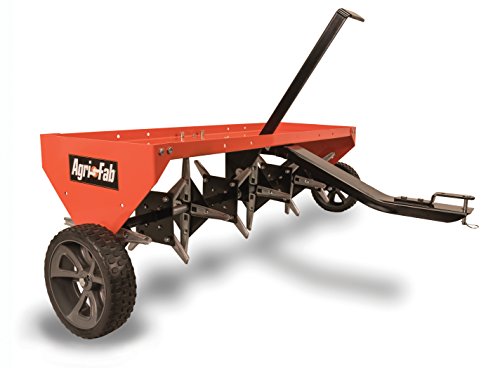



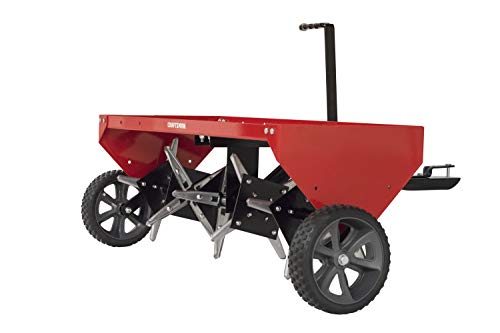

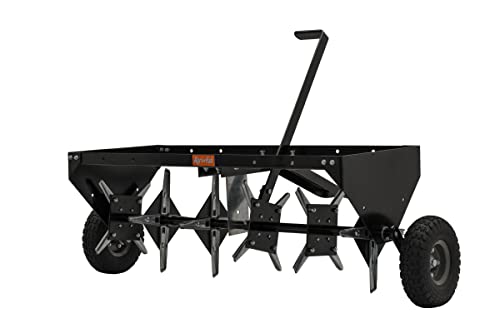

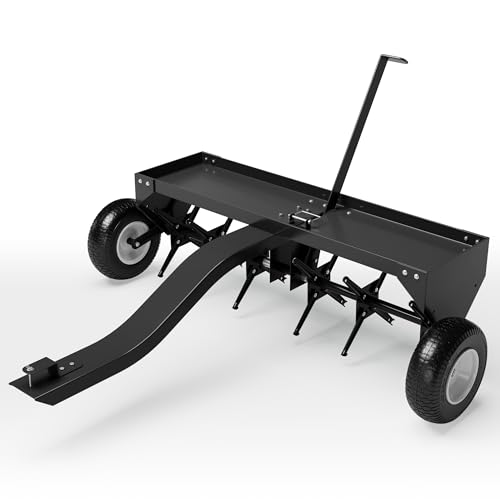
If you're managing a lawn that stretches beyond half an acre, the Agri-Fab 45-0299 is the aerator you want hitched to your garden tractor. At 48 inches wide, it covers more ground per pass than most competitors, which translates directly into less time spent driving back and forth across your property. This is a Made in USA product, and that heritage shows in the build quality — the steel frame feels solid, the welds are clean, and the 32 galvanized knives don't flex or chatter even at speed.
Those 32 knives are the real story here. Each one is engineered to penetrate up to 3 inches deep, extracting full soil plugs that give your lawn's root system genuine breathing room. Most aerators in this price range max out at 2 to 2.5 inches — that extra half-inch matters significantly when you're dealing with heavy clay soils. The universal hitch makes attachment to virtually any lawn or garden tractor straightforward, and the overall weight of the unit provides natural downforce without requiring a loaded weight tray on flat terrain.
This aerator has been around long enough to accumulate a large base of real-world feedback, and the consensus is consistent: it does what it says, year after year. Pair your aeration routine with better soil monitoring — our best soil thermometer reviews can help you time aeration for when soil temperatures are optimal. One note — this is a heavy unit, so make sure your tractor hitch can handle the load before you purchase.
Pros:
Cons:
Brinly has been making lawn equipment for over 175 years, and this 40-inch plug aerator reflects that depth of experience. The 24 heat-treated, 16-gauge steel plugging spoons are noticeably narrower and more sharply pointed than generic tines — that design means you need less weight to achieve the same penetration depth, which is a real practical advantage. You'll still pull plugs up to 3 inches deep, but without loading the tray to its maximum 150-pound capacity on average residential soils.
The fully enclosed weight tray is a standout detail. You can load it with sand bags, concrete blocks, or whatever heavy material you have on hand, and nothing shifts or spills during operation. The 10-inch semi-pneumatic rubber tread tires are another thoughtful inclusion — they absorb vibration on uneven terrain, and when you need to cross a driveway or paved walkway, a single transport lever lifts the tines clear of the surface. That transport mode feature saves you the headache of tearing up hardscaping and protects the tines from unnecessary wear.
For a 40-inch aerator in 2026, this Brinly model hits a sweet spot between performance and price. The all-steel construction with no plastic components means longevity isn't a concern, and the heat treatment on the tines keeps them sharp through multiple seasons without resharpening. If you're also monitoring your lawn's soil health holistically, check out the best soil pH tester reviews — pH directly affects how well nutrients move through freshly aerated soil.
Pros:
Cons:
CRAFTSMAN is a name synonymous with dependable outdoor equipment, and this 40-inch tow-behind aerator lives up to that reputation. The 24 galvanized steel coring points pull plugs up to 3 inches deep, and the steel deck construction is built to accommodate up to 140 pounds of ballast weight — more than enough for compacted suburban lawns that need a little extra encouragement. The wider weight tray design spreads that ballast evenly across the frame, which prevents the unit from tilting or dragging unevenly during operation.
What makes this aerator particularly well-suited to mid-size yards — think quarter-acre to three-quarter-acre — is the balance between its working width and its maneuverability. At 40 inches, it handles turns around flower beds and obstacles without requiring wide berths or complicated repositioning. The galvanized coring points resist corrosion effectively, which matters if you live in a humid climate or tend to leave equipment out between uses. Spring and fall aeration sessions are where this unit earns its keep year after year.
Assembly is straightforward and doesn't require specialized tools. The universal hitch connects cleanly to standard lawn tractor hitches, and the frame sits at a height that makes hitching up a one-person job. This is the aerator for someone who wants reliable, no-fuss performance without paying premium pricing for features they don't need on a residential lot.
Pros:
Cons:
If you're entering the tow-behind aerator market for the first time and want solid performance without breaking the budget, the YINTATECH 40-inch model deserves serious consideration. It comes equipped with 24 galvanized and sharpened plug coring knives arranged across eight steel spike disks, and while the maximum penetration depth is 2 inches rather than 3, that's entirely adequate for most well-established residential lawns that aren't dealing with severe compaction or heavy clay composition.
The eight-disk spike array distributes the coring action evenly across the 40-inch working width, which prevents uneven aeration patterns that can make your lawn look blotchy after treatment. The galvanized finish on the knives provides genuine corrosion resistance, and the sharpened edges mean the tines cut cleanly through turf rather than tearing it — an important distinction that affects how quickly your lawn recovers post-aeration. At this price point, you're not getting a transport lever or an enclosed weight tray, but the core functionality holds up.
The YINTATECH is best suited to lawns with moderate compaction and relatively loose soil structure. If you're dealing with heavy clay or extremely dense soil, you'll want to consider stepping up to a model with 3-inch penetration depth and a higher weight capacity. But for the average homeowner aerating once or twice per year on sandy loam or loamy soil, this unit delivers results that justify its price tag in 2026.
Pros:
Cons:
If you want Agri-Fab's proven American manufacturing quality in a more manageable 40-inch footprint, the 45-0518 is your answer. This model carries the same "Made in USA" designation as its 48-inch sibling, and it shows in the identical quality of construction — the 24 galvanized and sharpened plug coring knives are built to the same standard, and the steel frame tolerates decades of seasonal use without warping or weakening at the welds. For properties where a 48-inch aerator would be too wide to navigate comfortably, this 40-inch version hits the right balance.
The 40-inch working width covers ground efficiently while remaining maneuverable around tight corners, landscape features, and tree lines. The universal hitch system attaches to lawn and garden tractors without modifications, and the overall simplicity of the design is a feature in itself — fewer moving parts means fewer things to maintain or replace over a long service life. At 24 tines delivering up to 3-inch plug depth, this aerator performs at the top of the 40-inch class.
Agri-Fab backs this product with real customer support and parts availability, which is worth factoring into your purchase decision. A tow-behind aerator isn't something you replace every few years — you're buying something you expect to pass down eventually. The 45-0518 is built with that expectation in mind. If you're also fine-tuning your lawn's edge definition, pair aeration season with the right edging tool — our best stick edger reviews cover the top options for clean border work.
Pros:
Cons:
When you need maximum performance on large, heavily compacted lawns, the Brinly PA-482BH-A is the aerator to reach for. This 48-inch model packs 32 heat-treated, 16-gauge steel plugging spoons — the same sharp, narrow Brinly tine design that reduces the weight required for deep penetration, but scaled up to 48 inches of working coverage. You'll pull plugs up to 3 inches deep across a 4-foot swath, and the fully enclosed weight tray supports up to 200 pounds of ballast for absolutely relentless tine pressure on the densest clay soils.
The 200-pound weight capacity is what truly separates this model from the competition. Dense, dry clay can resist even quality aerators, but with 200 pounds pressing those 32 heat-treated spoons into the earth, compaction doesn't stand a chance. The all-steel construction with no plastic components means every part of this machine is built to last, and the heat treatment on the tines maintains their edge and structural integrity through continuous use. Tires are 10-inch semi-pneumatic rubber tread — durable enough to handle rough terrain without going flat mid-session.
The single-lever transport mode is essential on a machine this size. When you need to cross a driveway, sidewalk, or gravel path, you engage transport mode and the tines lift clear — protecting both your hardscaping and the tines themselves. The hammered black finish isn't just aesthetic; it provides a more robust surface protection against moisture and abrasion than standard painted finishes. If you're managing an acre or more of established lawn in 2026, this is the aerator that earns its storage space.
Pros:
Cons:
The SierraSquad earns its spot on this list through a genuinely distinctive engineering approach. Instead of the standard straight-tine design, SierraSquad uses a 6-tine steel star configuration on each disk — an arrangement that creates a more aggressive rotational cutting action as the aerator moves forward. This design cuts through compacted soil crust and breaks up hardpan layers that standard straight tines sometimes deflect off rather than penetrate. Maximum depth is 2 inches, but the quality of the aeration channels created at that depth is exceptional.
The all-steel chassis is reinforced at every stress point — the bracket assembly, the tine shafts, and the frame crossbars are all built to resist deformation under hard use. Galvanized blades retain their edge through multiple seasons without touching up. The all-steel weight tray with fortified side panels keeps your ballast securely contained, and the design allows for flexible loading — concrete blocks, sand bags, or weights all work. Inflatable tires give this aerator a smooth ride over uneven terrain, absorbing more vibration than semi-pneumatic options and protecting the machine's joints from stress fractures over time.
The SierraSquad is newer to the market than Agri-Fab or Brinly, but the build quality is competitive and the star-tine design gives it a genuine functional edge in specific soil conditions. If your lawn sits on top of heavily compacted, drought-hardened soil that other aerators have struggled with, the SierraSquad's rotational cutting action addresses that problem directly. It's a serious piece of equipment at a competitive price in 2026.
Pros:
Cons:
Working width is the most immediately practical spec to evaluate. A 48-inch aerator covers 4 feet per pass — on a half-acre lawn, that's a meaningful reduction in total passes compared to a 40-inch model. But wider isn't always better. If your lawn has tight corners, narrow gates between sections, or significant landscaping features to navigate around, a 40-inch aerator will be faster in practice because you're not spending time repositioning after botched turns. As a general rule, go with 48 inches for properties over half an acre and 40 inches for anything smaller or more complex in layout.
More tines mean more aeration holes per pass, but only if those tines are actually penetrating the soil effectively. Tine quality matters as much as quantity. Heat-treated tines stay sharper longer than standard galvanized steel, which means cleaner plug extraction rather than torn turf. Penetration depth is the other critical variable — 3-inch depth is the gold standard for genuine compaction relief, particularly in clay-heavy soils. If you're in a region with loose, well-draining sandy soil, 2-inch depth performs adequately. Know your soil type before letting depth specs drive your decision.
Every tow-behind plug aerator includes a weight tray, but the capacity varies dramatically — from 140 pounds on the CRAFTSMAN up to 200 pounds on the Brinly PA-482BH-A. Higher capacity gives you more flexibility on tough soils, but most residential lawns don't require 200 pounds of ballast. If you're aerating a normal suburban yard with reasonable soil, 140 to 150 pounds is sufficient. The design of the tray matters too — an enclosed tray prevents your ballast from shifting or falling out mid-pass, which is a safety and convenience consideration worth paying attention to.
This is a feature you'll overlook until you need it. If your lawn has any paved sections — driveways, sidewalks, patio edges — you need a way to cross them without dragging steel tines across the surface. Models with a single-lever transport mode (both Brinly options on this list) solve that problem cleanly. Tires also affect your aerating experience more than most buyers expect. Inflatable tires absorb vibration and handle uneven terrain more comfortably, while semi-pneumatic tires are maintenance-free but transmit more impact through the frame. Choose inflatable tires if your terrain is rough; semi-pneumatic if you want zero tire maintenance.
The optimal window for aeration depends on your grass type. Cool-season grasses — Kentucky bluegrass, fescue, ryegrass — should be aerated in early fall (September to October) when soil temperatures drop below 70°F and the grass is actively growing. Warm-season grasses — Bermuda, zoysia, St. Augustine — respond best to late spring aeration (May to June). Aerating during active growth periods allows the lawn to recover quickly and fill in the plug holes with new root growth. Avoid aerating during peak summer heat or drought stress.
Most lawns benefit from aeration once per year. Heavily trafficked areas — backyards with kids and pets, athletic fields, or any lawn established on heavy clay — may benefit from twice-yearly aeration, once in spring and once in fall. If your lawn has never been aerated or was established by sodding over existing compacted soil, plan for two consecutive years of annual aeration before dropping to a once-per-year maintenance schedule. You'll know aeration is working when water stops pooling on the surface after rain and your grass thickens noticeably over two growing seasons.
Plug aeration — what all the models on this list perform — physically removes cylindrical cores of soil from the ground, creating genuine open channels for air, water, and fertilizer. Spike aeration only punctures the soil with pointed tines, which can actually worsen compaction by compressing soil sideways rather than removing it. For meaningful, lasting results on any lawn dealing with compaction, plug aeration is the only approach worth your time. Spike aerators are appropriate only for very light surface treatments on already-loose, sandy soils.
Start with no added weight and make one test pass. If the tines are pulling clean 2–3 inch plugs consistently, no additional weight is needed. If the tines are skipping across the surface or pulling short, shallow plugs, add weight incrementally — 25 to 50 pounds at a time — until penetration improves. Sandy or moist soils rarely need added weight. Dense, dry clay may need 100 pounds or more to achieve full penetration depth. Never exceed the tray's rated capacity, and distribute weight evenly across the tray to prevent the aerator from running at an angle.
Yes — and timing matters. Aerate when the soil is moist but not saturated. The ideal condition is one to two days after a thorough watering or rainfall, when the top 4 to 6 inches of soil are evenly moist throughout. Dry, hard soil causes tines to deflect and bounce rather than penetrate cleanly. Waterlogged soil, on the other hand, compresses around the tines instead of releasing clean plugs. If you're unsure whether soil moisture is adequate, push a screwdriver into the ground — it should slide in without forcing, but not sink under its own weight.
No — leave the plugs on the surface. They'll break down naturally within one to two weeks through rainfall and foot traffic, returning organic matter to your soil. Some homeowners drag a mat or run a mower over the plugs to break them up faster, which is fine if the appearance bothers you, but it's not necessary for the aeration to be effective. After the plugs dissolve, that's the ideal window to overseed and fertilize — the open channels provide direct seed-to-soil contact and allow fertilizer to reach the root zone before the holes close.
 |
 |
 |
 |

About Christina Lopez
Christina Lopez grew up in the scenic city of Mountain View, California. For eighteen ascetic years, she refrained from eating meat until she discovered the exquisite delicacy of chicken thighs. Christina is a city finalist competitive pingpong player, an ocean diver, and an ex-pat in England and Japan. Currently, she is a computer science doctoral student. Christina writes late at night; most of her daytime is spent enchanting her magical herb garden.


Get new FREE Gifts. Or latest free growing e-books from our latest works.
Disable Ad block to reveal all the links. Once done, hit a button below
|
|
|
|
 rinjal