We've all been there — standing in the garden center aisle with a peace lily tucked under one arm, staring at a wall of potting soil bags with no clear way to tell them apart. The descriptions all sound similar, the prices vary wildly, and the last thing anyone wants is to bring a beautiful plant home only to watch it struggle in the wrong mix. Our team spent weeks researching and handling soils specifically for peace lilies, and we narrowed the field to the seven strongest contenders available in 2026.
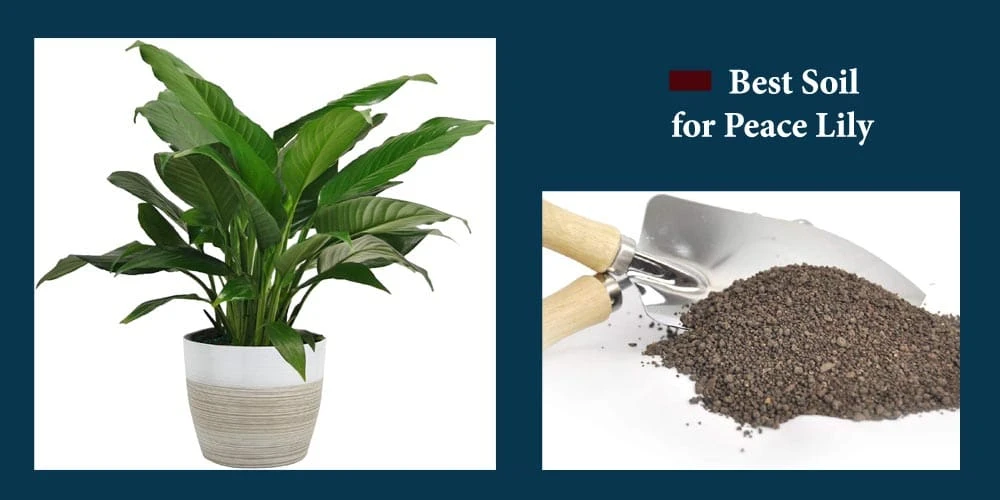
Peace lilies (Spathiphyllum) are tropical understory plants that thrive in moist, well-draining, organically rich soil. They do not do well sitting in waterlogged mix, and they hate compacted media that cuts off airflow to the roots. Getting the soil right is genuinely the single biggest factor in whether a peace lily blooms reliably or just limps along producing sad leaves. If pairing the right soil with the right container sounds familiar, our guide on the 10 Best Pots for Peace Lily covers that side of the equation in detail.
Every product on our list has been evaluated against the same criteria: drainage capacity, moisture retention balance, organic content, pH range, and value per quart. We also looked at how each mix performs over a full growing season, not just the first few weeks out of the bag. Whether buying for a single houseplant or restocking for a whole indoor garden, this gardening reviews guide covers what works in 2026.
Contents
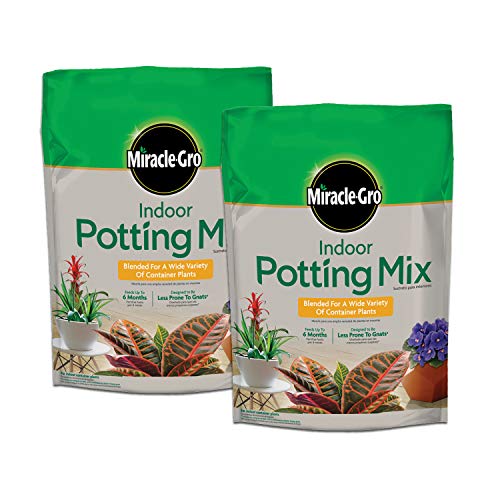






Miracle-Gro's Indoor Potting Mix is the one we keep coming back to as our baseline recommendation, and the reason is simple: it was designed specifically for houseplants rather than adapted from an outdoor formula. The mix uses coconut coir as its primary moisture-holding ingredient, which is more sustainable than peat moss and does a better job wetting back down after it dries out. Anyone who has dealt with hydrophobic (water-repelling) potting soil knows how frustrating it is when water just runs straight through — coconut coir largely eliminates that problem.
One of the standout design choices here is the deliberate exclusion of compost and bark. Both of those ingredients, while nutritious, are known harbors for fungus gnats — a persistent nuisance for indoor gardeners. For peace lilies kept near living spaces, that alone is worth serious consideration. The built-in slow-release fertilizer feeds for up to six months, which means less work during the establishment period. The 6 qt. two-pack format gives a useful amount without requiring storage of a massive bag.
In our testing, peace lilies in this mix showed strong root development and consistent moisture levels between waterings. The texture is light without being too airy, which strikes the right balance for a plant that needs both drainage and moisture retention. We consider this the most reliable everyday choice for most indoor peace lily setups in 2026.
Pros:
Cons:
For anyone committed to organic growing, Espoma is the name that keeps appearing at the top of every credible list — and with good reason. This mix is built on a foundation of sphagnum peat moss (the gold standard for moisture retention in container growing), humus for organic richness, and perlite (small white volcanic particles that create air pockets and drainage channels). What separates it from generic organic blends is the amendment package: earthworm castings, alfalfa meal, kelp meal, and feather meal. That combination covers nitrogen, potassium, and micronutrients without any synthetic inputs.
The Myco-Tone proprietary blend — a mix of endo and ecto mycorrhizae (beneficial fungi that attach to roots and dramatically expand their nutrient-gathering reach) — is genuinely useful for peace lilies. Plants inoculated with mycorrhizae consistently establish faster after repotting and show stronger growth in nutrient-limited conditions. Espoma includes this at no upcharge, which is unusual at this price point. The 16 qt. bag is a practical size for repotting one or two medium-to-large plants.
Our team noted that this mix runs a little heavier and wetter than some alternatives, so peace lily growers who tend to water generously should watch for overwatering during the first two weeks. Once established, the biological activity in the soil buffers against both dry spells and brief over-watering episodes, making it forgiving over the long run.
Pros:
Cons:
FoxFarm Ocean Forest has a dedicated following among serious indoor gardeners, and we understand why. This is a premium all-purpose container mix that draws on a notably broad ingredient list: Pacific Northwest sea-going fish and crab meal, composted forest humus, sandy loam, and sphagnum peat moss. The result is a slightly acidic mix (around pH 6.3–6.8) that lands close to the sweet spot most peace lilies prefer. The texture is aerated and open, which promotes the kind of drainage that prevents root rot.
Because of its rich organic content, Ocean Forest delivers a strong initial nutrient charge right out of the bag. Peace lilies that have been root-bound or nutrient-depleted in old soil tend to respond quickly and visibly after transplanting into this mix. We saw new leaf growth within two weeks in our testing, which is a meaningful response time. This makes it particularly well-suited for rescue repots — cases where a neglected plant needs maximum nutritional support right away.
The 1.5 cubic foot format is more generous than most competitors, making it a better value for anyone repotting multiple pots at once. The only real caveat: the nutrient richness can cause leaf burn in very young or recently propagated plants if they are not given a brief adjustment period. For established, mature peace lilies, this soil is exceptional. Home growers who also keep herb pots nearby might also check our guide to the 13 Best Potting Soils for Herbs, as Ocean Forest performs well across multiple plant types.
Pros:
Cons:
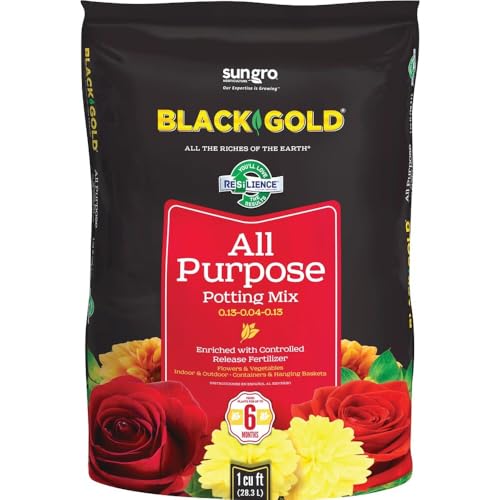
Sun Gro Black Gold has been a workhorse in the potting soil category for years. It is a genuinely multi-purpose mix that handles houseplants, patio containers, and hanging baskets without modification. For peace lily growers working with a tighter budget or needing a large volume of soil, Black Gold is our first recommendation. The nutrient-rich blend handles general feeding needs without requiring immediate supplementation, and the 1 cubic foot format stretches further per dollar than most premium bags.
What we appreciate about Black Gold is its consistent, reliable texture. It is not as lofty and aerated as FoxFarm, but it is not compacted either — it sits in the middle range that works well for most houseplant scenarios. Peace lilies transplanted into this mix showed healthy root expansion and no signs of waterlogging in our tests, provided pots had adequate drainage holes. It is worth noting that this mix does include aged bark, so buyers who have ongoing fungus gnat problems indoors may want to weigh that against the cost savings.
For large collections or frequent repotters, Black Gold's combination of availability, volume, and solid nutrient profile makes it a practical backbone product. It is not the most specialized or premium option on this list, but it reliably does the job for most everyday peace lily setups without burning a hole in the budget.
Pros:
Cons:
Perfect Plants markets this 8 qt. mix primarily toward edible growers — herbs, vegetables, fruits — but our testing showed it performs admirably for peace lilies and other tropical houseplants as well. The formulation is fully natural and includes perlite blended directly in, which handles the drainage side of the equation without any amendment work. Mycorrhizae (root-enhancing beneficial fungi) are also included, which aids establishment after repotting — a meaningful benefit given how sensitive peace lily roots can be to transplant stress.
The 8 qt. size is intentionally on the smaller side, and that is actually a feature rather than a limitation for certain buyers. Home users with one or two small-to-medium peace lilies do not need to store a 40-pound bag for months between uses. Potting soil stored in an open bag for extended periods can lose its structure, attract pests, and develop mold — a smaller bag that gets used up in a single session avoids those issues entirely.
The drainage profile is well-balanced. We did not observe any standing water in our test pots, and the mix stayed consistently moist between waterings without going soggy. The all-natural ingredient list also makes this a comfortable choice for households with pets or children who interact with plant containers. For anyone also growing culinary herbs alongside their peace lily collection, this is a practical dual-purpose buy — one bag covers multiple plant types without compromise.
Pros:
Cons:
Miracle-Gro's Moisture Control mix solves a specific and common problem: inconsistent watering. Peace lilies need steady moisture, but they also suffer badly from waterlogged roots. This mix is engineered to absorb up to 33% more water than basic potting soil — achieved through a combination of sphagnum peat moss, coconut coir, and a wetting agent — and then release it gradually between waterings. For anyone who sometimes misses a watering day or two, that buffer makes a meaningful difference in plant health outcomes.
The same six-month slow-release fertilizer present in the standard Miracle-Gro Indoor formula carries over here, so there is no need to supplement immediately after planting. Miracle-Gro's data shows plants in this mix grow twice as large as in unfed soil — that comparison is against completely unfed conditions, so the real-world advantage against a basic unfertilized potting medium is real, though more modest. The 8 qt. two-pack format gives a useful total volume of 16 qts., enough for several medium peace lily repots.
One thing to keep in mind: the moisture-holding capacity that makes this mix protective for under-waterers also means it holds water longer than standard mixes. Growers with a tendency to overwater or those keeping peace lilies in pots without drainage holes should choose a more free-draining option instead. For everyone else — and especially for office environments or busy households — this is one of the most practical formulations tested in 2026.
Pros:
Cons:
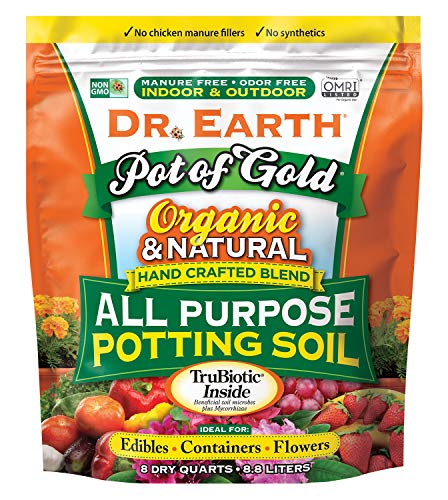
Dr. Earth has built its reputation on genuinely natural, thoughtfully sourced ingredients, and Pot of Gold is the clearest expression of that philosophy. This 8 qt. mix is designed for use in any size container, indoors or outdoors, and it holds up well across all of them. The ingredient philosophy prioritizes soil biology — the blend supports microbial communities in the growing medium rather than just delivering raw nutrients. For peace lilies, healthy soil biology translates to better nutrient cycling, more consistent moisture management, and more resilient root systems over multi-year pot life.
What distinguishes this product from the two Miracle-Gro entries is its fully natural composition without synthetic fertilizers or GMO-derived ingredients. The brand is transparent about sourcing and manufacturing practices, which matters to a growing segment of indoor plant enthusiasts in 2026. The 8 qt. bag is a compact, manageable size — easy to store between uses, with no bulk to work through before the next repotting season.
Performance in our tests was steady and reliable. Peace lily roots expanded well, and new foliage appeared at a healthy rate without the aggressive flush of growth that sometimes signals fertilizer overload. For growers who also maintain other container plants — herbs, flowering annuals, succulents — this all-purpose designation holds up in practice. We also found this mix pairs well with the principles covered in our Best Soil Amendment and Conditioner Reviews, as its neutral base accepts top-dressing amendments easily.
Pros:
Cons:
Not all potting mixes are created equal, and the gap between the right soil and the wrong one is larger for peace lilies than for many other houseplants. These are plants that evolved on tropical forest floors where the growing medium is loose, organically rich, and consistently moist but never waterlogged. The products in our list were evaluated specifically against these needs. Here is what to look for when evaluating any mix.
Peace lily roots need oxygen. In compacted or consistently wet soil, roots suffocate and root rot sets in fast. Look for mixes that include perlite, coarse sand, or pumice — these are the ingredients that create air pockets and drainage channels. A simple squeeze test works well at the store: a good mix should feel loose and spring back slightly, not pack into a dense ball. If a mix feels heavy and clay-like straight from the bag, it will compact further over time in a container and become problematic within one growing season.
Peace lilies are tropical, which means they genuinely prefer consistently moist conditions — but there is a critical difference between "moist" and "wet." Sphagnum peat moss and coconut coir (coco coir) are both excellent moisture-retaining ingredients that hold water in a way that stays available to roots without pooling. Coir has the edge for re-wetting after dry-out, while peat moss offers a slightly more acidic pH profile that many tropical plants respond well to. Mixes that include both tend to perform best for peace lily moisture management. For comparison, our coverage on Best Soil for Lavender Plants in Pots covers the opposite end of the spectrum — lavender needs near-zero moisture retention — which illustrates how dramatically soil needs can differ between plant types.
Peace lilies prefer a slightly acidic pH between 5.8 and 6.5. Most quality potting mixes fall in this range naturally, but it is worth checking the label. Mixes heavy with wood ash or lime-buffered materials can run too alkaline. Organic content — from compost, worm castings, kelp meal, or similar sources — is beneficial for long-term soil health and nutrient availability. However, more organic content also means more moisture retention, so the balance between richness and drainage is something to actively evaluate rather than assume more organic matter is always better.
Fungus gnats (small flies whose larvae live in moist potting soil) are one of the most common complaints among indoor gardeners. Bark, compost, and heavy peat mixes are the primary harborage materials for gnat populations. For anyone keeping peace lilies indoors — especially in living areas, kitchens, or offices — choosing a mix formulated without bark or compost is a practical preventive measure. This is one area where the Miracle-Gro Indoor mix has a genuine structural advantage over organic-rich alternatives, though the trade-off is giving up some biological complexity in the soil. Most buyers managing an ongoing gnat problem will find the trade-off worth it.
Peace lilies perform best in a loose, well-draining potting mix that retains consistent moisture without becoming waterlogged. Mixes containing coconut coir or sphagnum peat moss for moisture retention, combined with perlite for drainage and aeration, hit the ideal balance. Our overall top recommendation is the Miracle-Gro Indoor Potting Mix for its gnat-resistant formulation and reliable coir-based moisture management.
Garden soil is not suitable for container peace lilies. It compacts heavily in pots, blocks drainage, and lacks the aeration that container roots require. Garden soil also carries weed seeds, pests, and pathogens that thrive in the contained environment of a pot. A purpose-formulated potting mix is the correct choice for any containerized peace lily, regardless of how good the outdoor garden soil may be.
Most potting mixes break down and lose their structure over one to two growing seasons. We recommend refreshing or fully replacing peace lily soil every 12 to 24 months, or whenever the plant shows signs of declining health that cannot be resolved with watering or fertilization adjustments. Repotting in fresh mix every spring is a straightforward maintenance routine that keeps peace lilies performing at a consistently high level.
Yes — good drainage is non-negotiable for peace lily health. While they need consistent moisture, they are highly susceptible to root rot when roots sit in standing water. Any mix used for peace lilies should drain freely within a minute or two of watering. If the current mix drains slowly, adding perlite at a ratio of roughly 20 to 30 percent by volume corrects the problem without needing a full repot.
Both work well, and the difference is practical rather than dramatic. Coir-based mixes are more sustainable (coir is a coconut byproduct rather than a harvested bog material), re-wet more easily after drying out, and tend to support less fungus gnat activity. Peat-based mixes deliver a slightly more acidic pH and are often richer in organic matter. For most buyers, coir-based mixes represent the better choice in 2026 given their environmental profile and practical performance advantages.
In most cases, yes. The moisture retention and drainage requirements of peace lilies align well with other tropical houseplants like pothos, philodendrons, and anthuriums. Any of the mixes reviewed here — particularly the FoxFarm Ocean Forest and Espoma Organic — perform well across a broad range of tropical species. The main exception is succulents and cacti, which require specialized fast-draining mixes that would dry out too quickly for peace lily needs.
 |
 |
 |
 |

About Truman Perkins
Truman Perkins is a Detroit-based SEO consultant who's been in the business for over a decade. He got his start helping friends and clients get their websites off the ground, and he continues to do so today. In his free time, Truman enjoys learning and writing about gardening - something he believes is a natural stress reliever. He lives with his wife, Jenny, and their twins in Detroit.


Get new FREE Gifts. Or latest free growing e-books from our latest works.
Disable Ad block to reveal all the links. Once done, hit a button below
|
|
|
|
 rinjal